
 English
 Español
 русский
 Français
 عربى
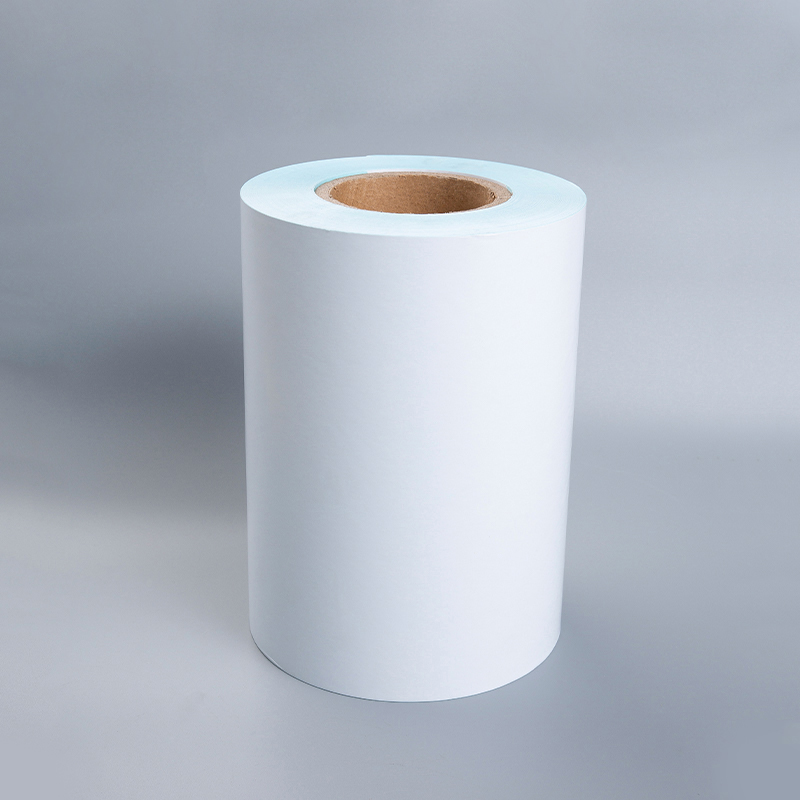
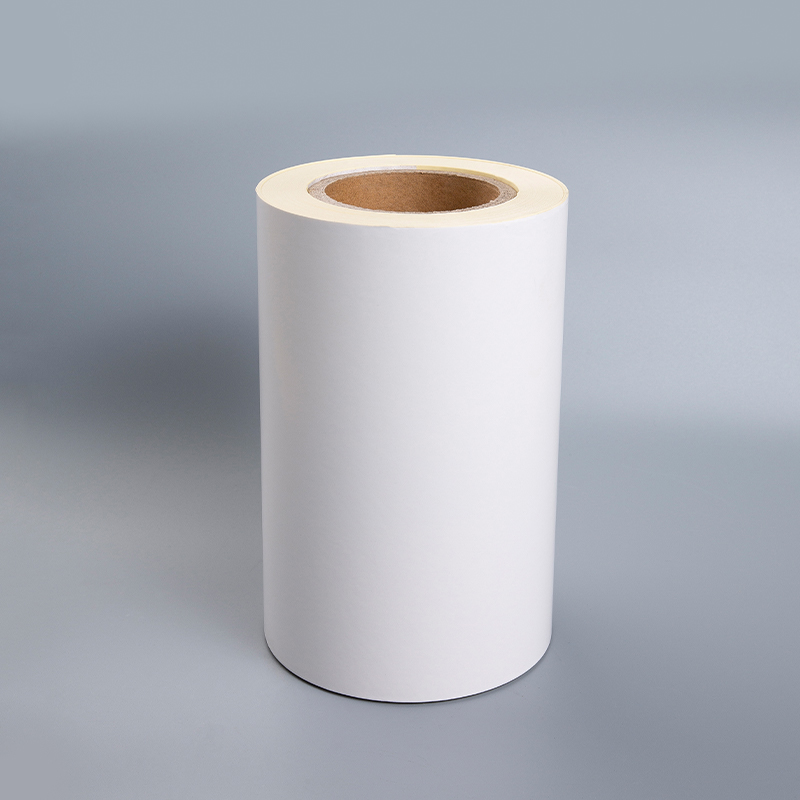
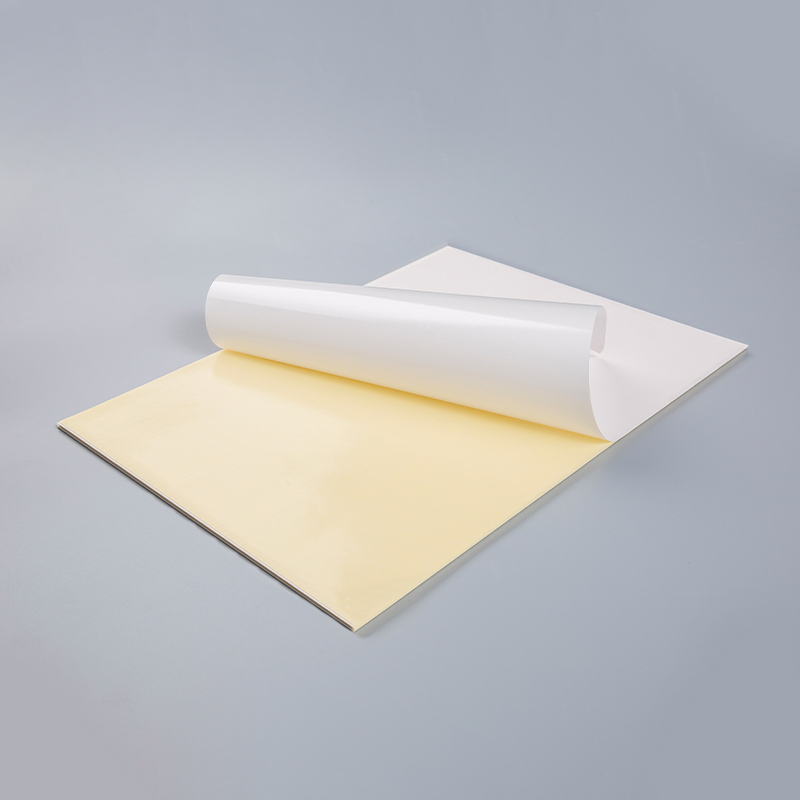
عربىDouble side adhesive paper in white PEK is a versatile pressure-sensitive bonding material designed for applications where clean handling, strong adhesion, stable converting performance, and reliable long-term attachment are required. It is widely used in stickers, stationery, office products, leather goods, pearl cotton, sponge products, footwear, electronics, and automobile decoration components. Compared with traditional one-sided paper labels, this material offers bonding strength on both sides, allowing it to function not only as a label substrate but also as an efficient joining, mounting, laminating, and fixing solution.
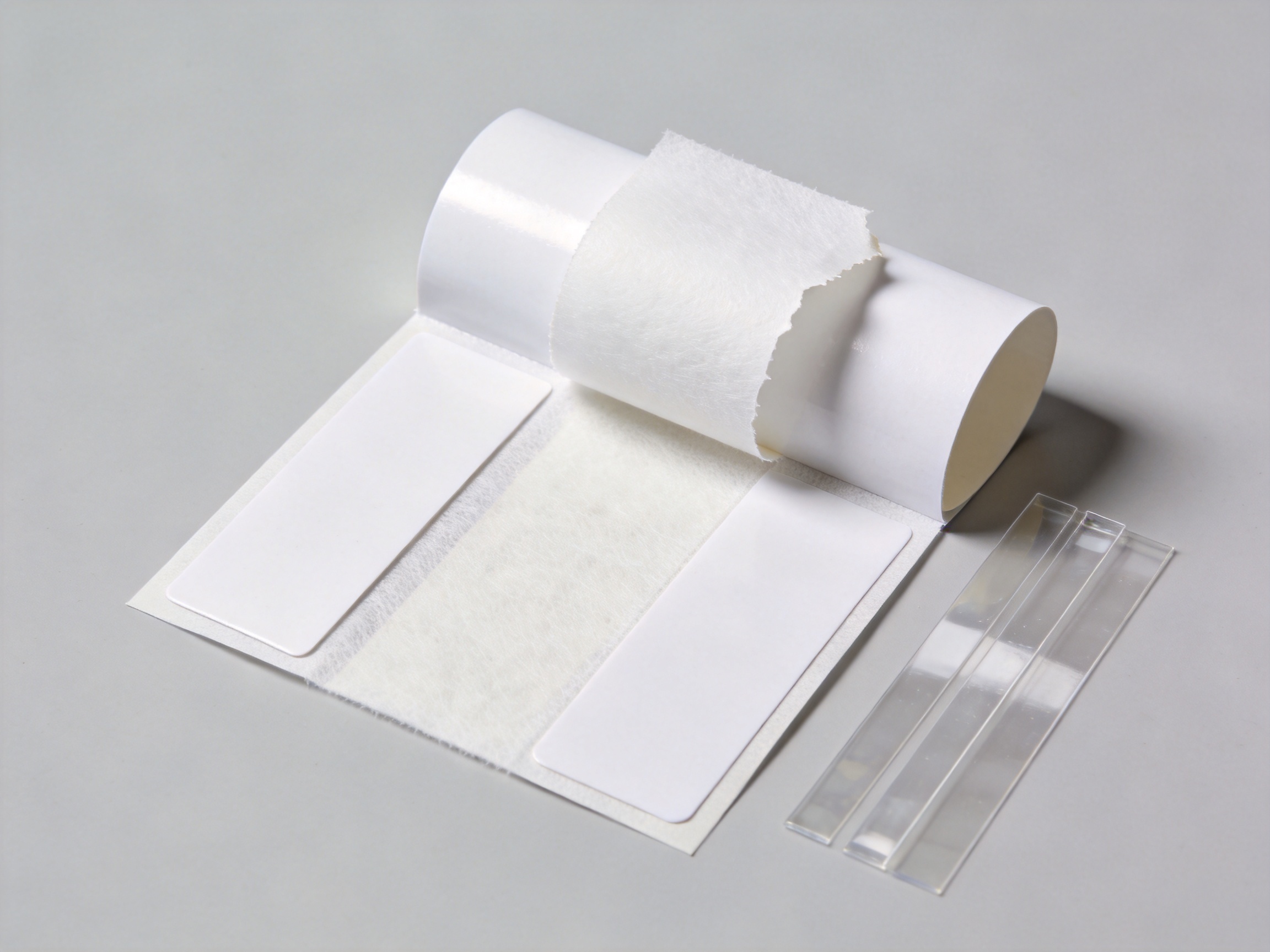
The product is built with a sandwiched carrier material, adhesive layers, and two release liners. This structure gives converters and end users greater flexibility in die-cutting, sheeting, laminating, mounting, and manual application. With options such as white non-woven carrier material, transparent PET carrier, water-based adhesive, hotmelt adhesive, solvent adhesive, anti-freeze adhesive, removable adhesive, cryogenic adhesive, and tyre-grade rubber adhesive, the material can be adapted to a wide range of industrial and commercial bonding requirements.
Suzhou Piaozhihua Composite Material Technology Co., Ltd. manufactures this product with integrated production capabilities covering gluing, laminating, cutting, inspection, customization, and after-sales support. With more than 20 years of manufacturing experience, an annual production capacity exceeding 280 million square meters, advanced testing facilities, and strong OEM and ODM capabilities, the company provides customers with stable, scalable, and application-oriented double side adhesive paper solutions.
Content
- 1 Product Overview
- 2 Key Product Specifications
- 3 Why Double Side Adhesive Paper Performs Better Than Traditional Paper Labels
- 4 Strong Adhesion for Demanding Surfaces
- 5 Carrier Material Selection and Its Importance
- 6 Release Liner Stability
- 7 Application Areas
- 8 Advantages Over Generic Competitor Materials
- 9 Advanced Manufacturing Process
- 10 Quality Control and Testing Strength
- 11 Customization and OEM/ODM Capabilities
- 12 Production Capacity and Supply Reliability
- 13 Packaging and Delivery
- 14 Sustainability and Responsible Material Development
- 15 How to Select the Right Double Side Adhesive Paper
- 16 Q&A Section
- 16.1 What is double side adhesive paper in white PEK used for?
- 16.2 How is it different from a traditional paper label?
- 16.3 What carrier materials are available?
- 16.4 Which adhesive types can be selected?
- 16.5 Why are there different adhesive choices?
- 16.6 What release liners are available?
- 16.7 Can the material be supplied in sheets?
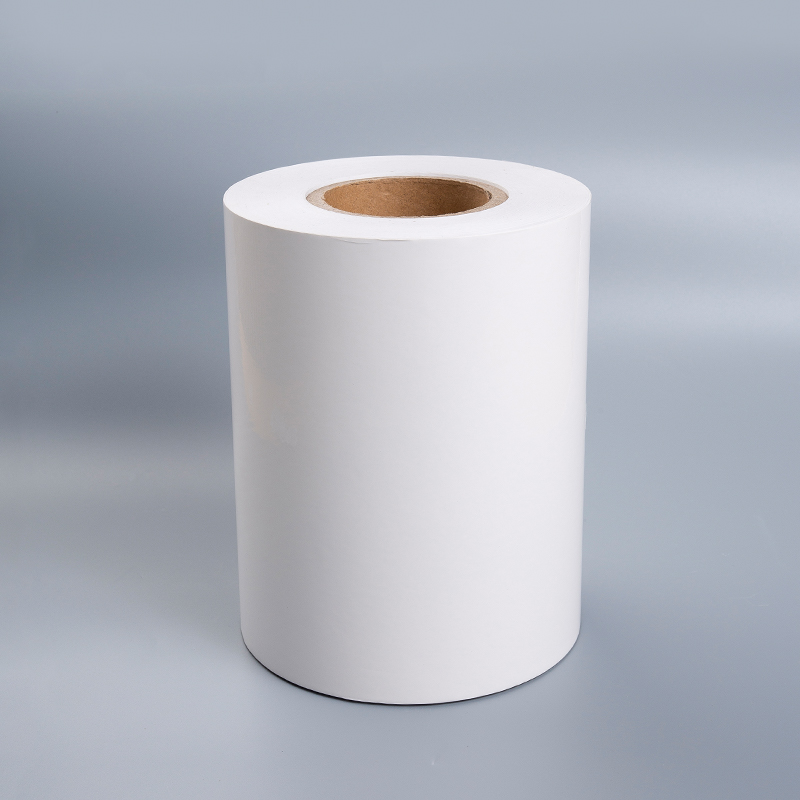
- 16.8 Can the material be supplied in jumbo rolls?
- 16.9 Is the product suitable for cold environments?
- 16.10 Can it be customized for OEM or ODM projects?
- 17 Conclusion
- 18 References
Product Overview
Double side adhesive paper in white PEK is a double-coated self-adhesive material designed to provide adhesion on both surfaces. Unlike ordinary adhesive labels that attach only one printed face material to a product surface, this material serves as an intermediate bonding layer. It can join two different substrates, reinforce assembly structures, support decorative components, and provide reliable positioning in high-viscosity application scenarios.
The core structure usually consists of a sandwiched carrier material, adhesive coatings on both sides, and release liners that protect the adhesive before use. The carrier can be 15g white non-woven material or optional transparent PET in 19 microns, 25 microns, or 50 microns. The carrier influences strength, dimensional stability, flexibility, transparency, and converting performance. For general mounting and flexible bonding, white non-woven material is a practical choice. For applications requiring better dimensional stability, transparency, or film strength, PET carrier options are available.
The adhesive system can be selected according to the bonding surface, service temperature, removability requirement, and final application environment. Water-based adhesive is suitable for many standard labeling and mounting applications, while hotmelt adhesive offers high initial tack. Solvent adhesive can support stronger chemical resistance and durability in demanding conditions. Anti-freeze and cryogenic adhesives serve low-temperature environments, removable adhesive supports clean repositioning or removal, and tyre-grade rubber adhesive is used for highly specialized bonding requirements.
The two side liners are generally 90g white release paper, with 90g yellow release paper also available. These release liners protect the adhesive surface, support die-cutting, and allow clean peeling during application. A stable release liner is essential for efficient converting because poor release performance can cause adhesive transfer, web breaks, inaccurate die-cutting, or application defects.
Key Product Specifications
Item |
Specification |
Benefit |
Product Type |
Double side adhesive paper in white PEK |
Provides adhesion on both sides for mounting, laminating, bonding, and fixing |
Sandwiched Material |
15g white non-woven material |
Flexible, lightweight, and suitable for many general-purpose bonding applications |
Optional Carrier |
19 microns, 25 microns, or 50 microns transparent PET |
Improves dimensional stability, transparency, and film strength when required |
Standard Adhesive |
Water-based adhesive |
Suitable for many label, stationery, office, and industrial bonding uses |
Optional Adhesives |
Hotmelt, solvent, anti-freeze, removable, cryogenic, and tyre-grade rubber adhesive |
Allows customization for temperature, surface energy, removability, and high-tack requirements |
Two Side Liners |
90g white release paper |
Protects adhesive and supports clean converting and application |
Optional Liner |
90g yellow release paper |
Provides visual distinction and alternative converting preference |
Jumbo Roll Width |
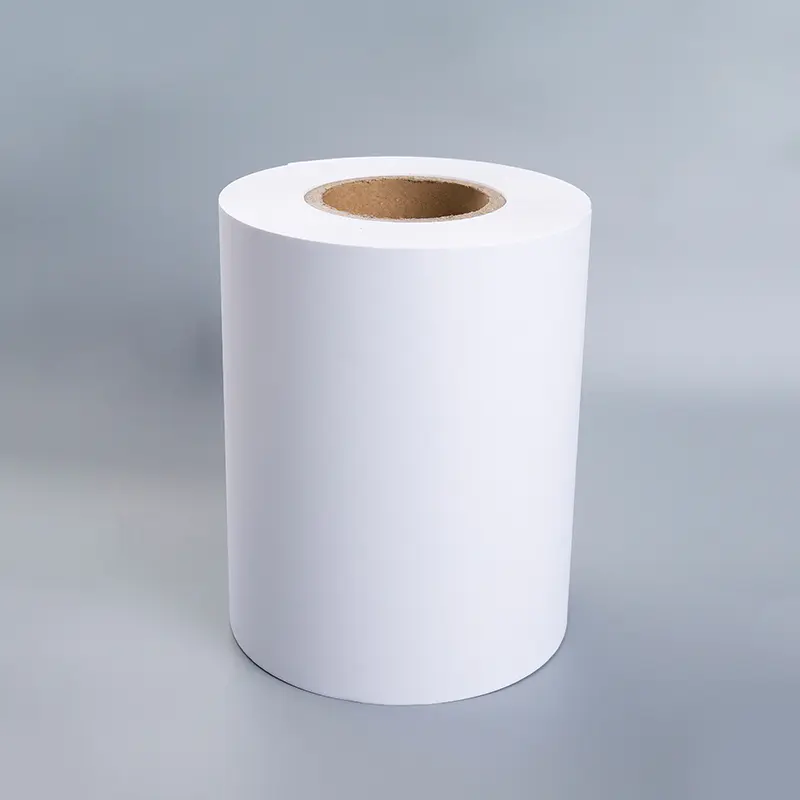
1000 mm, 1020 mm, 1080 mm, or 1530 mm |
Supports industrial slitting, laminating, and high-volume conversion |
Sheet Size |
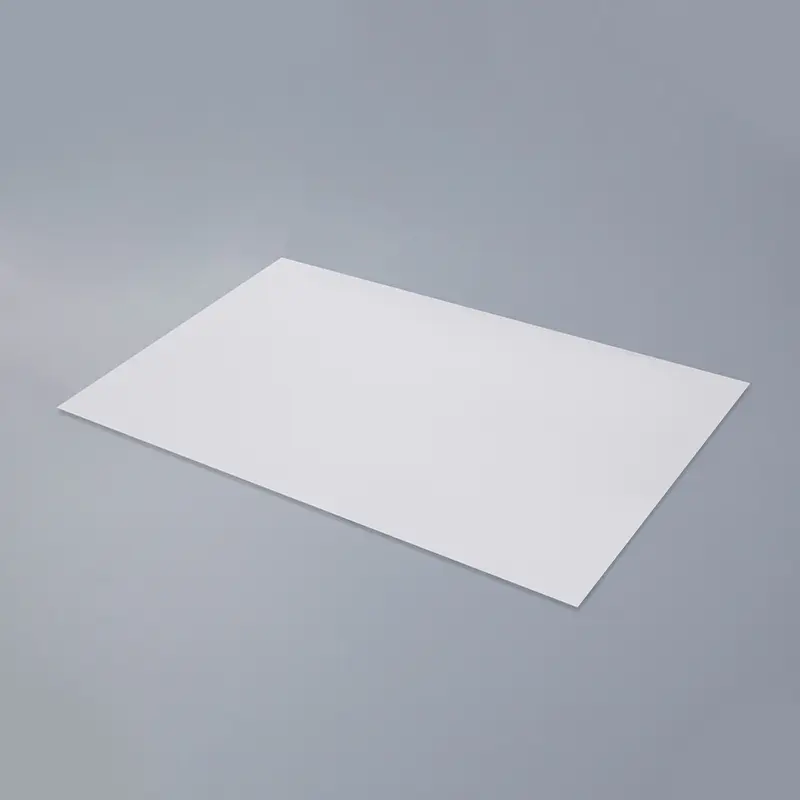
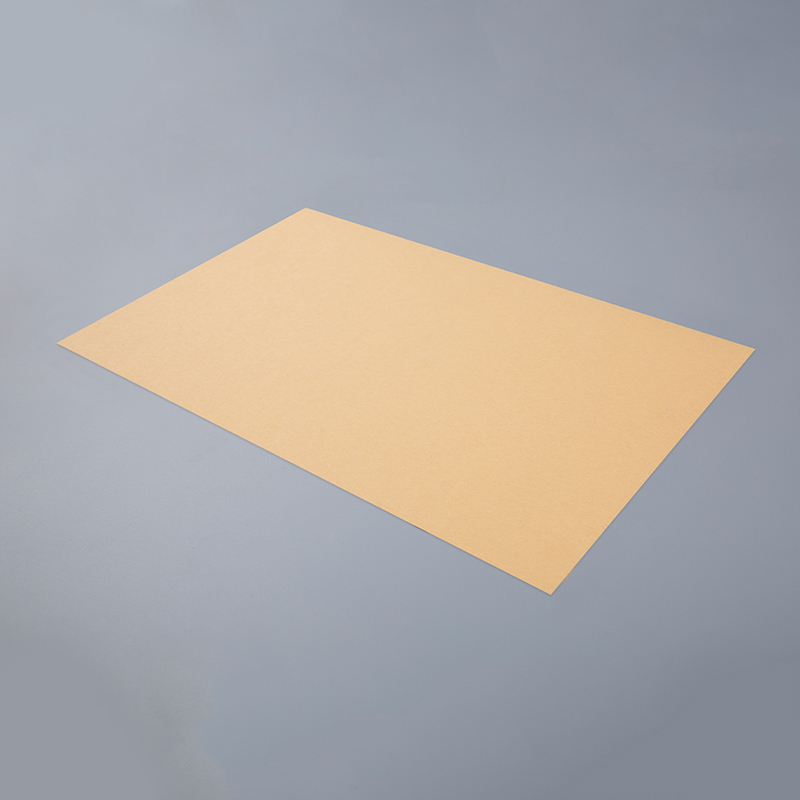
A4, A3, 20 x 30, 21 x 30, 24 x 36, 50 cm x 70 cm, 70 cm x 100 cm, or customized |
Meets commercial printing, office, die-cutting, packaging, and specialty application needs |
Packing |
Sea-transit-worthy poly-wood pallet packing and carton packing for rolls or sheets |
Protects goods during domestic and international transportation |
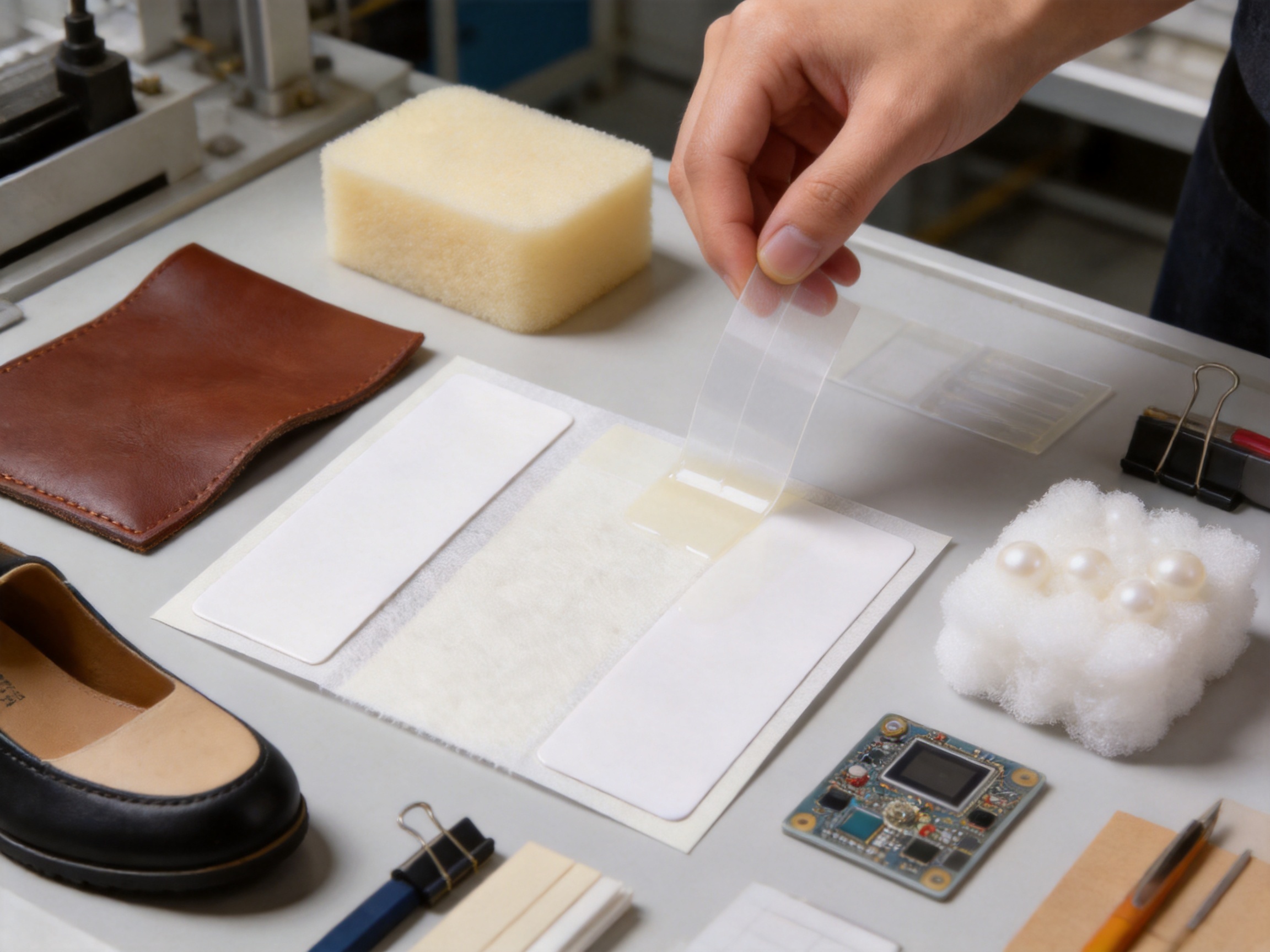
Why Double Side Adhesive Paper Performs Better Than Traditional Paper Labels
Traditional paper labels are designed primarily for identification, decoration, or information display. They normally include a face material, one adhesive layer, and one release liner. Once peeled from the liner, the label is applied to one surface. This structure is efficient for barcode labels, product labels, shipping labels, and many consumer goods labels, but it is limited when two surfaces need to be joined together.
Double side adhesive paper solves this limitation by providing adhesive on both sides. It can bond one material to another without the need for liquid glue, mechanical fasteners, stitching, or heat activation. This makes production cleaner, faster, and more consistent. It also enables bonding in thin and lightweight structures where screws, staples, clips, or bulky foam tapes may be unsuitable.
One major advantage is stronger overall fixing performance in high-viscosity scenes. In leather goods, shoe products, sponge processing, pearl cotton assembly, electronics mounting, and automotive decoration, components often need secure positioning before final pressing, stitching, molding, or assembly. Double side adhesive paper provides immediate attachment and helps prevent shifting during handling. This improves production efficiency and reduces misalignment-related waste.
Another advantage is cleaner appearance. Liquid glue may overflow, stain materials, create uneven bonding lines, or require drying time. Mechanical fasteners may leave visible marks or increase product thickness. Double side adhesive paper remains hidden between substrates, helping finished products maintain a neat surface. This is especially valuable in decorative products, office supplies, electronics, and interior automotive components where appearance matters.
Compared with many ordinary competitors’ products, a well-manufactured double side adhesive paper must achieve balanced adhesion, release stability, coating uniformity, and carrier consistency. Excessive adhesive may cause edge ooze, blocking, or contamination. Insufficient adhesive may cause lifting or delamination. Uneven coating may create weak spots. Poor release paper may affect die-cutting and peeling. The value of the product therefore depends not only on the formula but also on precise manufacturing control.
Strong Adhesion for Demanding Surfaces
Many industrial materials are difficult to bond because their surfaces are textured, porous, elastic, oily, curved, or low in surface energy. Leather, sponge, pearl cotton, rubber, plastics, and decorative automotive parts all present different bonding challenges. Double side adhesive paper in white PEK can be matched with different adhesive systems to improve compatibility with these surfaces.
Water-based adhesive is suitable for many regular substrates and supports stable coating performance. Hotmelt adhesive is often selected when fast tack and strong initial grip are important. Solvent adhesive can be chosen when stronger durability or resistance is needed. Anti-freeze adhesive and cryogenic adhesive help maintain bonding performance in cold environments. Removable adhesive is useful for temporary mounting, repositionable products, promotional materials, and applications where clean removal is required. Tyre-grade rubber adhesive is available for specialized high-tack requirements.
This range of adhesive options gives the product a competitive advantage over standard double side papers that offer only one adhesive formula. In practical purchasing, customers do not simply need a double side material; they need the right double side material for their surface, temperature, production process, and service life. A manufacturer with multiple adhesive systems can help reduce trial-and-error costs and improve final product reliability.
Carrier Material Selection and Its Importance
The sandwiched carrier material is the internal support layer of double side adhesive paper. It affects strength, flexibility, die-cutting quality, and dimensional performance. The standard 15g white non-woven material offers a practical balance between softness and processability. It can conform to many slightly uneven surfaces while maintaining enough structure for converting.
Transparent PET options in 19 microns, 25 microns, and 50 microns provide different performance characteristics. PET has better film strength and dimensional stability than many paper or non-woven carriers. It is useful when the bonding layer must remain thin, smooth, and stable. Transparent PET may also be preferred when the bonding line should be less visible or when a more film-like construction is needed.
By offering both non-woven and PET carrier options, the product can serve a wider range of customers. Some applications require flexibility and tearability, while others require tensile strength and dimensional control. A single carrier type cannot meet every requirement. This structural flexibility is an important advantage for customers in converting, packaging, automotive decoration, electronics, and specialty labeling.
Release Liner Stability
Release liners are sometimes overlooked, but they are essential to double side adhesive material performance. The liner protects the adhesive during storage, transportation, slitting, die-cutting, and application. If release force is unstable, users may experience liner tearing, adhesive transfer, curling, difficult peeling, or waste during automatic labeling and converting.
The product uses 90g white release paper as a standard liner and can also be supplied with 90g yellow release paper. The heavier liner supports good handling and dimensional stability. It helps maintain flatness during sheeting and provides practical stiffness for manual peeling. Yellow release paper is useful when customers need visual contrast between layers or want to distinguish one side from another during production.
In double side adhesive constructions, liner compatibility is even more important because both adhesive surfaces must remain protected until each application step is completed. A reliable release paper helps converters maintain productivity and reduces machine stoppages. For high-volume production, this can directly affect cost per finished piece.
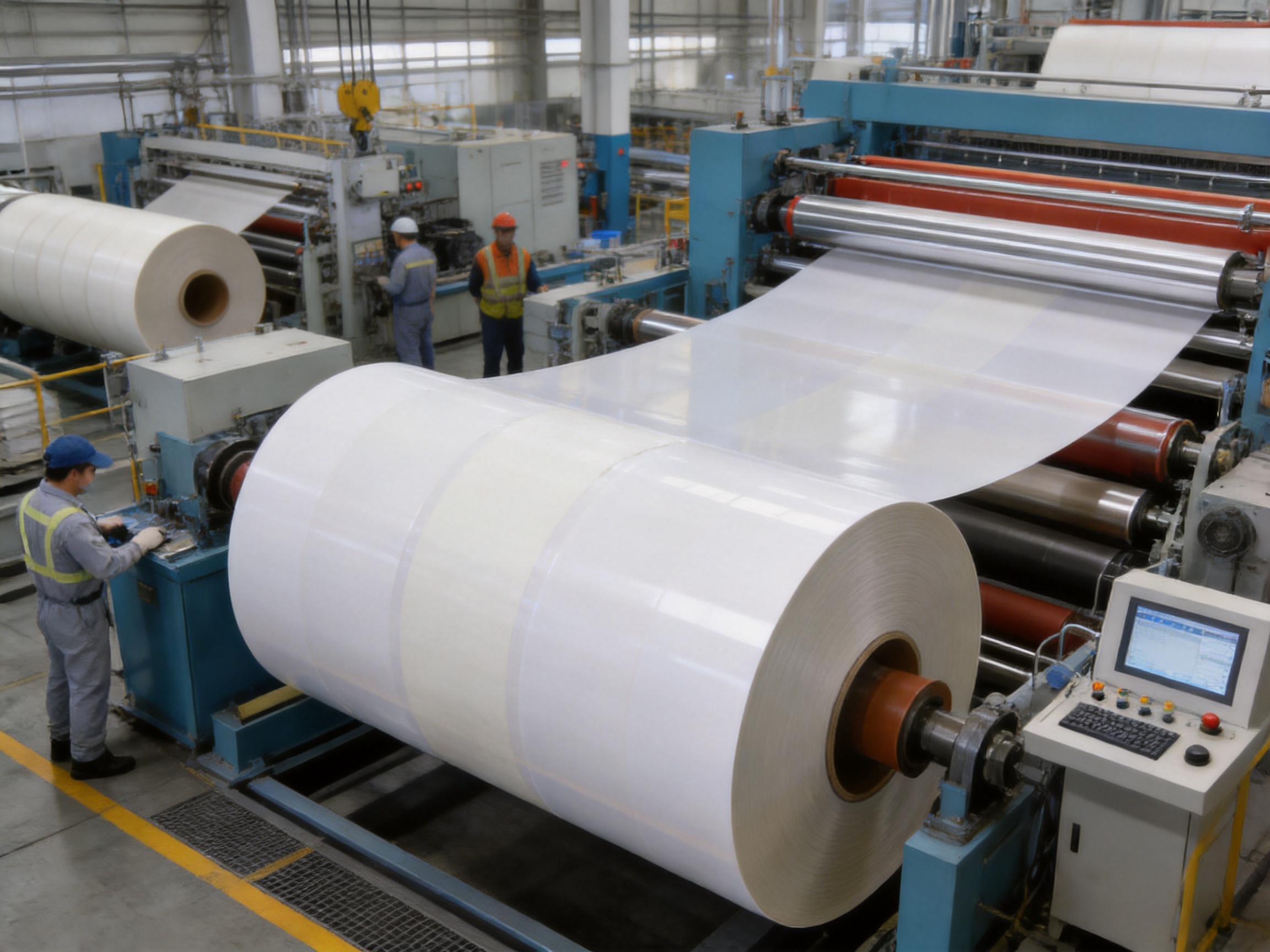
Application Areas
Double side adhesive paper in white PEK is used in many industries because it combines clean bonding, easy processing, and adaptable adhesion. Its applications include stickers, stationery, office supplies, leather goods, pearl cotton, sponge, shoe products, electronics, and automobile decoration products.
Stickers and Creative Products
In sticker production, double side adhesive paper can be used to create mounting stickers, craft stickers, layered decorative pieces, promotional items, and specialty adhesive formats. It enables one component to be attached to another without visible adhesive marks. For craft and stationery products, clean peeling and stable bonding are especially important because users expect convenience and neat results.
Stationery and Office Products
Stationery and office products often require thin bonding layers that do not add unnecessary bulk. Double side adhesive paper can be used for folders, pads, displays, tabs, mounting sheets, document accessories, labels, and self-adhesive office materials. It offers fast application and consistent thickness, making it suitable for both industrial conversion and manual use.
Leather Goods
Leather goods manufacturing often involves bonding before sewing, pressing, or shaping. Double side adhesive paper helps temporarily or permanently position leather components, linings, decorative elements, and reinforcement pieces. Compared with liquid glue, it reduces waiting time and helps keep work areas cleaner. It also reduces the risk of glue stains on premium leather surfaces.
Pearl Cotton and Sponge Products
Pearl cotton and sponge are lightweight, flexible, and porous materials. They are widely used in packaging, cushioning, craft products, and protective components. Bonding these materials can be challenging because adhesive must grip uneven surfaces without excessive penetration or mess. Double side adhesive paper offers a controlled adhesive layer and helps create stable laminated structures.
Shoe Products
Footwear manufacturing requires many temporary and permanent bonding steps. Shoe materials may include fabric, leather, foam, rubber, and synthetic components. Double side adhesive paper helps position parts accurately before stitching or pressing. Its clean handling and strong tack can improve workflow efficiency and reduce component movement during assembly.
Electronics
Electronic products often require thin, clean, and precise bonding solutions. Double side adhesive materials can be used for insulating sheets, nameplates, membrane switches, component fixing, cushioning pieces, and decorative surfaces. PET carrier options are especially useful where dimensional stability and thin film performance are required. The ability to select different adhesive systems also helps match bonding needs for plastic, metal, coated, or film surfaces.
Automobile Decoration Products
Automotive decoration components demand stable adhesion, clean appearance, and resistance to changing service conditions. Double side adhesive paper can be used for interior decorative trims, protective pads, labels, and lightweight mounting elements. For cold regions or temperature-sensitive applications, anti-freeze and cryogenic adhesive options help improve suitability.
Advantages Over Generic Competitor Materials
In the market for double side adhesive paper, many products appear similar at first glance. However, performance differences become clear during slitting, die-cutting, lamination, storage, peeling, and final use. The advantages of this product come from material choice, adhesive diversity, release liner quality, manufacturing control, customization capability, and professional technical support.
First, the material offers multiple adhesive options rather than a single standard formula. This allows customers to match the material to their application instead of forcing one adhesive to fit all surfaces. A converter making stationery products may require clean handling and moderate tack, while a manufacturer of automobile decoration products may require stronger environmental stability. A supplier with broader adhesive technology can serve both needs.
Second, the product supports both roll and sheet supply. Jumbo roll widths of 1000 mm, 1020 mm, 1080 mm, and 1530 mm support high-volume industrial conversion. Sheet formats such as A4, A3, 20 x 30, 21 x 30, 24 x 36, 50 cm x 70 cm, and 70 cm x 100 cm support printing, packaging, manual processing, and specialized production. Customized sheet sizes are also available, helping customers reduce trimming waste and improve production efficiency.
Third, release liner options provide practical converting advantages. Stable liner thickness, release performance, and color selection help improve die-cutting accuracy and peeling reliability. In many factories, poor liner performance causes more production problems than customers initially expect. A dependable liner is therefore a major value factor.
Fourth, the product benefits from integrated manufacturing. Suzhou Piaozhihua Composite Material Technology Co., Ltd. operates production lines for gluing, laminating, and cutting. Integrated production gives better control over quality, scheduling, customization, and troubleshooting. Compared with suppliers that rely heavily on outsourced coating or converting, integrated production can provide more consistent batches and faster technical response.
Fifth, the company’s experience matters. With more than 20 years of OEM manufacturing experience, the company understands the practical challenges of different industries, including adhesive selection, roll tension, lamination balance, release force, storage stability, and packing protection. Experience helps reduce risk for customers who need stable supply and technical guidance.
Advanced Manufacturing Process
The production of high-quality double side adhesive paper requires more than applying glue to a carrier. It involves raw material inspection, adhesive preparation, coating control, drying or curing, lamination, release liner matching, tension control, slitting, sheeting, final inspection, and protective packaging.
During raw material selection, carrier materials, adhesives, and release papers must meet defined specifications. Carrier thickness, basis weight, surface condition, and tensile properties affect coating and final performance. Release papers must have stable silicone release properties. Adhesives must be prepared and controlled to achieve the required coating weight, viscosity, tack, and bonding characteristics.
In the gluing process, coating uniformity is critical. If adhesive is too thick, the material may ooze at the edges, contaminate equipment, or become difficult to die-cut. If adhesive is too thin, bonding strength may be insufficient. Uniform coating helps ensure that every part of the roll or sheet performs consistently. This is especially important for industrial customers that convert thousands or millions of pieces.
Laminating must be carefully controlled to avoid wrinkles, bubbles, curling, or uneven pressure. Because double side adhesive materials have multiple layers, tension balance is essential. The carrier, adhesive layer, and release liners must move together smoothly during production. Improper tension can cause curl, telescoping rolls, poor flatness, and downstream converting problems.
Cutting and slitting require accuracy and cleanliness. Jumbo rolls may be slit to customer-specific widths, while sheeted products must maintain consistent dimensions. Clean edges reduce dust and adhesive buildup during converting. Accurate size control helps customers improve production planning and reduce waste.
Final inspection confirms product appearance, adhesion, release performance, size, roll quality, and packing condition. The company’s own testing lab and advanced inspection equipment support quality assurance. By testing materials before shipment, the manufacturer helps customers avoid production disruptions and inconsistent bonding performance.
Quality Control and Testing Strength
Quality control is a core advantage in self-adhesive material manufacturing. Double side adhesive paper must satisfy several performance requirements at the same time: adhesion must be strong enough, release must be smooth, liners must remain stable, rolls must be wound properly, and sheets must stay clean and flat. A weakness in any one area can affect the entire customer process.
Suzhou Piaozhihua Composite Material Technology Co., Ltd. maintains its own testing laboratory and advanced inspection equipment. This enables systematic evaluation of raw materials, semi-finished materials, and finished products. Testing may include adhesive performance checks, release force evaluation, appearance inspection, dimensional verification, coating uniformity observation, and application simulation according to customer needs.
For customers, this testing capability reduces uncertainty. When a product is used in electronics, footwear, automotive decoration, or specialty packaging, failure can cause rework, waste, delayed delivery, and customer complaints. Reliable quality control helps ensure that the same product specification performs consistently from batch to batch.
Advanced inspection is also important for customized products. When customers request a different adhesive, carrier, release liner, size, or sheet format, the manufacturer must confirm that the new structure can be produced reliably. Testing supports this development process and helps identify potential issues before mass production.
Customization and OEM/ODM Capabilities
Many customers do not use standard adhesive materials exactly as supplied. They may need a specific roll width, sheet size, adhesive strength, liner color, carrier type, or performance profile. Strong OEM and ODM capabilities are therefore essential.
The company accepts OEM and ODM services and can produce products based on customer drawings or samples. This is especially valuable for converters, label manufacturers, packaging suppliers, electronics component producers, footwear manufacturers, and automotive decoration suppliers. Instead of purchasing a generic material and modifying it afterward, customers can request a structure better aligned with their production process.
Customization can include adhesive choice, carrier material, liner selection, roll width, sheet size, packaging format, and performance requirements. For example, a customer producing office mounting sheets may prefer A4 or A3 sheets with clean release and balanced tack. A converter producing die-cut industrial parts may need jumbo rolls with precise width and strong adhesive. A customer working in low-temperature distribution may need anti-freeze adhesive. A temporary promotional product may require removable adhesive.
With professional research and development capabilities, multiple patents, and a technical team focused on innovation, the company can support customers from concept to mass production. This development ability is an important competitive advantage because adhesive materials often require practical testing on real substrates. A knowledgeable supplier can recommend suitable options and help shorten the qualification cycle.
Production Capacity and Supply Reliability
For industrial buyers, product performance is only one part of supplier selection. Supply reliability is equally important. A material that performs well but cannot be delivered consistently may create serious production risks. With an annual production capacity exceeding 280 million square meters, Suzhou Piaozhihua Composite Material Technology Co., Ltd. has the scale to support high-volume orders and long-term supply partnerships.
The company is recognized among the top 10 enterprises in China for self-adhesive products. Its production system covers gluing, laminating, and cutting, allowing it to manage multiple stages internally. This integrated capacity supports stable output and helps the company respond to both standard and customized order demands.
The company has built domestic sales outlets across major Chinese markets, including Shanghai, Ningbo, Hangzhou, Chengdu, Harbin, Wuhan, Chongqing, Guangzhou, Changsha, Beijing, and additional franchise chains. Internationally, its marketing network covers countries and regions including the United States, Germany, Japan, South Korea, Brazil, Mexico, Russia, the Middle East, and broader markets in Asia, Europe, the Americas, and Africa. This wide network demonstrates the company’s ability to serve diverse customers and maintain long-term cooperation.
Packaging and Delivery
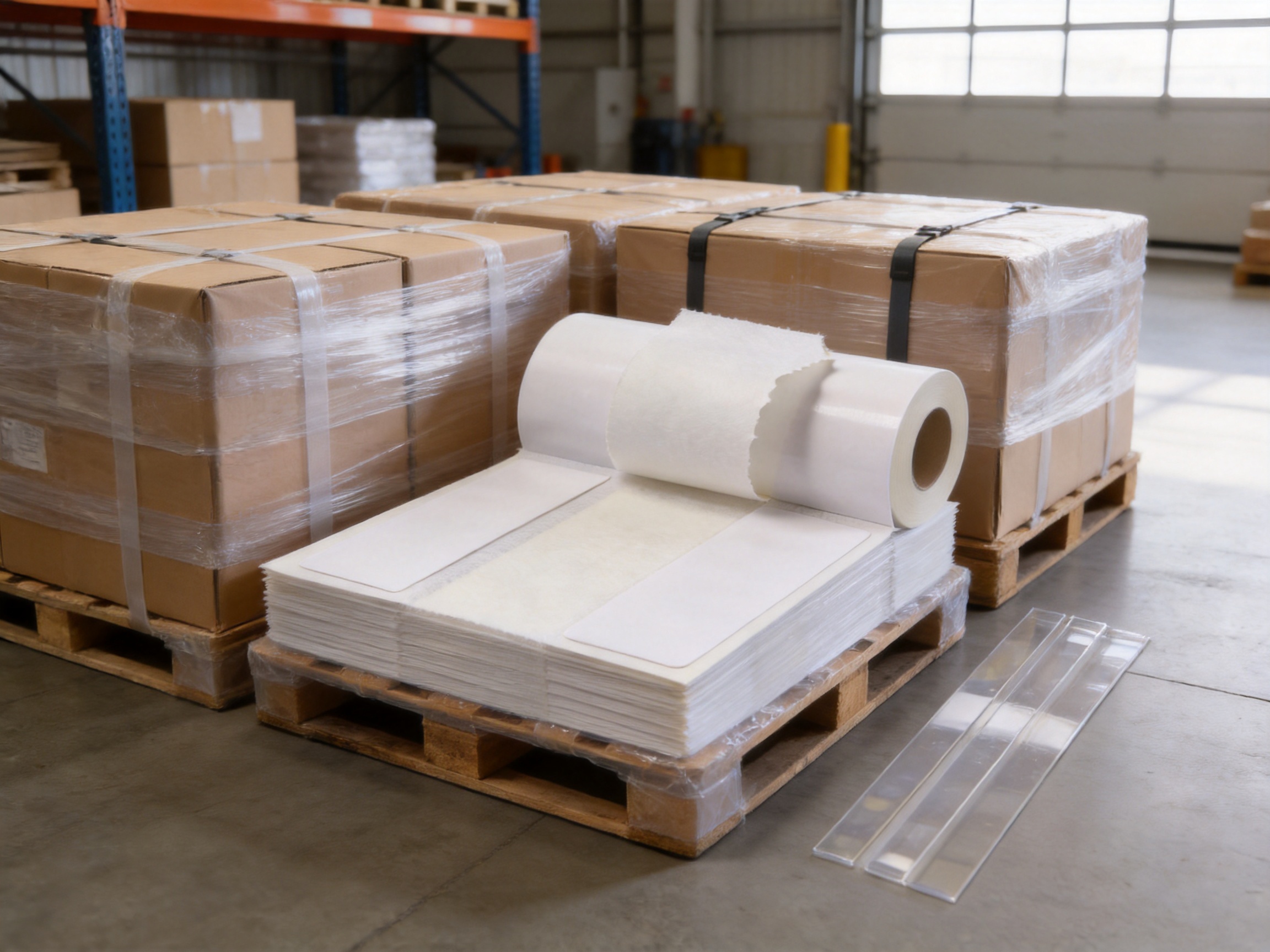
Proper packaging protects double side adhesive paper from moisture, contamination, deformation, pressure damage, and transportation stress. The product can be supplied in roll or sheet form from stock, with sea-transit-worthy poly-wood pallet packing and carton packing available.
For sheet products, 100 sheets per ream can be packed with strong PE-coated kraft paper wrapper. Strong pallets are wrapped with stretch film and fastened with plastic fastening belts. This packing approach helps maintain sheet flatness, protect edges, and prevent movement during shipment. For export shipments, stable pallet packing is essential because adhesive materials may travel long distances and experience handling at multiple logistics points.
Roll packaging must also maintain roll shape and protect edges. Damaged roll edges can affect slitting and converting, while deformation can cause web tension issues. Good packing reduces these risks and supports smoother customer production after delivery.
Sustainability and Responsible Material Development
The company’s brand positioning emphasizes sustainable development and environmental protection. In the self-adhesive material industry, sustainability can involve more responsible material selection, efficient production, waste reduction, improved coating control, and development of eco-friendly face materials, adhesives, and backing papers.
Double side adhesive paper can contribute to process efficiency by reducing the need for messy liquid adhesives, minimizing drying time, and improving assembly consistency. When customized correctly, it can reduce waste caused by bonding failure, misalignment, or excessive trimming. Efficient roll and sheet sizing also helps customers use material more effectively.
The company’s values include quality, integrity, innovation, win-win cooperation, and responsibility. These values are important in long-term adhesive material supply because customers need not only products but also reliable communication, continuous improvement, and responsible technical support.
How to Select the Right Double Side Adhesive Paper
Selecting the right double side adhesive paper requires understanding the application environment and production process. Customers should consider the substrate materials, surface texture, temperature range, required bonding strength, removability, converting method, storage conditions, and final use.
The first question is what surfaces need to be bonded. Smooth paper, coated board, leather, sponge, PET film, rubber, plastic, metal, and pearl cotton all behave differently. Porous surfaces may require different tack than smooth plastic surfaces. Flexible substrates may need an adhesive layer that can move with the material without lifting.
The second question is whether the bond is temporary or permanent. Permanent applications usually require strong adhesion and long-term stability. Temporary applications may require removable adhesive to prevent residue or surface damage. Choosing the wrong adhesive can cause either premature failure or difficult removal.
The third question is the service temperature. If the product will be stored, shipped, or used in cold conditions, anti-freeze or cryogenic adhesive may be necessary. Standard adhesives may lose tack or become brittle in low-temperature conditions, so temperature requirements should be discussed before ordering.
The fourth question is the converting method. Die-cutting, slitting, sheeting, printing, laminating, and manual assembly all place different demands on liner release, carrier strength, adhesive flow, and flatness. Customers using high-speed machines should pay close attention to release stability and roll quality.
The fifth question is the desired thickness and appearance. Non-woven carrier may be suitable for general bonding, while transparent PET carrier may be better for thin, stable, or less visible bonding lines. The correct carrier choice helps optimize both performance and appearance.
Q&A Section
What is double side adhesive paper in white PEK used for?
It is used for bonding, mounting, laminating, fixing, and assembling materials in stickers, stationery, office products, leather goods, pearl cotton, sponge products, shoe products, electronics, and automobile decoration products.
How is it different from a traditional paper label?
A traditional paper label usually has adhesive on one side only and is mainly used for identification or decoration. Double side adhesive paper has adhesive on both sides, allowing it to join two surfaces together and provide stronger positioning or mounting functions.
What carrier materials are available?
The standard sandwiched carrier is 15g white non-woven material. Transparent PET carriers in 19 microns, 25 microns, and 50 microns are also available for applications requiring better dimensional stability, film strength, or transparency.
Which adhesive types can be selected?
Water-based adhesive is available as a standard option. Other options include hotmelt adhesive, solvent adhesive, anti-freeze adhesive, removable adhesive, cryogenic adhesive, and tyre-grade rubber adhesive.
Why are there different adhesive choices?
Different applications require different bonding properties. Some products need high initial tack, some need low-temperature performance, some need clean removability, and some require stronger durability. Multiple adhesive choices allow customers to match the product to their real use conditions.
What release liners are available?
The standard two side liners are 90g white release paper. 90g yellow release paper is also available when customers need a different visual appearance or production identification.
Can the material be supplied in sheets?
Yes. Sheet sizes include A4, A3, 20 x 30, 21 x 30, 24 x 36, 50 cm x 70 cm, 70 cm x 100 cm, and customized sizes according to customer requirements.
Can the material be supplied in jumbo rolls?
Yes. Jumbo roll widths include 1000 mm, 1020 mm, 1080 mm, and 1530 mm, supporting industrial slitting, laminating, and converting.
Is the product suitable for cold environments?
Yes, anti-freeze adhesive and cryogenic adhesive options are available for applications that require better low-temperature performance.
Can it be customized for OEM or ODM projects?
Yes. The manufacturer accepts OEM and ODM services and can develop products based on customer drawings, samples, sizes, adhesive requirements, or application conditions.
Conclusion
Double side adhesive paper in white PEK is a practical and high-performance material for modern bonding and converting applications. Its double-sided adhesive structure provides stronger functional value than traditional one-sided paper labels, especially in applications requiring secure mounting, clean assembly, and reliable positioning. With selectable carrier materials, multiple adhesive systems, stable release liners, roll and sheet formats, and customized sizing, it can serve a wide range of industries.
The product’s advantages are strengthened by the manufacturing capabilities of Suzhou Piaozhihua Composite Material Technology Co., Ltd. The company integrates gluing, laminating, cutting, testing, customization, and after-sales service. With more than 20 years of OEM manufacturing experience, an annual production capacity of more than 280 million square meters, advanced inspection equipment, a professional R&D team, and broad domestic and international sales networks, the company offers not only adhesive material but also technical reliability and long-term supply confidence.
For customers in stickers, stationery, leather goods, sponge products, footwear, electronics, automotive decoration, and specialty converting, double side adhesive paper in white PEK provides a clean, efficient, and adaptable bonding solution. When selected correctly, it improves production efficiency, reduces visible glue problems, supports stable assembly, and enhances final product quality.
References
Pressure Sensitive Tape Council. Pressure Sensitive Adhesive Tape: Performance and Testing Guidelines.
FINAT. Technical Handbook for Self-Adhesive Label Materials and Converting.
Donatas Satas. Handbook of Pressure Sensitive Adhesive Technology.
China Adhesives and Tape Industry Association. Technical Development Reports on Adhesive Materials.
ASTM International. Standard Test Methods for Pressure-Sensitive Adhesive Performance.
Internal product specification materials for double side adhesive paper in white PEK.