
 English
 Español
 русский
 Français
 عربى
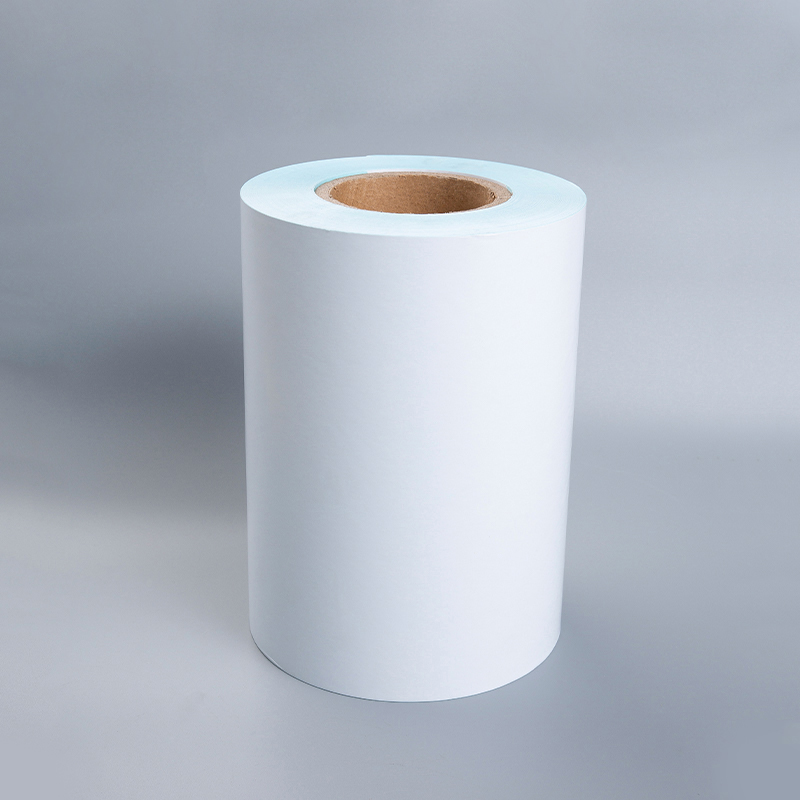
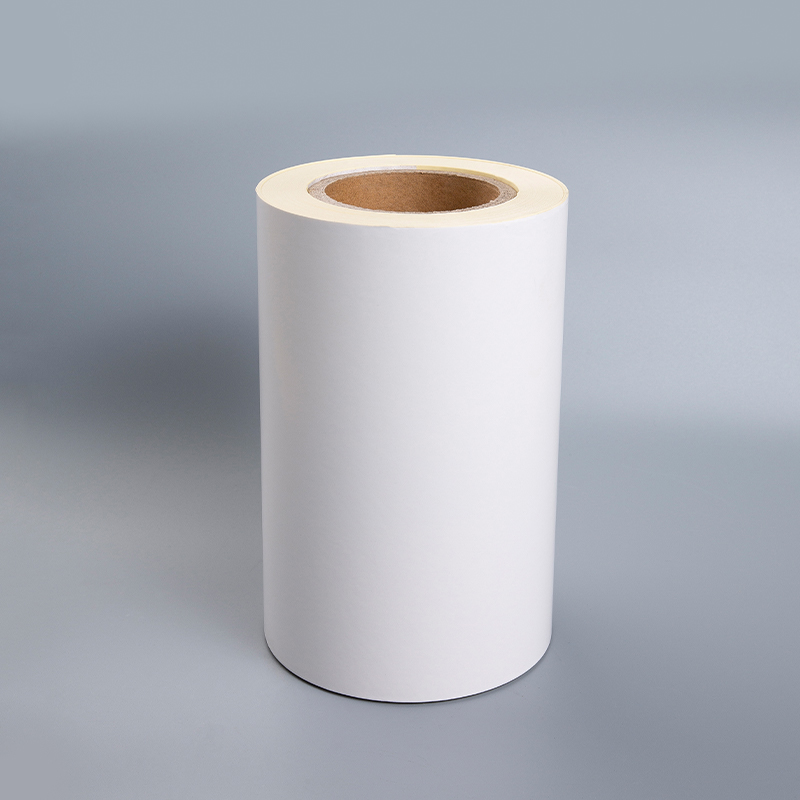
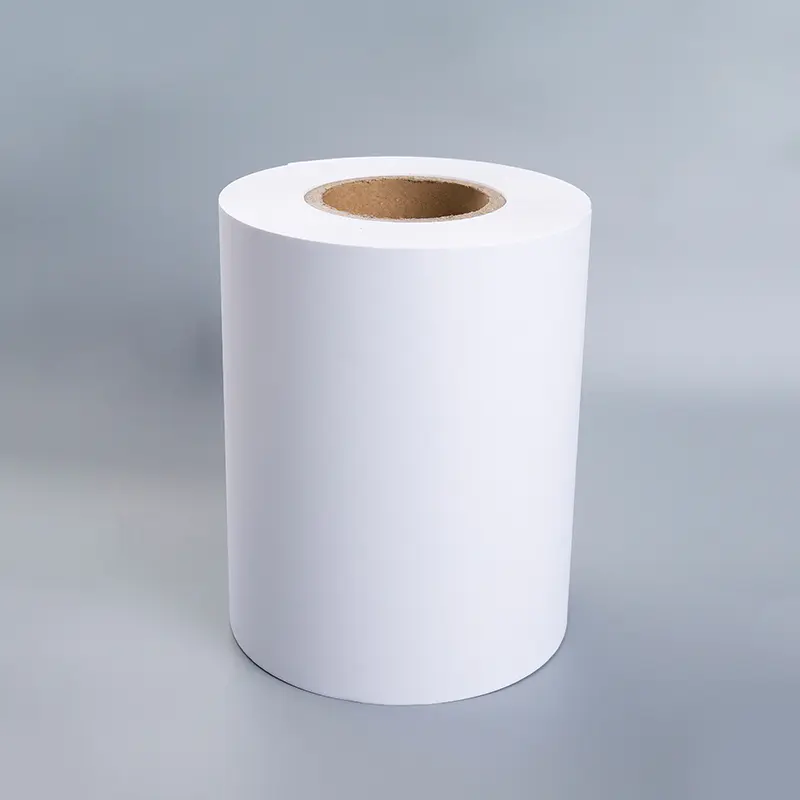
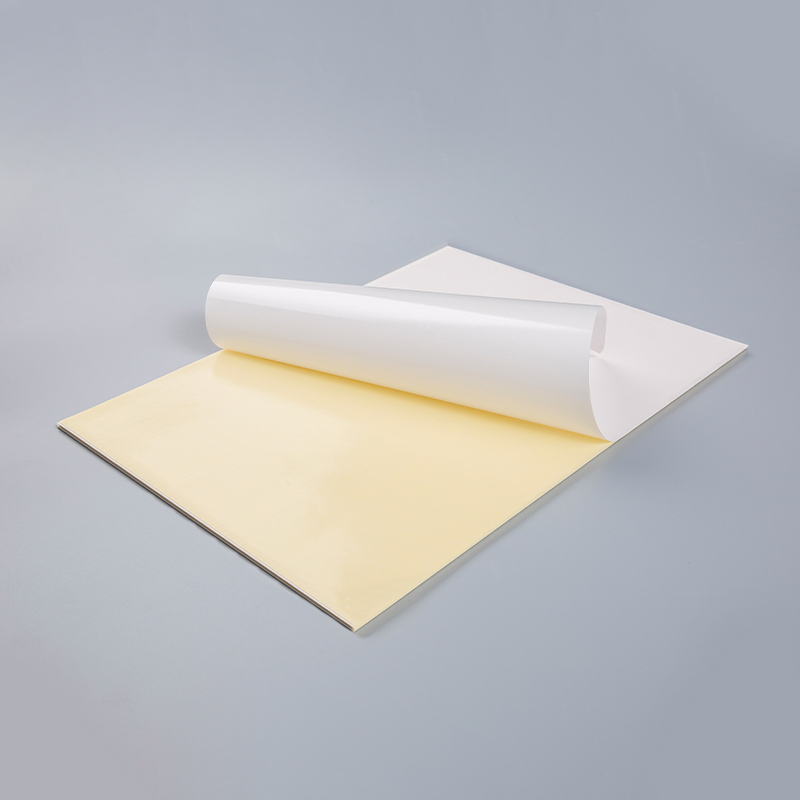
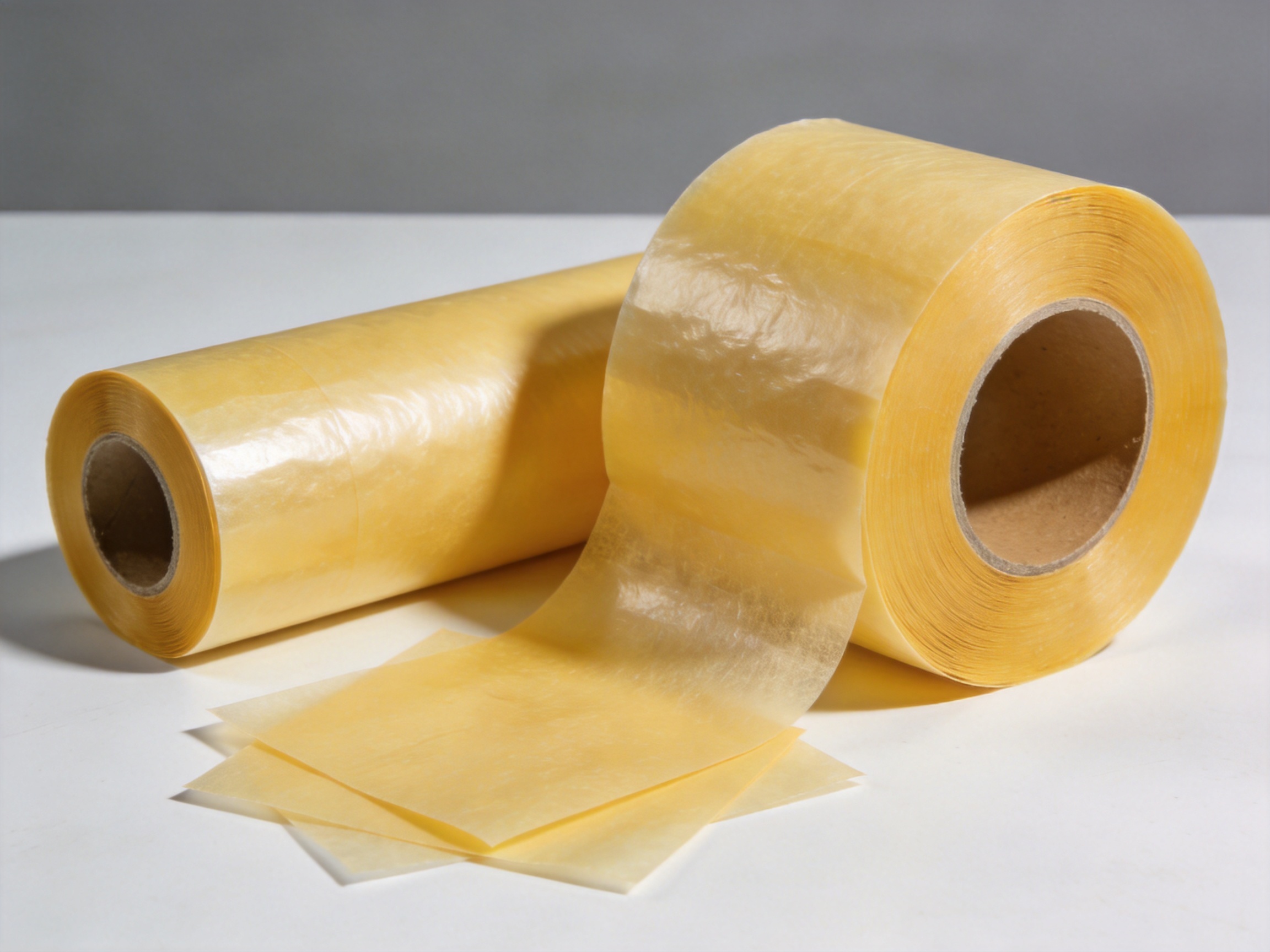
عربىYellow glassine paper is a specialized release base material designed for self-adhesive labels, tapes, barcode labels, double-sided adhesive products, and demanding industrial converting applications. With a dense fiber structure, smooth surface, controlled thickness, and stable dimensional performance, it supports accurate die-cutting, clean release, efficient lamination, and consistent high-speed labeling. In modern packaging and labeling production, a release liner is not merely a temporary backing; it is a functional engineering layer that affects adhesive coating quality, label appearance, converting speed, waste reduction, and final application performance.
This article introduces yellow glassine paper as a high-performance material for label and tape production, explains its technical advantages, compares it with common alternatives, and presents the manufacturing strengths behind consistent quality. It also highlights available specifications, packaging options, typical applications, and the value of working with a producer that integrates coating, laminating, slitting, cutting, testing, research, customization, and after-sales service.
Content
- 1 Understanding Yellow Glassine Paper
- 2 Why Yellow Glassine Paper Matters in Self-Adhesive Products
- 3 Key Product Specifications
- 4 Core Advantages Over Ordinary Release Base Materials
- 5 Applications in Label and Packaging Industries
- 6 Advantages in Rotary and Flatbed Die-Cutting
- 7 Comparison With Alternative Liner Materials
- 8 Manufacturing Strength Behind Consistent Quality
- 9 Customization and OEM or ODM Support
- 10 Packaging and Delivery for Roll and Sheet Materials
- 11 Sustainability and Responsible Material Development
- 12 How Yellow Glassine Paper Improves Total Production Value
- 13 Quality Factors Buyers Should Consider
- 14 Why Integrated Production Creates Competitive Advantage
- 15 International Supply and Market Responsiveness
- 16 Practical Use Scenarios
- 17 Q&A Section
- 17.1 What is yellow glassine paper mainly used for?
- 17.2 Why is glassine paper preferred for release liner applications?
- 17.3 What basis weights are available?
- 17.4 Can the material be supplied in rolls and sheets?
- 17.5 Is yellow glassine paper suitable for rotary die-cutting?
- 17.6 What advantages does the yellow color provide?
- 17.7 How does the product help high-speed automatic labeling?
- 17.8 What packaging options are available?
- 17.9 Can the product be customized?
- 17.10 Why is supplier manufacturing capability important?
- 18 Conclusion
- 19 References
Understanding Yellow Glassine Paper
Glassine paper is a highly refined, dense, smooth, and often translucent paper produced through special papermaking and finishing processes. Compared with ordinary paper, glassine has a tighter fiber structure and a more uniform surface, making it suitable for silicone coating and release liner applications. When used as yellow glassine paper, the material provides the functional performance of glassine while offering a distinctive yellow appearance that can help with identification, production management, and product differentiation.
In the self-adhesive label industry, glassine paper is commonly used as a base for release liners. A release liner is coated with silicone or other release chemistry so that adhesive labels can be carried, protected, converted, and later peeled away cleanly. The release liner must remain stable during adhesive coating, printing, die-cutting, matrix stripping, sheet cutting, roll rewinding, transportation, storage, and final dispensing. Yellow glassine paper is valued because it can combine smoothness, strength, dimensional stability, and reliable runnability.
The product discussed here is available in multiple basis weights, including 50 g, 60 g, 80 g, 100 g, and 120 g options. This range allows converters and brand owners to select the most appropriate liner thickness and stiffness for their process. Lighter grades may support cost-sensitive or flexible label structures, while heavier grades can improve handling, stiffness, and stability for demanding die-cutting or sheet applications.
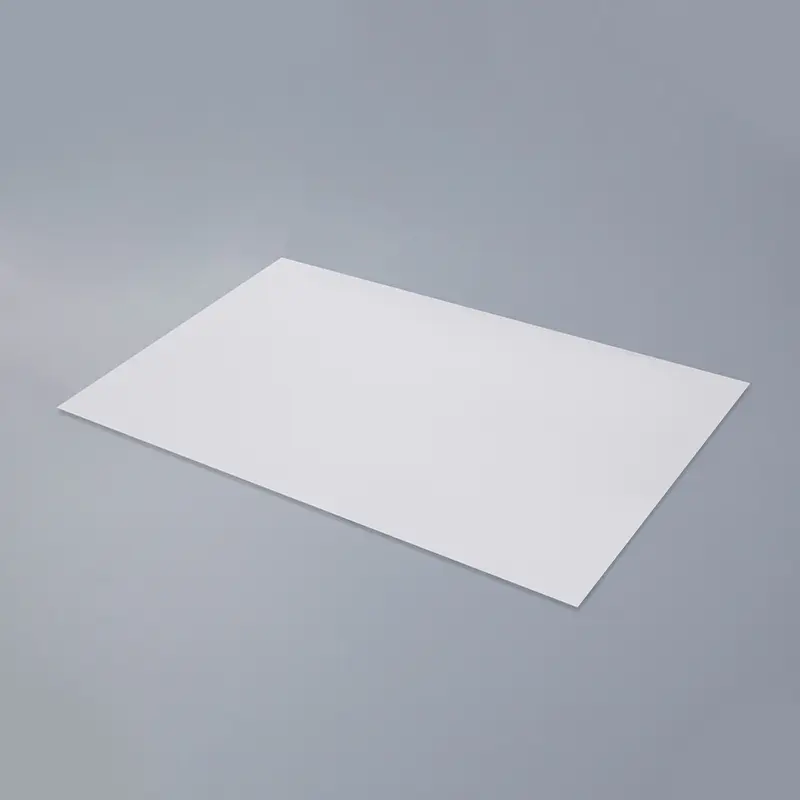
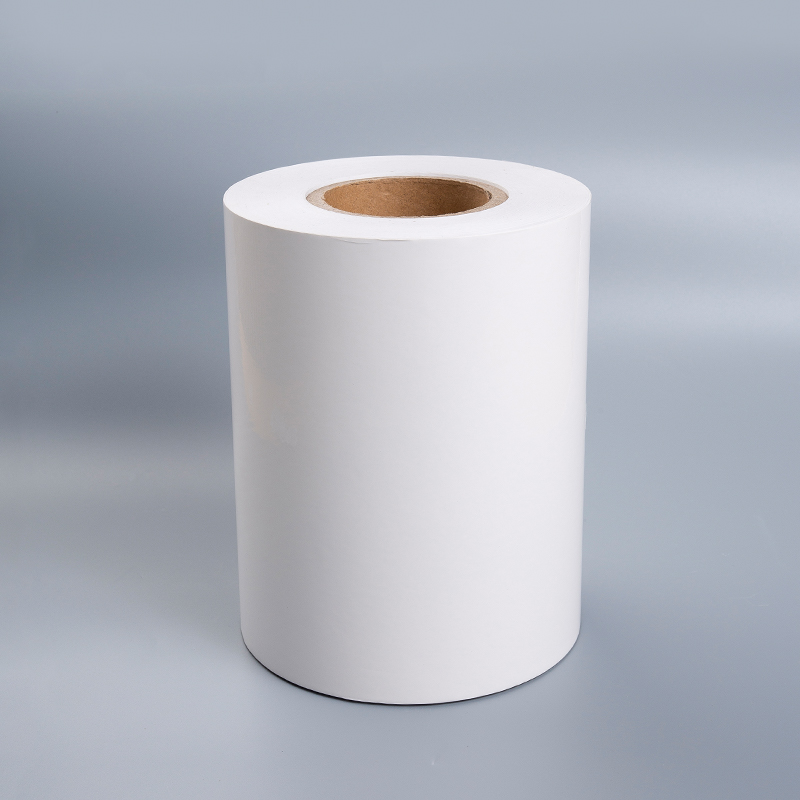
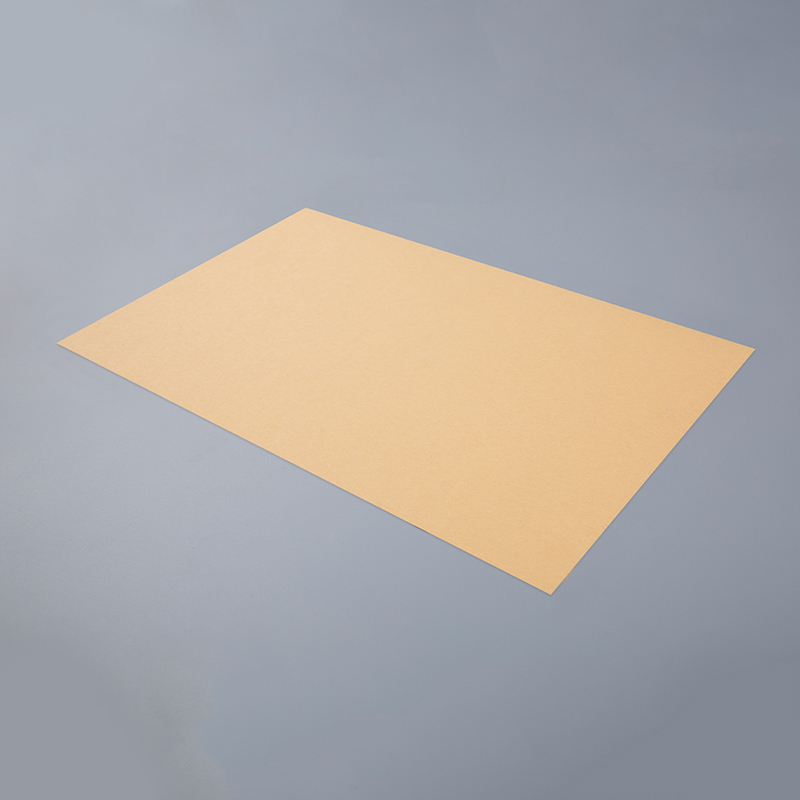
The material is supplied in jumbo roll widths such as 1000 mm, 1020 mm, 1080 mm, and 1530 mm. Sheet sizes may include A4, A3, 20 x 30, 21 x 30, 24 x 36, 50 cm x 70 cm, and 70 cm x 100 cm, with customization available. This flexibility is important because label and tape manufacturers often need liner materials compatible with their coating lines, printing machines, die-cutting equipment, and packaging formats.
Why Yellow Glassine Paper Matters in Self-Adhesive Products
In self-adhesive materials, the face stock, adhesive, and release liner work as one system. The face stock delivers visual and functional performance; the adhesive determines bonding; and the release liner protects the adhesive while enabling converting and dispensing. If the liner fails, the whole product may suffer from wrinkles, poor die-cutting, unstable release, adhesive transfer, label lifting, web breaks, dust contamination, or inefficient labeling.
Yellow glassine paper is important because it provides a stable foundation for release coating and converting. Its smooth surface supports even silicone coating, which is essential for predictable release force. Its dense structure helps reduce excessive adhesive penetration and supports cleaner die-cutting edges. Its strength contributes to web stability during rotary die-cutting, flatbed die-cutting, slitting, sheeting, and high-speed automatic labeling.
For barcode labels, yellow glassine paper helps support accurate label positioning and clean dispensing. Barcode labels are often used in logistics, retail, medicine, warehouse management, food packaging, and industrial tracking. These labels must feed smoothly through printers and applicators. A stable release liner reduces downtime and helps keep labeling systems running continuously.
For tapes and sticky industrial products, the liner must withstand unwinding, slitting, rewinding, punching, and sometimes high tension. Double-sided tape in particular depends heavily on release liner quality because both sides of the adhesive system must be protected until use. A reliable glassine liner improves storage stability, handling convenience, and application efficiency.
Key Product Specifications
The following table summarizes the main specification options and their practical meaning for buyers and converters.
Item |
Available Options |
Practical Value |
Material |
Glassine paper |
Dense, smooth, and suitable for silicone release coating and self-adhesive label production. |
Basis Weight |
50 g, 60 g, 80 g, 100 g, and 120 g options |
Supports different stiffness, converting, dispensing, and cost requirements. |
Color |
Yellow, with white and yellow options available |
Allows visual distinction, product identification, and flexible selection for different label structures. |
Jumbo Roll Width |
1000 mm, 1020 mm, 1080 mm, and 1530 mm |
Compatible with common coating, laminating, slitting, and converting equipment. |
Sheet Sizes |
A4, A3, 20 x 30, 21 x 30, 24 x 36, 50 cm x 70 cm, 70 cm x 100 cm, customized sizes |
Suitable for sheet-fed production, packaging, sampling, and special converting needs. |
Applications |
Barcode labels, self-adhesive labels, tapes, double-sided tapes, industrial sticky products |
Serves label, packaging, food, medicine, logistics, retail, and industrial sectors. |
Converting Suitability |
Rotary die-cutting and flatbed die-cutting |
Supports efficient production, accurate shapes, and stable matrix stripping. |
Core Advantages Over Ordinary Release Base Materials
Yellow glassine paper has several advantages over ordinary paper liners, lower-density backing papers, and inconsistent release base materials. These advantages become especially valuable when production speeds increase, label shapes become more complex, or quality expectations become stricter.
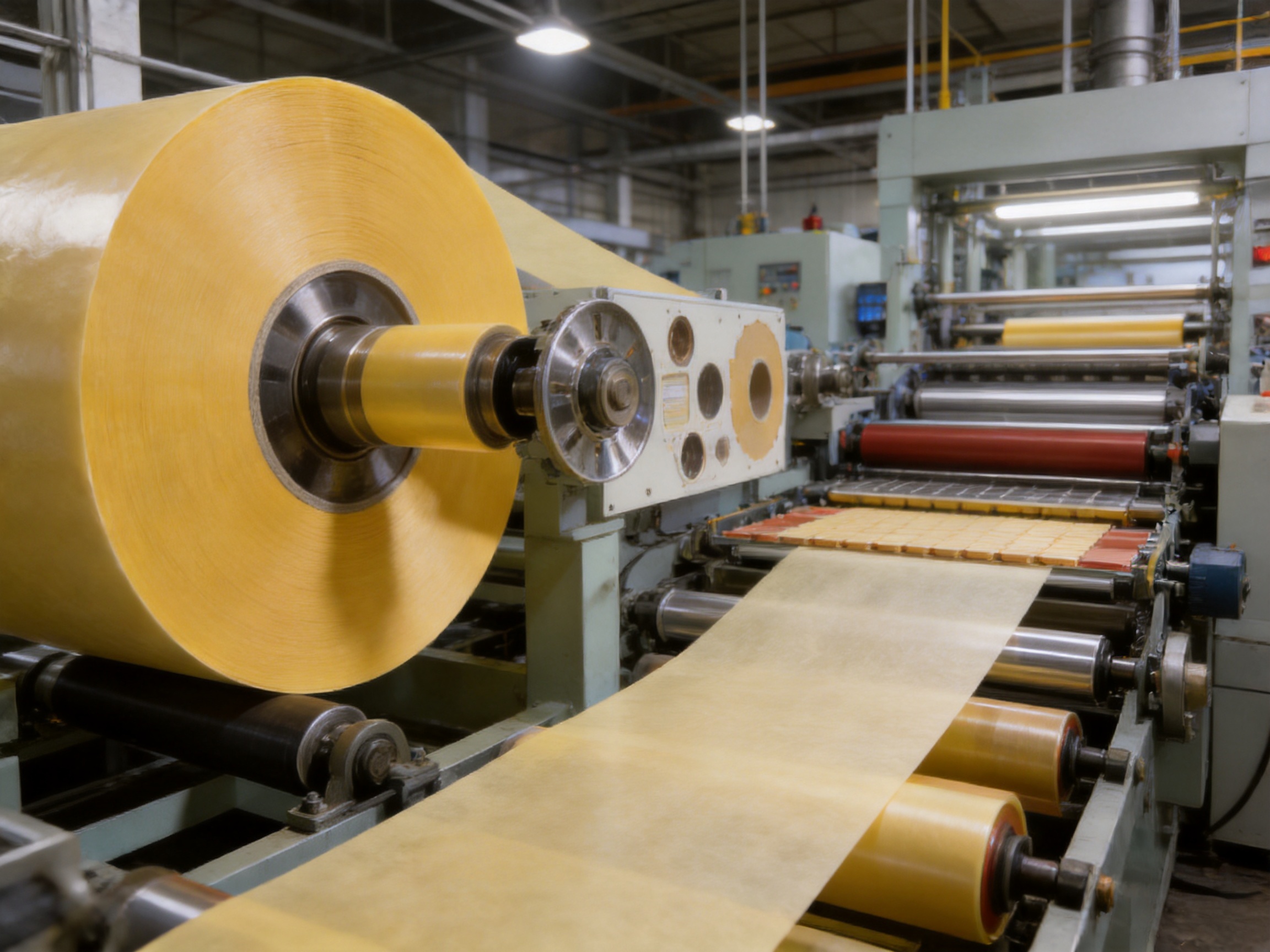
High Surface Smoothness
A smooth surface is one of the most important characteristics of glassine paper. Smoothness helps silicone or release coating spread evenly and reduces local variations that may cause uneven release. In label converting, uneven release can lead to poor peeling, missed labels, web tension instability, or applicator errors. A smoother liner also supports a cleaner adhesive surface, which is important for labels used on food packaging, medicine packaging, retail products, and logistics systems.
Dense Fiber Structure
Glassine paper is known for its compact fiber structure. This density helps reduce porosity and supports controlled coating behavior. Ordinary paper with a more open structure may absorb coating chemicals unevenly, resulting in inconsistent release force or higher coating consumption. The dense surface of glassine can help improve coating efficiency and produce a more reliable release interface.
Stable Performance During Die-Cutting
Die-cutting is one of the most demanding stages in label production. The die must cut through the face stock and adhesive without cutting too deeply into the liner. If the liner is too weak, too inconsistent, or too sensitive to pressure, the die may damage it, causing breaks or poor matrix stripping. Yellow glassine paper is especially suitable for rotary and flatbed die-cutting because it provides a stable backing for accurate cutting and reliable waste removal.
Good Runnability for High-Speed Labeling
High-speed automatic labeling requires liners that unwind smoothly, maintain tension, release labels predictably, and resist tearing during rapid acceleration and stopping. Yellow glassine paper is widely used in high-speed automatic labeling because it offers balanced strength and release performance. In practical production, better runnability means fewer machine stops, less waste, improved output, and more predictable delivery schedules.
Useful Color Identification
The yellow color provides more than visual appeal. It can help factories distinguish liner types, product batches, adhesive systems, or customer-specific materials. In busy production environments, easy visual recognition reduces the risk of material mix-ups. For some customers, yellow glassine also gives the finished roll or sheet a recognizable appearance that supports internal quality control and warehouse management.
Applications in Label and Packaging Industries
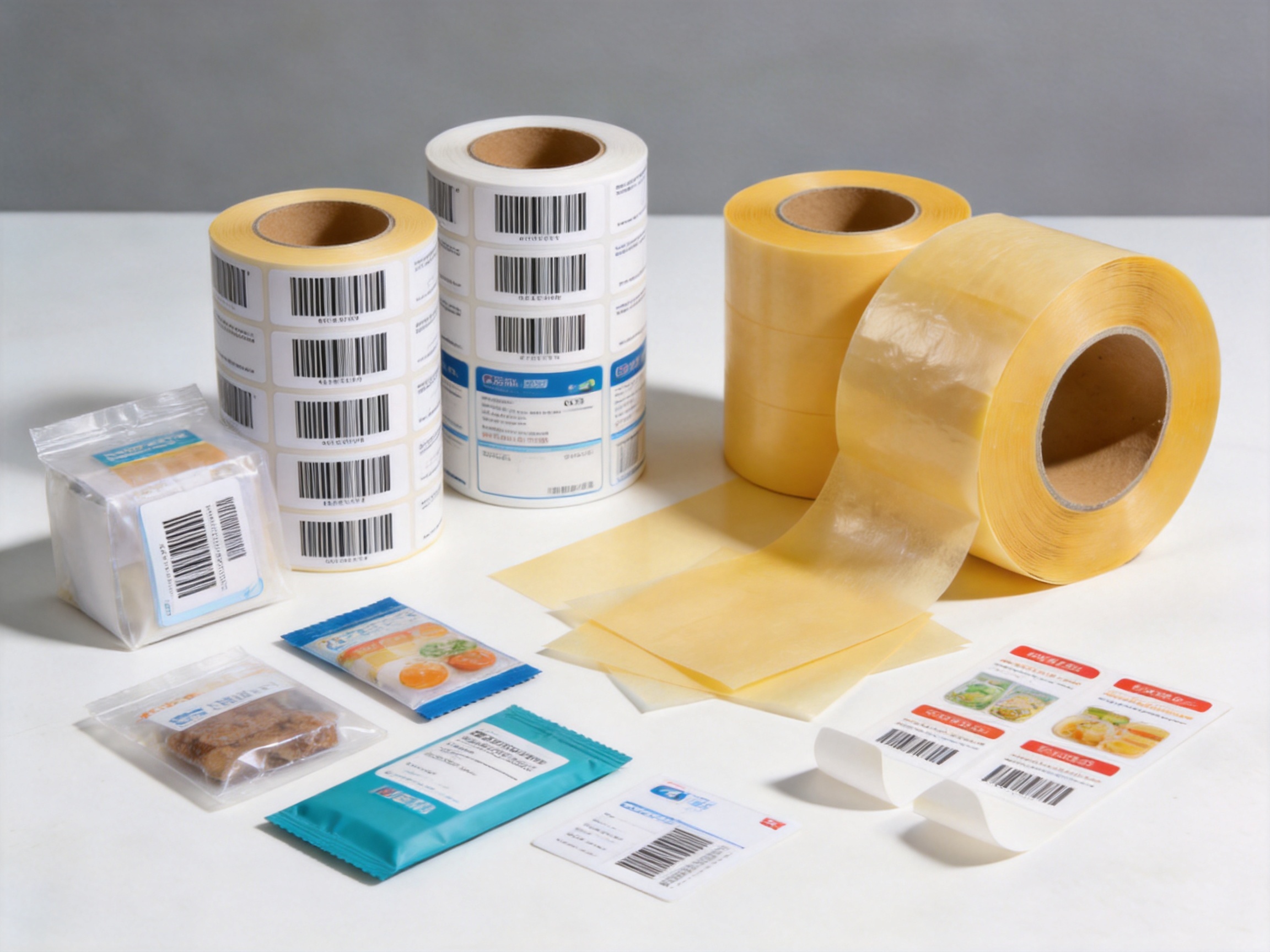
Yellow glassine paper is widely used in food, medicine, packaging, industrial labeling, barcode printing, tape production, and release applications. Its versatility comes from its ability to support many different adhesive constructions and converting methods.
Barcode Labels
Barcode labels demand precision. They must feed through printers, scanners, dispensers, and applicators without curling, sticking, or misalignment. The release liner affects label dispensing performance, especially when labels are applied automatically in warehouses, supermarkets, pharmaceutical production, and logistics centers. Yellow glassine paper provides a clean and stable backing that supports efficient printing and dispensing.
Self-Adhesive Labels
Self-adhesive labels are used on bottles, boxes, bags, cartons, medical containers, retail products, and industrial components. During production, the liner carries the label through printing, coating, lamination, die-cutting, stripping, slitting, inspection, and rewinding. A high-quality glassine liner can improve label flatness, reduce converting defects, and help maintain accurate roll tension.
Special Tapes and Double-Sided Tapes
Double-sided tape production places high requirements on release liners because the adhesive must be protected from contamination and premature bonding. Yellow glassine paper can be used as a release base for tapes that require controlled peeling, stable roll formation, and efficient slitting. It is suitable for industrial tapes, mounting tapes, packaging tapes, and special adhesive constructions.
Food Packaging
Labels for food packaging often require clean appearance, reliable adhesion, and efficient automatic application. Release liner stability is important because food packaging lines often operate at high speed. A liner that breaks, tears, or releases inconsistently can interrupt production and create material waste. Yellow glassine paper supports smooth processing and helps label converters provide reliable materials for food packaging manufacturers.
Medicine and Healthcare Packaging
Medicine packaging labels must perform consistently because they often carry critical information such as product names, batch codes, dosage instructions, warnings, and traceability data. A stable liner helps ensure accurate label application and clear presentation. Yellow glassine paper is suitable for medical and pharmaceutical packaging applications where clean converting, stable release, and dependable dispensing are important.
Industrial Sticky Products
Industrial adhesive products may include protective films, component labels, warning labels, electrical labels, sealing materials, foam tapes, and bonding products. These products may require special release behavior and liner strength. Glassine paper can be customized in weight and size to match the requirements of industrial converters.
Advantages in Rotary and Flatbed Die-Cutting
Rotary die-cutting is typically used for high-speed roll-to-roll production. It requires a release liner that can withstand continuous web tension and repeated cutting pressure. If the liner thickness or strength varies too much, the die-cutting depth becomes difficult to control. Yellow glassine paper offers uniform structure and stable surface quality, helping converters maintain consistent die-cutting performance.
Flatbed die-cutting is often used for sheets, special shapes, or shorter production runs. It requires accurate pressure control and a liner that can support clean cuts without tearing. The availability of customized sheet sizes makes yellow glassine paper practical for converters that need sheet-fed processing or special-format adhesive materials.
In both processes, matrix stripping is a critical step. Matrix stripping removes the waste material around labels after die-cutting. If the release liner has unstable release or poor strength, the matrix may break, labels may lift, or waste may not separate cleanly. Yellow glassine paper supports smoother waste removal and helps maintain productivity.
Comparison With Alternative Liner Materials
Release liners can be produced from various materials, including supercalendered kraft paper, polyethylene-coated kraft paper, clay-coated paper, film liners, and glassine paper. Each has advantages, but yellow glassine paper offers a strong balance of smoothness, density, converting performance, and cost efficiency.
Compared with ordinary kraft paper, glassine paper generally provides a smoother and denser surface. This supports more uniform release coating and better die-cutting control. Ordinary kraft paper may be sufficient for simple applications, but it may not provide the same level of release consistency and converting precision needed for high-speed labels and special tapes.
Compared with film liners, glassine paper can offer a paper-based alternative with excellent converting performance and good dimensional behavior for many applications. Film liners may provide excellent moisture resistance and transparency, but they can be more expensive or less suitable for certain paper-based label systems. Yellow glassine paper gives converters a practical balance between performance and economy.
Compared with inconsistent low-cost liners, high-quality yellow glassine paper helps reduce hidden production costs. A cheaper liner may seem attractive at purchase, but if it causes web breaks, adhesive defects, downtime, material waste, or customer complaints, the real cost can be higher. Consistent glassine liner quality contributes to stable production and better total value.
Manufacturing Strength Behind Consistent Quality
High-quality yellow glassine paper for release applications requires more than raw material selection. It depends on integrated production capability, process control, testing, and technical experience. Suzhou Piaozhihua Composite Material Technology Co., Ltd. specializes in high-grade self-adhesive label materials and integrates research and development, production, sales, and after-sales service. This integrated structure supports consistent product quality and responsive customer support.
The company has a full range of production lines, including gluing, laminating, and cutting. These processes are essential for self-adhesive label material production because the final product must combine the face material, adhesive, and liner into a stable construction. For release liner applications, precise process control affects coating uniformity, web tension, roll formation, and finished material reliability.
With an annual production capacity of more than 280 million square meters, the company can support large-volume orders and long-term supply programs. Large production capacity is important for customers in packaging, logistics, food, medicine, and industrial sectors because they often require stable supply, consistent batches, and rapid response to market demand.
The company is recognized among leading self-adhesive product producers in China and has developed domestic and international market coverage. Sales networks and customer support channels help ensure communication, order coordination, and after-sales responsiveness. For international buyers, a stable manufacturer with export experience can simplify procurement and reduce uncertainty.
Gluing Capability
Gluing is a critical process in self-adhesive material manufacturing. Adhesive must be applied evenly and at controlled coating weight. If the adhesive layer is uneven, labels may show poor bonding, edge lifting, adhesive ooze, or inconsistent tack. A manufacturer with mature gluing capability can offer more stable self-adhesive constructions and better compatibility with release liners.
Laminating Capability
Laminating joins the face material, adhesive layer, and release liner into a complete self-adhesive structure. During lamination, tension, temperature, pressure, and alignment must be carefully controlled. Poor lamination can cause wrinkles, bubbles, curl, or unstable roll shape. Advanced laminating capability helps ensure that yellow glassine paper performs effectively as part of the final label or tape material.
Cutting and Slitting Capability
Cutting and slitting convert jumbo rolls into customer-specified roll widths or sheets. Accurate slitting reduces edge defects, dust, telescoping, and roll instability. Sheet cutting must maintain dimensional accuracy and clean edges. The availability of both roll and sheet formats allows customers to choose materials that match their production line.
Testing and Inspection
A dedicated testing laboratory and advanced inspection equipment are important strengths. Quality control can include checking basis weight, thickness, moisture, smoothness, tensile strength, release performance, coating uniformity, roll appearance, and dimensional accuracy. Regular testing helps detect variations before materials reach customers. This reduces risk and supports dependable converting performance.
Customization and OEM or ODM Support
Many customers do not need only a standard liner; they need a material that fits a specific adhesive, label face stock, die-cutting process, printer type, storage environment, or dispensing system. Customization is therefore a major advantage. Yellow glassine paper can be supplied in different grammages, widths, sheet sizes, and formats to meet varied customer requirements.
With more than 20 years of OEM manufacturing experience, the producer can develop solutions based on customer drawings, samples, technical targets, and application environments. OEM and ODM capabilities are especially valuable for label converters, tape manufacturers, packaging suppliers, and brand owners that need differentiated products or consistent private-label supply.
The professional research and development team supports continued innovation and product improvement. Multiple patents and technical development activities reflect a long-term commitment to material performance. For customers, this means access to technical advice, product matching, and potential development of customized constructions.
Customization may involve choosing the correct basis weight for dispensing stiffness, selecting roll width for machine compatibility, adjusting sheet size for packaging or converting, or matching release performance to an adhesive. In practice, successful customization can reduce waste, improve processing speed, and enhance the final user experience.
Packaging and Delivery for Roll and Sheet Materials
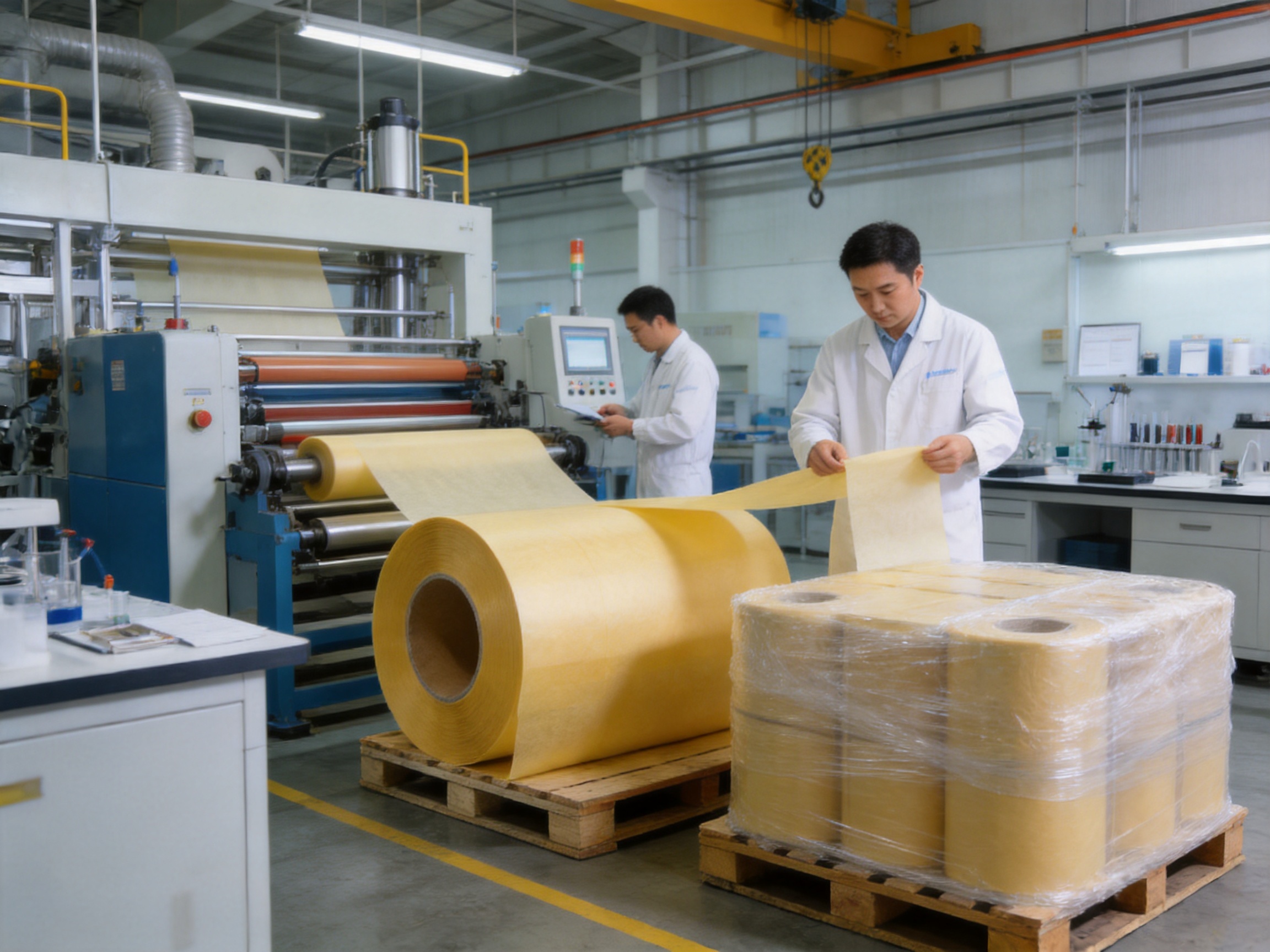
Reliable packaging is essential for release liner materials because paper can be affected by moisture, compression, edge impact, and poor handling. Sea-transit-worthy poly-wood pallet packing and carton packing are available for rolls or sheets from stock. This type of packaging supports export transportation and helps protect materials during long-distance shipping.
For sheets, packaging may include 100 sheets per ream, with reams packed in strong PE-coated kraft paper wrappers. The PE-coated wrapper helps protect the paper from moisture and contamination. Strong pallets wrapped with stretch film and fastened with plastic belts provide additional stability during transportation and storage.
Roll packaging must protect roll edges, maintain roundness, and prevent contamination. Good packaging reduces the risk of edge damage that could cause web breaks during converting. For customers receiving jumbo rolls or customized rolls, proper packing is an important part of product quality.
Sustainability and Responsible Material Development
The modern label industry is increasingly focused on sustainability, resource efficiency, and responsible manufacturing. Release liners are a significant part of self-adhesive material systems, so their quality and process efficiency influence waste generation. A liner that runs smoothly and reduces rejected material contributes to more sustainable production.
The company emphasizes sustainable development and environmental protection, developing eco-friendly solutions involving face materials, adhesives, and backing papers. This approach supports customers that need to meet sustainability goals, improve production efficiency, or develop more environmentally responsible packaging and labeling systems.
Quality, integrity, innovation, win-win cooperation, and responsibility are important values in long-term manufacturing. For buyers, these values are meaningful when reflected in consistent product supply, transparent communication, reliable service, and continued material improvement. Yellow glassine paper is part of a broader material platform designed to support practical performance and responsible production.
How Yellow Glassine Paper Improves Total Production Value
The value of yellow glassine paper is not limited to its purchase price. It should be evaluated according to total production performance. A reliable liner helps improve coating stability, printing quality, die-cutting accuracy, matrix stripping, roll rewinding, storage, shipping, and final dispensing. Each of these steps affects cost and customer satisfaction.
In a label converting plant, downtime is expensive. If a liner breaks during high-speed die-cutting, the operator must stop the machine, remove waste, rethread the web, adjust tension, and inspect the product. This reduces output and increases labor cost. A stable glassine liner can reduce these interruptions.
Waste reduction is another major benefit. Inconsistent release liners can cause defective labels, adhesive contamination, poor edge quality, or unusable rolls. Even small defect percentages can become costly in large production runs. Consistent yellow glassine paper supports better yield and more predictable quality.
Customer satisfaction also depends on liner performance. A label may appear acceptable when shipped, but if it does not dispense smoothly at the customer’s packaging line, complaints may arise. By using a reliable release liner, converters can supply products that perform well not only in their own factory but also in the end user’s application process.
Quality Factors Buyers Should Consider
When selecting yellow glassine paper, buyers should consider several technical and commercial factors. The correct choice depends on application, converting process, adhesive type, label size, storage conditions, and equipment requirements.
Basis Weight and Stiffness
Basis weight affects thickness, stiffness, and handling. A lighter liner may reduce material usage and improve flexibility, while a heavier liner may provide better stiffness, easier handling, or improved resistance to damage. Buyers should test the selected grade under actual production conditions before large-scale use.
Release Compatibility
When yellow glassine paper is used as a silicone release base, release performance must match the adhesive and application. Too high a release force can make labels difficult to dispense; too low a release force can cause premature label lifting. Stable release compatibility is especially important for automatic labeling and double-sided tape production.
Dimensional Stability
Paper can respond to humidity and tension. A well-manufactured glassine paper should maintain stable dimensions under normal converting and storage conditions. Dimensional stability helps reduce curling, wrinkling, misregistration, and feeding problems.
Roll Quality
Rolls should be wound evenly, with clean edges and appropriate tension. Poor roll formation can lead to telescoping, wrinkles, edge cracks, or web tracking problems. Buyers should consider not only the paper itself but also slitting and packaging quality.
Supplier Capability
A supplier with integrated manufacturing, testing, customization, and after-sales service can provide better long-term support than a simple trading source. Technical communication, sample testing, production consistency, and problem-solving capability are all important in self-adhesive material procurement.
Why Integrated Production Creates Competitive Advantage
Integrated production means the manufacturer can coordinate multiple steps in the value chain. Instead of depending entirely on external processors for coating, laminating, cutting, and testing, an integrated company can control quality more directly. This reduces variability and improves response speed when customers need special specifications or troubleshooting.
For yellow glassine paper and self-adhesive material applications, integration supports better matching between liner, adhesive, and face material. If a customer reports a release issue, the technical team can evaluate the whole structure rather than only one component. This systems-level understanding is a major advantage in the label industry.
Advanced inspection equipment and an internal laboratory further strengthen this advantage. Testing allows the manufacturer to verify product properties before shipment and continuously improve process parameters. In high-volume supply programs, batch consistency is essential. A supplier that combines capacity, inspection, and technical experience can offer more dependable materials.
International Supply and Market Responsiveness
Yellow glassine paper and self-adhesive materials are used globally in packaging, logistics, retail, food, medicine, and industrial production. International customers need stable quality, clear communication, reliable packaging, and timely delivery. The company has built marketing networks in countries and regions across Asia, Europe, the Americas, Africa, and the Middle East, supporting long-term cooperation with customers in diverse markets.
Export experience is important because international shipments require suitable packaging, documentation, specification control, and communication across time zones. Sea-transit-worthy pallet packing and clear product specification options help reduce procurement risk for overseas customers.
Market responsiveness also matters. Label trends change quickly as brands update packaging, logistics systems expand, and regulatory requirements evolve. A manufacturer with R&D strength and production flexibility can help customers respond to new requirements, such as sustainable labeling, special adhesives, customized release behavior, or improved converting efficiency.
Practical Use Scenarios
A food packaging company may need labels that can be applied rapidly to containers on an automatic labeling line. If the release liner tears or releases inconsistently, the line stops. Yellow glassine paper helps support smooth dispensing and stable label release, reducing interruption and improving packaging efficiency.
A pharmaceutical label converter may produce small labels with high information density. These labels require accurate die-cutting and reliable matrix stripping. A stable glassine liner helps maintain registration, reduces label lifting, and supports clean roll formation for later application.
A tape manufacturer may use yellow glassine paper for double-sided adhesive products. In this case, the liner must protect the adhesive and release cleanly when the tape is applied. Consistent surface quality and controlled release behavior are essential for end user convenience.
A logistics label producer may require large-volume barcode label materials. The liner must perform well in thermal printing, dispensing, and high-speed application. Reliable yellow glassine paper helps maintain output and reduces customer complaints related to feeding or peeling.
Q&A Section
What is yellow glassine paper mainly used for?
Yellow glassine paper is mainly used as a release liner base for barcode labels, self-adhesive labels, tapes, double-sided tapes, and sticky industrial products. It is also suitable for high-speed automatic labeling and release applications in food, medicine, packaging, logistics, and industrial fields.
Why is glassine paper preferred for release liner applications?
Glassine paper is preferred because it has a dense structure, smooth surface, and stable converting performance. These properties support uniform release coating, clean die-cutting, smooth matrix stripping, and reliable label dispensing.
What basis weights are available?
Available basis weights include 50 g, 60 g, 80 g, 100 g, and 120 g. The appropriate choice depends on the required stiffness, handling performance, die-cutting process, dispensing method, and product structure.
Can the material be supplied in rolls and sheets?
Yes. Yellow glassine paper can be supplied in jumbo rolls, customized rolls, and sheet formats. Common jumbo roll widths include 1000 mm, 1020 mm, 1080 mm, and 1530 mm. Sheet sizes include A4, A3, 20 x 30, 21 x 30, 24 x 36, 50 cm x 70 cm, and 70 cm x 100 cm, with customized sizes available.
Is yellow glassine paper suitable for rotary die-cutting?
Yes. Yellow glassine paper is especially suitable for rotary die-cutting because it provides stable web performance, consistent support, and reliable release behavior. It is also suitable for flatbed die-cutting.
What advantages does the yellow color provide?
The yellow color helps with visual identification, batch distinction, warehouse management, and product differentiation. In production environments with multiple liner types, color recognition can reduce the risk of material mix-ups.
How does the product help high-speed automatic labeling?
High-speed automatic labeling requires stable unwinding, predictable release, and resistance to tearing. Yellow glassine paper supports smooth feeding and consistent label release, helping reduce downtime and improve labeling efficiency.
What packaging options are available?
Sea-transit-worthy poly-wood pallet packing and carton packing are available for rolls and sheets. Sheet products may be packed as 100 sheets per ream with strong PE-coated kraft paper wrappers, then placed on strong pallets wrapped with stretch film and fastened with plastic belts.
Can the product be customized?
Yes. Customization is available for basis weight, roll width, sheet size, and application requirements. OEM and ODM services can also be provided based on customer drawings, samples, or technical specifications.
Why is supplier manufacturing capability important?
Supplier capability affects product consistency, delivery reliability, customization, and technical support. A producer with gluing, laminating, cutting, testing, R&D, and after-sales service can provide stronger long-term value than a supplier with limited process control.
Conclusion
Yellow glassine paper is a practical and high-value material for release liner and self-adhesive label applications. Its smooth surface, dense structure, stable die-cutting performance, and suitability for high-speed automatic labeling make it a strong choice for barcode labels, tapes, double-sided tapes, food packaging, medicine packaging, and industrial adhesive products. Available in multiple basis weights, roll widths, and sheet sizes, it can be adapted to a wide range of converting needs.
Compared with ordinary liner materials, yellow glassine paper offers better support for release coating uniformity, cleaner die-cutting, more reliable matrix stripping, and smoother dispensing. These advantages can reduce downtime, lower waste, improve production efficiency, and enhance customer satisfaction. In competitive label and tape markets, such performance benefits are often more important than the initial material price alone.
The manufacturing strengths behind the product further increase its value. Integrated gluing, laminating, cutting, testing, R&D, customization, and after-sales service enable stable quality and flexible supply. With large annual capacity, advanced inspection capability, OEM and ODM experience, and a commitment to sustainable development, the producer can support customers seeking dependable self-adhesive material solutions for both domestic and international markets.
For converters and brand owners that require a release liner combining reliability, process efficiency, and customization potential, yellow glassine paper is a strong material choice. It supports the full production chain, from coating and converting to packaging and final application, making it a dependable foundation for modern self-adhesive products.
References
1. Pressure Sensitive Tape Council. Pressure Sensitive Adhesive Tape Technology and Applications.
2. FINAT. Technical Handbook for Self-Adhesive Label Materials and Converting.
3. TAPPI Press. Paper and Paperboard Characteristics, Nomenclature, and Testing Methods.
4. Donatas Satas. Handbook of Pressure Sensitive Adhesive Technology.
5. Alexander Watson Associates. Release Liners and Specialty Papers Market Studies.
6. Pira International. Label and Release Liner Technology: Materials, Converting, and End-Use Performance.