
 English
 Español
 русский
 Français
 عربى
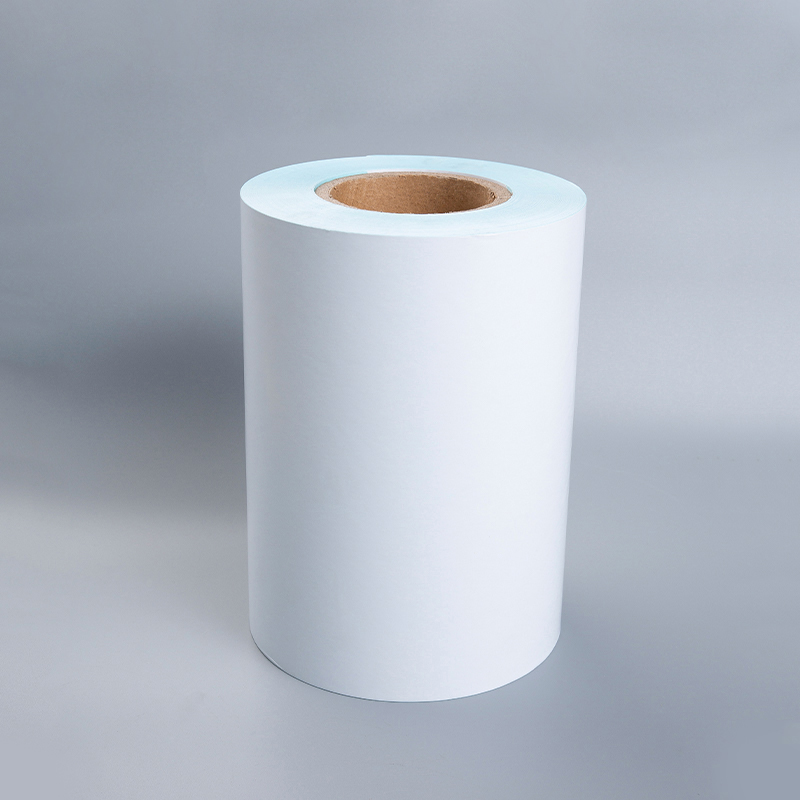
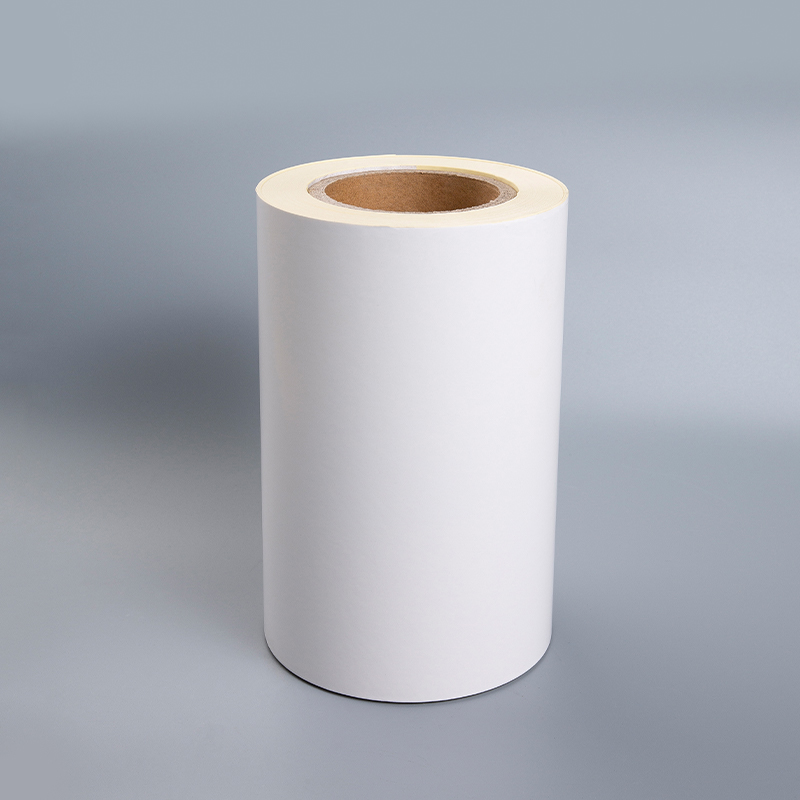
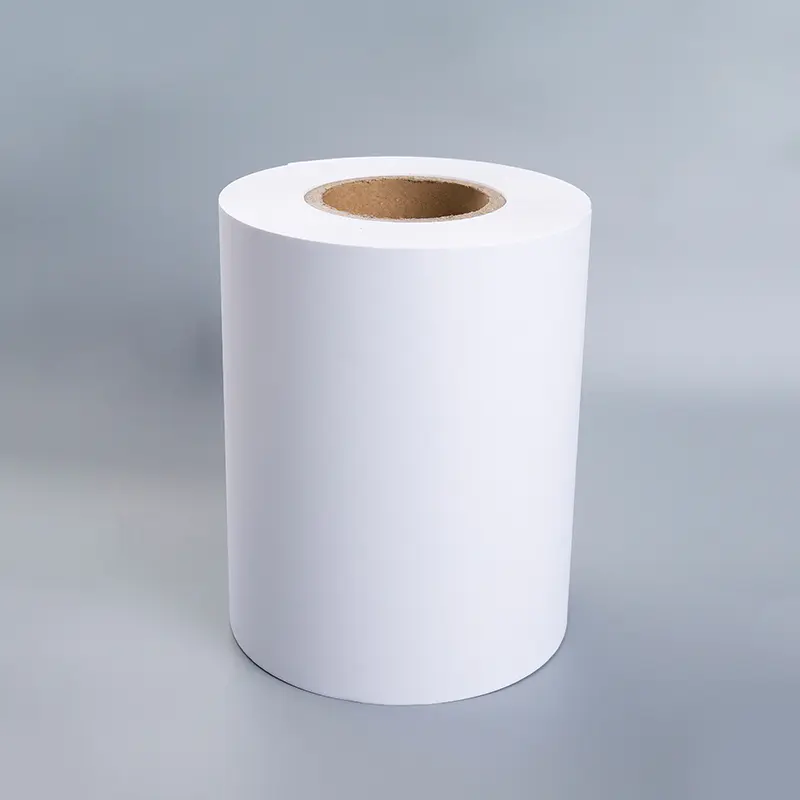
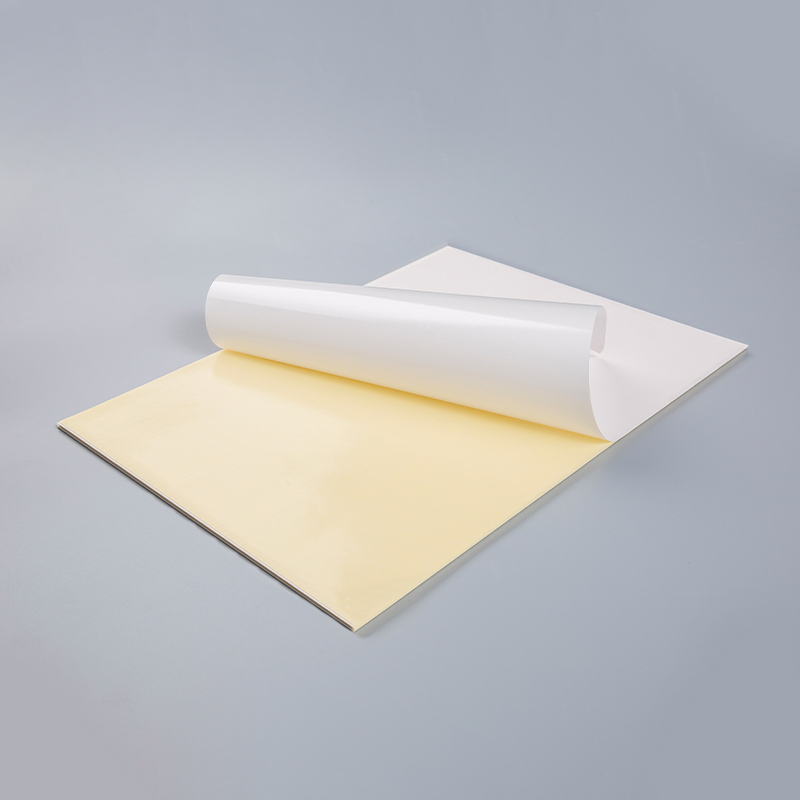
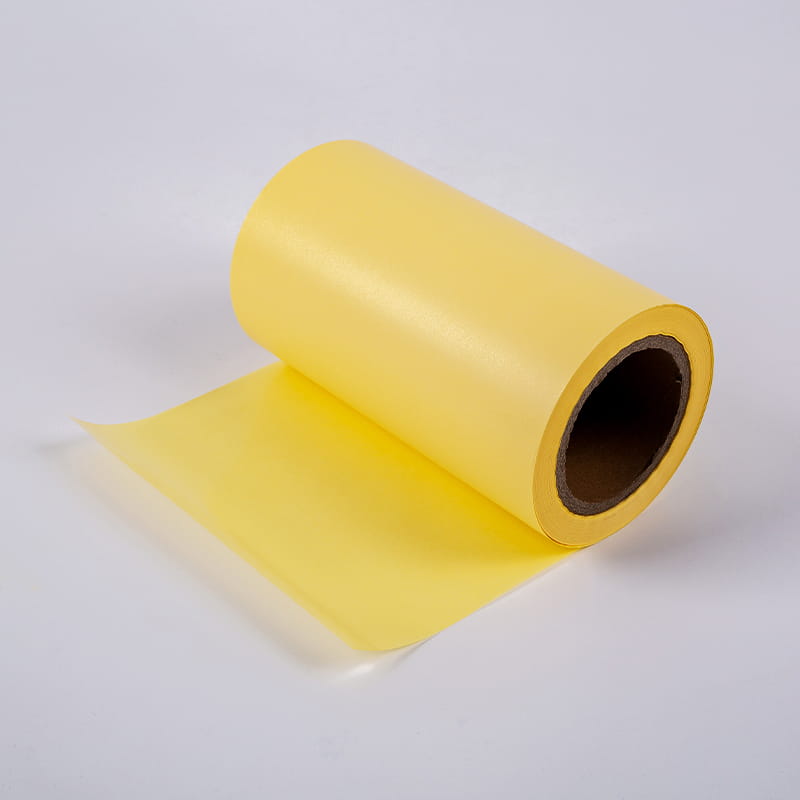
عربىYellow glassine paper is a specialized release and backing material designed for demanding label, tape, and industrial adhesive applications. With a dense, smooth, and uniform glassine base, it offers excellent dimensional stability, reliable release performance, and strong compatibility with rotary and flat die-cutting systems. For manufacturers and converters working with self-adhesive labels, bar code labels, double-sided tape, specialty tape, food packaging labels, medicine packaging labels, and high-speed automatic labeling processes, yellow glassine paper provides a practical balance of strength, smoothness, processability, and visual identification.
In modern label production, the performance of a release liner is just as important as the face material and adhesive. A liner must carry the adhesive-coated face material through coating, laminating, slitting, printing, die-cutting, matrix stripping, rewinding, storage, transportation, and final dispensing. If the liner is unstable, uneven, too weak, or inconsistent in release force, the entire self-adhesive construction may fail. Yellow glassine paper is developed to reduce these risks by offering a stable surface, controlled thickness, dependable stiffness, and clean release behavior for industrial-scale conversion.
Suzhou Piaozhihua Composite Material Technology Co., Ltd. produces yellow glassine paper and related self-adhesive label materials with integrated manufacturing capabilities covering gluing, laminating, cutting, inspection, and customization. With more than 20 years of OEM manufacturing experience, advanced production lines, a professional R&D team, and annual production capacity exceeding 280 million square meters, the company supplies practical material solutions for customers in packaging, labeling, tape, logistics, food, medicine, retail, and industrial adhesive sectors.
Content
- 1 Understanding Yellow Glassine Paper
- 2 Product Specifications and Available Options
- 3 Key Applications in Label and Adhesive Product Manufacturing
- 4 Advantages Over Ordinary Release and Backing Materials
- 4.1 Smoother Surface for Better Release Control
- 4.2 Improved Dimensional Stability
- 4.3 Excellent Compatibility with High-Speed Automatic Labeling
- 4.4 Good Strength for Die-Cutting and Matrix Stripping
- 4.5 Visual Identification and Process Control
- 4.6 Flexible Grammage Range
- 4.7 Availability in Rolls and Sheets
- 5 Manufacturing Strength Behind the Product
- 6 Quality Factors That Matter in Yellow Glassine Paper
- 7 Packaging and Delivery Reliability
- 8 Sustainability and Responsible Material Development
- 9 How Yellow Glassine Paper Supports Cost Efficiency
- 10 Comparison with Alternative Liner Materials
- 11 Customization for Different Industries
- 12 Why Supplier Capability Matters
- 13 Recommended Handling and Storage Practices
- 14 Product Value for Converters and End Users
- 15 Frequently Asked Questions
- 15.1 What is yellow glassine paper mainly used for?
- 15.2 Why is glassine paper suitable for self-adhesive labels?
- 15.3 What grammages are available?
- 15.4 Can yellow glassine paper be supplied in customized sizes?
- 15.5 Is yellow glassine paper suitable for rotary die-cutting?
- 15.6 How does yellow glassine paper help high-speed automatic labeling?
- 15.7 What packaging options are available?
- 15.8 What makes this product competitive compared with ordinary backing paper?
- 15.9 Does the manufacturer support OEM and ODM requirements?
- 15.10 How should yellow glassine paper be stored?
- 16 Conclusion
- 17 References
- 18 Product: Yellow Glassine Paper
Understanding Yellow Glassine Paper
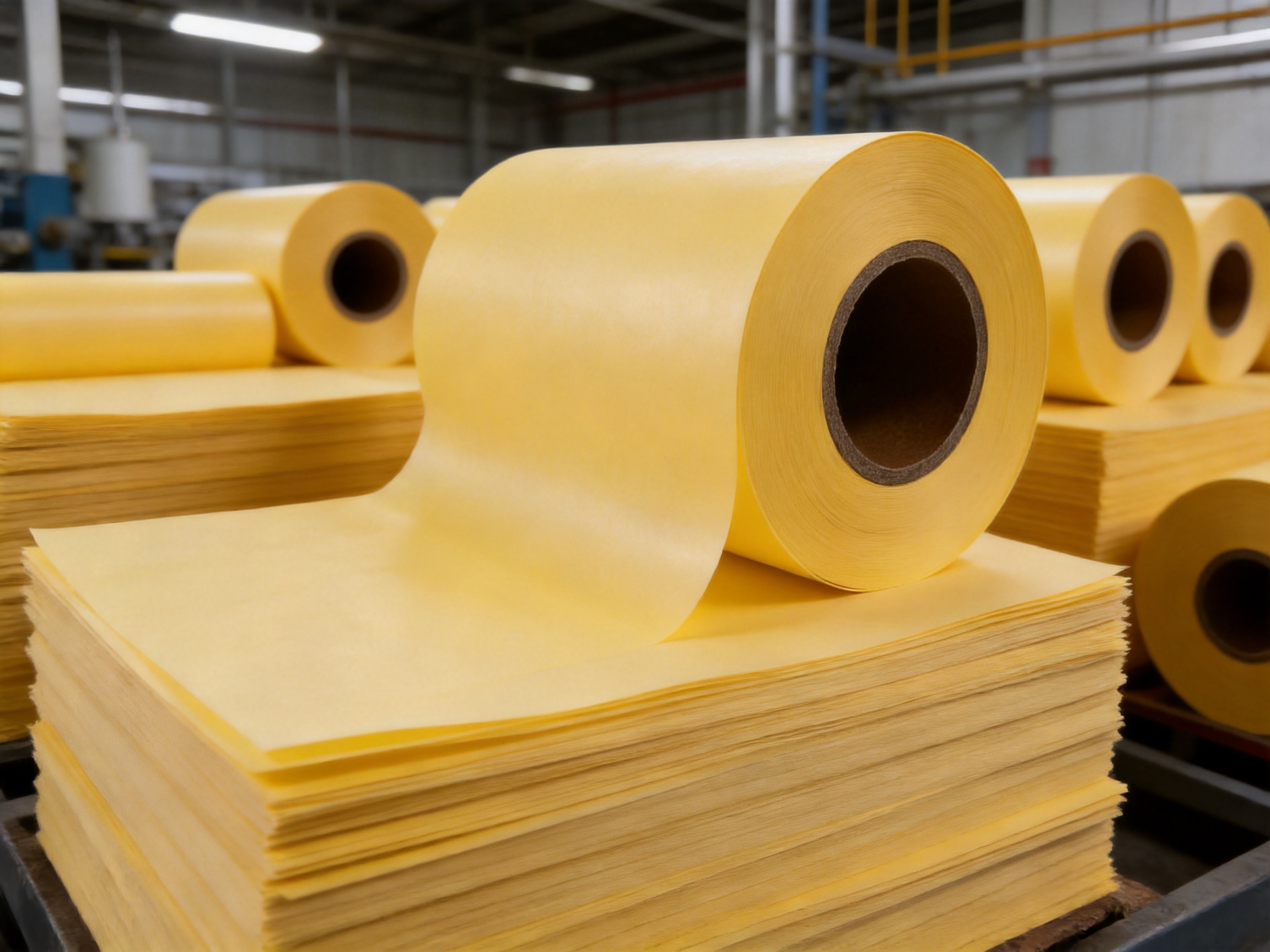
Glassine paper is a highly refined, smooth, and dense paper material. It is typically manufactured from carefully processed pulp and then calendered to create a compact sheet with a smooth surface and high resistance to grease and air penetration compared with ordinary paper. When used as a release liner, glassine paper is often coated or treated to support controlled release from pressure-sensitive adhesives. The yellow color gives the material a recognizable appearance, helping converters distinguish liner types, production batches, or end-use constructions during processing.
Yellow glassine paper is especially common in label and adhesive product manufacturing because it combines practical mechanical strength with excellent converting properties. Its surface supports stable coating and laminating, while its internal density helps reduce fiber lift, dust, and deformation. These properties are critical in self-adhesive label production, where clean contact between liner, adhesive, and face material determines final quality.
Compared with ordinary kraft backing paper or low-density liner paper, glassine paper has a smoother surface and more compact structure. This helps improve adhesive coating uniformity and reduces the risk of inconsistent release. In high-speed labeling, where labels are dispensed rapidly from a roll, release consistency is essential. A liner that releases too tightly may cause label misfeeding or machine stoppage. A liner that releases too easily may lead to premature label lifting, edge curling, or waste during transportation and storage. Yellow glassine paper is selected to achieve a more reliable balance.
Product Specifications and Available Options
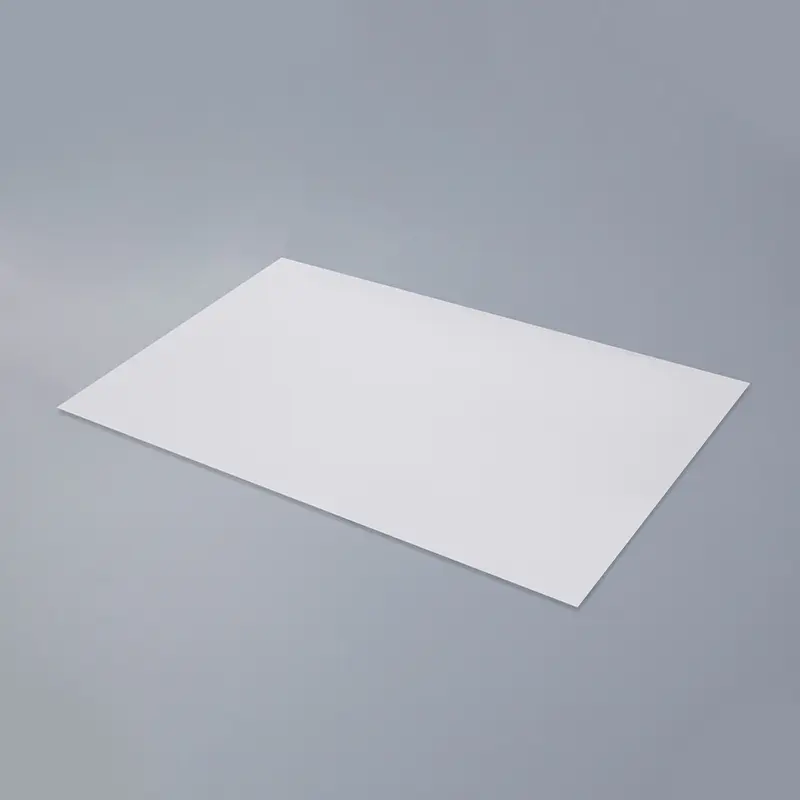
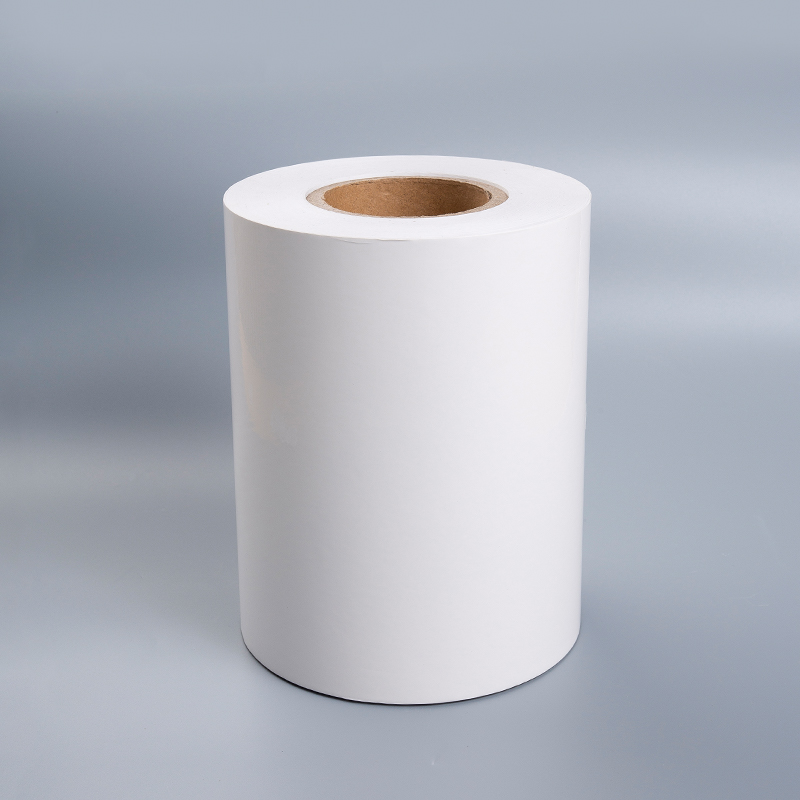
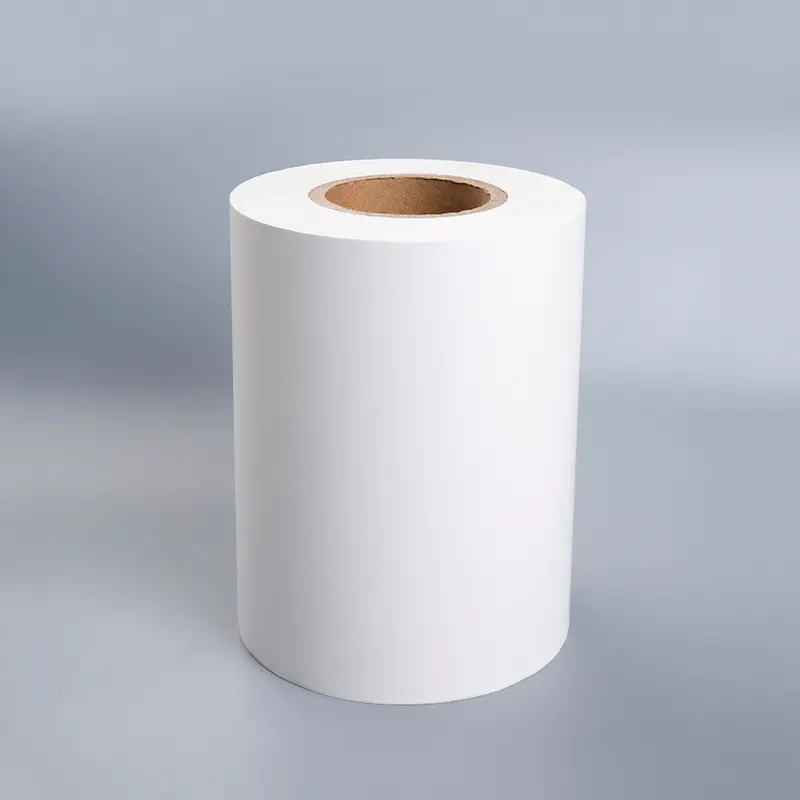
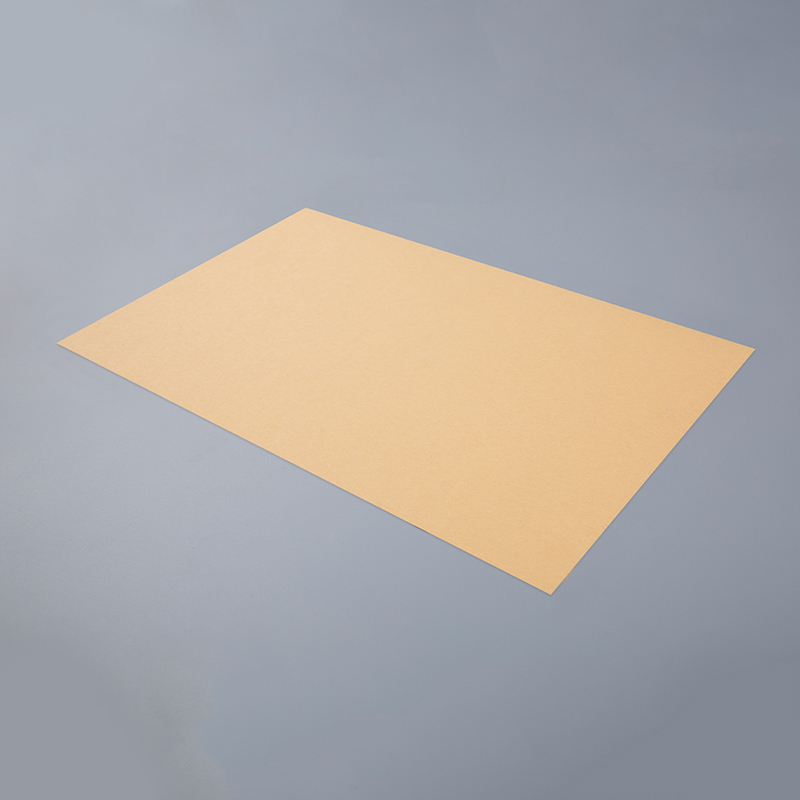
The yellow glassine paper described here is available in several grammages and sizes to support different converting and end-use requirements. Customers may select suitable thickness, roll width, sheet size, and packaging style according to their equipment and product design. The material is suitable for both roll and sheet supply, enabling use in large-scale automatic production as well as smaller converting operations.
Item |
Available Specification |
Application Benefit |
Material |
Glassine Paper |
Smooth, dense, and stable liner base for self-adhesive and release applications |
Grammage |
50 g, 60 g, 80 g, 100 g, and 120 g available |
Supports different stiffness, strength, and converting requirements |
Color |
Yellow, with white and yellow options available |
Easy identification and suitable visual appearance for release liner systems |
Jumbo Roll Width |
1000 mm, 1020 mm, 1080 mm, and 1530 mm |
Compatible with large-scale coating, laminating, slitting, and label converting lines |
Sheet Size |
A4, A3, 20 x 30, 21 x 30, 24 x 36, 50 cm x 70 cm, 70 cm x 100 cm, and customized sizes |
Flexible for sheet-fed processing, sampling, packaging, and special applications |
Packing |
Poly-wood pallet packing and carton packing for rolls or sheets |
Sea-transit-worthy protection for domestic and international shipment |
The available grammages from 50 g to 120 g allow manufacturers to choose the right balance between flexibility and rigidity. Lighter grades may be preferred for applications requiring easy bending, economical liner use, and efficient roll length. Heavier grades may be suitable for applications needing higher stiffness, improved handling, stronger die-cutting support, or better stability during high-speed label dispensing.
Roll width options such as 1000 mm, 1020 mm, 1080 mm, and 1530 mm are practical for jumbo roll processing. These widths support efficient downstream slitting, laminating, and labelstock production. Sheet sizes such as A4, A3, 50 cm x 70 cm, and 70 cm x 100 cm are useful for sheet-fed processing, sample preparation, special adhesive products, manual labeling applications, and customized packaging operations.
Key Applications in Label and Adhesive Product Manufacturing
Yellow glassine paper is widely used as a common material for bar code labels, self-adhesive labels, tapes, sticky industrial products, high-speed automatic labeling, special tape, double-sided tape, and other release applications. Its combination of smoothness, release reliability, and die-cutting suitability makes it especially valuable in operations where production efficiency and stable dispensing are priorities.
Bar Code Labels and Logistics Labels
Bar code labels are widely used in logistics, retail, warehousing, manufacturing tracking, shipping, inventory control, and product identification. These labels need to be printed clearly, die-cut accurately, and dispensed smoothly. Yellow glassine paper supports these requirements by providing a stable liner base during printing and conversion. When labels are peeled from the liner, controlled release helps prevent tearing, misalignment, or adhesive contamination.
In logistics environments, label rolls may run through printers, dispensers, applicators, or automatic labeling systems. The liner must withstand repeated bending and pulling while maintaining release consistency. Yellow glassine paper helps reduce production interruptions and improves the user experience for downstream customers.
Self-Adhesive Labels for Food and Medicine Packaging
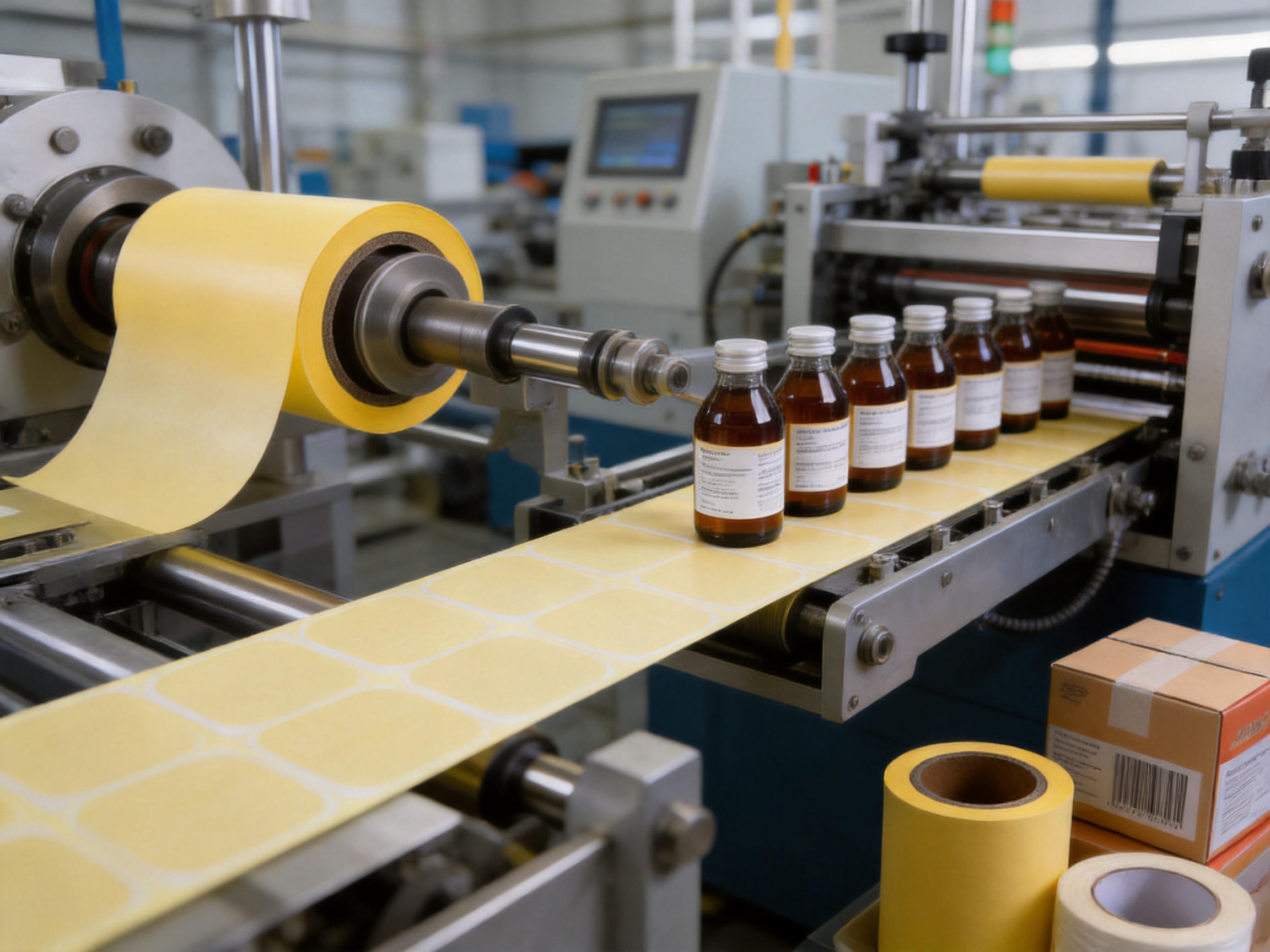
Food and medicine packaging industries require labels that are clean, reliable, and easy to process. Labels may be applied to cartons, bottles, boxes, flexible packages, containers, and medical packaging components. Yellow glassine paper is suitable for these industries because it provides stable support for adhesive labels throughout production and application.
In food packaging, consistent label release supports high-speed application to containers or packaged products. In medicine packaging, where accuracy and traceability are important, a stable liner helps maintain label placement, readability, and production efficiency. Although the liner is usually removed before the label reaches the consumer, its performance directly affects the quality of the finished labeled package.
Special Tape and Double-Sided Tape
Yellow glassine paper is also suitable for special tape and double-sided tape release applications. Double-sided tape requires a release liner that can protect adhesive surfaces before use and release cleanly when the tape is applied. Poor liner performance may cause adhesive transfer, tearing, curling, or difficult peeling. A dense glassine structure helps provide clean separation and stable handling.
Special tapes may be used in electronics, packaging, automotive components, household products, industrial bonding, and assembly processes. Depending on adhesive type and end-use requirements, the release liner must be selected carefully. Yellow glassine paper offers a versatile base for many tape constructions where process stability and controlled release are necessary.
Rotary and Flat Die-Cutting
One of the most important strengths of yellow glassine paper is its suitability for rotary and flat die-cutting. Die-cutting is a critical process in label conversion, where the face material is cut into the desired shape while the liner remains intact. If the liner is too weak, inconsistent, or poorly calendered, it may be cut through, torn, or damaged. If it is too hard or unstable, die wear and adjustment problems may increase.
Yellow glassine paper provides a stable cutting base. Its smoothness and density help support precise cuts, clean matrix stripping, and stable roll rewinding. For high-volume converters, this can reduce downtime, lower waste, and improve output consistency. Compared with lower-grade liners, yellow glassine paper can offer a more predictable converting window, which is valuable when equipment operates at high speed.
Advantages Over Ordinary Release and Backing Materials
In competitive label material markets, customers compare liner materials based on cost, converting efficiency, quality stability, supply reliability, and end-use performance. Yellow glassine paper offers several advantages over ordinary release papers and less refined backing materials.
Smoother Surface for Better Release Control
The dense and smooth nature of glassine paper provides a better surface for release treatment and adhesive contact. A smoother liner helps reduce microscopic unevenness that can cause inconsistent release force. In pressure-sensitive label systems, even small variations in release behavior can affect dispensing speed and accuracy. Yellow glassine paper helps maintain a more uniform release surface, improving production reliability.
Improved Dimensional Stability
Dimensional stability is essential during printing, laminating, die-cutting, slitting, and rewinding. If a liner expands, shrinks, curls, or wrinkles excessively, label registration and die-cutting accuracy may be affected. Yellow glassine paper is designed to provide stable performance under typical converting conditions. This makes it useful for applications where precise label shape and roll quality are required.
Excellent Compatibility with High-Speed Automatic Labeling
High-speed automatic labeling equipment demands liners that release labels consistently without tearing or stretching. Yellow glassine paper supports rapid label dispensing by offering a stable carrier for the adhesive label. This helps reduce machine stoppages, label misfeeds, and production waste. For manufacturers and end users operating automatic label applicators, stable release performance can translate into higher efficiency and lower total operating cost.
Good Strength for Die-Cutting and Matrix Stripping
Matrix stripping is the process of removing the unwanted material surrounding die-cut labels. This step can stress both the face material and liner. A suitable glassine liner must remain intact while allowing the waste matrix to be removed cleanly. Yellow glassine paper’s compact structure helps support clean die-cutting and stable stripping, especially in rotary and flat die-cutting operations.
Visual Identification and Process Control
The yellow color is not only an aesthetic feature. In a production environment, color can help workers quickly identify liner type, material grade, or production stage. When multiple white paper liners, films, and specialty materials are processed in the same facility, a yellow liner improves visual differentiation. This helps reduce material mix-ups and supports better workshop management.
Flexible Grammage Range
With 50 g, 60 g, 80 g, 100 g, and 120 g options, yellow glassine paper can serve a wide range of applications. Lightweight grades may help reduce material consumption and improve roll length, while heavier grades offer stronger support and stiffness. Competitors that offer limited grammage options may not match the flexibility required by customers with diverse production lines and application needs.
Availability in Rolls and Sheets
Some suppliers focus only on jumbo rolls or only on standard sheet sizes. This product can be supplied in roll or sheet form, with carton packing and pallet packing available. Roll supply supports continuous industrial production, while sheet supply supports sampling, special converting, manual processing, and customized applications. This flexibility makes procurement easier for customers who manage multiple product formats.
Manufacturing Strength Behind the Product
A high-quality glassine paper product depends not only on raw material selection but also on the manufacturing system behind it. Suzhou Piaozhihua Composite Material Technology Co., Ltd. integrates research and development, production, sales, and after-sales service. The company’s production capabilities include gluing, laminating, and cutting lines, which are essential for self-adhesive label materials and release products.
With an annual production capacity of more than 280 million square meters, the company supports large-volume orders while maintaining the flexibility to provide customized solutions. Such scale is important for customers who require long-term supply stability. In label manufacturing, inconsistent supply can interrupt printing schedules, delay packaging production, and increase inventory pressure. A supplier with strong production capacity can better support stable planning and rapid replenishment.
Integrated Production Lines
The company operates production lines covering gluing, laminating, and cutting. Integrated production offers several advantages. First, it improves process coordination because different production stages can be managed under one quality system. Second, it reduces the communication gap between material preparation and finishing. Third, it supports faster response when customers need custom structures, adjusted sizes, or special product development.
For yellow glassine paper, integration helps ensure that the material is suitable for downstream release and label applications. Cutting accuracy, roll quality, surface protection, and packaging condition are all controlled before shipment. Customers receive material that is ready for further conversion or direct application, reducing the need for additional sorting or reprocessing.
Advanced Inspection and Testing
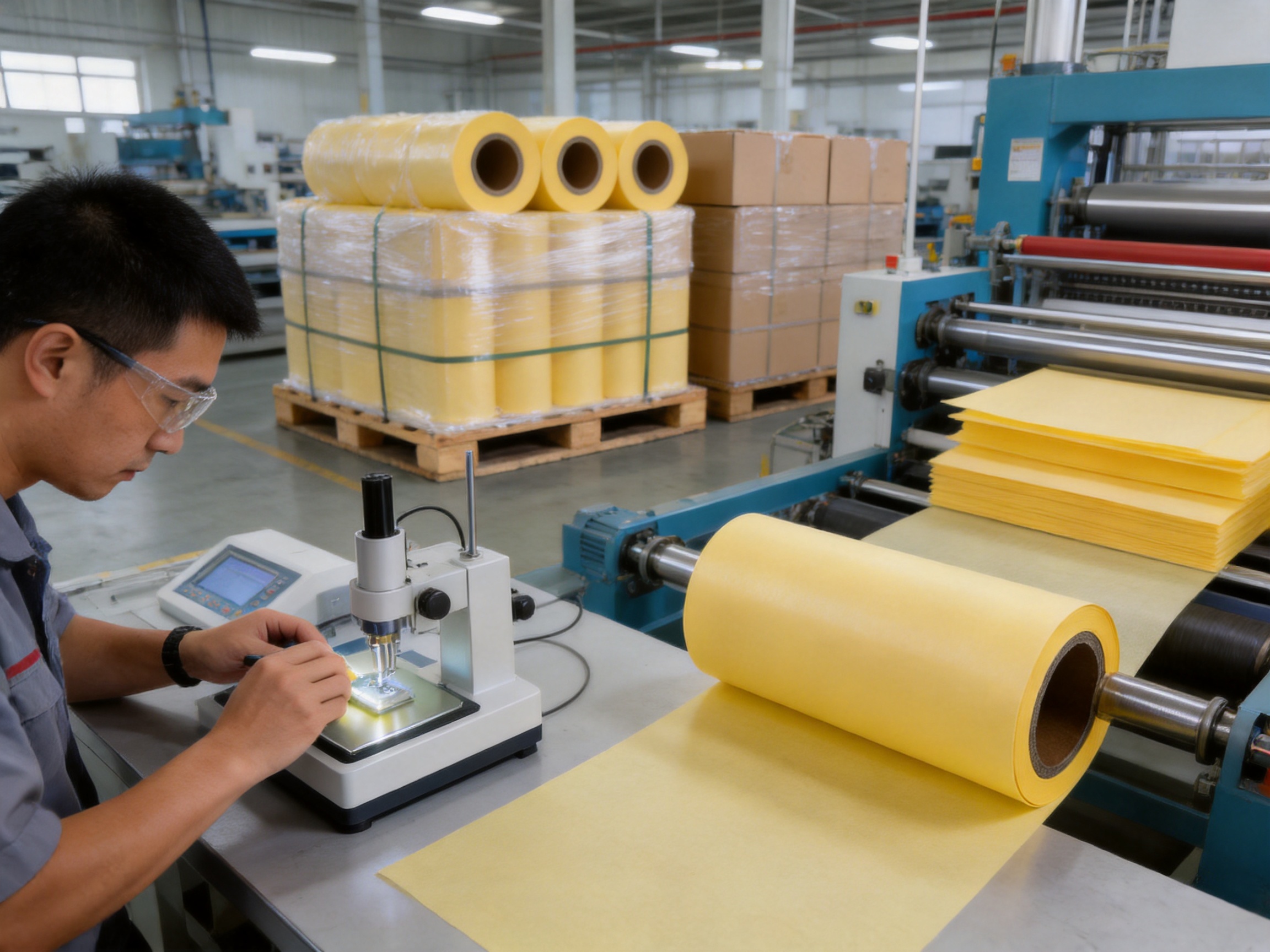
The company has its own testing laboratory and advanced inspection equipment to ensure product quality. Quality control in release liner production may involve checking grammage, thickness, width, surface condition, moisture balance, release behavior, appearance, roll tension, and packaging integrity. Although specific test methods may vary by customer requirement, the presence of internal testing capability supports stable product performance.
For converters, inspection matters because small defects can become large losses during high-speed production. A surface defect on a liner may cause adhesive coating issues. Inconsistent roll tension may lead to wrinkles or telescoping. Poor slitting may cause edge dust or uneven rewinding. By strengthening inspection before shipment, the supplier helps customers reduce risk and maintain efficient production.
Professional R&D and Customization
The company provides OEM and ODM services and can produce products based on customer drawings or samples. This is especially important in the label material industry because different markets use different adhesives, face materials, coating weights, die-cutting shapes, printer systems, and labeling machines. A standard liner may not be suitable for every application.
For example, a customer producing small medicine labels may require a liner with excellent die-cutting stability and controlled release for precise automatic labeling. A tape manufacturer may require stronger liner stiffness and clean peeling. A food label converter may need reliable roll quality and stable release for high-speed application. Through OEM and ODM capability, the supplier can help match material properties to practical production needs.
More Than 20 Years of Manufacturing Experience
Experience is a competitive advantage in self-adhesive materials. Over more than 20 years, the company has accumulated knowledge in material selection, adhesive systems, backing papers, face materials, coating behavior, converting requirements, and customer application problems. This experience supports faster troubleshooting and more realistic product recommendations.
New suppliers may offer low prices but lack deep understanding of how release liners behave during printing, die-cutting, stripping, rewinding, storage, and labeling. An experienced manufacturer can better anticipate problems such as curl, release inconsistency, edge lifting, roll deformation, and die-cutting damage. This helps customers achieve not only lower purchase cost but also lower total production cost.
Quality Factors That Matter in Yellow Glassine Paper
When selecting yellow glassine paper, buyers should evaluate more than basic price and grammage. The real value of the material appears during conversion and application. Several quality factors are especially important.
Surface Uniformity
Surface uniformity affects adhesive coating, lamination, release control, and appearance. A liner with uneven surface density may produce inconsistent release or poor adhesive contact. Yellow glassine paper’s smooth, compact surface supports stable adhesive systems and clean release behavior.
Roll Formation
Good roll formation is essential for high-speed processing. Rolls should be wound evenly, with stable tension, smooth edges, and minimal telescoping. Poor roll formation can cause machine vibration, web breaks, wrinkles, or inaccurate slitting. Sea-transit-worthy packing further protects roll condition during transportation.
Moisture Balance
Paper is naturally sensitive to moisture. Excessive moisture variation may cause curling, waviness, or dimensional change. A reliable manufacturer controls production and packaging to help preserve paper stability. Customers should also store yellow glassine paper in a suitable environment to maintain performance.
Die-Cutting Resistance
A release liner must be strong enough to survive die-cutting while allowing clean label separation. If the die cuts too deeply, the liner may break during matrix stripping or dispensing. If the liner lacks uniformity, cutting results may vary across the web. Yellow glassine paper is especially suitable for rotary and plate die-cutting because it provides stable backing support.
Release Consistency
Release consistency is critical in self-adhesive labels and tape. Inconsistent release may cause labels to lift too early, fail to dispense, or remain stuck to the liner. Stable release behavior improves labeling speed, reduces waste, and supports more reliable packaging line performance.
Packaging and Delivery Reliability
Packaging is a practical but often underestimated part of material quality. Yellow glassine paper is available with sea-transit-worthy poly-wood pallet packing and carton packing for rolls or sheets from stock. Sheet packaging can include 100 sheets per ream, with reams packed using strong PE coated kraft paper wrappers. Pallets are wrapped with stretch film and fastened with plastic fastening belts.
This type of packaging helps protect the material from moisture, dust, impact, deformation, and handling damage during storage and transportation. For international customers, sea-transit-worthy packing is particularly important because materials may face long shipping times, temperature changes, humidity variation, port handling, and warehouse transfers. Good packing reduces the chance of edge damage, roll crushing, sheet bending, and surface contamination.
For customers purchasing roll materials, pallet stability and roll protection are essential. If rolls arrive damaged, production may be delayed and waste may increase. For sheet materials, ream wrapping and carton packing help maintain sheet cleanliness and flatness. Reliable delivery condition supports customer confidence and reduces hidden costs.
Sustainability and Responsible Material Development
Modern packaging and labeling industries are increasingly focused on sustainable development and environmental responsibility. Customers are looking for eco-friendly solutions involving face materials, adhesives, and backing papers. The company’s brand positioning emphasizes sustainable development and environmental protection, along with the values of quality, integrity, innovation, win-win cooperation, and responsibility.
Yellow glassine paper can contribute to better material efficiency when it helps reduce production waste. A liner that runs smoothly through printing, die-cutting, and labeling equipment can lower rejected rolls, machine downtime, and adhesive contamination. While release liners are functional materials, selecting stable and well-controlled products is part of responsible production because fewer defects mean less wasted paper, adhesive, packaging, labor, and energy.
In addition, the ability to customize grammage and size can help customers avoid over-specification. For some applications, a lighter grade may perform well and reduce material use. For demanding applications, a heavier grade may prevent failure and waste. Responsible material selection means choosing the grade that best matches the actual application rather than using the same liner for every purpose.
How Yellow Glassine Paper Supports Cost Efficiency
Cost efficiency in label manufacturing is not determined only by the purchase price of the liner. A low-cost liner may become expensive if it causes web breaks, die-cutting failures, release issues, poor roll quality, or customer complaints. Yellow glassine paper supports cost efficiency by improving process stability and reducing avoidable waste.
During printing and converting, stable liner quality helps machines run with fewer adjustments. Operators spend less time correcting web tension, cleaning debris, repairing broken rolls, or troubleshooting dispensing problems. During die-cutting, a consistent liner reduces the need for repeated die pressure adjustments. During automatic labeling, controlled release helps maintain speed and accuracy.
For label converters, even a small improvement in production uptime can be valuable. High-speed lines are designed to produce large quantities, and downtime quickly becomes costly. When yellow glassine paper helps maintain steady running, it contributes to better output, more predictable delivery schedules, and improved customer satisfaction.
Comparison with Alternative Liner Materials
Different release liner materials are available, including kraft paper, clay-coated paper, polyethylene-coated paper, film liners, and various specialty papers. Each material has its own advantages. Yellow glassine paper is often selected when a balance of smoothness, density, strength, release control, die-cutting performance, and cost-effectiveness is needed.
Kraft paper may offer strength and lower cost in some applications, but it is generally less smooth and less dense than glassine paper. For high-quality self-adhesive labels, this may affect release consistency and coating uniformity. Film liners can provide excellent moisture resistance and dimensional stability, but they may be more expensive and may not be suitable for every cost structure or recycling preference. Polyethylene-coated papers can provide barrier properties, but they may add complexity to material selection and processing.
Yellow glassine paper occupies an important position between economy and performance. It is suitable for many mainstream label and tape applications where reliable release, smooth surface, good die-cutting behavior, and flexible supply formats are required. For customers who need stable performance without unnecessary over-engineering, it is a practical and widely used solution.
Customization for Different Industries
Because yellow glassine paper is used in many sectors, customization is important. The company can provide different grammages, roll widths, sheet sizes, and customer-specific solutions. This allows buyers to match material selection with their exact production equipment and product performance targets.
Food Packaging
Food packaging labels often require high-speed application and good visual presentation. Yellow glassine paper supports efficient label dispensing on packaging lines. Stable liner quality helps labels apply cleanly to boxes, bottles, cartons, and containers.
Medicine Packaging
Medicine packaging labels may carry important product names, batch numbers, instructions, bar codes, or traceability information. Label application must be accurate and reliable. Yellow glassine paper helps maintain label integrity through printing, conversion, and dispensing.
Industrial Products
Industrial sticky products may include protective labels, warning labels, bonding tapes, assembly tapes, and functional adhesive components. These products may require stronger liners and special release behavior. The available grammage range supports different industrial requirements.
Retail and Logistics
Retail and logistics labels are produced in high volumes and must perform reliably in printers and applicators. Yellow glassine paper supports bar code labels, shipping labels, tracking labels, and inventory labels where smooth dispensing and clear printing workflows are important.
Why Supplier Capability Matters
Choosing yellow glassine paper is not only a product decision; it is also a supplier decision. The quality, consistency, delivery, and technical support of the supplier directly influence customer production. Suzhou Piaozhihua Composite Material Technology Co., Ltd. has built domestic and international sales networks and serves customers in many countries and regions, including markets in Asia, Europe, the Americas, Africa, and the Middle East.
The company’s nationwide direct sales and franchise networks in China, combined with international marketing experience, help it understand different market needs. Customers in different regions may require different roll widths, packaging standards, documentation, shipping methods, or application support. A supplier with broad market experience is better positioned to provide practical service.
Another advantage is after-sales support. In self-adhesive material applications, customers may encounter issues caused by machine settings, storage conditions, adhesive compatibility, die-cutting pressure, or environmental changes. A manufacturer with technical experience and after-sales service can help analyze problems and suggest improvements. This service value is often more important than a small price difference between suppliers.
Recommended Handling and Storage Practices
To maintain the best performance of yellow glassine paper, customers should store and handle the material properly. Paper-based liners should be kept in a clean, dry, and stable environment. Rolls and sheets should be protected from excessive humidity, direct sunlight, water exposure, and mechanical damage. Before production, materials should be allowed to adjust to the workshop environment when there is a large temperature difference between storage and processing areas.
Rolls should be handled with suitable lifting tools to avoid edge damage or deformation. Damaged roll edges can cause web breaks or tracking problems during high-speed conversion. Sheets should remain wrapped until use to maintain cleanliness and flatness. Opened materials should be resealed or protected if not used immediately.
During die-cutting, operators should adjust die pressure carefully. The goal is to cut the face material cleanly without damaging the liner. Because yellow glassine paper provides stable support, it can help operators maintain a good cutting window, but correct equipment settings remain important. During automatic labeling, label dispensing speed, peel plate angle, roll tension, and adhesive properties should be matched to the liner and label construction.
Product Value for Converters and End Users
For converters, yellow glassine paper provides a reliable base for producing self-adhesive labelstock, tapes, and other adhesive products. Its smoothness, strength, and release suitability help improve converting efficiency. For end users, it supports better label dispensing, fewer machine stoppages, and more consistent product application.
In a competitive market, material reliability can become a major advantage. Customers increasingly expect fast delivery, stable quality, customized sizes, and technical support. Yellow glassine paper supplied by an experienced manufacturer helps converters meet these expectations. It also supports brand owners and packaging manufacturers that require labels to perform consistently in automated production environments.
The product’s flexibility across industries is another important benefit. A single material family can serve bar code labels, self-adhesive labels, food packaging labels, medicine packaging labels, double-sided tape, special tape, and industrial release applications. This versatility helps distributors and converters simplify inventory while still serving many customer groups.
Frequently Asked Questions
What is yellow glassine paper mainly used for?
Yellow glassine paper is mainly used as a release and backing material for bar code labels, self-adhesive labels, tapes, double-sided tapes, sticky industrial products, high-speed automatic labeling, and other release applications. It is also commonly used in food, medicine, logistics, retail, and packaging industries.
Why is glassine paper suitable for self-adhesive labels?
Glassine paper has a smooth, dense, and stable structure. These properties help support uniform adhesive contact, controlled release, clean die-cutting, and reliable label dispensing. It is especially useful when labels must be processed at high speed or cut into precise shapes.
What grammages are available?
The available grammages include 50 g, 60 g, 80 g, 100 g, and 120 g. Lighter grades are suitable for flexible and economical applications, while heavier grades provide higher stiffness and stronger support for demanding conversion processes.
Can yellow glassine paper be supplied in customized sizes?
Yes. Jumbo roll widths include 1000 mm, 1020 mm, 1080 mm, and 1530 mm. Sheet sizes include A4, A3, 20 x 30, 21 x 30, 24 x 36, 50 cm x 70 cm, 70 cm x 100 cm, and customized sizes according to customer requirements.
Is yellow glassine paper suitable for rotary die-cutting?
Yes. The material is especially suitable for rotary and flat die-cutting. Its compact and stable structure helps support accurate cutting, clean matrix stripping, and efficient label conversion.
How does yellow glassine paper help high-speed automatic labeling?
High-speed labeling requires labels to release smoothly and consistently from the liner. Yellow glassine paper provides stable release behavior and good mechanical support, helping reduce misfeeds, tearing, downtime, and label waste.
What packaging options are available?
Rolls and sheets can be packed with sea-transit-worthy poly-wood pallet packing or carton packing. Sheet materials can be packed as 100 sheets per ream, with strong PE coated kraft paper wrappers, stretch film, and plastic fastening belts for pallet protection.
What makes this product competitive compared with ordinary backing paper?
Compared with ordinary backing paper, yellow glassine paper offers a smoother surface, denser structure, better die-cutting support, improved release consistency, and stronger compatibility with high-speed label processing. These advantages can reduce waste and improve production efficiency.
Does the manufacturer support OEM and ODM requirements?
Yes. Suzhou Piaozhihua Composite Material Technology Co., Ltd. supports OEM and ODM services and can manufacture products based on customer drawings, samples, and application needs. The company also provides technical support and after-sales service.
How should yellow glassine paper be stored?
It should be stored in a clean, dry, and stable environment, away from excessive humidity, direct sunlight, water, and mechanical damage. Rolls should be handled carefully to protect edges, and sheets should remain wrapped until use.
Conclusion
Yellow glassine paper is a dependable release and backing material for modern self-adhesive labels, bar code labels, tapes, double-sided tapes, and industrial adhesive products. Its smooth surface, dense structure, reliable release behavior, and compatibility with rotary and flat die-cutting make it a strong choice for converters and manufacturers seeking stable production and high-quality results.
Beyond the product itself, manufacturing capability plays a vital role. With integrated gluing, laminating, and cutting lines, strong production capacity, advanced inspection equipment, professional R&D support, OEM and ODM services, and more than 20 years of manufacturing experience, Suzhou Piaozhihua Composite Material Technology Co., Ltd. provides customers with both material quality and supply confidence.
For companies in food packaging, medicine packaging, logistics, retail, tape manufacturing, and industrial labeling, yellow glassine paper offers a practical combination of performance, flexibility, and cost efficiency. By choosing the correct grammage, size, and supplier support, customers can improve die-cutting quality, labeling speed, release consistency, and overall production reliability.
References
Pressure Sensitive Tape Council. Technical Guide to Pressure Sensitive Adhesive Tapes and Release Liners.
FINAT. Label Materials, Release Liners, and Self-Adhesive Label Converting Guidelines.
TAPPI. Paper and Paperboard Testing Methods for Grammage, Thickness, Smoothness, and Moisture Control.
Alexander Watson Associates. Global Release Liner Industry Market and Technology Review.
Handbook of Pressure Sensitive Adhesive Technology. Release Coatings, Liners, and Labelstock Construction.