
 English
 Español
 русский
 Français
 عربى
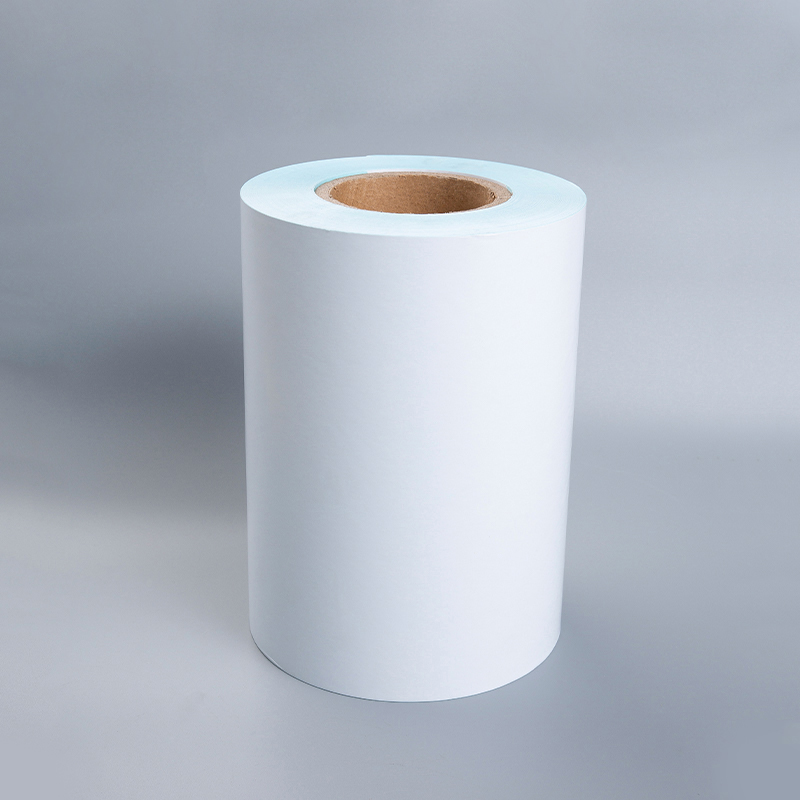
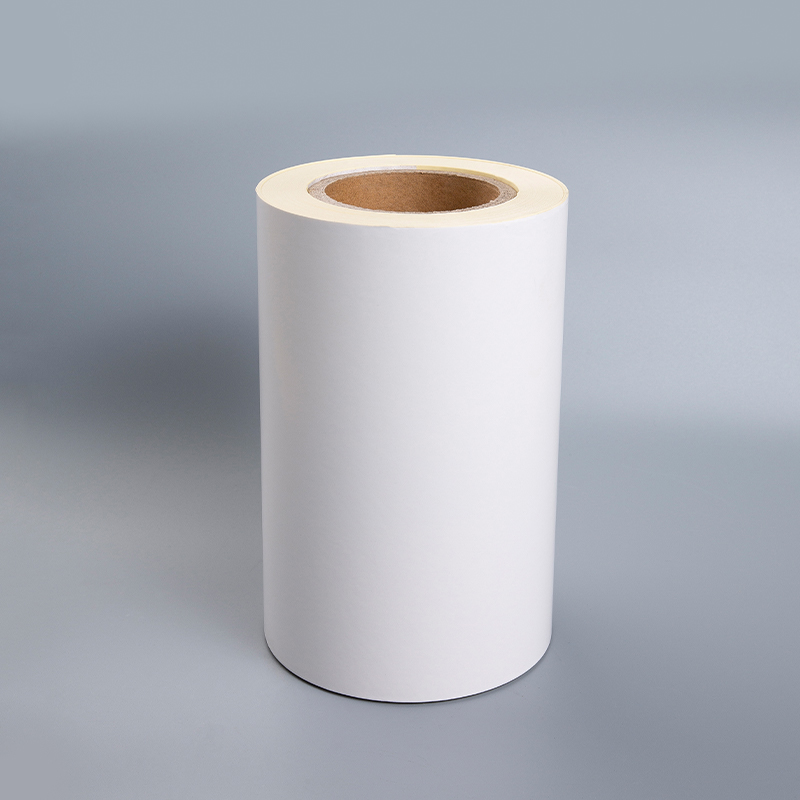
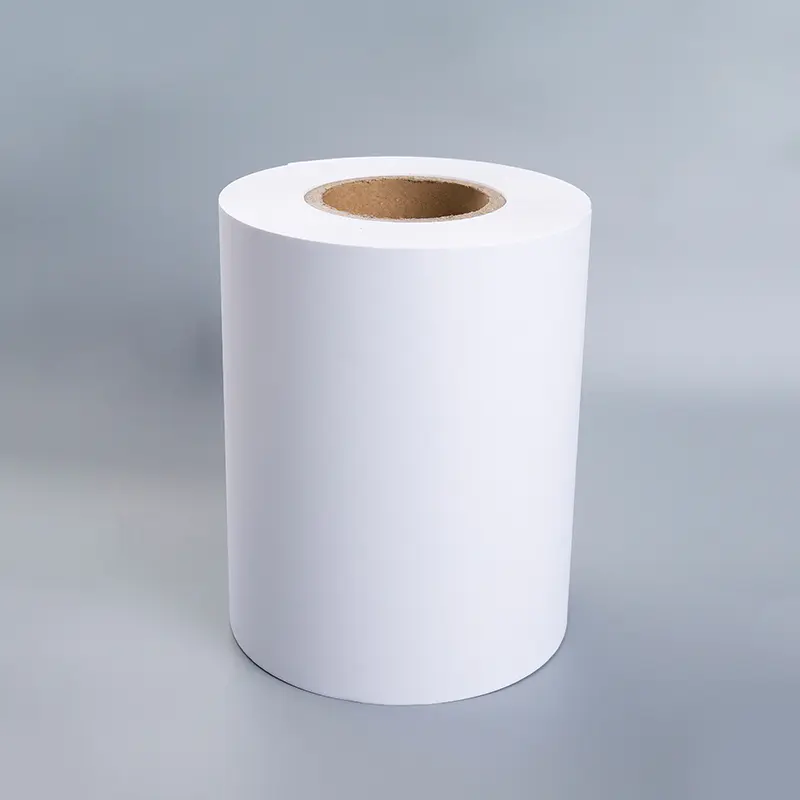
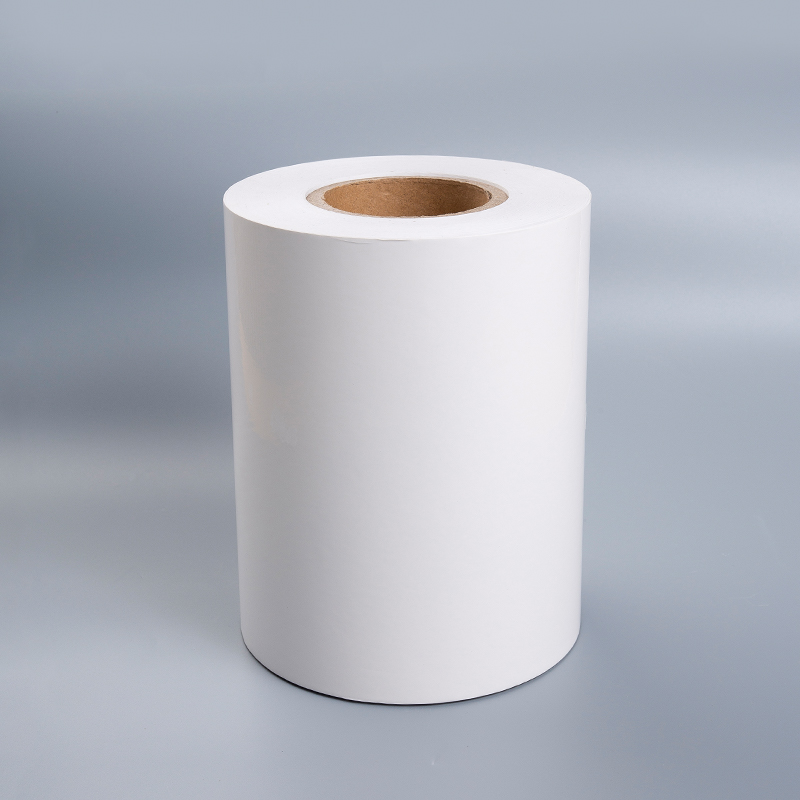
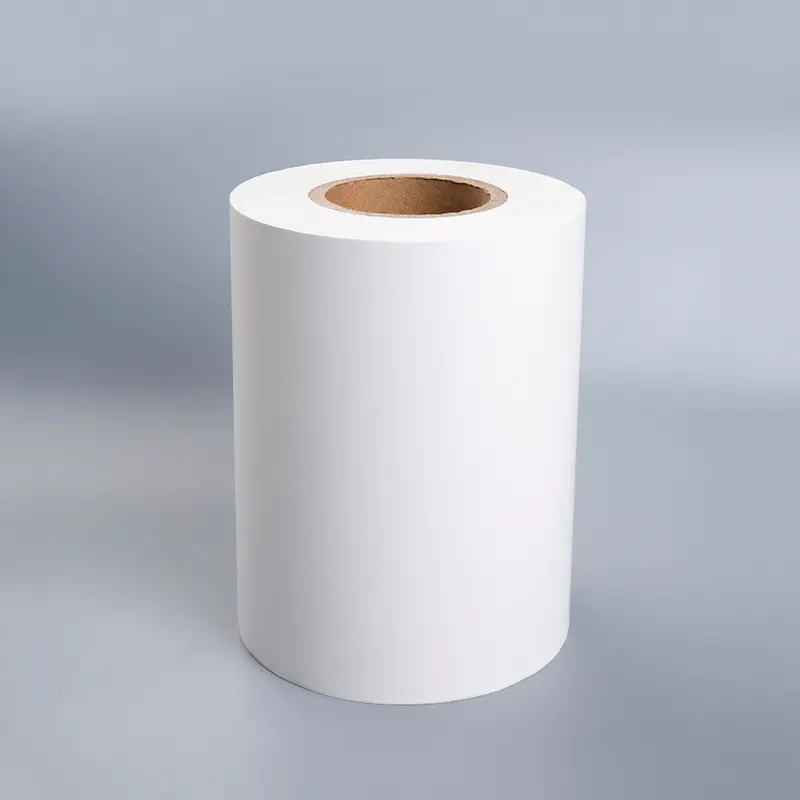
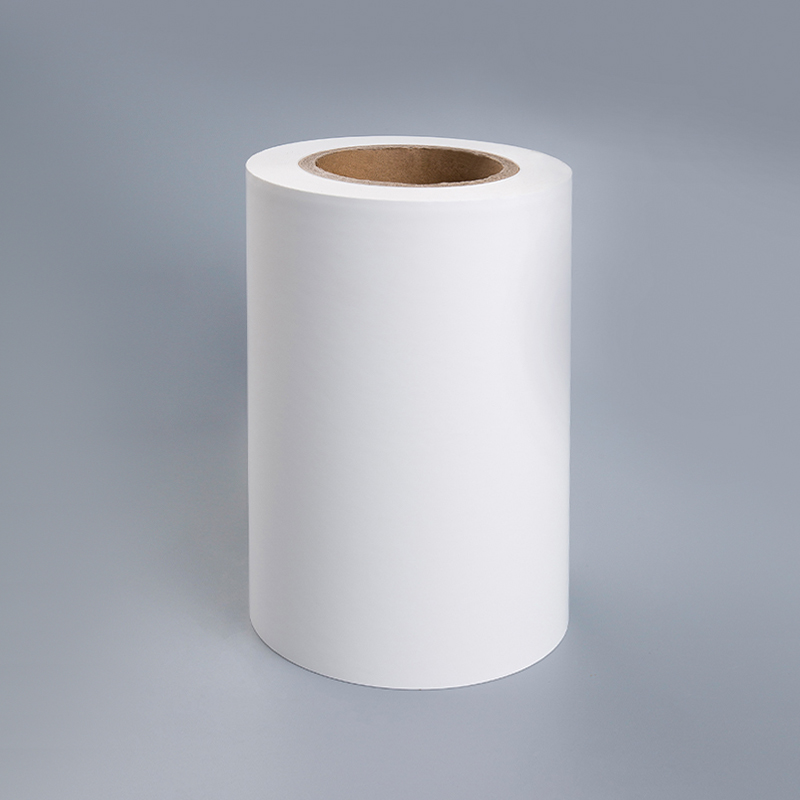
عربىCast coated paper with a yellow release liner is a premium self-adhesive label material designed for applications where visual brightness, smooth surface quality, dependable adhesion, and efficient converting are all required. It combines a mirror-like cast coated face paper with an adhesive layer and a release liner that protects the adhesive until the label is applied. This structure makes the material suitable for publicity labels, advertising stickers, product identification, packaging decoration, promotional labels, newspaper stickers, signage, and specialty decorative uses on vehicles, equipment, containers, ships, aircraft, and other surfaces where attractive presentation and practical bonding performance matter.
In a competitive label market, many buyers do not simply need paper with glue on the back. They need a complete self-adhesive system that can print clearly, die-cut cleanly, release smoothly, remain stable during storage and transportation, and perform reliably during application. Cast coated paper with a yellow release liner answers those demands by offering a bright, glossy surface for high-impact graphics, multiple adhesive options for different environments, flexible liner choices for converting needs, and sheet or jumbo roll formats for different production workflows. For label printers, packaging converters, brand owners, stationery suppliers, and industrial users, it provides a balance of appearance, processability, and customization that ordinary label stocks often cannot deliver.
Cast Coated Paper With Yellow Release Liner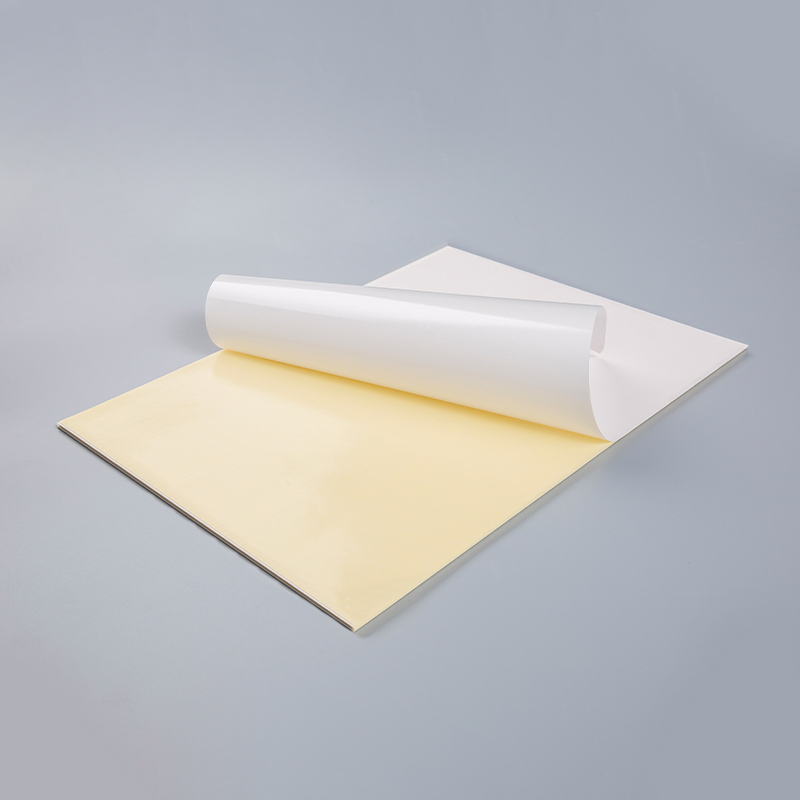
Content
- 1 Understanding the Product Structure
- 2 Main Specifications
- 3 Why Cast Coated Paper Matters
- 4 Advantages Over Ordinary Label Materials
- 5 Applications in Publicity, Advertising, and Promotion
- 6 Applications in Product Labels and Packaging Decoration
- 7 Applications in Signs, Stickers, and Decorative Uses
- 8 Printing Performance and Visual Quality
- 9 Adhesive Options for Different Environments
- 10 The Role of the Yellow Release Liner
- 11 Manufacturing Strength and Process Control
- 12 Quality Assurance and Testing Capability
- 13 Research, Development, and Customization
- 14 Sustainable Development and Environmental Responsibility
- 15 Packaging and Delivery Advantages
- 16 Global Supply and Market Experience
- 17 How to Select the Right Configuration
- 18 Common Quality Considerations for Buyers
- 19 Why This Product Is a Strong Choice for Professional Users
- 20 Practical Use Scenarios
- 21 Q&A Section
- 21.1 Q1: What is cast coated paper with a yellow release liner?
- 21.2 Q2: What applications is this product suitable for?
- 21.3 Q3: What is the main advantage of the cast coated surface?
- 21.4 Q4: Why is the yellow release liner useful?
- 21.5 Q5: Which adhesive options are available?
- 21.6 Q6: Can the product be customized?
- 21.7 Q7: What roll and sheet sizes are available?
- 21.8 Q8: How should buyers choose the correct adhesive?
- 21.9 Q9: What manufacturing strengths support product quality?
- 21.10 Q10: How is the material packed for delivery?
- 22 Conclusion
- 23 References
- 24 Product: Cast Coated Paper With Yellow Release Liner
Understanding the Product Structure
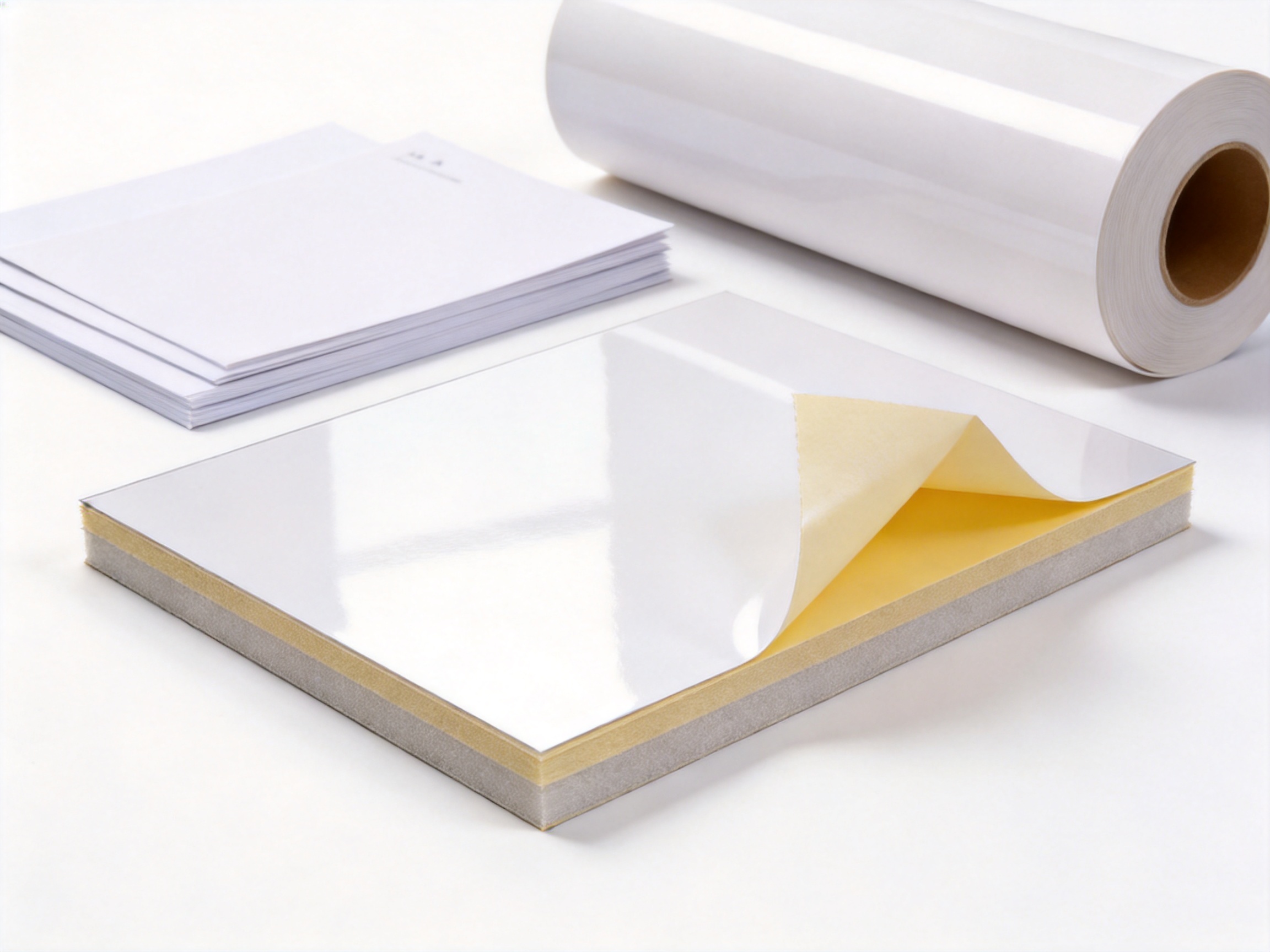
This product is built as a multi-layer self-adhesive construction. The face material is cast coated paper, commonly selected for its smooth, reflective, mirror-like finish. Beneath the face material is an adhesive layer, which can be selected according to the final application. The adhesive is protected by a release liner, and in this product configuration the yellow release liner provides a recognizable backing that separates easily when the label is ready to be used.
The face material can be based on 80 gsm woodfree paper, with 75 gsm, 78 gsm, and 90 gsm options available depending on customer needs. This range gives buyers flexibility in stiffness, caliper, print handling, and final label feel. A lighter basis weight may suit high-volume promotional labels or applications where economy and flexibility are important. A heavier face material may be selected for premium packaging labels, product labels, and labels that require stronger handling properties.
The adhesive layer is another key performance area. Hot melt adhesive is available as a standard solution, and other options include water-based adhesive, solvent adhesive, removable adhesive, anti-freeze adhesive, cryogenic adhesive, and tyre-grade rubber adhesive. This adhesive range is important because label performance is not universal. A label for indoor promotional packaging does not require the same adhesive as a label applied in low-temperature logistics, on curved surfaces, or on rubber-based materials. By offering multiple adhesive systems, the product can be engineered for specific end-use requirements rather than forcing customers to accept a one-size-fits-all solution.
The liner is equally important. A release liner is not just a backing sheet; it affects adhesive protection, die-cutting accuracy, label dispensing, waste matrix removal, flatness, and user experience. Options include glassine paper in multiple weights, release paper in several basis weights, art paper liners, and CCK liners. These choices allow converters to select a liner that matches their printing method, die-cutting equipment, dispensing process, and cost-performance target. The yellow release liner also helps the label stock stand out visually during production, storage, or manual application, improving identification and handling efficiency.
Main Specifications
Item |
Available Configuration |
Practical Benefit |
Face Material |
80 gsm woodfree paper; 75 gsm, 78 gsm, and 90 gsm available |
Supports different stiffness, print feel, label durability, and cost requirements |
Surface Character |
Cast coated, mirror-like glossy finish |
Enhances color brightness, visual attraction, and premium label appearance |
Adhesive |
Hot melt adhesive; water-based, solvent, removable, anti-freeze, cryogenic, and tyre-grade rubber adhesive available |
Allows product matching for packaging, decoration, cold-chain, removable labels, industrial labeling, and specialty applications |
Release Liner |
Yellow release liner configuration; other liner choices include glassine paper, release paper, art paper, and CCK liner |
Protects adhesive, supports converting, assists release control, and improves handling |
Jumbo Roll Width |
1000 mm, 1020 mm, 1080 mm, and 1530 mm |
Suitable for slitting, converting, and high-volume label production |
Sheet Size |
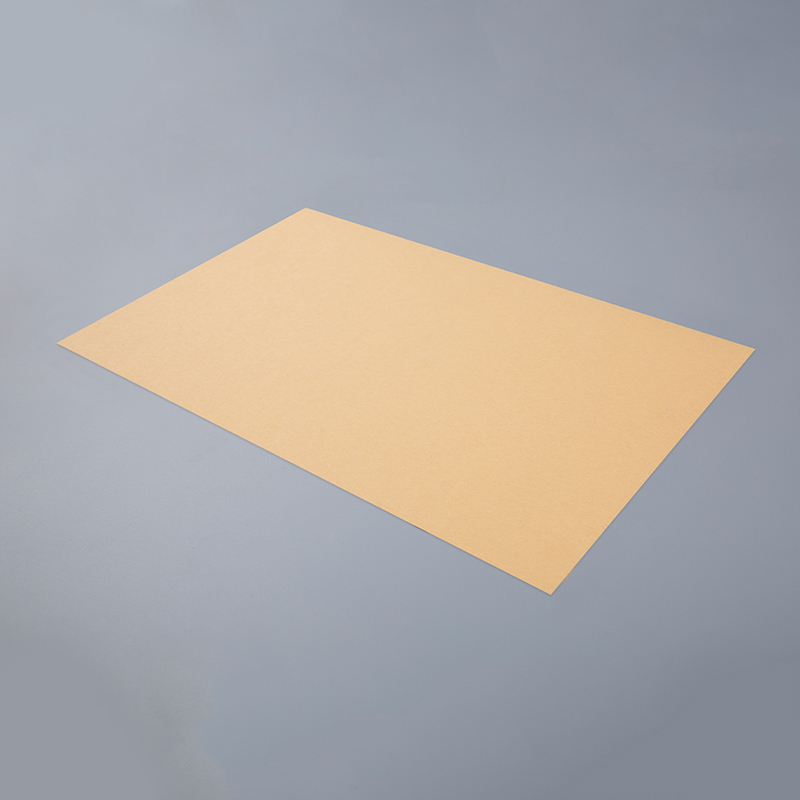
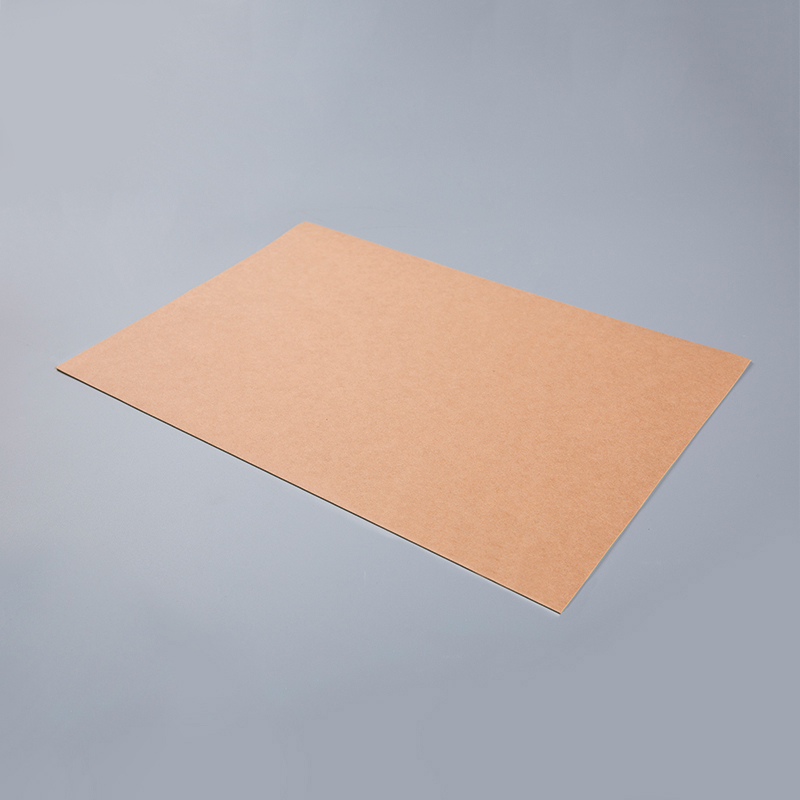
A4, A3, 20 x 30, 21 x 30, 24 x 36, 50 cm x 70 cm, 70 cm x 100 cm, and customized sizes |
Supports office printing, commercial printing, manual label production, and custom packaging operations |
Packaging |
Sea-transit-worthy poly-wood pallet packing and carton packing; rolls or sheets available from stock |
Improves product protection during domestic and international logistics |
Sheet Packing |
100 sheets per ream, packed with strong PE-coated kraft paper wrapper |
Helps prevent moisture impact, dust contamination, and handling damage |
Why Cast Coated Paper Matters
Cast coated paper is valued because of its very smooth and glossy surface. During production, the coating is cast against a highly polished surface, which gives the paper its mirror-like finish. For self-adhesive labels, this surface quality is more than an aesthetic feature. It supports sharp printing, strong color expression, refined graphics, and a clean premium look. When a label is used on consumer packaging, promotional materials, cosmetics, food packaging, stationery, or advertising displays, the surface impression can strongly influence how the product is perceived.
Compared with ordinary uncoated label paper, cast coated paper offers better visual intensity. Colors appear brighter, fine details can be reproduced more clearly, and the label has a more refined touch. Compared with many standard glossy papers, cast coated paper can deliver an even higher level of smoothness and brightness, making it especially suitable for product labels that must attract attention in retail environments. It is a practical option for customers who want high visual value without moving to more expensive synthetic films.
The product also provides a useful balance between printability and economy. Self-adhesive film materials can offer excellent moisture resistance and durability, but they may be unnecessary for many indoor or short-to-medium-term labeling applications. Cast coated self-adhesive paper gives a premium paper-based surface for labels that need attractive decoration and print clarity while maintaining efficient cost control. This makes it an attractive choice for brands and printers seeking high appearance value in everyday labeling.
Advantages Over Ordinary Label Materials
The first advantage is the high-gloss visual effect. Ordinary matte or semi-gloss papers may serve basic identification needs, but they often lack the reflective brightness needed for promotional and decorative uses. Cast coated paper with a yellow release liner is designed for labels that must be noticed. It supports strong shelf appeal, vivid printed graphics, and a clean finish that improves the perceived quality of the labeled product.
The second advantage is customization. Many basic self-adhesive label materials are sold with limited adhesive and liner combinations. This product can be supplied with hot melt adhesive, water-based adhesive, solvent adhesive, removable adhesive, anti-freeze adhesive, cryogenic adhesive, or tyre-grade rubber adhesive. This range helps customers solve real application problems, such as low-temperature adhesion, removable labeling, high-tack industrial use, or special surface bonding. Instead of compromising with a generic adhesive, buyers can select a configuration that better matches the substrate and environment.
The third advantage is converting compatibility. Label converters need material that performs well during printing, slitting, die-cutting, sheeting, matrix stripping, and application. A suitable liner is essential for stable processing. The available liner range, including glassine, release paper, art paper, and CCK liner options, allows the construction to be adjusted for different machines and label formats. This reduces processing interruptions and helps maintain consistent finished label quality.
The fourth advantage is supply flexibility. Jumbo roll widths of 1000 mm, 1020 mm, 1080 mm, and 1530 mm are suitable for large-scale converting. At the same time, sheet sizes such as A4, A3, 20 x 30, 21 x 30, 24 x 36, 50 cm x 70 cm, 70 cm x 100 cm, and customized sizes support smaller print shops, office printing, manual labeling, and custom packaging projects. This format flexibility makes the material useful for both industrial users and smaller customers with specialized requirements.
The fifth advantage is professional packing. Sheet stock can be packed 100 sheets per ream, with each ream protected by a strong PE-coated kraft paper wrapper. Pallets are wrapped with stretch film and fastened with plastic fastening belts. Roll and sheet materials can be supplied in sea-transit-worthy poly-wood pallet packing or carton packing. These details matter because label materials can be sensitive to moisture, pressure, dust, and handling damage. Protective packaging helps preserve flatness, print surface quality, and adhesive performance during transportation.
Applications in Publicity, Advertising, and Promotion
Promotional labels and advertising stickers need to communicate quickly. A bright cast coated surface helps printed text, logos, icons, product images, and colors stand out. This makes the material well suited for promotional stickers, retail display labels, campaign labels, event stickers, newspaper stickers, and advertising decorations. The mirror-like surface gives promotional designs a more polished look, helping brands create an immediate visual impression.
For publicity materials, the label must often be attractive but also economical enough for mass use. Cast coated self-adhesive paper can meet this need because it provides strong appearance value while remaining paper-based. It can be used for limited-time campaigns, seasonal packaging, sales promotion labels, sample stickers, membership labels, and point-of-sale materials. When compared with basic paper labels, it offers a more refined surface; when compared with many films, it can provide a more cost-effective solution for applications that do not require high outdoor durability.
The yellow release liner can be useful during manual handling and distribution. Workers can easily identify the backing side and peel labels from sheets or rolls. In promotional environments where large numbers of stickers are distributed or applied quickly, clear liner recognition can reduce confusion and improve application speed. This is especially useful for sticker campaigns, event staff, packaging teams, and manual assembly operations.
Applications in Product Labels and Packaging Decoration
Product labels are among the most important uses for cast coated self-adhesive paper. Labels influence consumer expectations before the product is even opened. A smooth, glossy, high-brightness label can make packaging look cleaner and more professional. This product is suitable for labels used on cartons, boxes, bottles, bags, stationery products, household goods, gifts, promotional items, and a broad range of consumer packaging formats.
For packaging decoration, the material can add a premium visual layer without requiring complex packaging redesign. A brand can use a cast coated adhesive label to add logos, certification marks, flavor information, promotional messages, barcode fields, warning information, or decorative graphics. The label can be applied to standard packaging to create a more attractive final product. This makes it valuable for small and medium production runs, customized packaging, private-label products, and seasonal packaging updates.
Because multiple adhesive options are available, the product can be adjusted for different packaging substrates. Some surfaces require stronger initial tack, while others need a removable adhesive that can be peeled away cleanly. Some products may be stored or transported in cool environments, requiring anti-freeze or cryogenic adhesive solutions. The ability to choose the adhesive type helps reduce common label problems such as edge lifting, poor bonding, adhesive residue, or failure under low-temperature conditions.
Applications in Signs, Stickers, and Decorative Uses
The material is also suitable for signs, stickers, and decorative labels. In these applications, appearance and adhesion are equally important. A sign label must be legible and visually clean. A decorative sticker must show color and detail clearly. The cast coated surface supports these requirements by providing a smooth printing base. The adhesive selection helps the label remain attached to the intended surface under the expected conditions.
Decorative self-adhesive labels can be used on display boards, equipment panels, craft items, stationery, folders, promotional giveaways, containers, and packaging inserts. The material can also be used for styling and body stickers in appropriate environments, including decorative uses on trucks, ships, aircraft, and similar vehicles or surfaces. For such specialty applications, the correct adhesive and testing are essential. Surfaces may vary in energy, texture, cleanliness, coating, curvature, and exposure conditions. The availability of specialty adhesives gives buyers more options for developing suitable constructions.
For labels applied to curved or irregular surfaces, adhesive flow and tack are critical. A poorly matched adhesive may lift at the edges or fail after exposure to temperature changes. Hot melt adhesive may provide strong tack for many uses, while solvent or rubber-based adhesive systems may be selected for more demanding bonding requirements. Removable adhesive can be used where temporary application is needed and clean removal is important. This versatility is one of the product’s key competitive strengths.
Printing Performance and Visual Quality
Printing performance is a major reason to select cast coated self-adhesive paper. The surface is engineered for smoothness, which supports fine text, line art, barcodes, brand graphics, and high-density color designs. A label material with uneven surface texture can cause poor ink laydown, reduced clarity, and inconsistent color. By contrast, a cast coated surface helps create a more uniform printed result, especially for graphics that require a refined, high-gloss effect.
The material is suitable for a variety of label printing and converting workflows, depending on the selected construction and customer process. It may be used in sheet format for office, digital, or commercial printing scenarios and in roll format for larger converting operations. The availability of standard and custom sheet sizes helps printers match the material to different production equipment and label layout requirements.
In product packaging, a glossy label can enhance brand recognition. Colors can appear more energetic, and details such as product names, decorative borders, icons, and promotional claims can become more eye-catching. When a customer compares two similar products on a shelf, the label surface can influence attention and perceived value. Cast coated self-adhesive paper helps create this attractive first impression while maintaining the practical advantages of a paper label.
Adhesive Options for Different Environments
The adhesive is the working heart of any self-adhesive label. The face material provides appearance, and the liner protects the adhesive, but the adhesive determines whether the label bonds successfully. This product can be supplied with several adhesive types, giving customers the freedom to design for specific end uses.
Hot melt adhesive is often selected where strong tack and fast bonding are required. It is useful for many general-purpose labels, packaging labels, and applications where immediate adhesion is important. Water-based adhesive can be selected for applications where a balanced adhesive profile and environmental considerations are important. Solvent adhesive may be selected for demanding performance needs, depending on the final substrate and conditions. Removable adhesive is suitable for labels that must be peeled away without excessive residue. Anti-freeze and cryogenic adhesives are valuable for products exposed to cold storage, refrigerated logistics, frozen goods, or low-temperature application environments. Tyre-grade rubber adhesive is available for difficult rubber-related applications where stronger bonding behavior may be required.
These options help the product compete effectively against standard label stocks. A generic label material may perform well in one application but fail in another. A customizable adhesive system reduces risk by aligning the product with the customer’s specific surface, temperature, application pressure, dwell time, and removal expectations. For industrial buyers, this can reduce waste, customer complaints, relabeling costs, and production delays.
The Role of the Yellow Release Liner
The release liner protects the adhesive before use and controls how the label separates during application. In a yellow liner configuration, the backing is easy to identify, which can help during manual operation, inventory sorting, or assembly work. A colored liner can also distinguish a product grade, adhesive type, or customer-specific construction when multiple label materials are stored in the same facility.
Release performance must be carefully controlled. If release is too tight, labels may be hard to peel and automatic dispensing may become unstable. If release is too easy, labels may lift prematurely during converting or transportation. A well-matched release liner supports smooth peeling, stable die-cutting, and reliable label dispensing. The availability of different liner materials and weights allows the construction to be tuned for specific converting methods.
Glassine liners are commonly valued for smoothness, density, and converting performance. CCK liners can offer dimensional stability and are often used where good layflat behavior is required. Art paper liners and release papers can meet different cost, stiffness, and application needs. By offering a broad liner selection, the manufacturer can provide a construction that fits the customer’s equipment and label design rather than forcing the customer to adjust production around unsuitable material.

Manufacturing Strength and Process Control
High-quality self-adhesive material depends on advanced manufacturing and disciplined process control. Suzhou Piaozhihua Composite Material Technology Co., Ltd. specializes in high-grade self-adhesive labels and integrates research and development, production, sales, and after-sales service. Its production capabilities include gluing, laminating, and cutting lines, allowing the company to manage the key stages of self-adhesive material production. This integrated structure supports consistency, customization, and faster response to customer requirements.
Gluing is one of the most important stages. The adhesive layer must be coated evenly across the web. Uneven adhesive coating can cause poor bonding, edge lifting, adhesive bleed, curling, or inconsistent release. Advanced gluing control helps ensure that the adhesive coat weight and distribution match the target performance. For a product such as cast coated paper with a yellow release liner, controlled gluing is essential because the material may be used in both visual packaging applications and practical industrial labeling environments.
Laminating is another critical stage. The face paper, adhesive, and release liner must be combined under controlled tension and pressure. Poor lamination can create wrinkles, bubbles, delamination, or uneven layflat. A stable laminating process helps produce a uniform self-adhesive construction that prints, converts, and applies predictably. This is especially important for glossy cast coated paper, where surface quality is highly visible and defects can affect the final appearance.
Cutting and finishing determine how the product reaches the customer. Jumbo rolls must be slit accurately, and sheet materials must be cut cleanly to specified dimensions. The company offers jumbo roll widths and various sheet sizes, including customized options. Accurate cutting helps converters reduce waste, improve registration, and maintain production efficiency. For sheet users, clean and consistent size control helps ensure smooth feeding through printing and handling equipment.
The company has an annual production capacity of more than 280 million square meters, indicating strong manufacturing scale. Scale matters because large customers need stable supply, consistent batch quality, and the ability to support repeat orders. At the same time, the company’s OEM and ODM capabilities help it serve customized projects, including products based on customer drawings or samples. This combination of capacity and customization is a strong advantage in a market where buyers increasingly require specialized self-adhesive solutions.
Quality Assurance and Testing Capability
Self-adhesive label materials must meet practical performance requirements, not just visual standards. Quality testing may include appearance inspection, adhesive performance evaluation, release force, peel strength, tack, temperature resistance, dimensional stability, surface smoothness, printing suitability, and packaging condition. The company operates its own testing lab and uses advanced inspection equipment to ensure product quality. This internal quality control capability supports both standard production and customized development.
Testing is especially important when customers choose specialty adhesives. Anti-freeze adhesive, cryogenic adhesive, removable adhesive, and tyre-grade rubber adhesive each require different performance expectations. A removable label must not bond too aggressively. A cold-chain label must maintain adhesion at low temperature. A high-tack adhesive must bond to difficult surfaces without failure. Laboratory testing helps identify whether the chosen construction is suitable before large-scale production or application.
Inspection also protects print and converting performance. Cast coated paper must have a clean surface, uniform gloss, and stable coating quality. Liner materials must release properly and maintain dimensional stability. Adhesive coating must remain uniform across the roll or sheet. By controlling these factors, the manufacturer helps customers reduce downtime, waste, rework, and finished label defects.
Research, Development, and Customization
One of the key strengths behind this product is the ability to customize. The company has more than 20 years of OEM manufacturing experience, a professional research and development team, and multiple patents. These strengths allow it to develop solutions for customers rather than only supply standard commodity materials. For label buyers, this is important because different industries have different performance targets.
A food packaging customer may need an attractive cast coated label with stable adhesion on cartons or flexible packaging. A logistics customer may require a label that remains attached in low-temperature storage. A promotional company may need bright, affordable sheet labels that peel easily and apply quickly. A specialty industrial customer may require strong bonding to a difficult surface. With multiple face material weights, adhesive types, liner options, roll widths, sheet sizes, and custom formats, the product can be adjusted for these different scenarios.
Customization also supports branding and operational efficiency. A customer may request a particular sheet size for a printing layout, a particular liner weight for die-cutting, or a particular adhesive for seasonal temperature changes. The ability to produce according to customer drawings or samples gives buyers a route to develop differentiated label materials. This can be a major advantage over suppliers that provide only fixed catalog products.
Sustainable Development and Environmental Responsibility
Modern label buyers increasingly consider sustainability. A self-adhesive label is a multi-layer product, and each layer can influence environmental performance. The company’s brand positioning emphasizes sustainable development and environmental protection, including eco-friendly solutions involving face materials, adhesives, and backing papers. This approach is important because brands and packaging converters are under growing pressure to reduce environmental impact while maintaining product performance.
Paper-based cast coated self-adhesive labels can be attractive for many applications where synthetic film durability is not necessary. Choosing a paper-based face material may help customers meet appearance and cost goals while avoiding over-engineering. Adhesive selection can also support sustainability objectives, especially when water-based systems or other environmentally considerate options are suitable for the application. Backing paper selection and liner management can further influence waste handling and converting efficiency.
Sustainability in label materials should always be evaluated in relation to real application performance. A label that fails, curls, falls off, or requires replacement creates waste and cost. Therefore, responsible product design involves choosing the correct structure from the beginning. By offering multiple material options and technical support, the manufacturer can help customers select constructions that perform well without unnecessary material excess.
Packaging and Delivery Advantages
Packaging is an often-overlooked part of label material quality. Self-adhesive paper can be affected by humidity, pressure, dust, and rough handling. Proper packaging helps preserve surface quality, adhesive stability, flatness, and liner performance. This product can be packed in sea-transit-worthy poly-wood pallet packing or carton packing, with both roll and sheet formats available from stock. This makes it suitable for domestic shipment and international export.
For sheet products, 100 sheets per ream are packed with strong PE-coated kraft paper wrappers. This helps protect the paper from moisture and handling damage. Strong pallets are wrapped with stretch film and fastened with plastic fastening belts. These measures improve transportation stability and help prevent shifting, crushing, or contamination during storage and shipment.
Reliable packaging is particularly important for cast coated paper because the surface is visually important. Scratches, dents, moisture waves, or contamination can affect the appearance and printing result. By using protective packing methods, the supplier helps ensure that customers receive material in usable condition, reducing receiving inspection problems and production waste.
Global Supply and Market Experience
The manufacturer has developed sales outlets across China and a marketing network in many countries and regions, including markets in Asia, Europe, the Americas, Africa, and the Middle East. This broad market experience helps the company understand different customer expectations, climate conditions, printing methods, packaging requirements, and regulatory concerns. International supply experience is valuable for buyers who require stable communication, export packing, consistent documentation, and repeatable product quality.
With more than 20 years of manufacturing experience, the company has accumulated practical knowledge in self-adhesive materials. Experience matters because label performance problems often come from small details: the wrong adhesive for a substrate, an unsuitable liner for a die-cutting process, insufficient packaging protection, or a mismatch between sheet size and printing equipment. A mature manufacturer can help identify and prevent these issues early.
The company’s core values include quality, integrity, innovation, win-win cooperation, and responsibility. In practical terms, these values are reflected in product consistency, customized development, after-sales service, and continuous improvement. For customers purchasing cast coated paper with a yellow release liner, this means they are not only buying a material but also gaining access to technical support and production experience.
How to Select the Right Configuration
Choosing the correct cast coated self-adhesive paper requires evaluating the final application. The first question is the surface to which the label will be applied. Smooth cartons, coated packaging, plastic containers, rubber surfaces, metal panels, and curved surfaces may all require different adhesive characteristics. The second question is the environment. Labels used indoors at room temperature have different requirements from labels used in refrigerated storage, outdoor decoration, or transport conditions. The third question is whether the label must be permanent or removable.
For general promotional stickers and packaging labels, a standard hot melt adhesive may provide strong performance. For labels that need clean removal, removable adhesive should be considered. For cold storage or frozen applications, anti-freeze or cryogenic adhesives may be more appropriate. For difficult surfaces such as rubber-related applications, tyre-grade rubber adhesive may be selected after testing. The final adhesive choice should be confirmed through sample evaluation on the actual substrate whenever possible.
The face material weight should also be selected carefully. An 80 gsm woodfree paper construction offers a balanced standard option. A lighter face material may be economical for high-volume labels, while a heavier option may provide a more premium feel or better handling stiffness. The liner should be selected based on converting and dispensing needs. Glassine may be suitable for many roll label converting operations, while CCK or other release paper options may be preferred for sheet applications, dimensional stability, or specific machine requirements.
Sheet size and roll width should match the customer’s equipment. A4 and A3 sheets may be convenient for smaller print runs or digital printing. Larger sheet sizes such as 50 cm x 70 cm and 70 cm x 100 cm support commercial printing and packaging production. Jumbo roll widths allow converters to slit and process the material according to finished label requirements. Customized sizes can reduce waste and improve production efficiency.
Common Quality Considerations for Buyers
Before purchasing cast coated paper with a yellow release liner, buyers should evaluate several quality points. Surface appearance should be clean, glossy, and consistent. The material should be free from visible scratches, coating defects, wrinkles, and contamination. Print testing should confirm that ink laydown, color density, drying behavior, and image clarity meet the intended standard. For labels involving barcodes or small text, print sharpness is particularly important.
Adhesion testing should be performed on the actual application surface. Peel strength, initial tack, and long-term bonding can vary depending on surface energy, roughness, temperature, moisture, and application pressure. A label may perform differently on coated cardboard than on plastic or metal. For cold-chain or specialty applications, temperature testing is strongly recommended.
Release performance should also be checked. Labels should peel smoothly without tearing, adhesive transfer, or excessive force. During die-cutting, the liner should support clean cutting without being cut through too deeply. Matrix removal should be stable, and finished labels should remain flat. If automatic dispensing is used, release force must match the equipment requirements.
Storage conditions are another factor. Self-adhesive materials should generally be stored in clean, dry, stable environments away from excessive heat, direct sunlight, and high humidity. Rolls should be handled carefully to prevent edge damage. Sheets should remain wrapped until use to reduce moisture variation. Proper storage helps preserve both the cast coated surface and the adhesive system.
Why This Product Is a Strong Choice for Professional Users
Cast coated paper with a yellow release liner is a strong choice because it combines premium appearance with practical convertibility. Its mirror-like surface supports attractive printing and packaging decoration. Its adhesive options allow customers to match performance to application conditions. Its liner choices support different converting and dispensing methods. Its roll and sheet formats serve both high-volume industrial production and smaller custom projects.
Compared with low-grade label materials, it offers a more refined surface, more flexible adhesive selection, and better suitability for demanding visual applications. Compared with many film materials, it can provide a cost-effective paper-based alternative for indoor labels, promotional stickers, and packaging decoration where extreme film durability is not required. Compared with suppliers offering limited configurations, the manufacturer’s integrated production and customization capability provides more room for technical matching and product development.
The product is also supported by strong manufacturing capacity. Gluing, laminating, and cutting capabilities allow control over the key process stages. An annual capacity of more than 280 million square meters supports stable supply. A testing laboratory and advanced inspection equipment support quality assurance. OEM and ODM services allow customers to develop customized constructions based on drawings, samples, or application requirements. These strengths are particularly valuable for customers who need more than a standard stock item.
Practical Use Scenarios
Retail Packaging Labels
For retail packaging, appearance is critical. A glossy cast coated label can make product information and brand graphics look more attractive. The material can be used for boxes, bags, promotional packs, gift packaging, and seasonal product labels. Its smooth surface supports clear printing, while adhesive options help match different packaging substrates.
Promotional Stickers
Promotional stickers require visual appeal and easy handling. The yellow release liner can help users distinguish the backing and peel labels efficiently. The cast coated face enhances printed colors, making it suitable for campaigns, events, advertisements, newspaper inserts, and giveaway stickers.
Stationery and Office Labels
Sheet formats such as A4 and A3 are useful for smaller batches, office printing, stationery labeling, file labels, decorative stickers, and customized short runs. The product’s clean surface and peelable liner make it convenient for flexible applications.
Cold-Chain or Low-Temperature Labels
When paired with anti-freeze or cryogenic adhesive, the product can be developed for labels exposed to low-temperature storage or transportation. Such applications should always be tested under real conditions to confirm bonding performance.
Specialty Decorative Labels
For decorative labeling on vehicles, equipment, containers, or industrial surfaces, adhesive selection is essential. Solvent adhesive, high-tack systems, or tyre-grade rubber adhesive may be evaluated depending on the surface and environment. The cast coated surface provides the visual quality needed for decoration, branding, or identification.
Q&A Section
Q1: What is cast coated paper with a yellow release liner?
It is a self-adhesive label material made from a cast coated glossy paper face, an adhesive layer, and a yellow release liner that protects the adhesive until use. The cast coated surface provides a bright, mirror-like appearance, while the liner supports peeling, converting, and application.
Q2: What applications is this product suitable for?
It is suitable for publicity labels, advertising stickers, product labels, packaging decoration, signs, newspaper stickers, promotional stickers, stationery labels, and decorative labeling. With the correct adhesive, it can also be used for more specialized applications such as low-temperature labels or labels for difficult surfaces.
Q3: What is the main advantage of the cast coated surface?
The cast coated surface offers high gloss, smoothness, and visual brightness. It helps printed graphics look sharper and more attractive, making the label suitable for branding, promotion, and premium packaging decoration.
Q4: Why is the yellow release liner useful?
The yellow release liner protects the adhesive and helps users identify the backing side easily. It can improve handling efficiency during manual application, sorting, and production. The liner also plays a key role in release control, die-cutting, and label dispensing.
Q5: Which adhesive options are available?
Available adhesive options include hot melt adhesive, water-based adhesive, solvent adhesive, removable adhesive, anti-freeze adhesive, cryogenic adhesive, and tyre-grade rubber adhesive. The best choice depends on the application surface, temperature, required permanence, and converting process.
Q6: Can the product be customized?
Yes. The product can be customized in face material weight, adhesive type, liner type, roll width, sheet size, and other specifications. OEM and ODM services are available for customers who need products based on drawings, samples, or specific performance requirements.
Q7: What roll and sheet sizes are available?
Jumbo roll widths include 1000 mm, 1020 mm, 1080 mm, and 1530 mm. Sheet sizes include A4, A3, 20 x 30, 21 x 30, 24 x 36, 50 cm x 70 cm, 70 cm x 100 cm, and customized dimensions.
Q8: How should buyers choose the correct adhesive?
Buyers should consider the application surface, temperature, expected service life, removability requirements, and application method. Testing samples on the actual substrate is recommended before mass production, especially for cold-chain, removable, rubber-surface, or outdoor decorative uses.
Q9: What manufacturing strengths support product quality?
The manufacturer uses production lines for gluing, laminating, and cutting, supported by a testing laboratory and advanced inspection equipment. With large annual capacity, long OEM experience, and strong R&D capability, it can provide stable supply and customized self-adhesive solutions.
Q10: How is the material packed for delivery?
The product can be packed in sea-transit-worthy poly-wood pallet packing or carton packing. Sheet materials are commonly packed 100 sheets per ream with a strong PE-coated kraft paper wrapper, while pallets are wrapped with stretch film and fastened with plastic fastening belts.
Conclusion
Cast coated paper with a yellow release liner is a high-value self-adhesive material for customers who need attractive printing results, dependable adhesion, efficient handling, and flexible customization. Its mirror-like paper surface improves the appearance of labels used in advertising, packaging, publicity, signage, decoration, and product identification. Its broad adhesive range allows the construction to be adapted for removable labeling, cold environments, general packaging, and difficult surfaces. Its liner choices and size options support both roll converting and sheet printing.
The product’s competitive strength comes not only from its material structure but also from the manufacturing system behind it. Integrated gluing, laminating, and cutting processes, large-scale production capacity, internal testing capability, advanced inspection equipment, OEM and ODM services, and more than 20 years of experience all contribute to reliable quality and practical customization. For printers, converters, packaging companies, brand owners, and industrial users, this material offers a strong combination of premium visual effect, technical flexibility, and professional supply support.
By selecting the correct face weight, adhesive, liner, and format, customers can develop a label solution that looks refined, processes smoothly, and performs reliably in its intended application. In a market where labels must do more than carry information, cast coated paper with a yellow release liner provides a practical and attractive pathway to better presentation, stronger brand communication, and more efficient label production.
References
FINAT. FINAT Technical Handbook: Test Methods for Self-Adhesive Label Materials.
Pressure Sensitive Tape Council. Test Methods for Pressure Sensitive Adhesive Coated Tapes and Label Materials.
ISO 536. Paper and Board: Determination of Grammage.
ISO 534. Paper and Board: Determination of Thickness, Density and Specific Volume.
ISO 8791. Paper and Board: Determination of Roughness and Smoothness.
ISO 9001. Quality Management Systems: Requirements.
Handbook of Pressure Sensitive Adhesive Technology. Edited by Donatas Satas.
Paper and Paperboard Packaging Technology. Edited by Mark J. Kirwan.