
 English
 Español
 русский
 Français
 عربى
عربىCorona treatment and dyne level come up in nearly every technical conversation about printing on film labels, and for good reason. If a surface does not wet properly, nothing applied afterwards, whether ink, varnish, or adhesive, will hold the way it should. We have spent twenty years coating, laminating, and slitting self-adhesive label materials at PUODEHUA, and a large part of that work is making sure the surface leaving our factory is ready for whatever the printer does next.
This article covers what the dyne level actually measures, what corona treatment changes on a film, why the number falls over time, and how to test it reliably on the shop floor. It is written for converters, printers, and technical buyers rather than for a physics department.
Content
- 1 What the Dyne Level Actually Tells You
- 2 What Corona Treatment Changes, and What It Does Not
- 3 Typical Dyne Targets for Common Label Substrates
- 4 Why the Dyne Level Drops Over Time
- 5 Testing Dyne Level Without Guesswork
- 6 Choosing Film Stock That Holds Its Treatment
- 7 Adhesives and Coatings Have Their Own Dyne Window
- 8 Where Metallised and Silver Films Fit
- 9 Transparent Films and Removable Adhesives
- 10 A Short Checklist Before a Large Run
What the Dyne Level Actually Tells You
Surface energy is the tendency of a liquid to spread across a solid. It is expressed in dynes per centimetre, or its numerical twin, millinewtons per metre. A high-energy surface pulls a liquid into a thin, continuous film. A low-energy surface makes the same liquid bead up and pull back.
Every ink, coating, and adhesive has its own surface tension, and adhesion works when the substrate energy sits comfortably above it. Untreated polypropylene usually measures around 29 to 31 dynes/cm, while water sits at 72, which is exactly why ink beads on an untreated film. After corona treatment, that same PP face typically reaches 38 to 42 dynes/cm.
What Corona Treatment Changes, and What It Does Not
During treatment, the film passes over a grounded roll while a high-voltage, high-frequency electrode discharges across the gap. The air ionises, ozone and other reactive species form, and the discharge bombards the polymer surface. Chains break, oxygen-containing groups such as carbonyl, hydroxyl, and carboxyl attach to the surface, and a slight micro-roughness develops that helps mechanical keying.
What treatment does not do is change the bulk material. Thickness, tensile strength, clarity, and heat resistance stay the same, because the effect lives in the top few nanometres. That is good news for your product and inconvenient news for your scheduling, since a surface that thin is also a surface that drifts.
Typical Dyne Targets for Common Label Substrates
The numbers below are working ranges rather than rules, but they give a sensible starting point when you are lining up film, ink, and adhesive.
| Substrate | Untreated surface energy | Typical treated target | Notes |
|---|---|---|---|
| BOPP / PP film | 29 to 31 | 38 to 42 | Widely used film face stock; treatment matters for UV flexo and screen printing |
| PE film | 29 to 31 | 36 to 40 | Inks and adhesives for PE are formulated around a slightly lower window |
| PET film | 40 to 42 | 46 to 52 | Already higher energy; treatment is about consistency for demanding anchorage |
| PVC film | 35 to 38 | 40 to 44 | Plasticiser migration can pull the level down over time |
| Synthetic paper (PP based) | 30 to 32 | 38 to 40 | Behaves like a film, not like paper, when it meets ink |
| Metallised or holographic film | Varies | 44 to 48 | Often topcoated; test the surface you actually print |
| Coated or woodfree paper | 45 and above | Usually untreated | Absorption does the work; treatment only for very closed coatings |
Why the Dyne Level Drops Over Time
The oxidised layer created by corona treatment is not permanent. A polymer surface always moves toward its lowest energy state: polar groups rotate inward, short chains migrate, and airborne contamination settles on top. A polypropylene film treated to 40 dynes/cm can read 33 to 35 dynes/cm within 30 days or less, and the loss runs faster in warm, humid storage.
Roll geometry and the release liner add their own variables. Where adhesive mass or liner sits in close contact with a treated face, the interaction can drag the level down unevenly, and outer wraps are exposed to air while inner wraps are not. Two samples from the same pallet can genuinely test differently.
What helps is fairly simple: keep treated stock in its original packaging, store it away from direct sun and heat, rotate inventory first in, first out, and re-test before a long or demanding run instead of trusting a certificate issued months earlier.
Testing Dyne Level Without Guesswork
A dyne reading is only useful if it is repeatable. The standard method is the wetting tension test described in ASTM D2578, usually run with dyne pens or bottled solutions covering roughly 31 to 58 dynes/cm.
- Confirm which side carries the treatment. On a self-adhesive laminate the treated face is the print side, not the release liner.
- Start with a solution close to the expected level, for example 38 dynes/cm for treated PP.
- Draw a line two to four centimetres long with a clean cotton swab. Do not press or rub.
- Watch the line for two to three seconds. If it holds without beading, shrinking, or breaking into droplets, the surface is at or above that value. If it breaks up, step down. If it holds, step up to find the ceiling.
- Test at several points across the web and along the roll, not only at the outside edge.
- Record the value, the roll number, and the production date.
Common mistakes on the floor
- Touching the surface with bare fingers before testing
- Reusing a swab that has picked up adhesive or silicone
- Reading the result too slowly, since the fluid evaporates and the wetting behaviour changes
- Using expired or contaminated solution
- Testing only the first few metres of a roll
- Applying a supplier certificate value to a roll that has sat in storage for six months
Choosing Film Stock That Holds Its Treatment
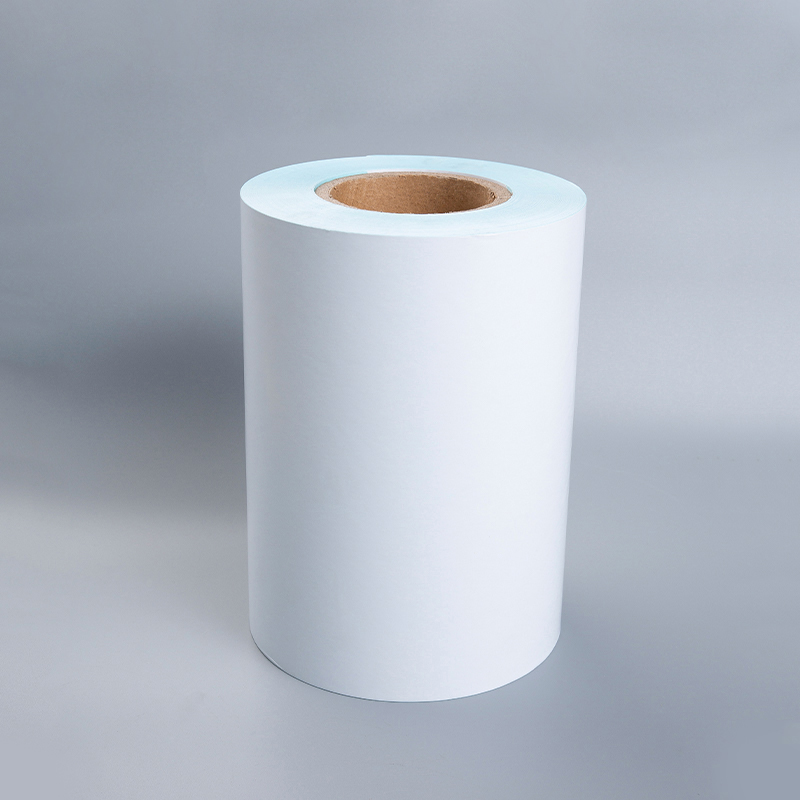
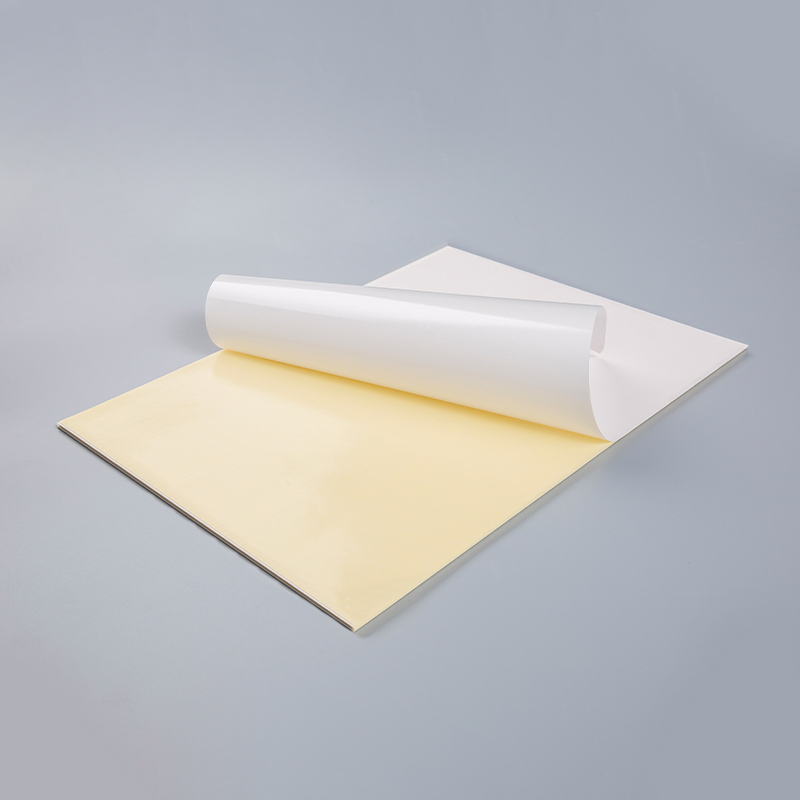
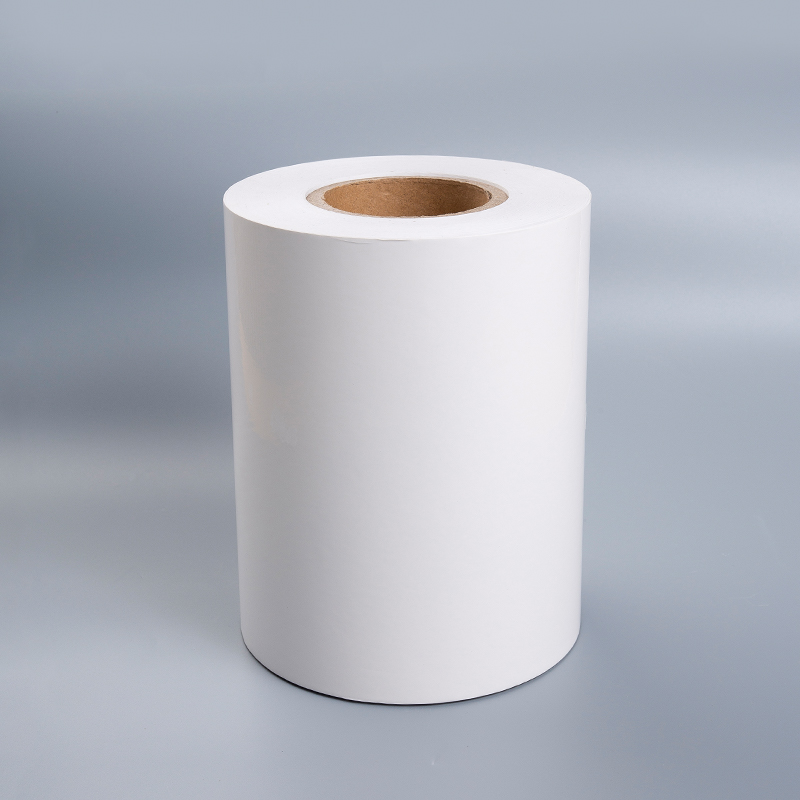
When we build a film label material, treatment level and adhesive are chosen together rather than separately. Our gloss white BOPP with a hot melt adhesive is a good example: the PP face is supplied treated so it accepts high-speed flexo inks, thermal transfer ribbons, and water-based systems without the printer having to bolt an extra treater onto the press.
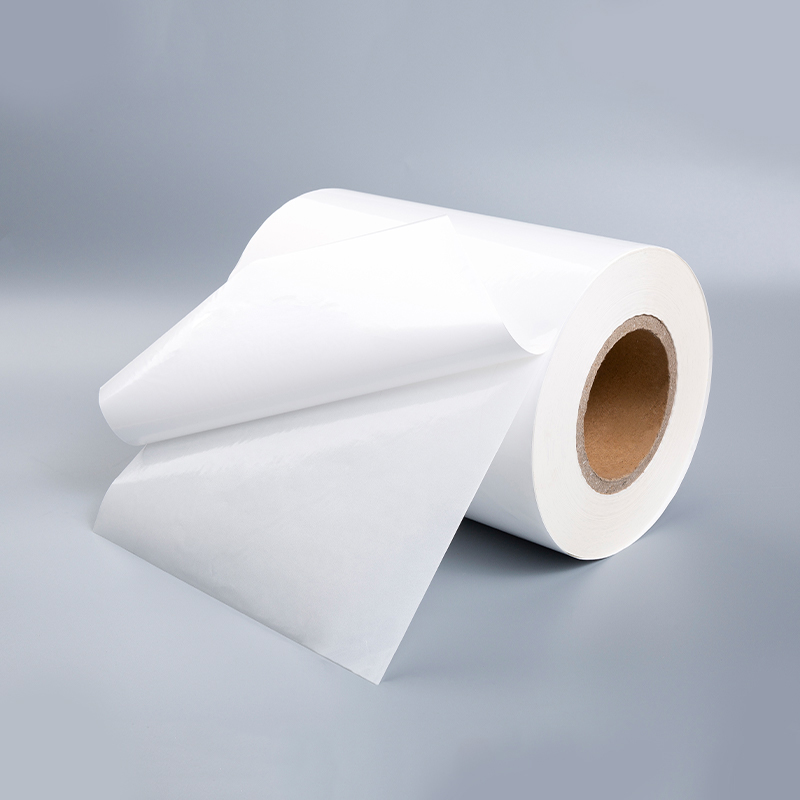 Gloss White BOPP Film with Hotmelt AdhesiveFor high-speed flexo, thermal transfer, and water-based printing, this treated PP face pairs with hotmelt adhesive and multiple liner options.View Product →
Not every job needs the same starting point. A short-run promotional label may be perfectly happy with a fresh roll of standard treated stock, while a label heading for a chilled or humid environment needs a face stock and adhesive combination that keeps its wetting tension long enough to survive the journey. If you are comparing options, our self-adhesive film range covers PP, PET, PVC, and synthetic paper faces with different liners and adhesive systems.
Adhesives and Coatings Have Their Own Dyne Window
Corona treatment only solves half of the equation. The other half is what you apply to it. A coating or adhesive wets a surface when its own surface tension is lower than the energy of the substrate, and most technicians prefer a margin of about 7 to 10 dynes/cm rather than a bare minimum. Hot melt rubber, water-based acrylic, and solvent acrylic adhesives do not behave identically, and the same adhesive can read differently on a treated film in January and in July.
The practical consequence is that 40 dynes/cm does not guarantee success if the ink or adhesive was formulated for a 46 dyne surface. When adhesion problems show up, it pays to check both sides of the pair before blaming the film. Our article on how to choose the right label glue walks through adhesive families, substrate matching, and the conditions that push a bond out of its comfort zone.
Where Metallised and Silver Films Fit
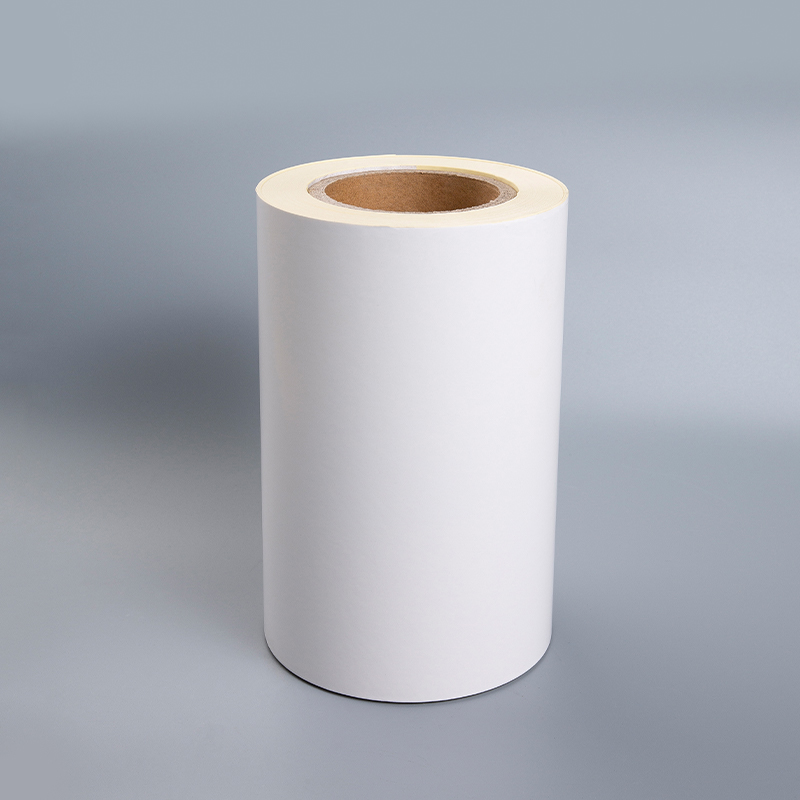
Metallised stock deserves a separate mention. A matt silver PET with a white glassine liner is a popular choice for premium and security-conscious labels, but metallised surfaces vary widely in how they accept ink, and some constructions rely on a topcoat rather than the base film's dyne level to achieve anchorage. Always test the surface you actually print, not the film category in general.
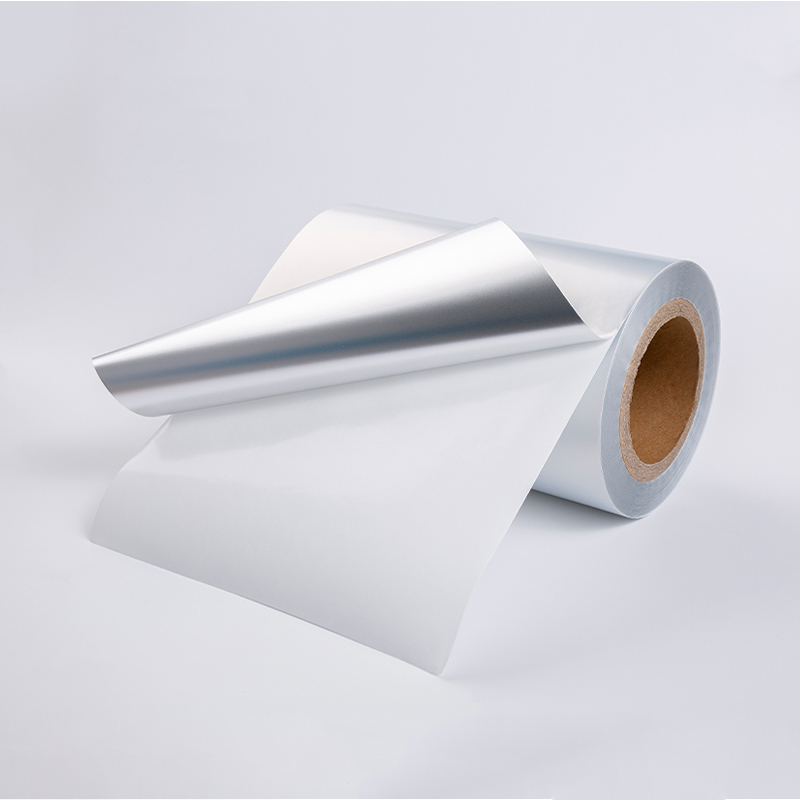 Matt Silver PET Label Film with White Glassine LinerA metallised PET face for premium or security labels, with water-based adhesive and options including hotmelt, removable, cryogenic, and alternative liners.View Product →
Transparent Films and Removable Adhesives
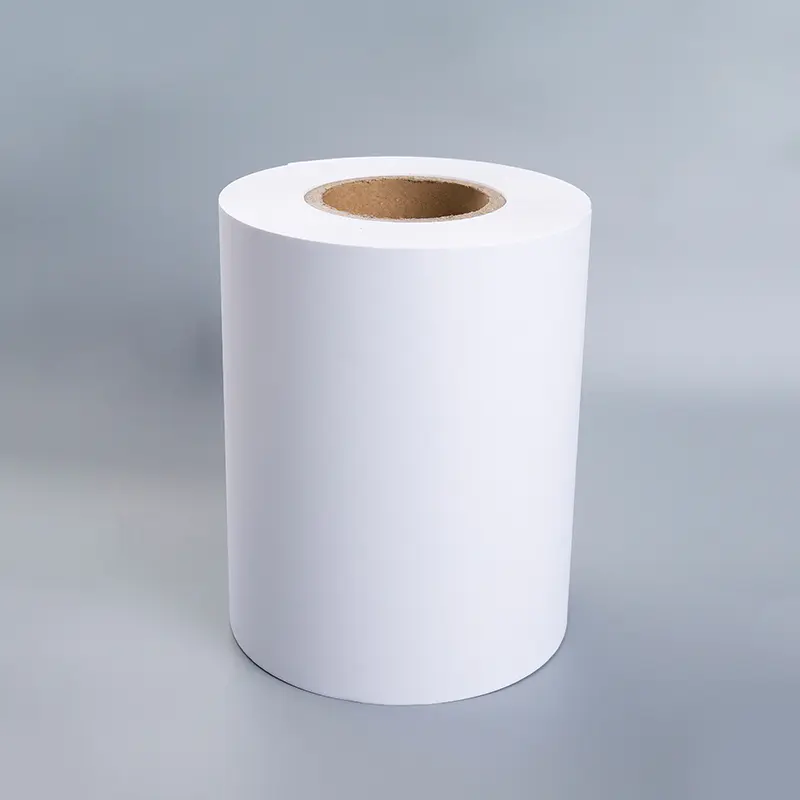
Clear labels are the least forgiving of a low dyne level. A transparent PVC with a clear PET liner leaves nowhere for a weak bond to hide, since insufficient wetting shows up as silvering, haze, or edge lift within days. Transparent films are also frequently paired with removable adhesives, which are formulated to release cleanly and therefore depend on a controlled, predictable bond rather than the strongest possible one.
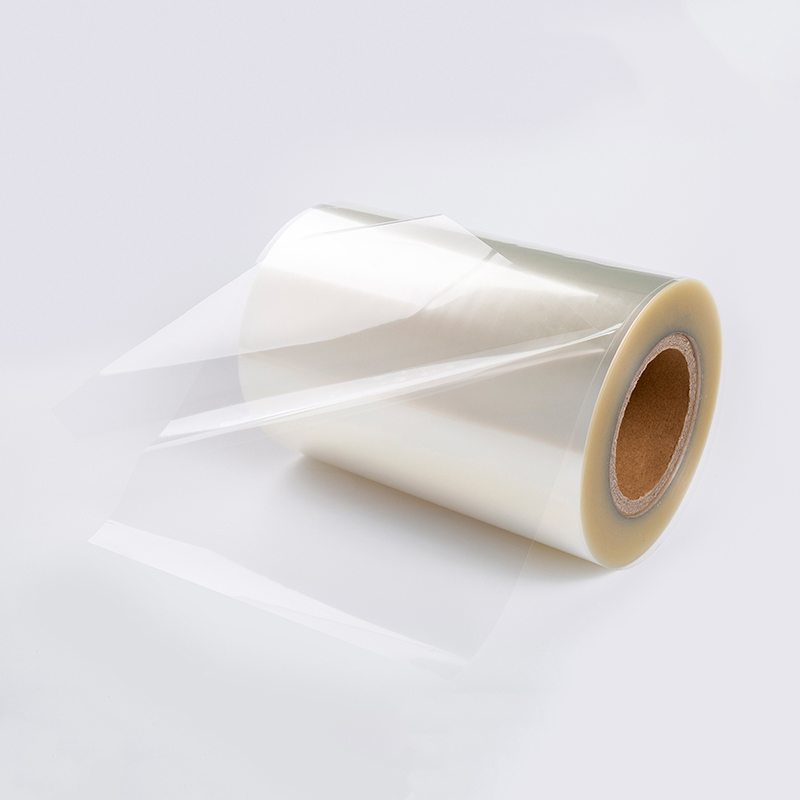 Transparent PVC Label Film with Clear PET LinerA no-label-look transparent film for beverages, cosmetics, and daily chemical labels, available with water-based or removable adhesives and multiple liner choices.View Product →
A Short Checklist Before a Large Run
Five minutes of routine at the start of a job saves reels of waste at the end of it.
- Ask what dyne level the film was treated to, and when
- Test the roll yourself at three points across the web
- Compare the measured value with the surface tension of your ink or adhesive, keeping a 7 to 10 dyne margin
- Confirm storage conditions, humidity in particular
- Re-test after long storage or a change of material supplier
- Keep a written record so a good job can be repeated exactly
Corona treatment and dyne level stop being mysterious once you treat them as a measurable, time-sensitive property of the material rather than a fixed guarantee. A treated film is a perishable surface: it is produced to a specification, it changes with storage, and it can be verified in under a minute with a pen and a swab.
If you are matching face stocks, liners, and adhesives for a specific print process, our technical team is glad to talk through the combination. Twenty years of coating, laminating, and slitting label materials has taught us that most adhesion problems are solved before the press starts, not on it.