
 English
 Español
 русский
 Français
 عربى
If you have sourced for a medical device programme before, you will have noticed that "die cut medical materials" describes two things at once. Sometimes it refers to the finished, precision-cut part: a patch, a gasket, a diagnostic strip, a sterile-barrier label. Sometimes it refers to the raw web that feeds the press, meaning the face stock, the adhesive and the release liner.
Both readings are correct, and the gap between them is where most late-stage surprises hide. A die cut part is only as dependable as the stack it was cut from. Problems that surface after sterilization, or after six weeks in a warm warehouse, were usually decided long before a die touched the web.
Content
What Die Cutting Actually Does to a Material
Die cutting is a converting step, not a material family. A steel rule or a rotary die presses into the web and separates it into shape. In medical work it most often takes four forms:
- Kiss cutting cuts face and adhesive but leaves the liner intact, so parts can be peeled away one at a time.
- Through cutting cuts every layer, producing loose components for downstream assembly.
- Perforation places a line of small cuts so a part tears away cleanly in the applicator.
- Pull-tabs and extended liners leave the liner wider than the part, or add a tab, so a gloved hand has something to grip.
Each method asks something different of the material. Kiss cutting is unforgiving about liner calliper consistency and release force, because the die has to stop within a few microns of the liner face without nicking it. Perforating is unforgiving about tensile strength and fibre structure. Anyone who has watched a web snap mid-run will tell you that material choice and tooling choice are one decision, not two.
Where These Materials End Up
The medical applications for die cut materials are broader than the label shelf suggests. These categories cover most of what passes through converter enquiries.
Wearable patches and fixation devices
Continuous glucose sensors, ECG electrodes, ostomy flanges and simple fixation tapes all rely on a die cut skin-contact layer. The material has to conform to a moving body, stay put through sweat, and still release from the liner at the line speed the converter runs.
Diagnostic strips and test components
Lateral flow and point-of-care devices use die cut pads, films and adhesive spacers. Dimensional consistency matters more than adhesion here, because a strip that is 0.2 mm off can change the flow path.
Labels that have to survive sterilization
Sterile barrier labels, vial labels and device tracking labels pass through ethylene oxide, gamma or autoclave cycles. Adhesive choice and liner choice decide whether the label stays flat or lifts at the edge afterwards.
Packaging and process consumables
Not every die cut medical material touches a patient. Sealing films, tamper-evident closures, cleanroom documentation labels and packaging tape all sit in the same specification conversation.
Reading the Stack: Face, Adhesive, Liner
When a specification goes wrong, the conversation usually returns to three layers. It helps to know which layer is doing the work.
| Layer | Options we see most | What it really decides |
|---|---|---|
| Face stock | Cast coated paper, semi-glossy paper, white BOPP, PET film, synthetic paper | Print resolution, stiffness on the applicator, conformability over curved skin or device housings |
| Adhesive | Acrylic permanent, acrylic removable, hot melt, water-based, solvent | Initial tack, peel growth over time, residue on removal, tolerance to humidity and sterilization |
| Release liner | White or blue glassine, PE-coated kraft, transparent PET film | Die-cut depth control, release force, dimensional stability through heat and pressure |
Face stock gets the most attention and deserves the least. What actually fails is the relationship between the other two layers. An adhesive with strong initial tack will grip a liner that releases too easily and drag it into the die. A liner that is perfectly stable at 23 degrees may curl at 60. If you are still narrowing options, this guide to how to choose the right label glue is a useful companion to the material datasheets.
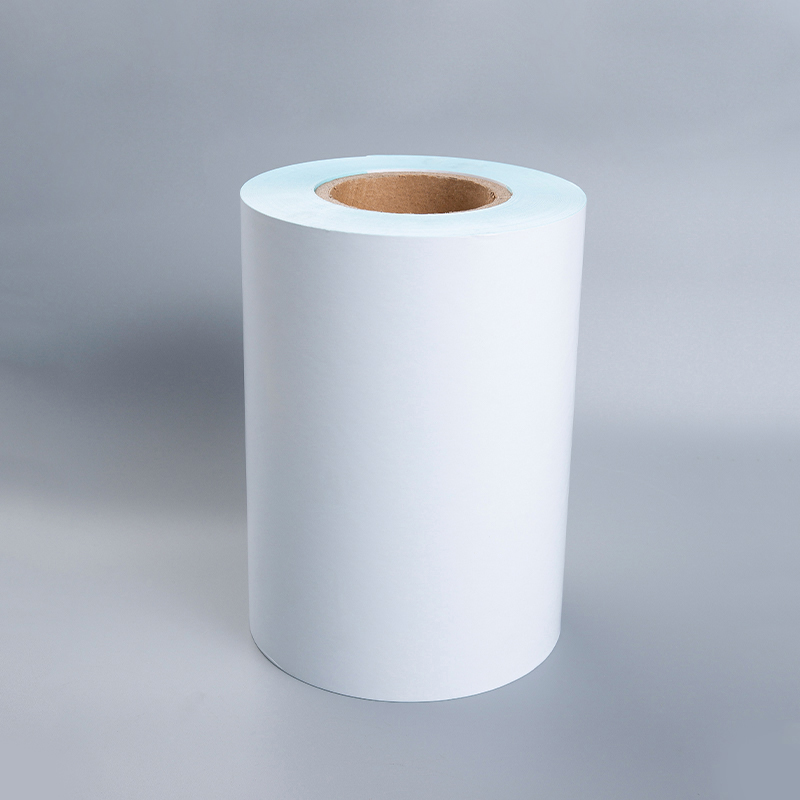
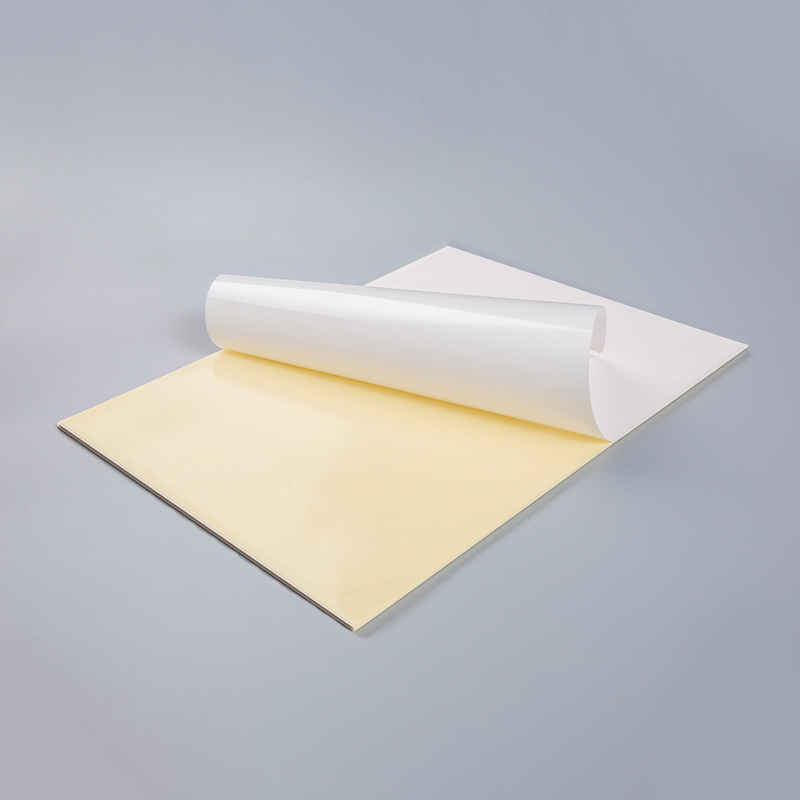
 White Glassine Release Paper for Kiss-Cut Label WorkA consistent, predictable glassine liner suited to kiss-cut medical labels and high-speed automatic labeling, available in multiple weights and roll or sheet formats.View Product →
In practice, a white glassine liner handles a large share of kiss cut medical work, simply because its calliper stays consistent and its release profile is predictable across long runs.
Matching the Stack to Wear Time and Sterilization
Two questions tend to settle a specification faster than any spreadsheet.
How long does it stay on? A part worn for eight hours and a part worn for fourteen days are different engineering problems. Short-wear devices usually tolerate a high-tack acrylic. Long-wear devices need an adhesive that builds peel strength slowly and releases without stripping the skin, which almost always means lower initial tack and a more carefully chosen liner.
What does it go through? Ethylene oxide is relatively gentle on paper and film but can affect some adhesive chemistry. Gamma irradiation is harder on polymers. Autoclave cycles combine heat, moisture and pressure, which is the toughest combination for a paper face and a glassine liner. If a specification has been signed off at room conditions only, it is worth running a trial roll through the real sterilization cycle before committing to a production order.
The liner does more of the work here than people expect. A transparent PET liner holds its dimensions through heat and does not absorb moisture, which makes it a frequent choice for parts processed in a humid cleanroom or sterilized in bulk.
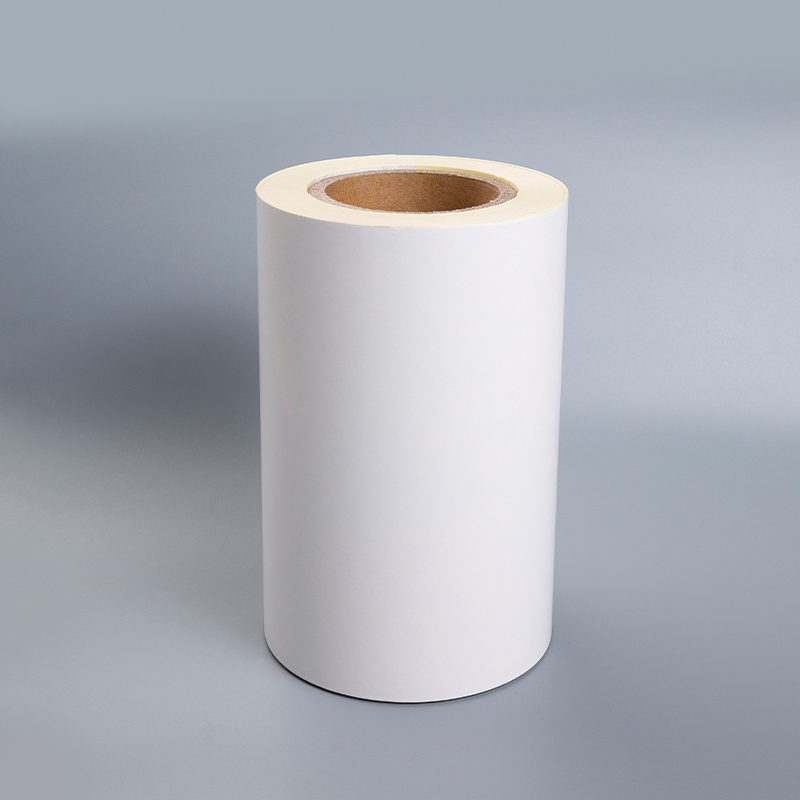
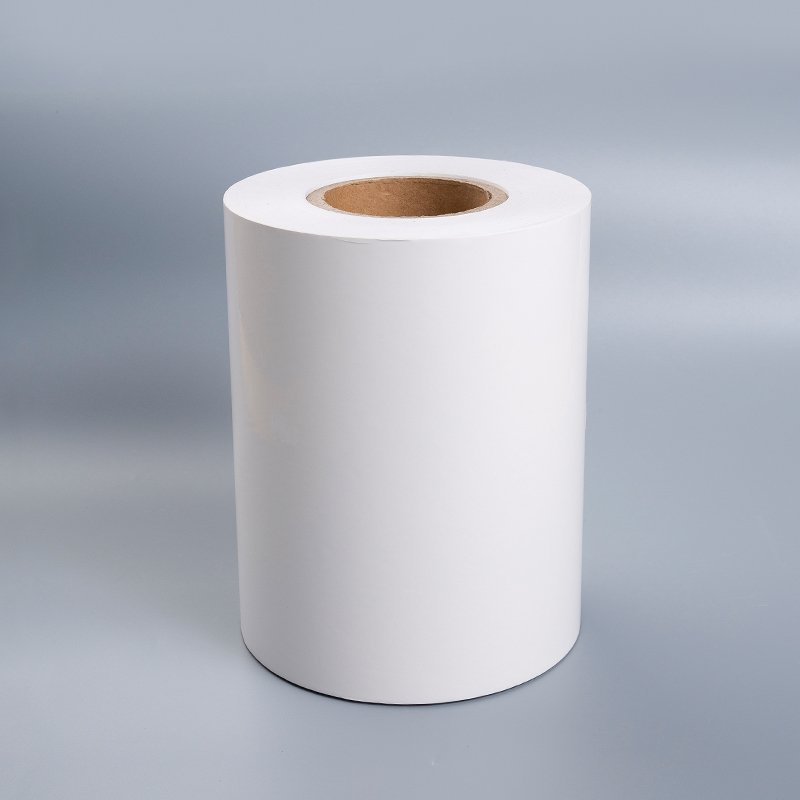
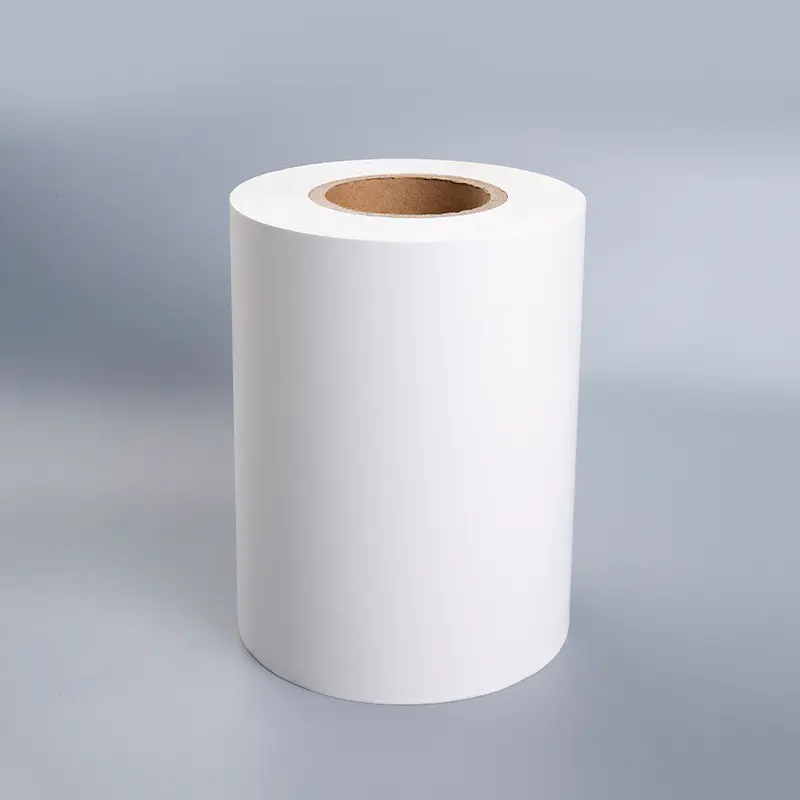
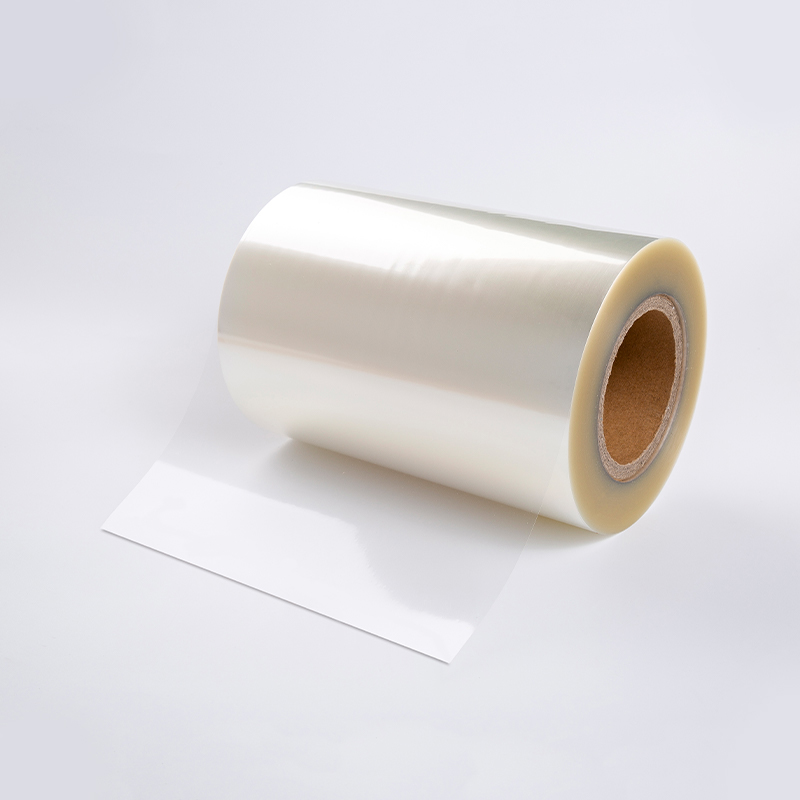 Transparent PET Release Liner for Humid Cleanroom ProcessingA dimensionally stable PET film liner that resists moisture and heat, making it a practical option for tape, insulation, packaging and cleanroom-processed release applications.View Product →
Our silicone release paper range covers glassine, PE-coated kraft and PET film, and it is usually the layer where a specification gets won or lost.
Where a Material Manufacturer Fits In
It is worth being clear about the division of labour, because it shapes how a project gets planned.
We coat, laminate and slit. That means taking a face stock, applying an adhesive, marrying it to a release liner and delivering it in roll or sheet form at the width and calliper the converter has specified. The die cutting, the cleanroom, the sterilization and the regulatory file sit with the converter and the device manufacturer.
That division is not a limitation; it is what makes the chain work. A converter who knows the die, the press speed and the end-use environment can specify the web precisely. A material supplier who has run the same construction a thousand times can say where the tolerances really sit. The two conversations need to happen early. Changes that are trivial at the coating stage, such as a different liner calliper or a slightly softer adhesive, become expensive once tooling exists.
For device assembly work, a double-sided paper carrier with a white PEK liner is one of the more practical building blocks, because it can be die cut into small bonding shapes and applied without a separate adhesive step.
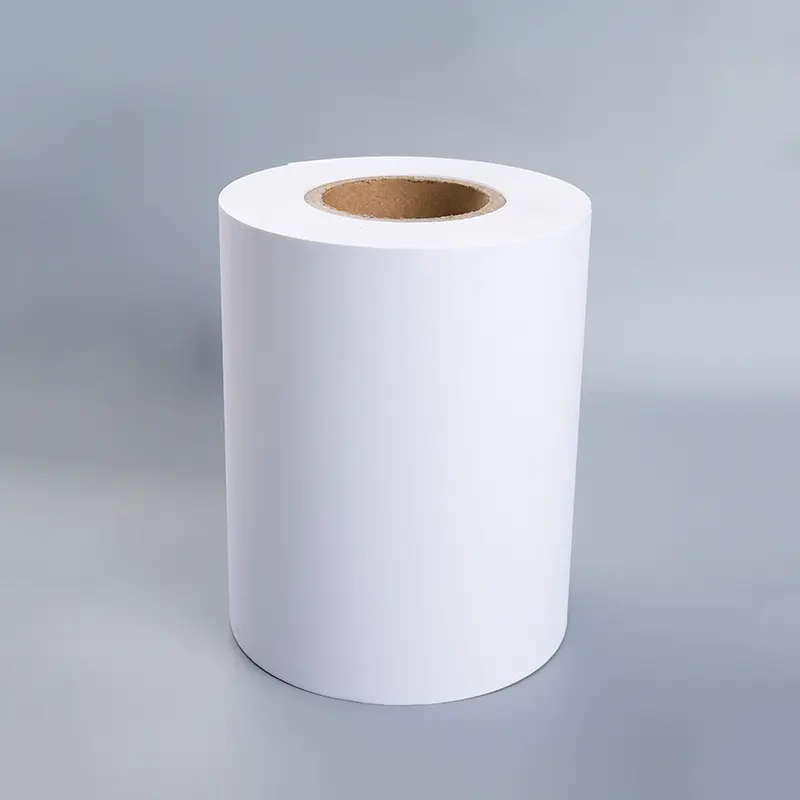
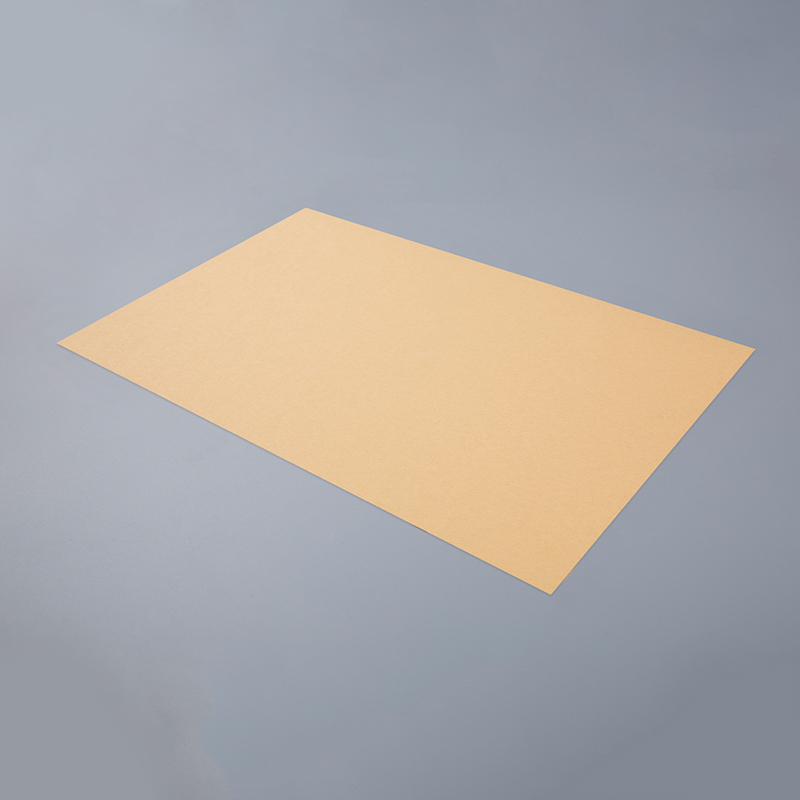
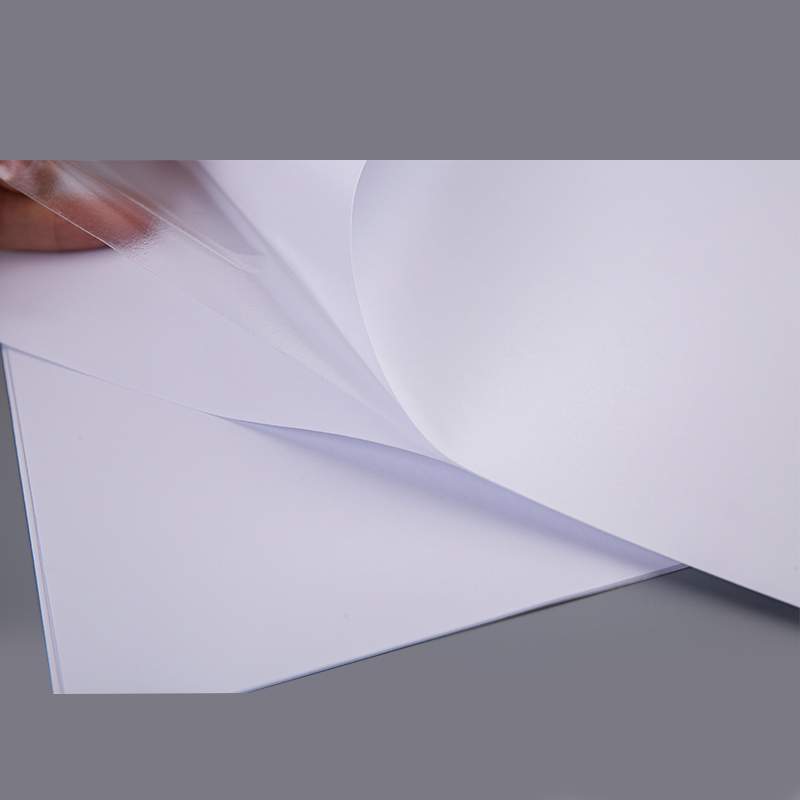 Double-Sided Adhesive Paper with White PEK LinerA high-tack double-sided paper carrier for die-cut bonding shapes, with white release paper liners and adhesive options for leather, electronics and assembly work.View Product →
Our own production covers coating, laminating and slitting across paper, film and release liner, which helps when a single project needs a paper face for the label and a film liner for the carrier in the same shipment.
Habits That Save Weeks Later
- Specify the liner, not just the face. Most die-cut failures are liner failures in disguise.
- Ask for the trial roll in the real environment. A humidity chamber is not a warehouse, and a warehouse is not a sterilization cycle.
- Keep one variable per trial. Changing adhesive and liner together tells you that something worked, never what.
- Write down the calliper tolerance. "About 80 gsm" is not a specification; a number with a range is.
- Talk to the converter before the tooling is cut. Design changes are cheap on paper and expensive on a die.
Questions We Hear Most
Do medical die cut materials need to be medical grade?
The material itself is rarely certified in isolation. What matters is the finished device and the evidence behind it: biocompatibility testing on the actual construction, extractables data, and a supplier who can document batch consistency. A face stock that performs well in an industrial label may still be the wrong choice if nobody can trace its lot.
Can paper-based materials work in medical applications?
Yes, more often than people assume. Cast coated and semi-glossy papers are common in secondary labels, vial labels and documentation. Where they struggle is in prolonged moisture or repeated autoclave exposure, which is where film faces and PET liners earn their cost.
What is the most common specification mistake?
Over-specifying the face and under-specifying the release. A premium film face on an inconsistent liner will still produce ragged kiss cuts and adhesive ooze.
None of this is complicated, but it is sequential. Get the stack right, prove it in the environment it will actually live in, and the die cutting step becomes routine. Get it wrong, and no amount of tooling skill will rescue the run.
If you are at the stage of comparing constructions, send us the application, the wear time and the sterilization method. We will tell you honestly which of our materials fits, and which one does not.