
 English
 Español
 русский
 Français
 عربى
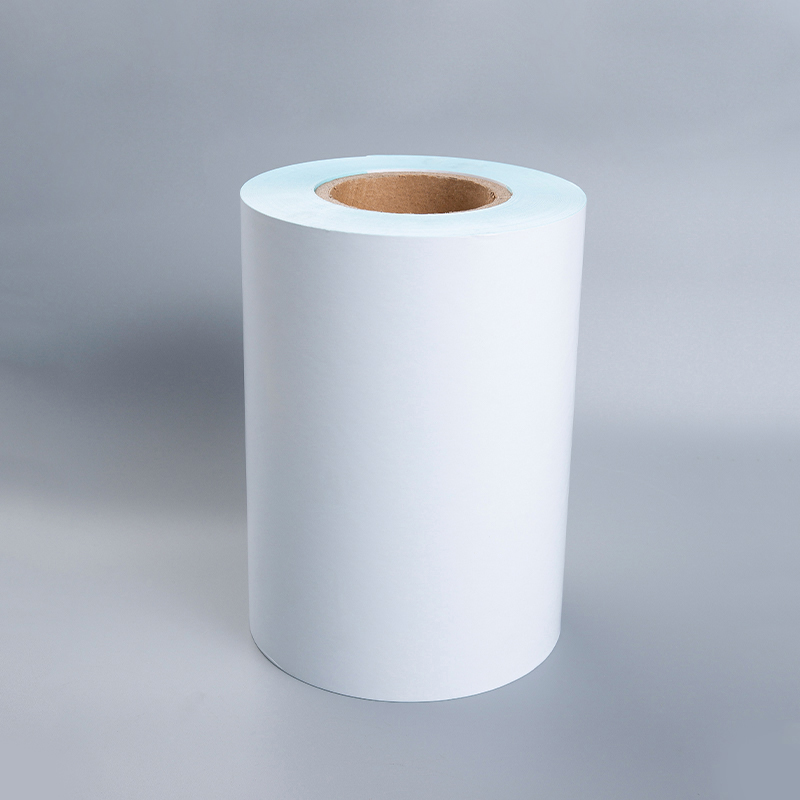
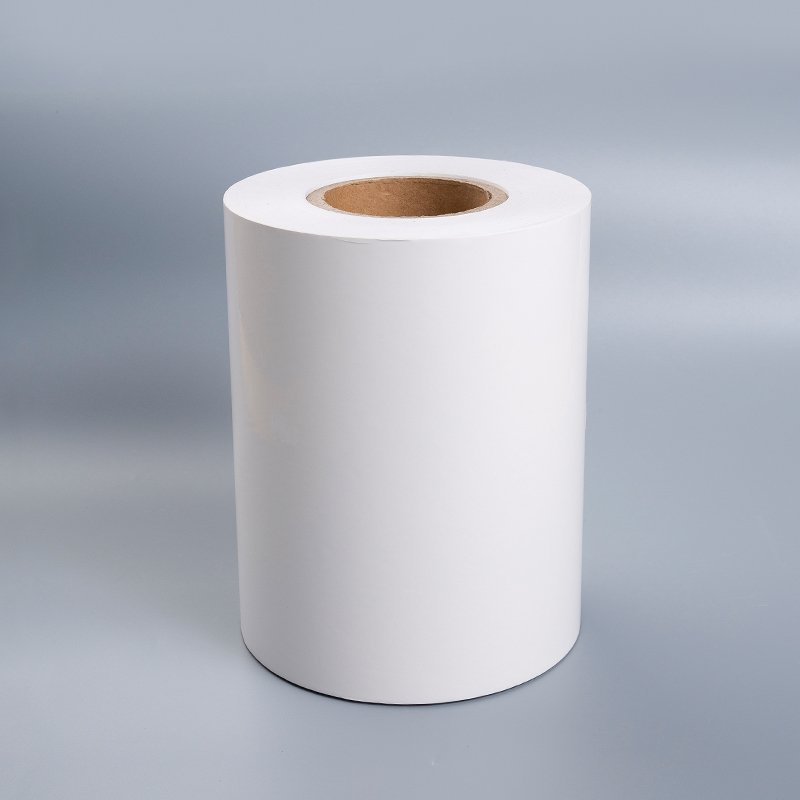
Anyone who has flipped through a converter's sample book has met the term. "Filmic" is workshop shorthand for a label built on a plastic film face stock instead of paper — BOPP, PET, PVC, or a synthetic paper that behaves like film on press. It sounds like a minor distinction, but it quietly decides how a label looks on shelf, whether it survives a cooler full of melting ice, how it runs through a flexo press, and what happens to it at end of life.
We have spent twenty years coating adhesives, laminating films and slitting release liners for label printers and brand owners, and the questions we hear about filmic stock are always the same handful. What follows is the practical version of our answers, without the sales gloss.
Content
What "Filmic" Really Describes
A paper label sits on a surface. A clear film label seems to sink into it. That single optical difference is why the word filmic has stuck: it describes a family of materials whose defining quality is a smooth, non-porous plastic face that either disappears against the container or reflects light in a very controlled way.
The practical consequences run deeper than appearance:
- Optics. Film faces are far smoother than paper, so ink sits on top with high hold-out and gloss. Clear grades transmit light rather than scattering it, which is what produces the "no-label look" on glass and PET bottles.
- Mechanics. Film stretches, recovers and resists tearing. On squeezable tubes and curved containers it follows the surface instead of cracking at the edge.
- Environment. Films shrug off water, humidity, oils and many chemicals that would cockle or stain a paper face.
- Converting. Film has different surface energy, static behaviour and web tension requirements than paper, so it rewards printers who adjust rather than assume.
The Filmic Substrates You Will Actually Meet
Most filmic work in the label industry is done by five face stocks. They are not interchangeable, and neither is their pricing.
| Face stock | What it gives you | Typical applications | Watch out for |
|---|---|---|---|
| Gloss white BOPP | Bright, smooth surface with excellent ink hold-out and good moisture resistance | Beverages, household care, promotional and multi-pack labels | Limited conformability on soft or heavily curved containers |
| Clear BOPP | The classic no-label look on transparent packaging | Bottled water, juices, cosmetics, personal care | Trapped air reads as silvering if application is rushed |
| PET, white, clear or metallised | High temperature and chemical resistance with strong dimensional stability | Industrial, automotive, electronics, durable decals | Stiffer hand; edges may lift on tight radii without a conformable adhesive |
| PVC | Soft, very conformable, forgiving on textured and curved surfaces | Home and personal care, surface decoration, wall graphics | Increasing recycling scrutiny and plasticiser migration over time |
| Synthetic paper | Film durability with paper-like printability and tear resistance | Logistics, horticulture, outdoor signage, industrial tags | Surface energy and topcoat quality vary noticeably between suppliers |
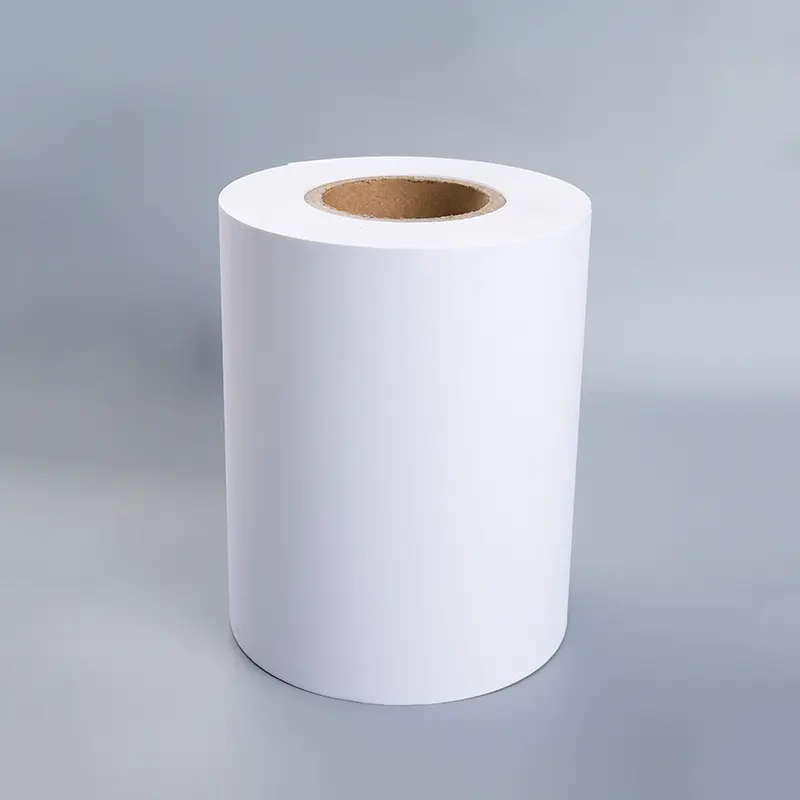
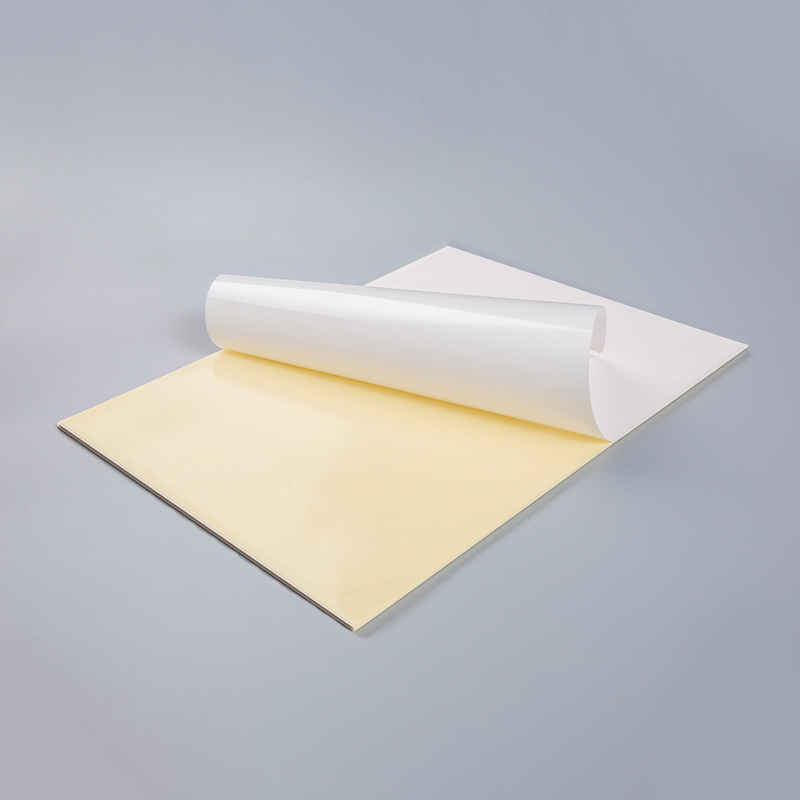
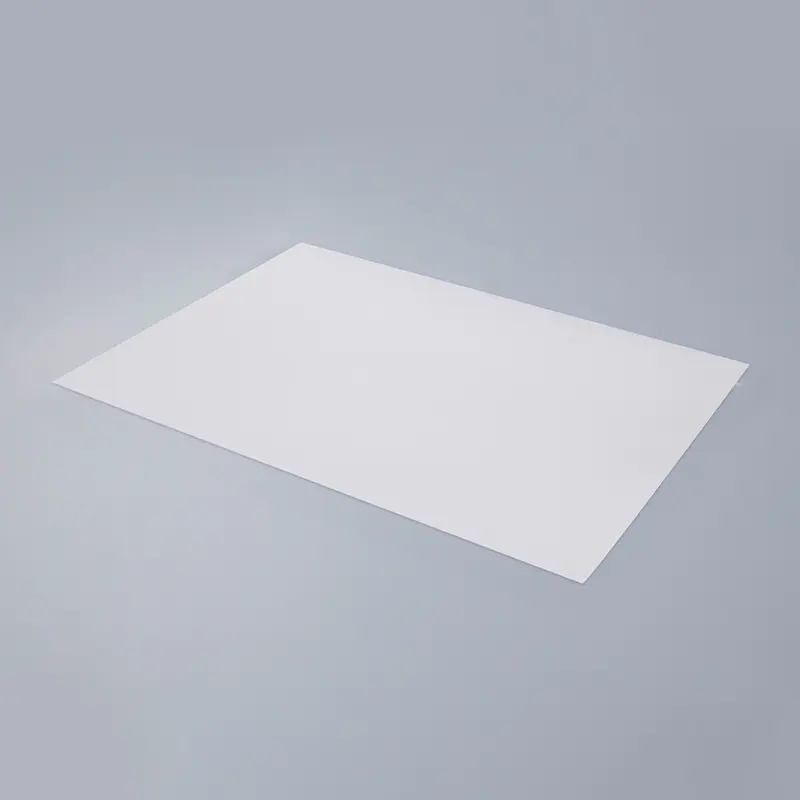
BOPP is where most filmic projects begin, simply because it balances cost, print quality and machinability better than anything else. A hot-melt gloss white PP in sheet form, for instance, is a workhorse for converters running sheet-fed offset and needing a film face without rethinking their whole process.
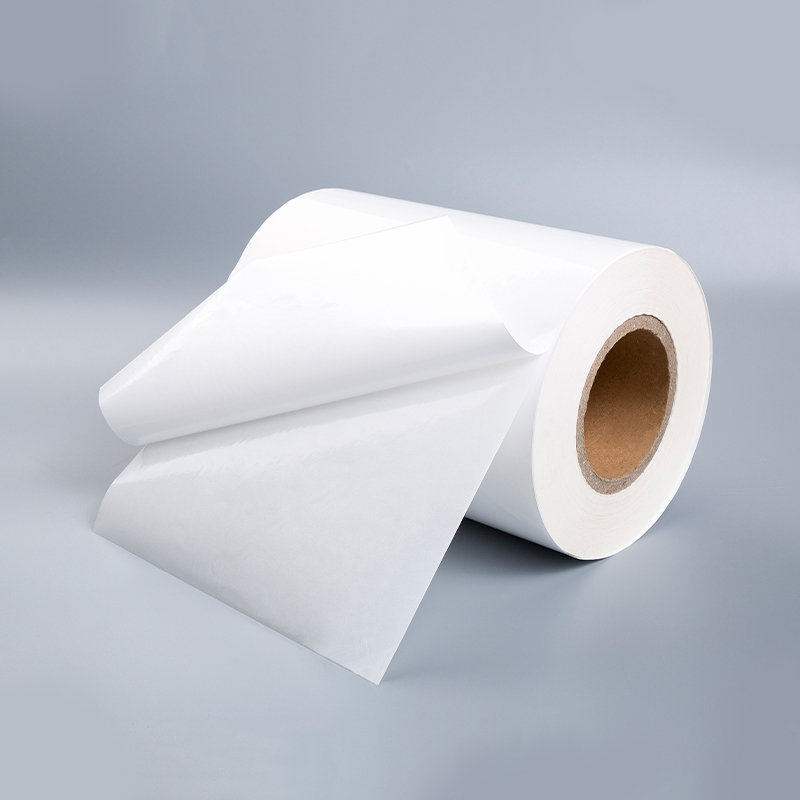 Hotmelt Adhesive Gloss White PP Label MaterialA BOPP/PP film face with hotmelt adhesive, suited to sheet-fed offset projects and available with customizable thicknesses, liners and sheet sizes.View Product →
If your project spans several film families, it helps to review the wider self-adhesive film range alongside the paper options, because the right answer is sometimes a hybrid: a film face on a paper liner, or a paper face with a film-like topcoat.
Adhesives and Liners: The Half of the Story People Skip
The face stock gets all the attention, but most filmic failures we investigate come from the adhesive or the liner. A clear BOPP on a bottle is only as good as the glue behind it.
Acrylic, hot melt or water-based?
Acrylic adhesives are the default for clear filmic work: they resist UV and ageing, stay optically clear and suit chilled or damp conditions. Hot melt delivers higher initial tack and better grab on rough or recycled surfaces, which matters for cartons and moulded containers. Water-based systems sit in between, offering good general performance with a lighter environmental footprint. For freezer and cold-chain work, look specifically at grades formulated for low-temperature application rather than assuming a standard permanent will cope.
The liner decides how the label behaves in the press
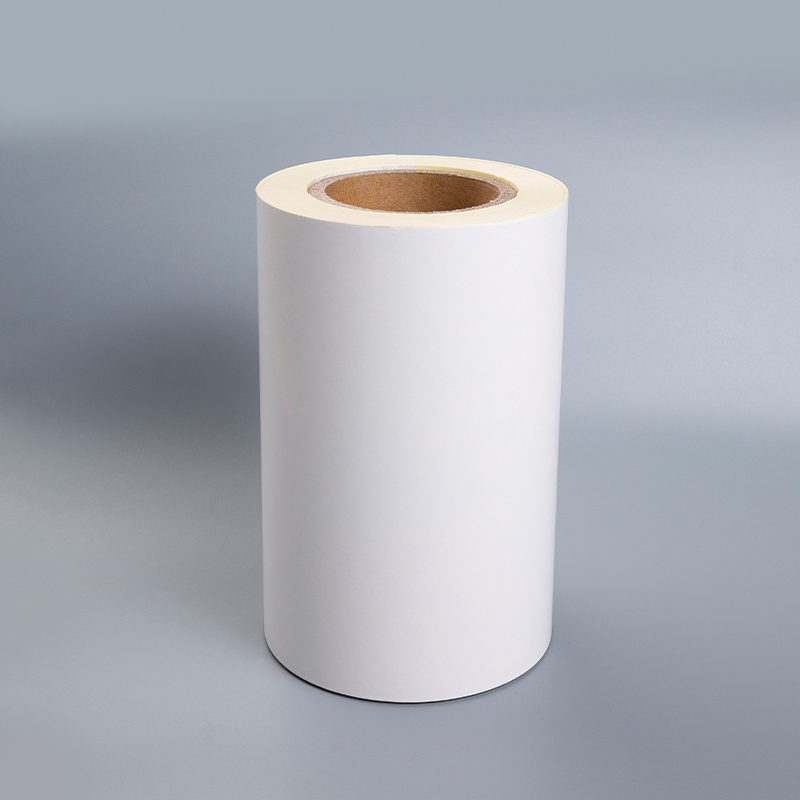
Glassine liners, in white, blue or yellow, are the familiar choice for filmic labels because they are stable, die-cut cleanly and run well at speed. Film liners such as clear PET come into play where the label is applied automatically at high speed, where optical inspection needs to see through the web, or where humidity in the plant would affect a paper liner. The liner is also where a surprising amount of cost sits, so specifying it deliberately is one of the fastest ways to protect a margin.
Where Filmic Labels Earn Their Keep
Beverages remain the showcase. A thin clear film wrapped around a PET bottle makes the pack look printed rather than labelled, and the film keeps its clarity through chillers and ice buckets. Personal care follows closely: shower gels, shampoos and household cleaners put labels through constant wet handling, and film simply lasts longer.
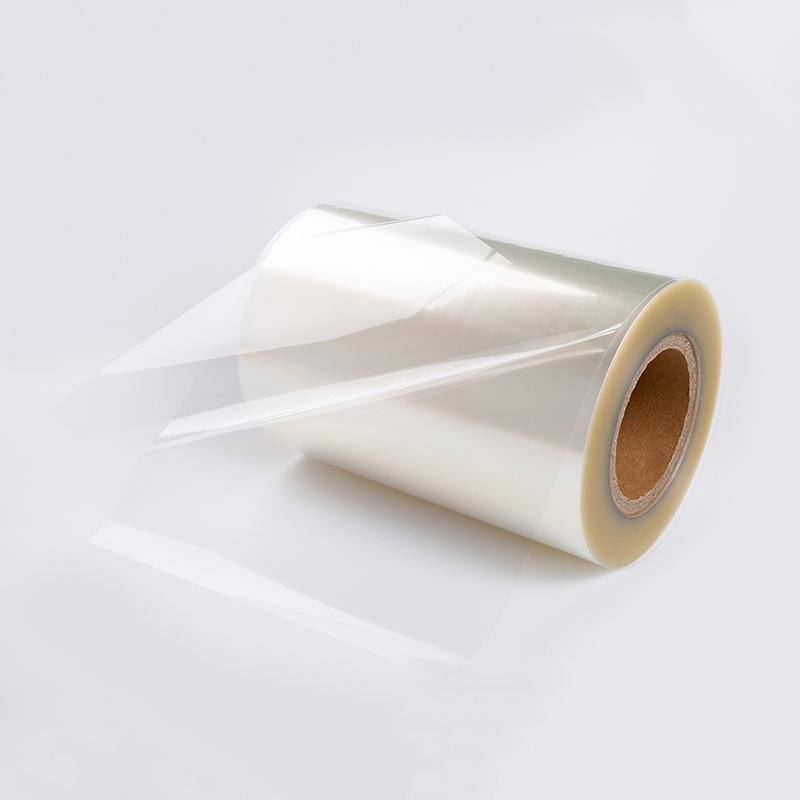 Transparent PVC Film With Clear PET LinerA clear PVC label film with PET liner for no-label beverage and personal care packs, available in multiple thicknesses and customizable formats.View Product →
Beyond packaging, filmic materials have moved into industrial and functional territory — automotive trim, appliance panels, equipment rating plates, horticultural pots, and surfaces that need chemical resistance rather than shelf appeal. That shift is examined in more depth in our look at functional surface innovation, where film stops being decoration and starts being a component.
Metallised and silver PET grades deserve their own mention. They carry a mirror finish that photographs beautifully and, in industrial settings, also reflect heat and resist moisture ingress.
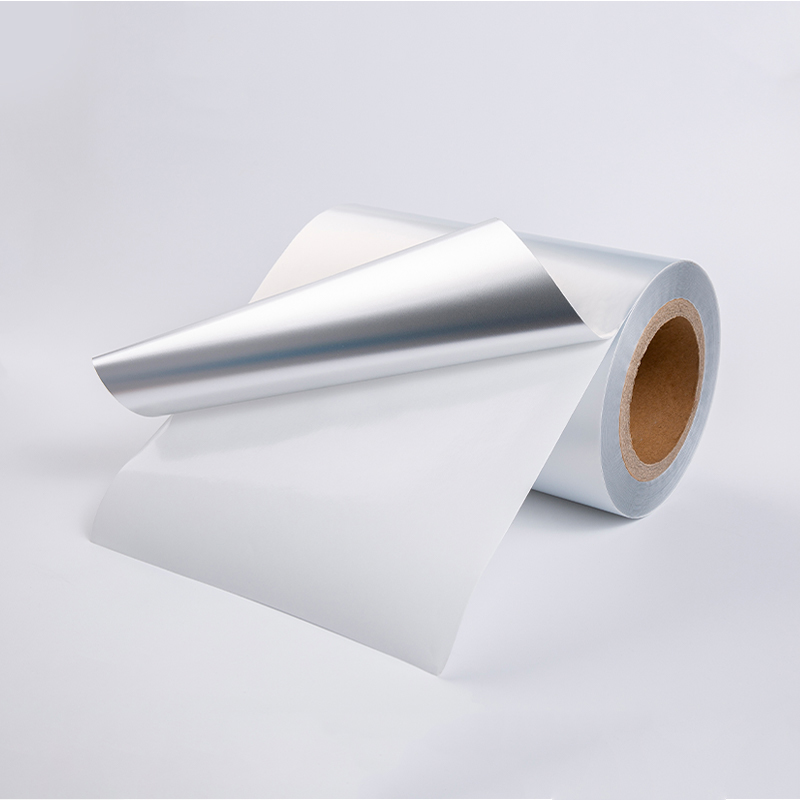 Matte Silver PET Self-Adhesive Label FilmA matte silver PET film for electronics, cosmetics and industrial labels, with customizable adhesives, liners, thicknesses and sheet or roll formats.View Product →
A Simple Selection Sequence
When a customer sends us a brief, we work through the same order of questions every time. It rarely fails.
- Define the container or surface first, including curvature, texture and any squeeze or flex in use.
- Decide the optical goal: opaque and bright, clear and invisible, metallic, or textured.
- Map the environment: moisture, refrigeration, UV exposure, oils, solvents, abrasion, expected service life.
- Choose the adhesive on the basis of that environment, not on price per square metre.
- Select the liner according to your press, your application line and your climate.
- Request samples, then run a short trial on the actual substrate and the actual applicator before committing to volume.
Steps five and six are where most avoidable problems are caught. A material that performs beautifully on a lab bench can behave very differently on a line running 300 bottles a minute in a humid filling hall.
Press and Finishing Notes
Filmic stock is not difficult, but it is less forgiving than paper. Check the dyne level of the face before printing; film that has sat in storage can drift below the level a UV ink needs, and a light corona pass is cheaper than a reprint. Control web tension carefully, because film stretches and thin grades will register badly if tension creeps up through a long run. Manage static at unwind and at the die station, especially in dry winter air.
On the finishing side, filmic labels take hot foil, screen tactile varnish, cold foil and overlamination well, which is why they dominate premium and promotional work. Die-cutting needs a sharp, well-set tool; rough cuts on film show up as ragged edges far more visibly than on paper.
Common Problems and Their Usual Causes
- Silvering or cloudy patches on a clear label: air trapped during application. Slower dispensing, a firmer squeegee and a slightly domed applicator roll usually solve it.
- Edge lift on curves: the face is too stiff for the radius. Move to a more conformable film or a softer adhesive.
- Ink rub or poor adhesion: low surface energy on the face, or an incompatible ink and topcoat pairing.
- Label wandering during automatic application: liner choice, matrix stripping quality or release force that is too high for the speed.
- Discolouration after storage: adhesive or plasticiser interaction, often accelerated by heat and pressure on the roll.
The Sustainability Question
Film has an image problem in sustainability discussions, and some of it is fair. The most useful thing a converter or brand owner can do is design for the recycling stream that actually exists in the target market. A clear BOPP on a PET bottle is only recyclable in practice if the adhesive washes off cleanly and the label detaches during flotation; that is a specification decision, not an afterthought. Mono-material polyolefin constructions, thinner downgauged films and paper liners where the application allows all reduce impact without sacrificing appearance.
We see filmic labels and paper labels coexisting for a long time yet. The realistic goal is to match the material honestly to the pack, the process and the disposal route, rather than to assume paper is always the greener answer.
Filmic labels are ultimately a conversation about fit. Get the face, the adhesive and the liner aligned with how the pack is filled, shipped, displayed and discarded, and film rewards you with clarity, durability and print quality that paper struggles to match. Get one of those three wrong and no amount of premium artwork will hide it. If you are weighing up options for a new project, we are always happy to look at the container and the filling line with you before anyone talks about quantities.