
 English
 Español
 русский
 Français
 عربى
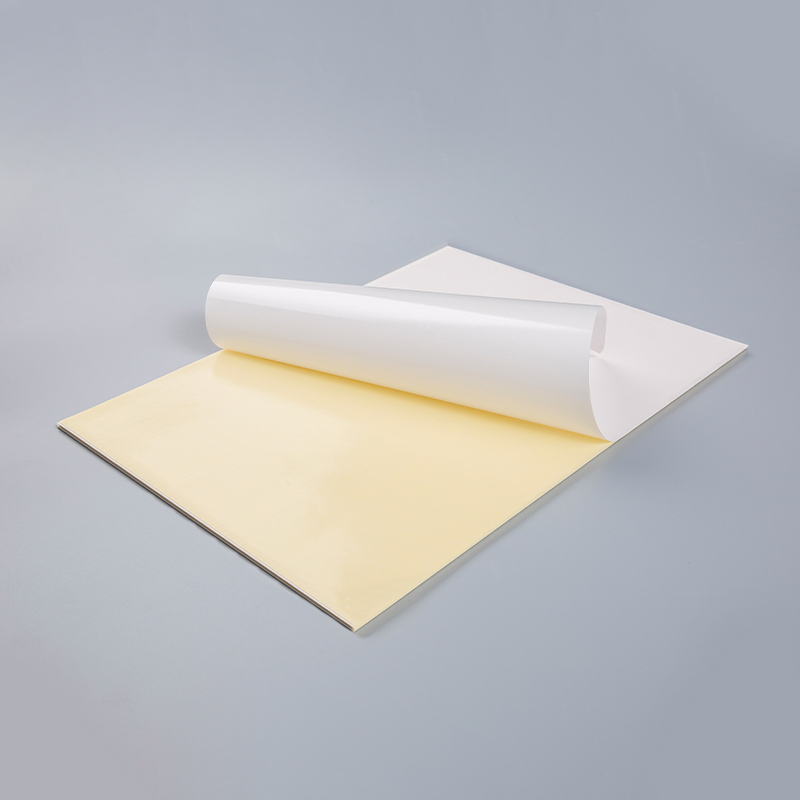
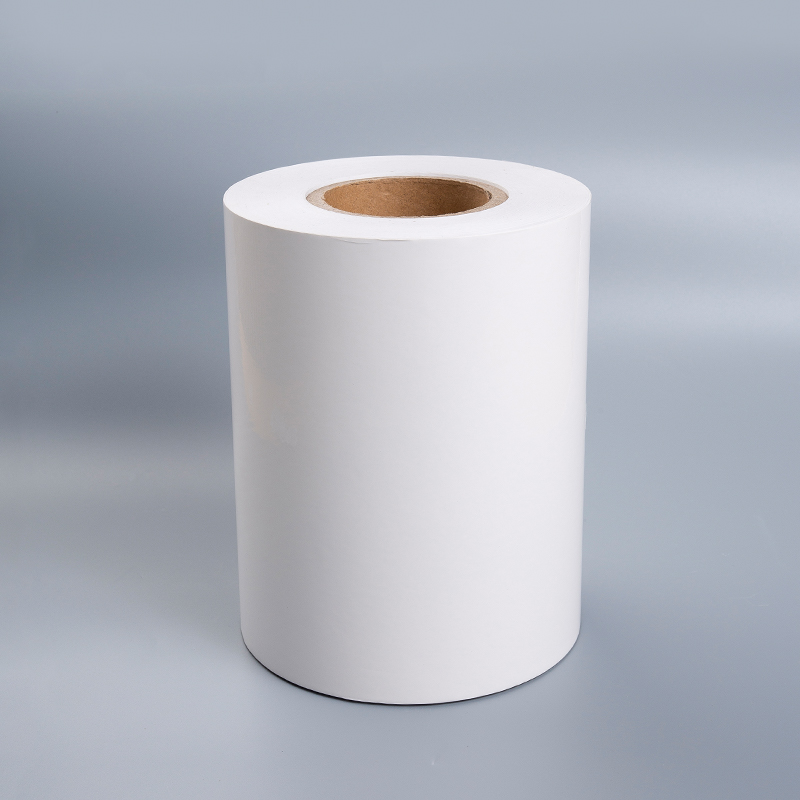
عربىLabels that fail in the field create real problems — smeared barcodes, peeling edges, faded product names, and lost consumer trust. For products that routinely face moisture, grease, cleaning agents, or condensation, the choice of label material is not cosmetic; it is functional. Self-adhesive gloss white BOPP (Biaxially Oriented Polypropylene) labels have become a leading solution precisely because they are engineered to withstand these conditions while maintaining print clarity and adhesion integrity over extended periods. Understanding why they perform so well requires looking at both the material science behind BOPP film and the practical environments where these labels are put to the test.
Content
- 1 What Makes BOPP Film Chemically Resistant
- 2 Water Resistance: Performance in Wet and Humid Environments
- 3 Oil Resistance: Maintaining Adhesion on Greasy Surfaces
- 4 Detergent and Chemical Resistance: Surviving Wash-Down Conditions
- 5 Industries and Applications Where These Properties Are Critical
- 6 Long-Term Colour and Adhesion Retention
- 7 Selecting the Right BOPP Label Specification for Your Application
- 8 Conclusion
What Makes BOPP Film Chemically Resistant
BOPP stands for Biaxially Oriented Polypropylene — a thermoplastic polymer film that has been stretched in two perpendicular directions during manufacture. This biaxial orientation process aligns the polymer chains, dramatically increasing the film's tensile strength, dimensional stability, and barrier properties compared to standard polypropylene or paper-based label stocks.
Polypropylene is inherently non-polar, meaning it does not absorb water, oils, or most aqueous chemicals. Where paper labels absorb moisture and begin to delaminate, wrinkle, or lose adhesion within minutes of contact with water or cooking oils, BOPP film remains structurally unchanged. The film's surface does not swell, soften, or become porous under wet conditions, which is why the label face retains both its dimensional form and its printed graphics even after prolonged exposure.
The gloss white finish on BOPP labels adds a further functional layer. A white pigmented top-coat creates a bright, opaque base that maximises print contrast and colour vibrancy, while the gloss surface coating provides additional resistance to scuffing and surface abrasion — critical for products that are handled frequently in retail or industrial environments.
Water Resistance: Performance in Wet and Humid Environments
Water resistance in label materials operates on two levels: the face stock's ability to repel moisture and the adhesive's ability to maintain bond strength when the substrate becomes wet. Gloss white BOPP labels are designed to perform on both fronts simultaneously.
The BOPP film itself is waterproof at the face. Rain, condensation, splashing, and brief submersion will not cause the film to wrinkle, become translucent, or allow moisture to wick behind the label face. This is in stark contrast to paper labels, which become pulpy and illegible within seconds of full water contact. For beverage bottles removed from ice buckets, shampoo bottles used in wet showers, or outdoor product containers exposed to rain, this distinction is commercially significant.
Adhesive Performance Under Moisture
The pressure-sensitive acrylic adhesives formulated for BOPP labels are selected specifically for their wet-bond performance. Standard acrylic adhesives used in gloss white BOPP label constructions are water-resistant rather than water-soluble, meaning the adhesive does not emulsify or lose tack when exposed to moisture. Labels applied to clean, dry surfaces before exposure to water maintain their bond through repeated wetting and drying cycles without lifting at the edges or developing the characteristic bubble pattern seen in inferior label materials.
Cold-temperature variants of gloss white BOPP labels are also available for refrigerated and frozen product applications, where condensation is a persistent challenge. These use adhesives formulated to bond effectively at temperatures as low as -10°C and resist the adhesive plasticisation that causes labels to slide or fall from chilled glass and plastic surfaces.
Oil Resistance: Maintaining Adhesion on Greasy Surfaces
Oil contamination is one of the most challenging conditions for label adhesion. Oils — whether from cooking, machinery, cosmetics, or skin contact — act as release agents between a label's adhesive and the substrate surface, dramatically reducing bond strength. Gloss white BOPP labels address this problem through their non-porous film construction and through specialised adhesive formulations designed for oleophilic (oil-attracting) environments.
In food processing environments, BOPP labels applied to bottles, tubs, and sachets containing edible oils, sauces, dressings, and fatty products must survive accidental drips, wiping with oily cloths, and handling by hands that have contacted food products. The gloss surface of the BOPP label repels surface oils rather than absorbing them, preventing the label face from becoming greasy, discoloured, or translucent — a common failure mode in uncoated paper labels used on similar products.
Industrial and Automotive Applications
In industrial settings, self-adhesive gloss white BOPP labels are used on lubricant containers, chemical drums, engine components, and workshop tools — all environments where mineral oils, hydraulic fluids, and greases are routine contaminants. Aggressive acrylic and rubber-based adhesive options available within BOPP label constructions provide the bond strength necessary to keep labels securely attached even on substrates that have been wiped but not completely degreased. This is a practical advantage in fast-moving production and warehouse environments where label application conditions are rarely ideal.
Detergent and Chemical Resistance: Surviving Wash-Down Conditions
Many labelled products are cleaned with alkaline detergents, acidic cleaning solutions, or sanitising agents as part of routine handling or industrial wash-down processes. This is particularly relevant in food manufacturing, pharmaceutical production, hospitality, and healthcare environments where stringent hygiene standards require frequent surface cleaning.
Standard paper and some synthetic label materials degrade rapidly when exposed to alkaline detergents — the cleaning chemicals attack the paper fibres or the adhesive layer, causing the label to soften, separate from the substrate, or disintegrate entirely. Gloss white BOPP labels are chemically inert to most common household and commercial cleaning agents, including sodium hypochlorite (bleach) solutions, quaternary ammonium sanitisers, and standard alkaline degreasers at typical use concentrations.
Print and Colour Stability Under Chemical Exposure
Beyond the face film and adhesive, print durability under chemical exposure is a critical factor for gloss white BOPP label performance. Labels printed using UV-cured inks or digital toner systems on BOPP film demonstrate markedly superior chemical resistance compared to water-based ink systems on paper. UV inks form a cross-linked polymer matrix on the BOPP surface that resists solvent attack, prevents colour bleeding when wet, and maintains contrast and colour accuracy even after exposure to detergents or sanitisers.
This is especially important for regulated products that require printed information — batch codes, expiry dates, ingredient lists, dosage instructions, and barcode data — to remain legible throughout the product's shelf life and after cleaning. A label that survives but renders its printed content illegible has failed in its core function.
Industries and Applications Where These Properties Are Critical
The combined resistance to water, oil, and detergents makes gloss white BOPP labels suitable across a wide range of demanding industries. The following table summarises key application areas and the specific resistance properties that matter most in each sector.
| Industry | Typical Exposure | Key Benefit of BOPP |
|---|---|---|
| Food & Beverage | Water, oils, sauces, ice, condensation | Waterproof face, wet-bond adhesive, print clarity |
| Personal Care & Cosmetics | Water, lotions, steam, bathroom humidity | Gloss finish retention, edge-seal adhesion |
| Household Cleaning Products | Detergents, bleach, alkaline solutions | Chemical inertness, print legibility maintained |
| Industrial & Automotive | Mineral oils, greases, solvents | Oil-resistant adhesive, non-porous face |
| Pharmaceutical | Sanitisers, isopropyl alcohol, autoclave steam | Regulatory print durability, adhesive stability |
| Hospitality & Food Service | Dishwasher cycles, steam, grease splash | High-temperature adhesive options, wash resistance |
Long-Term Colour and Adhesion Retention
Durability under acute exposure conditions is one measure of a label's performance; long-term stability over a product's full shelf life or service duration is another. Gloss white BOPP labels are designed to maintain both visual quality and adhesion integrity over periods that typically range from 18 months to 5 years, depending on the specific adhesive and topcoat specification chosen.
UV stabilisers incorporated into the BOPP film and topcoat resist photodegradation — the process by which UV light breaks down polymer chains and causes yellowing, brittleness, or colour fading. Outdoor-rated BOPP label constructions extend this UV resistance further, using specialised topcoats and UV-resistant ink systems that maintain colour accuracy under direct sunlight for extended periods. This is essential for products stored outdoors, garden chemicals, agricultural containers, and external asset labelling.
Adhesive Ageing and Bond Permanence
A well-specified BOPP label should not only adhere strongly at the point of application but maintain that bond as the adhesive ages. Permanent acrylic adhesives used in quality BOPP label constructions are formulated to resist plasticiser migration from PVC and PE substrates — a common cause of adhesive softening and label lifting on plastic containers over time. They also resist the cold-flow creep that can cause labels to shift position or develop lifting edges on curved surfaces such as bottles and tubes.
Selecting the Right BOPP Label Specification for Your Application
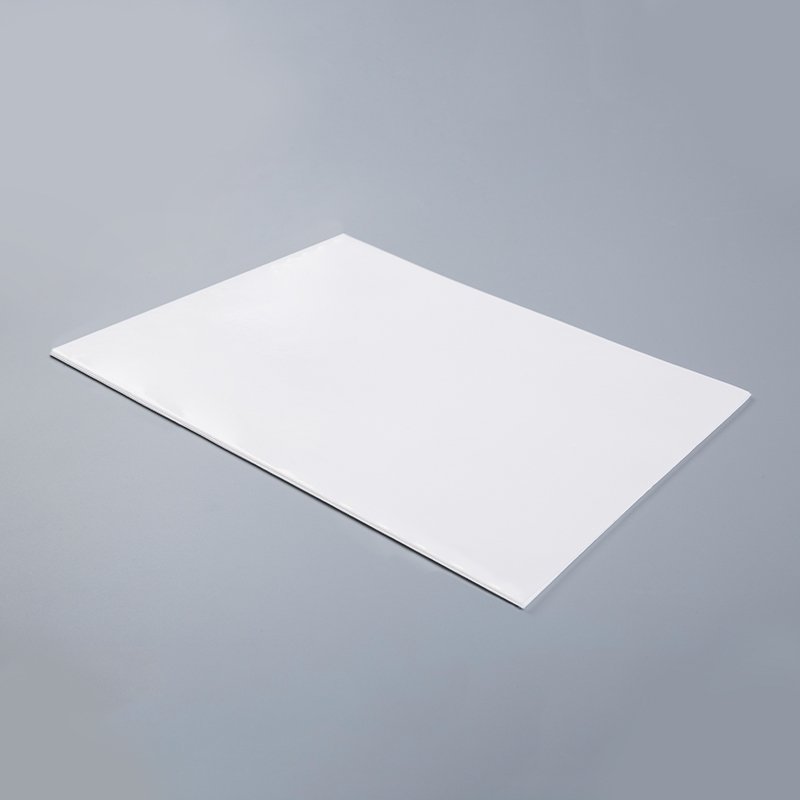
Not all gloss white BOPP labels are identical. Selecting the correct specification for a particular application requires matching the adhesive type, topcoat, and ink system to the expected exposure conditions. Key factors to evaluate include:
- Adhesive tack level: High-tack adhesives are required for low-energy surfaces such as PE and PP containers; standard-tack adhesives suit glass, metal, and coated cardboard.
- Temperature range: Confirm the adhesive's rated temperature range covers both the application temperature and the extremes the labelled product will encounter in storage or use.
- Print method compatibility: BOPP labels must be matched to the correct print technology — UV flexo, digital toner, or thermal transfer — to ensure ink adhesion and chemical resistance of the finished print.
- Regulatory compliance: For food-contact and pharmaceutical applications, confirm that the BOPP film and adhesive meet relevant food safety standards such as EU Regulation 10/2011 or FDA 21 CFR regulations.
- Topcoat specification: A gloss overlaminate or varnish applied over the printed surface provides an additional barrier against chemical attack and scuffing, extending the label's effective service life in harsh conditions.
Working with a label converter who can provide application-specific test data — including water immersion tests, chemical resistance trials, and peel adhesion measurements — removes guesswork from specification decisions and ensures the finished label performs reliably in real-world conditions rather than only in controlled laboratory settings.
Conclusion
Self-adhesive gloss white BOPP labels deliver a combination of water resistance, oil tolerance, and detergent durability that paper and many alternative synthetic label materials simply cannot match. Their performance comes from the chemistry of the BOPP film itself, the formulation of the pressure-sensitive adhesive, and the durability of the print system applied to their surface. For brands and manufacturers operating in wet, oily, or chemically aggressive environments, specifying gloss white BOPP labels correctly means investing in label performance that protects product identity, ensures regulatory legibility, and maintains brand presentation throughout the full product lifecycle — whether that means six months on a supermarket shelf in a chilled cabinet or three years on a container in an industrial workshop.