
 English
 Español
 русский
 Français
 عربى
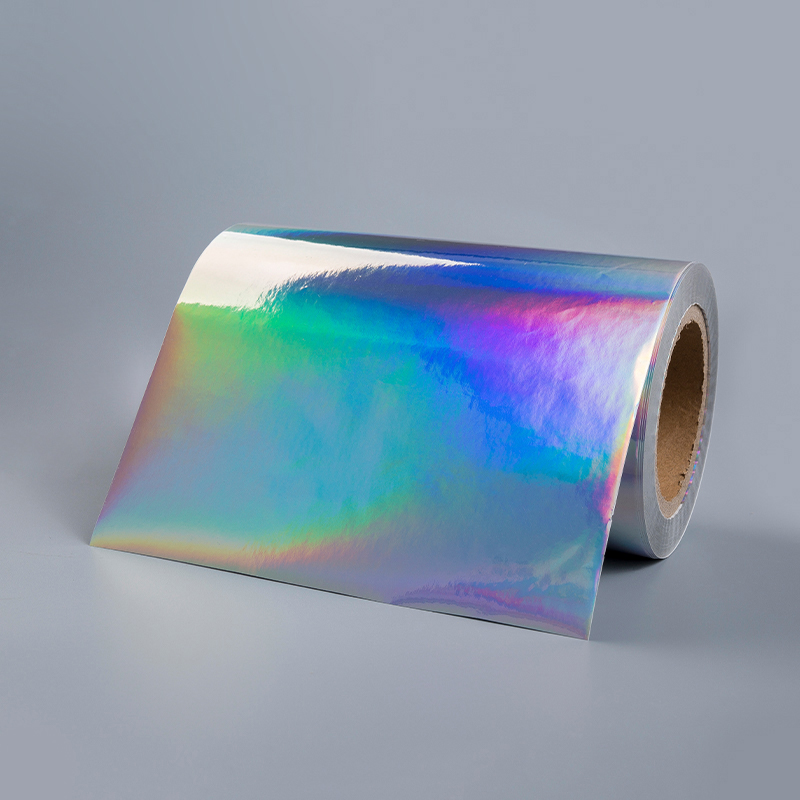
عربىPlain holographic laser film in rolls produces its signature shifting rainbow effect without any printed graphics or text, relying instead on microscopic surface structures that manipulate light. This makes it a popular choice for packaging, gift wrap, decorative lamination, and craft applications where a bright, eye-catching finish is desired without the complexity of custom holographic imagery. Understanding how this film works at a physical level helps buyers and converters choose the right product and apply it correctly during production.
Content
The Science Behind the Holographic Effect
The rainbow, shifting appearance of plain holographic laser film comes from a phenomenon called diffraction, not from pigments or dyes. The film's surface contains millions of microscopic grooves or patterns embossed at a scale smaller than the wavelength of visible light. When light strikes these grooves, it splits into its component wavelengths and reflects at slightly different angles, producing the shifting spectrum of colors that seems to change as the viewing angle changes.
Diffraction Versus Reflection
Standard reflective materials, such as plain metallic foil, bounce light back at a consistent angle regardless of the viewer's position, producing a uniform shine. Holographic film behaves differently because its embossed micro-pattern causes light to diffract, meaning different wavelengths of light are bent by different amounts. This is why holographic film appears to shift color as the viewing angle or light source position changes, while plain foil does not.
Why "Plain" Refers to the Pattern, Not the Effect
The term "plain" in plain holographic laser film refers to the absence of a custom image, logo, or design embossed into the surface. Instead, the entire roll carries a uniform micro-pattern, such as a linear or dot-matrix structure, that produces a consistent rainbow sparkle across the full width and length of the material. This distinguishes it from custom holographic film, which uses a specially engineered master pattern to display particular shapes, text, or security features.
How the Film Is Manufactured
Producing plain holographic laser film involves several precise steps that transform a plain plastic substrate into a light-diffracting material. Each stage plays a role in determining the final brightness, durability, and consistency of the holographic effect.
Embossing the Micro-Pattern
The process begins with a master embossing roller or shim that carries the microscopic diffraction pattern. As the plastic film, typically BOPP or PET, passes through the embosser under heat and pressure, the pattern is pressed into the film's surface, creating the physical structure responsible for the diffraction effect.
Metallization
After embossing, the film typically passes through a vacuum metallization chamber, where a thin layer of aluminum is deposited onto the embossed surface. This metallic layer is essential because it reflects light back through the diffraction pattern, intensifying the holographic effect. Without metallization, the embossed pattern alone would produce a much fainter, less noticeable effect.
Lamination or Coating
Depending on the intended application, the metallized film may be laminated to a paper or plastic backing, or coated with a protective layer to improve scratch resistance and durability. This step also determines how the finished roll will be used, whether for direct lamination onto packaging or as a standalone decorative film.
Common Pattern Types and Their Visual Effects
Different embossed patterns produce noticeably different visual effects, even though all fall under the "plain" holographic category. Selecting the right pattern depends on the desired visual impact for the final product.
| Pattern Type | Visual Effect | Common Use |
| Linear grating | Subtle, directional rainbow streaks | Gift wrap, ribbon |
| Dot matrix | Sparkling, glitter-like appearance | Decorative packaging, crafts |
| Crystal or diamond pattern | Bright, multi-directional sparkle | Premium packaging, labels |
| Rainbow gradient | Smooth, continuous color shift | Balloons, decorative film |
Factors That Affect the Quality of the Holographic Effect
Not all holographic laser film performs equally, even when the same general pattern type is used. Several manufacturing and material factors influence how bright, consistent, and durable the final effect appears.
- Depth and precision of the embossed micro-pattern, which affects brightness and color separation
- Thickness and uniformity of the metallization layer
- Quality and clarity of the base film substrate
- Consistency of tension control during the roll-to-roll production process
- Protective coating quality, which affects long-term scratch and moisture resistance
Practical Applications That Rely on This Working Principle
Because the holographic effect comes entirely from physical light diffraction rather than printed ink, plain holographic laser film offers a durable, fade-resistant decorative finish that does not rely on color pigments that can degrade over time. This makes it well suited to applications such as gift wrapping paper, retail packaging, greeting cards, balloons, and craft materials, where a consistent, vibrant shine is desired across large production volumes. Converters also value the film for lamination onto paperboard or other substrates, since the diffraction effect remains visible even after the film is bonded to a secondary material.
Choosing the Right Film Based on Its Working Principle
Understanding that the holographic effect depends on embossed micro-patterns and metallization, rather than printed color, helps buyers evaluate film samples more critically. When reviewing rolls from different suppliers, checking pattern sharpness under varied lighting angles, testing metallization consistency across the width of the roll, and confirming the protective coating's durability all provide better insight into long-term performance than relying on a single static sample viewed under one light source. Selecting film based on these physical characteristics, rather than appearance alone, leads to more consistent results once the material moves into full production.