
 English
 Español
 русский
 Français
 عربى
عربىContent
- 1 Understanding Self-Adhesive Materials: A Practical Guide for Buyers and Converters
- 2 Self Adhesive Paper: Grades, Coatings, and Applications
- 3 Self Adhesive Film: Durability Where Paper Falls Short
- 4 Special Label Material: Engineered Substrates for Demanding End Uses
- 5 Silicone Release Paper: The Component That Controls Everything Else
- 6 How to Specify Self-Adhesive Materials Correctly
Understanding Self-Adhesive Materials: A Practical Guide for Buyers and Converters
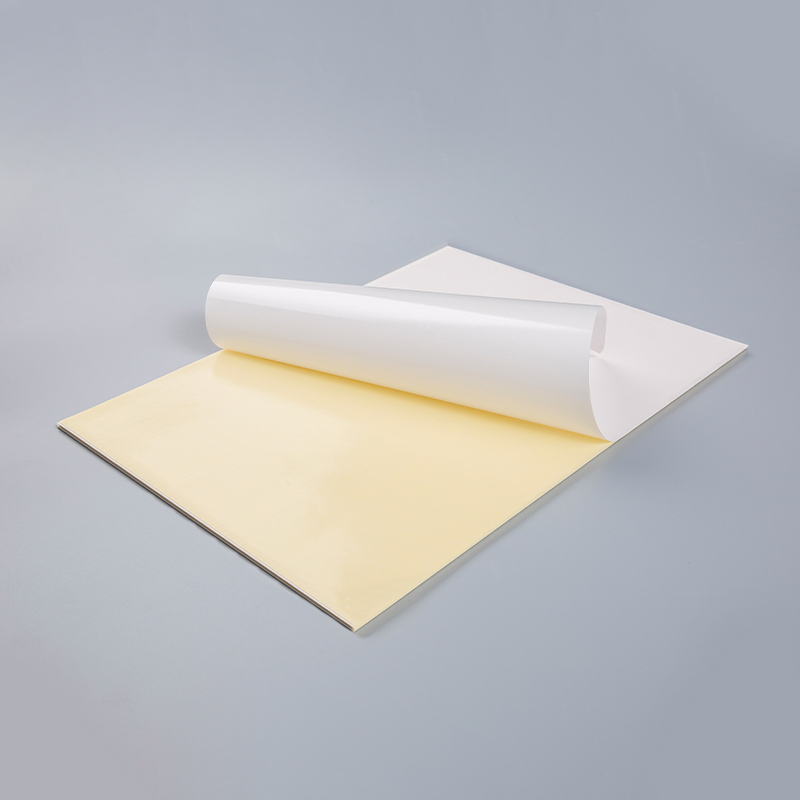
Self-adhesive materials are engineered composites — not single-layer products. Every roll or sheet consists of a facestock (the printable or functional top layer), a pressure-sensitive adhesive, and a release liner that protects the adhesive until application. The performance of the final label, film, or graphic depends on how well each of these three layers is matched to the end-use environment.
For procurement teams, printers, and product manufacturers, understanding the distinctions between self-adhesive paper, self-adhesive film, specialty label substrates, and silicone release papers is the foundation for making sound sourcing decisions. Selecting the wrong material — even at a lower unit cost — typically results in adhesion failure, print defects, or processing waste that far exceeds the initial savings.
Self Adhesive Paper: Grades, Coatings, and Applications
Self adhesive paper is the most widely used facestock category globally, covering applications from product labeling and logistics to food packaging, retail shelf tags, and office printing. Despite its apparent simplicity, self-adhesive paper spans a wide range of grades with meaningfully different performance profiles.
Primary Paper Grades
- Glassine-backed woodfree paper: The industry baseline for general-purpose labeling. Accepts flexographic, offset, and digital inkjet printing. Suitable for ambient storage and dry retail environments.
- Semi-gloss and high-gloss coated paper: Enhanced surface smoothness for vivid color reproduction. Common in consumer goods labeling — cosmetics, beverages, food products — where shelf appeal is a key requirement.
- Thermal direct paper: No ink or ribbon required; the coating darkens under heat. Widely used in logistics labels, receipts, and short-life barcode applications. Not suitable for long-term outdoor or high-temperature exposure.
- Thermal transfer paper: Receives ink from a thermal transfer ribbon, producing more durable print than thermal direct. Used in industrial labeling, laboratory specimens, and compliance marking.
- Kraft paper (natural and white): Uncoated or lightly coated, with a deliberately raw aesthetic. Increasingly specified in craft food, artisan beverage, and sustainability-positioned packaging lines.
Adhesive Selection for Paper Facestocks
The adhesive beneath the paper facestock is often more consequential than the paper grade itself. Permanent acrylic adhesives cover the majority of applications, but removable, repositionable, deep-freeze, and high-tack variants exist for specific end uses. Temperature at application, surface energy of the substrate, and required dwell time are the three variables that most directly dictate adhesive choice.
Self Adhesive Film: Durability Where Paper Falls Short
Self adhesive film replaces the paper facestock with a polymer substrate — most commonly biaxially oriented polypropylene (BOPP), polyethylene (PE), polyester (PET/PET-G), or polyvinyl chloride (PVC). The shift from paper to film delivers waterproofing, tear resistance, and chemical resistance that paper-based products cannot match.
| Film Type | Key Properties | Typical Applications | Print Compatibility |
|---|---|---|---|
| BOPP (clear / white / matt) | Moisture-resistant, dimensionally stable, cost-effective | Food & beverage, personal care, no-label look | Flexo, offset, digital (with corona treatment) |
| PET / PET-G | High tensile strength, temperature resistance, chemical resistance | Industrial labels, electronics, automotive parts | Flexo, screen, thermal transfer, laser |
| PVC (calendered / cast) | Conformable, UV-stable, long outdoor durability | Vehicle graphics, outdoor signage, decorative films | Screen, solvent inkjet, latex inkjet |
| PE (HDPE / LDPE) | Squeeze-resistance, conforms to curved and irregular surfaces | Squeezable bottles, cosmetics, chemical drums | Flexo, digital (HP Indigo) |
Surface Treatment and Printability
Polymer films are inherently low-surface-energy materials, which means inks and coatings have difficulty bonding without surface preparation. Corona treatment, flame treatment, and primer coatings are the three standard methods used to raise surface energy and ensure adequate ink adhesion. When sourcing self-adhesive film, confirm the surface treatment type and dyne level relative to your print process — this detail is frequently omitted from basic product data sheets but is critical for press performance.
Outdoor and Harsh-Environment Film Selection
For outdoor applications, UV resistance and thermal cycling tolerance are the dominant selection criteria. Cast PVC and UV-stabilized BOPP films with aggressive acrylic adhesives are the most common solutions for labels and graphics expected to survive 3–7 years of outdoor exposure. For chemical-splash or high-temperature environments (above 150°C), polyimide or specialty PET films with silicone adhesives are typically specified.
Special Label Material: Engineered Substrates for Demanding End Uses
Beyond standard paper and film grades, a category of purpose-engineered label materials addresses end uses where conventional substrates fail. Special label material encompasses synthetic papers, tamper-evident constructions, metallic facestocks, ultra-destructible materials, and eco-designed substrates, among others.
Synthetic Paper
Synthetic papers — most commonly based on BOPP or HDPE — offer the printability and appearance of paper with the moisture and tear resistance of film. They are widely used in outdoor signage, menus, wristbands, and any application where labels are handled with wet or dirty hands. Yupo, Valeron, and similar proprietary grades dominate this segment.
Tamper-Evident and Security Labels
Tamper-evident constructions are engineered to fail visibly if removal is attempted. Designs include:
- Destructible vinyl: Shatters into fragments on removal, preventing reapplication
- VOID labels: Leave a "VOID" pattern on both the label and the surface beneath when peeled
- Holographic foil labels: Combine visual authentication with tamper evidence
- Eggshell labels: Ultra-thin paper-based constructions that fragment on removal, used in asset tagging and anti-counterfeiting
Metallic and Foil Facestocks
Aluminum foil and metalized film facestocks are specified where a premium finish is required — premium spirits, cosmetics, and luxury consumer goods — or where the label must serve a functional barrier role, such as heat reflection or moisture sealing. Foil facestocks require specialized die-cutting tooling and are more sensitive to temperature and humidity during processing than standard materials.
Sustainable and Recyclable Label Materials
Regulatory pressure and brand sustainability commitments have accelerated demand for wash-off adhesive labels, mono-material constructions, and compostable label stocks. Wash-off adhesive systems — designed to release cleanly in hot alkaline wash cycles used at PET recycling facilities — are now mandatory for returnable beverage containers in several European markets and are gaining traction in North American packaging supply chains.
Silicone Release Paper: The Component That Controls Everything Else
Silicone release paper — the liner layer in any self-adhesive construction — is frequently treated as a commodity afterthought. In practice, liner selection critically affects adhesive transfer, processing speed, die-cutting cleanness, and dispensing reliability. A mismatch between liner and adhesive can cause premature release, flagging in die-cutting, or adhesive residue left on the liner — problems that appear at press or on the application line, not in the laboratory.
How Silicone Release Liners Are Made
A release liner is produced by applying a cured silicone coating to a base substrate — typically glassine paper, supercalendered kraft (SCK), clay-coated kraft (CCK), or polyester film. The silicone coating provides a controlled, low-surface-energy surface from which the adhesive releases cleanly at a defined peel force. The thickness and uniformity of the silicone layer directly determines release consistency.
Key Liner Specifications to Evaluate
- Release force: Measured in cN/cm, this defines how easily the facestock separates from the liner. Light release (5–15 cN/cm) suits high-speed automatic dispensing; higher release values are used for hand-applied labels or constructions where premature release is a risk.
- Caliper and basis weight: Thicker liners add stiffness and dimensional stability during converting and printing. Thin liners reduce waste weight and material cost but may require tighter tension control on press.
- Single-sided vs. double-sided siliconization: Double-sided release liners — coated on both faces with different release values — are used in double-sided tape, transfer tape, and foam tape constructions.
- Silicone migration: Low-migration silicone formulations are specified for food-contact and medical applications where silicone transfer to the adhesive surface would compromise either safety or bond performance.
- Recyclability and liner waste management: Silicone-coated liners are difficult to recycle through standard paper streams. Filmic PET liners are more readily recyclable and are increasingly specified in closed-loop manufacturing environments where liner waste recovery is managed.
Liner Formats and Converting Considerations
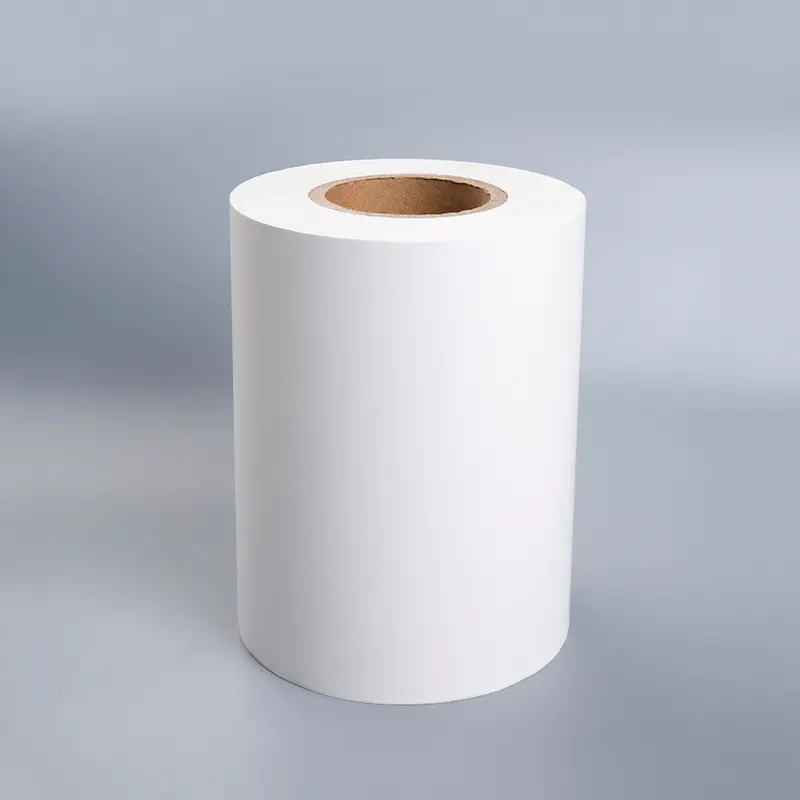
Silicone release papers are available in roll and sheet formats, with siliconization on one face (1S1G — one side silicone, one side glassine) or both faces. For linerless label systems — a growing format in retail and logistics that eliminates liner waste entirely — a different construction is used: the back of the facestock itself is silicone-coated, and the adhesive is repositionable or activatable on demand. Linerless formats require dedicated printer hardware but eliminate liner disposal entirely at the point of application.
How to Specify Self-Adhesive Materials Correctly
Procurement and technical teams sourcing self-adhesive materials for the first time — or switching suppliers — frequently encounter problems that trace back to incomplete specification. The following framework covers the minimum information needed to obtain an accurate material recommendation:
- Define the facestock requirement: Paper or film? What print process will be used? Is the facestock printable on both sides? What finish is required — gloss, matt, satin?
- Characterize the application surface: What is the substrate the label will be applied to — glass, HDPE, corrugated board, polypropylene, metal? What is its surface energy? Is the surface curved, textured, or contaminated (oily, wet, powdery)?
- Define the application environment: What temperature will the label be applied at? What temperature and humidity range will it be exposed to in service? Is there UV exposure, chemical splash, or submersion?
- Specify required adhesion behavior: Permanent, removable, or repositionable? Is tamper evidence required? Does the label need to be applied cold (freeze application) or survive freezer storage?
- Clarify liner requirements: Hand-applied or machine-dispensed? What release force is needed? Are there liner recycling or waste reduction commitments to honor?
- Specify regulatory or certification requirements: Food contact, medical device labeling, REACH compliance, UL certification, or specific regional packaging regulations narrow the field of acceptable materials significantly and should be stated upfront.
Providing complete specification data reduces sampling cycles, accelerates supplier qualification, and prevents the most common category of self-adhesive material failure: a technically capable material applied to the wrong environment.