
 English
 Español
 русский
 Français
 عربى
عربىIn the modern label and packaging industry, material selection is no longer a simple choice between paper and film. Brand owners, converters, printers, logistics providers, pharmaceutical companies, cosmetics manufacturers, and industrial users increasingly require label materials that can deliver stable printing performance, durable surface strength, reliable adhesion, smooth converting, and consistent release behavior. Synthetic Paper with White Glassine Liner is designed to meet these practical requirements by combining the printable feel of paper with the durability of plastic-based material and the clean release performance of glassine backing.
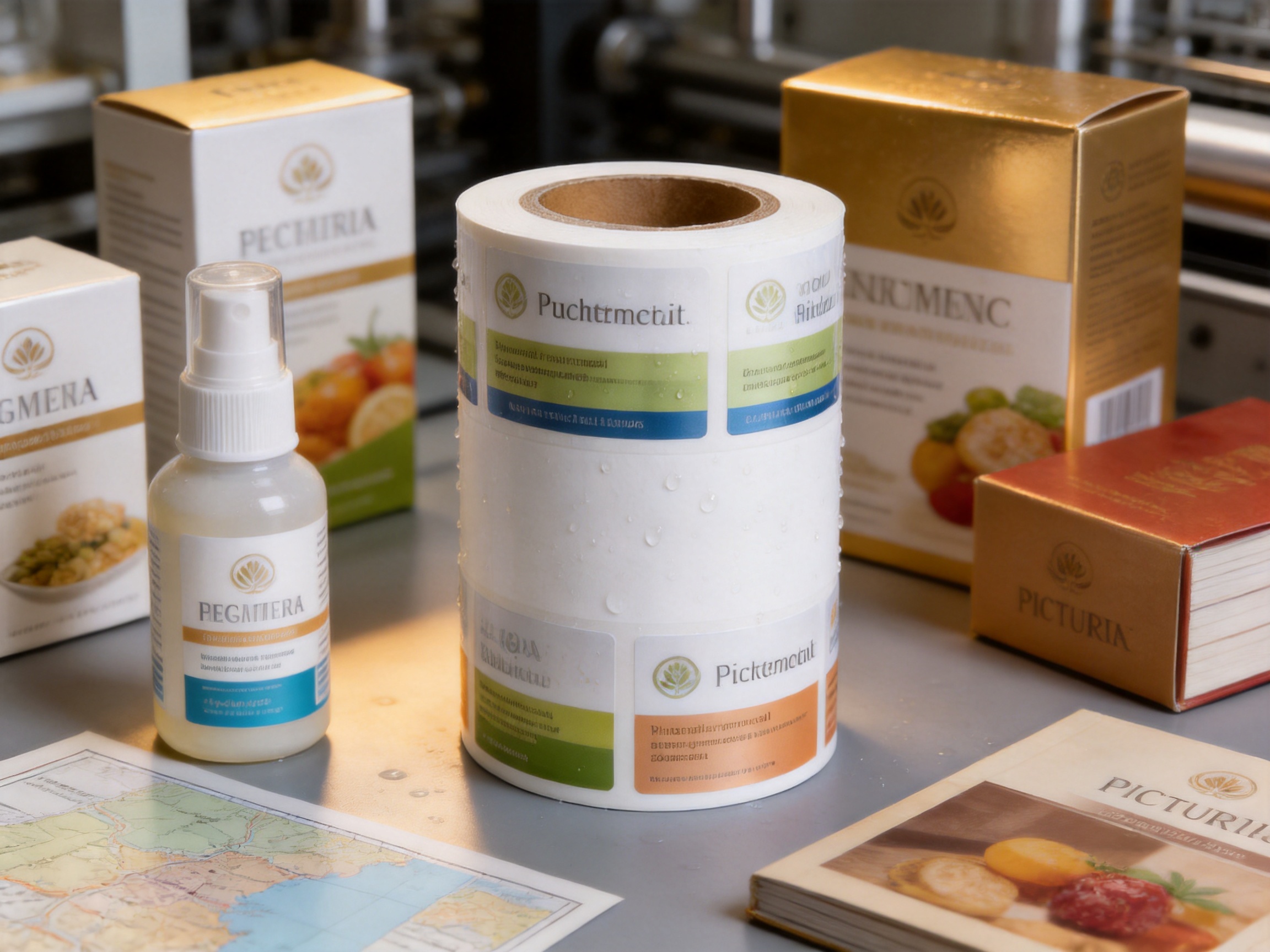
This self-adhesive material is built for applications that demand more than ordinary paper labels can provide. It offers light weight, high strength, tear resistance, good printability, shading performance, UV resistance, durability, cost efficiency, and environmental awareness. These characteristics make it suitable for high-grade artworks, maps, picture albums, premium books, packaging boxes, pharmaceutical packaging, cosmetic packaging, food packaging, industrial product packaging, and a broad range of pressure-sensitive labeling applications.
Unlike conventional paper labels that may tear, absorb moisture, or deform under challenging handling conditions, synthetic paper has a more robust structure. It is especially valuable when a label must remain readable, attractive, and functional throughout transportation, storage, retail display, and end use. When paired with a 60 g white glassine liner, it also supports smooth die-cutting, stripping, rewinding, dispensing, and manual or automatic labeling.
Synthetic Paper With White Glassine Liner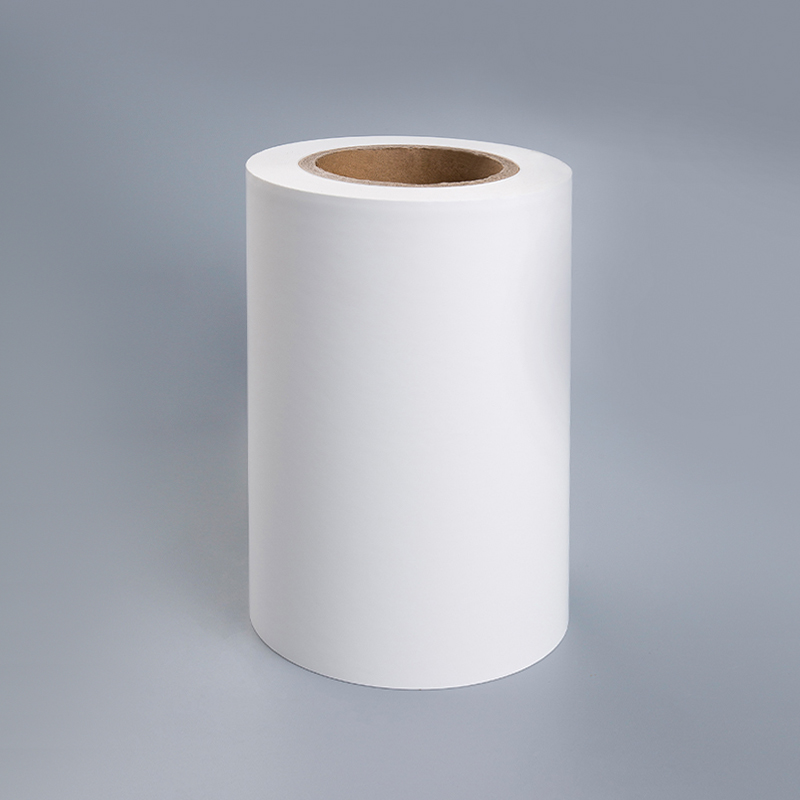
Content
- 1 Understanding Synthetic Paper with White Glassine Liner
- 2 Why Synthetic Paper Is Different from Ordinary Paper
- 3 Key Product Specification Overview
- 4 Advantages Over Competing Label Materials
- 5 Printability for Premium Visual Results
- 6 Durability in Real Use Environments
- 7 The Role of White Glassine Liner
- 8 Adhesive Choices for Different Labeling Challenges
- 9 Applications in Premium Printing and Publishing
- 10 Applications in Packaging
- 11 Manufacturing Strengths Behind the Material
- 12 Production Capacity and Supply Reliability
- 13 Quality Control and Testing Capability
- 14 OEM and ODM Customization Advantages
- 15 Sustainability and Environmental Considerations
- 16 Packaging and Delivery Protection
- 17 How to Select the Right Construction
- 18 Why This Product Supports Converter Efficiency
- 19 Competitive Value for Brand Owners
- 20 Company Strengths Supporting Long-Term Cooperation
- 21 Q&A Section
- 21.1 What is Synthetic Paper with White Glassine Liner?
- 21.2 What are the main advantages of synthetic paper compared with ordinary paper?
- 21.3 Why is white glassine liner used?
- 21.4 Which adhesive options are available?
- 21.5 Can the material be customized?
- 21.6 What applications are best suited for this material?
- 21.7 Is the material suitable for cold environments?
- 21.8 How does the product help converters improve efficiency?
- 21.9 What packaging is available for shipment?
- 21.10 Why choose this product for premium packaging?
- 22 Conclusion
- 23 References
- 24 Product: Synthetic Paper With White Glassine Liner
Understanding Synthetic Paper with White Glassine Liner
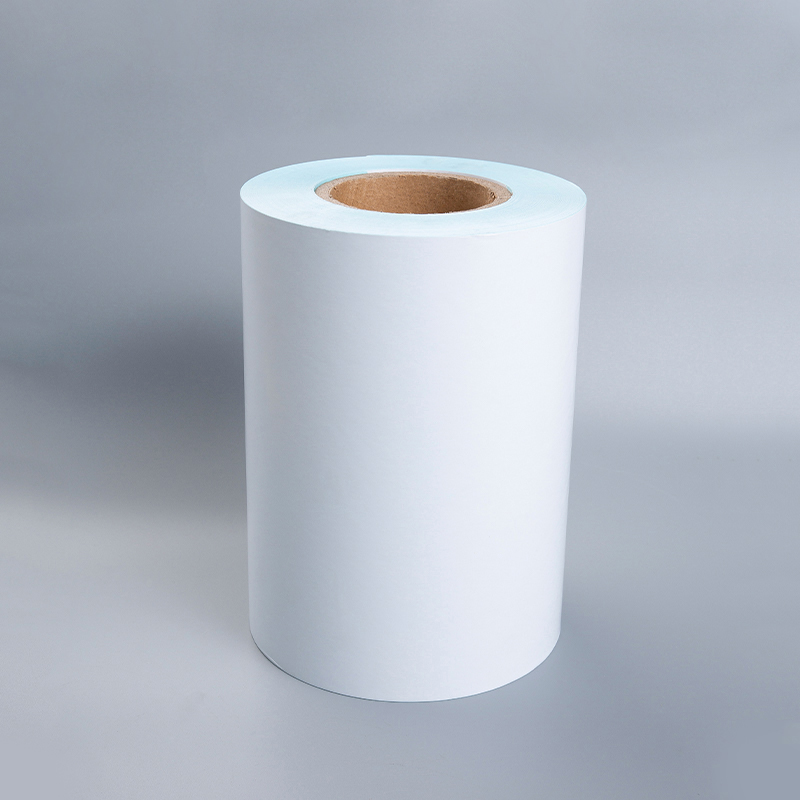
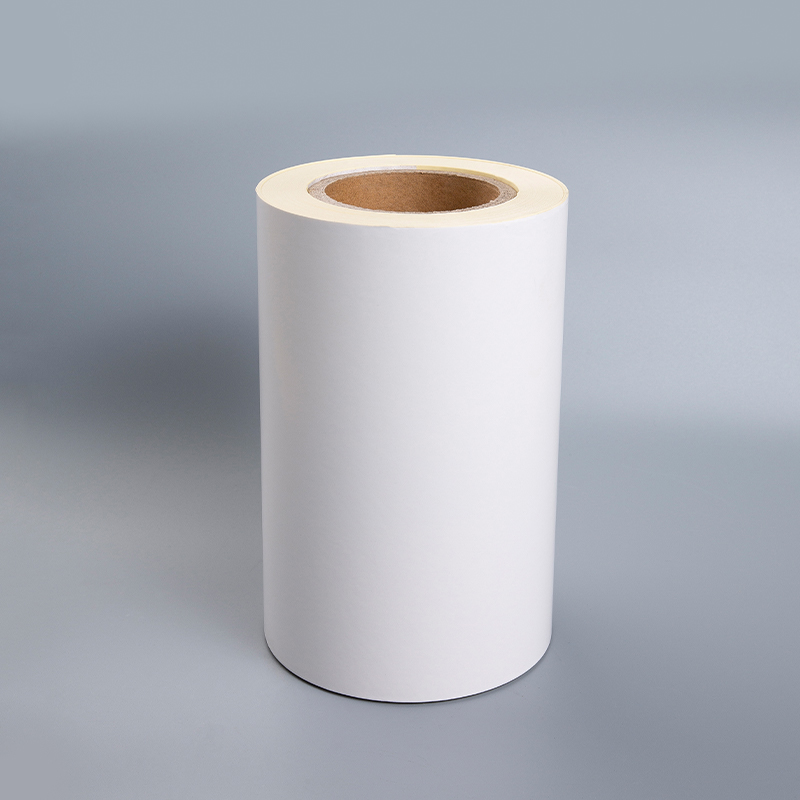
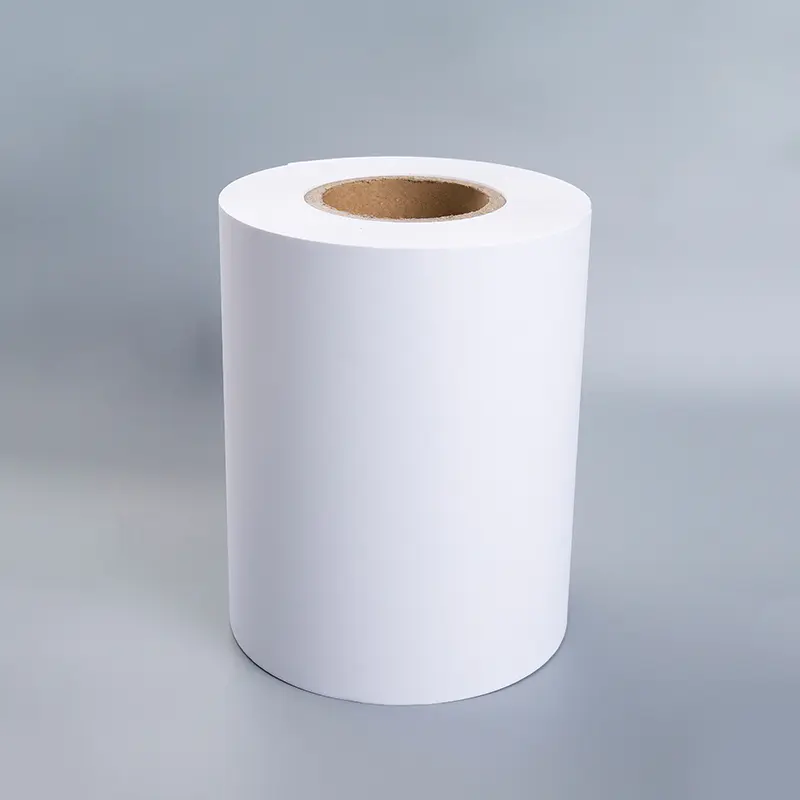
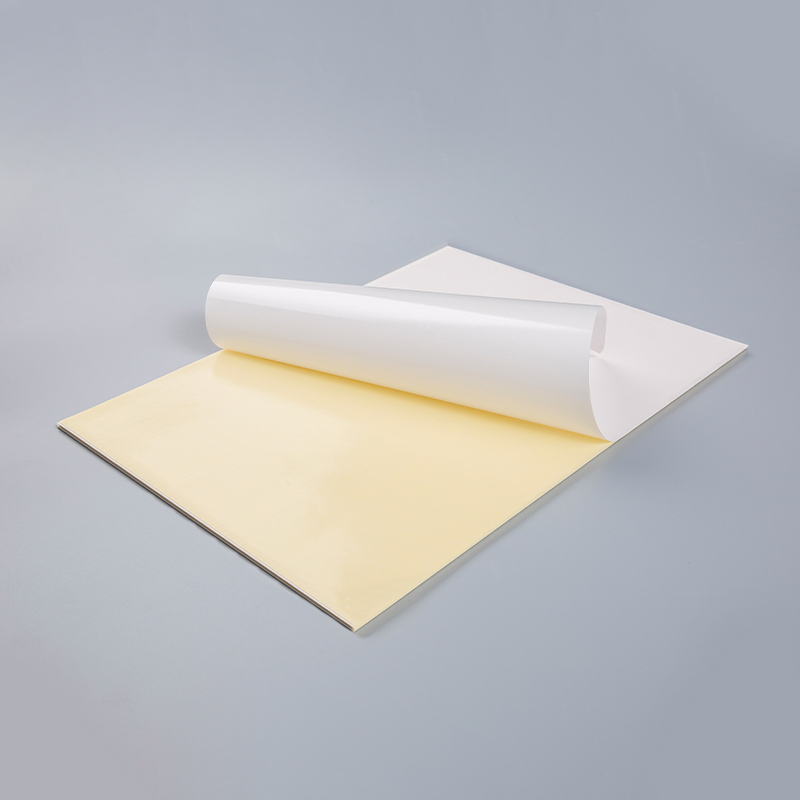
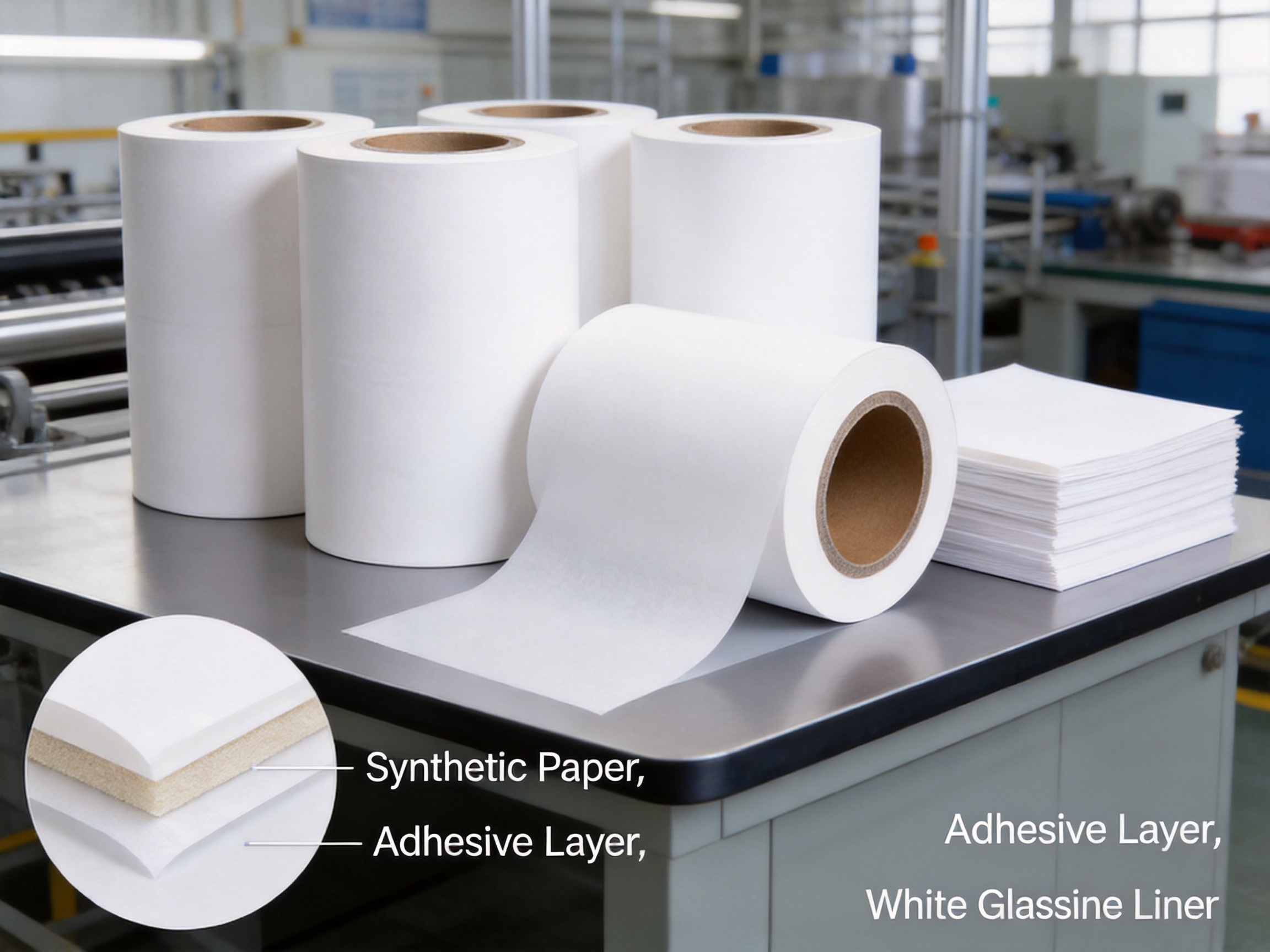
Synthetic Paper with White Glassine Liner is a pressure-sensitive label material composed of a synthetic paper face stock, an adhesive layer, and a white glassine release liner. The face material commonly uses 75 mic synthetic paper, while alternative thicknesses such as 54 mic, 100 mic, 150 mic, and 260 mic can be supplied depending on the application. The standard adhesive is water-based adhesive, with options including hotmelt adhesive, solvent adhesive, removable adhesive, anti-freeze adhesive, cryogenic adhesive, and tyre-grade rubber adhesive.
The liner plays a crucial role in the final performance of the label stock. The standard construction uses 60 g white glassine paper, which is known for its smooth surface, stable release properties, and compatibility with high-speed label converting. Other liner options are available, including 50 g, 80 g, 100 g, and 120 g glassine paper; 60 g, 85 g, 120 g, and 140 g release paper; 140 g and 165 g art paper; and 50 g, 80 g, 90 g, and 120 g CCK liner. This wide liner selection allows converters and end users to balance stiffness, release force, cost, dispensing method, and printing or die-cutting requirements.
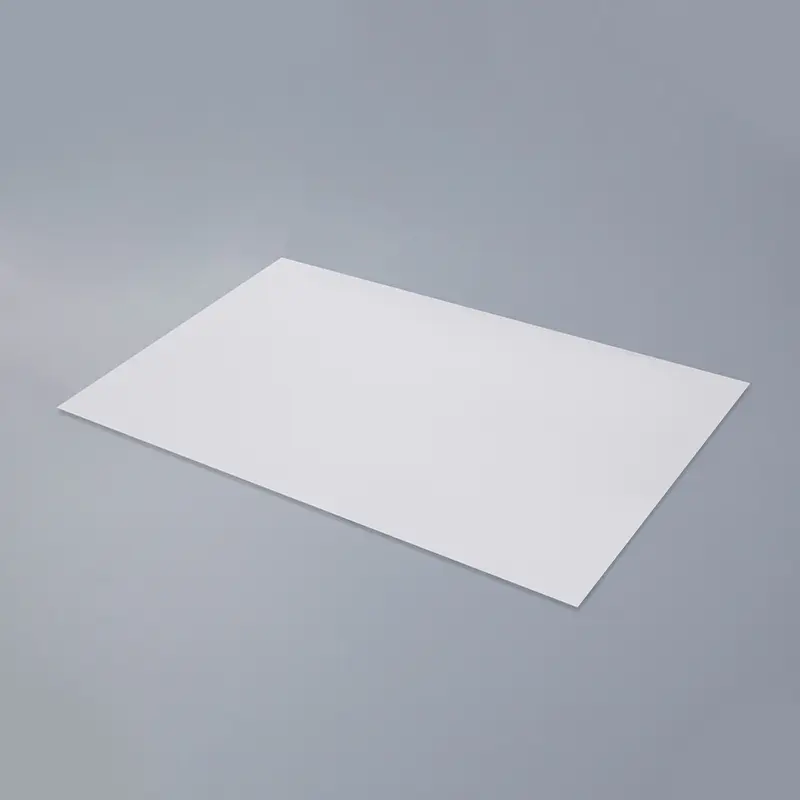
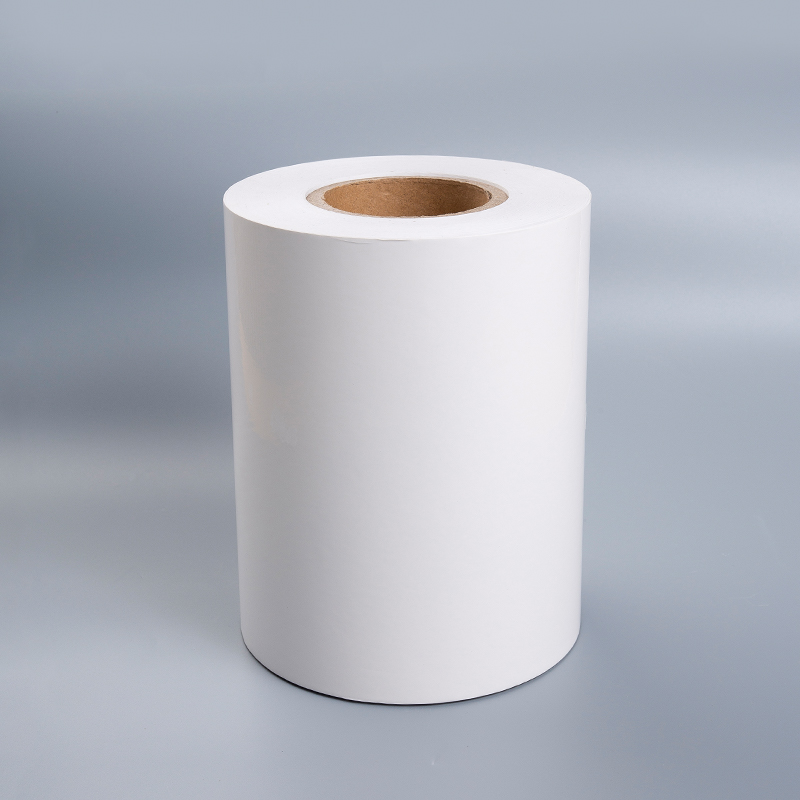
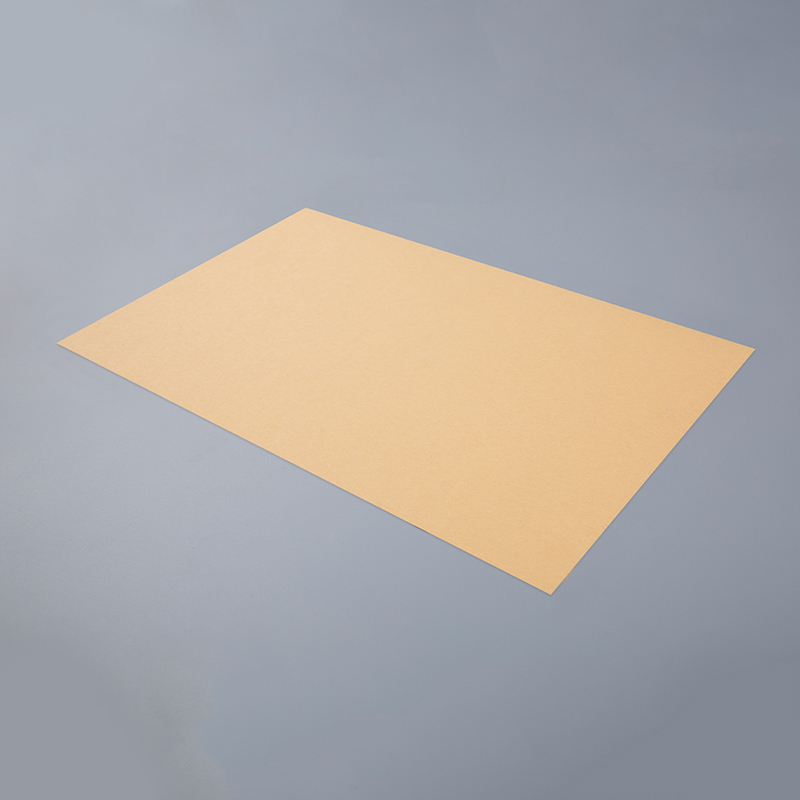
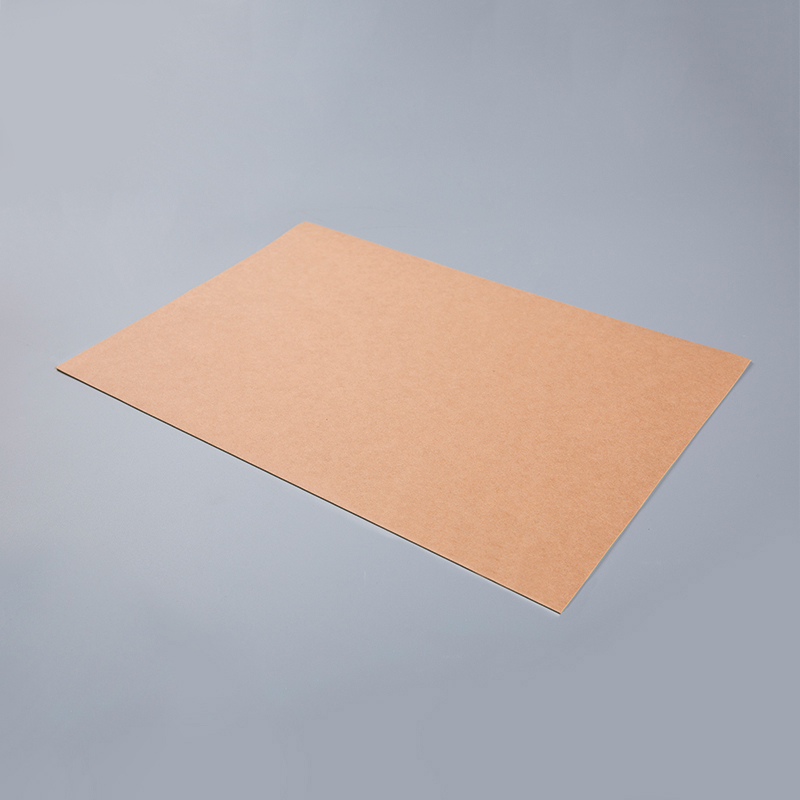
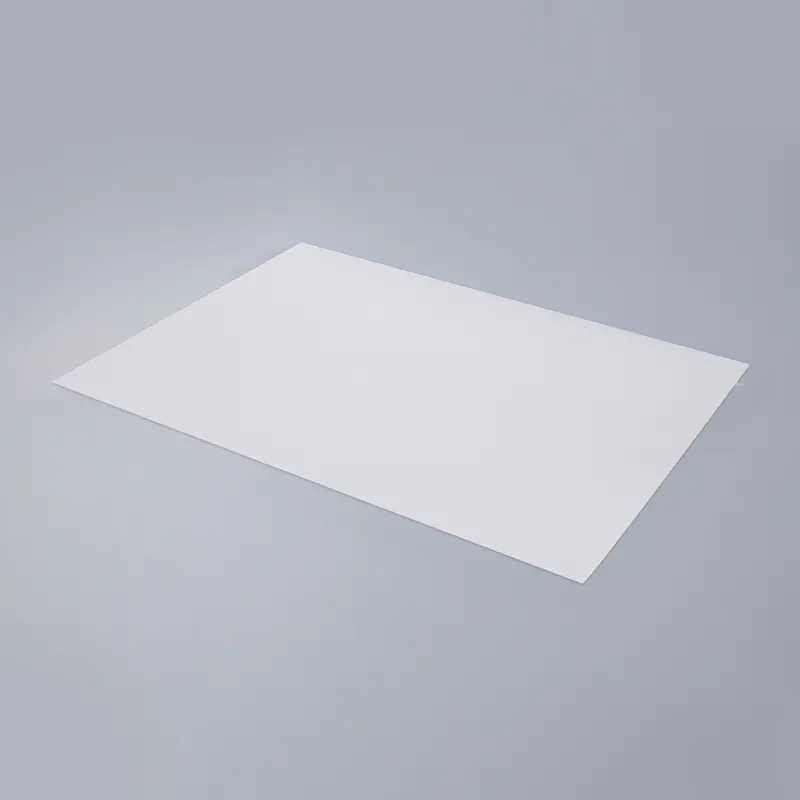
The product can be supplied in jumbo roll widths such as 1000 mm, 1020 mm, 1080 mm, and 1530 mm. Sheet formats are also available, including A4, A3, 20 x 30, 21 x 30, 24 x 36, 50 cm x 70 cm, 70 cm x 100 cm, and customized dimensions. This flexibility makes the material suitable for roll-fed label presses, sheet-fed printing, digital printing workflows, and customized packaging operations.
Why Synthetic Paper Is Different from Ordinary Paper
Traditional paper labels have clear advantages in cost, print familiarity, and recyclability in certain streams, but they are vulnerable in environments involving moisture, abrasion, outdoor exposure, repeated handling, or tearing stress. Synthetic paper was developed to bridge the gap between paper and plastic film. It retains many of the printing characteristics associated with paper while improving mechanical durability and environmental resistance.
The product’s tear resistance is one of its most important strengths. A printed label may pass through cutting, stacking, packaging, shipping, shelf handling, and consumer use. If the material tears easily, the brand image suffers and critical information may become unreadable. Synthetic paper provides a stronger surface, helping printed information, barcodes, graphics, and regulatory details remain intact.
Another difference is dimensional stability. Ordinary paper may curl, wrinkle, expand, or shrink when exposed to changes in humidity. Synthetic paper is less sensitive to these conditions, making it a better option for packaging labels, industrial labels, cosmetics labels, and book or album applications where appearance and registration accuracy matter. Better dimensional stability also helps during die-cutting and converting because the web remains more predictable under tension.
Synthetic paper also offers good opacity and shading performance. In packaging and publishing applications, opacity can improve visual quality by preventing show-through from the substrate beneath the label or page. For premium artworks, maps, picture albums, and high-grade books, the clean white surface and stable print base help produce sharp images and attractive color results.
Key Product Specification Overview
Item |
Standard Specification |
Available Options |
Face Material |
75 mic synthetic paper |
54 mic, 75 mic, 100 mic, 150 mic, and 260 mic synthetic paper |
Adhesive |
Water-based adhesive |
Hotmelt adhesive, solvent adhesive, removable adhesive, anti-freeze adhesive, cryogenic adhesive, and tyre-grade rubber adhesive |
Liner |
60 g white glassine paper |
50 g, 80 g, 100 g, and 120 g glassine paper; 60 g, 85 g, 120 g, and 140 g release paper; 140 g and 165 g art paper; 50 g, 80 g, 90 g, and 120 g CCK liner |
Jumbo Roll Width |
1000 mm, 1020 mm, 1080 mm, and 1530 mm |
Customized widths may be discussed according to converting needs |
Sheet Size |
A4, A3, 20 x 30, 21 x 30, 24 x 36, 50 cm x 70 cm, and 70 cm x 100 cm |
Customized sheet dimensions available |
Packaging |
Sea-transit-worthy poly-wood pallet packing and carton packing |
Roll or sheet supply from stock, with protective wrapping and pallet fastening |
Advantages Over Competing Label Materials
Compared with standard wood-pulp paper labels, Synthetic Paper with White Glassine Liner offers stronger resistance to tearing, improved moisture tolerance, better durability, and greater dimensional stability. These advantages are important for labels applied to products that may be refrigerated, transported over long distances, displayed under bright lighting, handled frequently, or stored in variable warehouse conditions.
Compared with some film labels, synthetic paper can offer a more paper-like printing surface and appearance. Many users prefer a label that has the refined look of premium paper but does not sacrifice strength. Synthetic paper provides a balanced solution, especially for packaging where both high visual quality and functional durability are expected.
Compared with low-grade self-adhesive materials, this product also benefits from more flexible adhesive and liner options. The availability of water-based, hotmelt, solvent, removable, anti-freeze, cryogenic, and tyre-grade rubber adhesives allows customers to adapt the label to different substrates and environments. A label for a cosmetic bottle, a frozen product, an industrial component, and a tyre requires different adhesive behavior. One universal adhesive cannot solve every labeling challenge, so a broad adhesive portfolio gives the material a competitive advantage.
The white glassine liner further improves competitiveness by supporting precise release and clean converting. In pressure-sensitive label production, a liner that releases too easily may cause web handling problems, while a liner that releases too tightly may cause dispensing failure. Glassine is widely respected for its smoothness, density, and controlled release properties. When used with an appropriate silicone coating and adhesive system, it can help maintain stable peeling behavior during printing, die-cutting, matrix stripping, slitting, rewinding, and application.
Printability for Premium Visual Results
Print quality is a key factor in label performance because labels often serve as the first point of communication between the product and the customer. Synthetic paper offers good printability, allowing it to be used for high-grade artworks, maps, albums, premium books, packaging labels, and product identification. Its surface is suitable for detailed graphics, fine text, barcodes, and design elements that require clarity.
The material supports applications where image sharpness and surface uniformity are essential. In maps, for example, fine lines, symbols, color boundaries, and text must remain legible. In picture albums and art reproductions, color balance and detail are important. In cosmetics and pharmaceutical packaging, printed labels must communicate quality, safety, ingredients, batch information, and branding clearly. Synthetic paper helps maintain a smooth and dependable printing base for these requirements.
For converters, consistent printability reduces waste. A surface that accepts inks predictably can improve press efficiency, reduce trial runs, and support stable color management. Stable material thickness and surface properties also assist with registration during multi-color printing. When combined with proper ink selection and curing conditions, synthetic paper can become an effective platform for both practical labels and high-value printed products.
Durability in Real Use Environments
Durability is one of the strongest reasons to choose synthetic paper. Labels must often survive more than the printing process. They may be exposed to friction during shipping, moisture during storage, oils or chemicals during use, sunlight on display shelves, or repeated contact by consumers. A durable label protects not only the appearance of the package but also the information printed on it.
The product’s tear resistance makes it suitable for packaging that experiences movement, bending, or handling pressure. If a label is applied to a flexible package, carton, bottle, industrial part, or pharmaceutical box, the face stock must remain intact when the substrate is handled. Synthetic paper performs better than conventional paper in these situations because it has higher mechanical strength.
UV resistance is another valuable characteristic. Labels and printed materials may be exposed to indoor lighting, window displays, outdoor logistics, or warehouse conditions. UV exposure can cause fading, yellowing, brittleness, or surface degradation in weaker materials. Synthetic paper with appropriate printing and coating choices can help improve long-term appearance and readability.
The product also offers shading and opacity. For labels applied over colored packaging, printed cartons, or previously marked surfaces, opacity helps maintain clean graphics and prevent background interference. This is especially useful for premium packaging, cosmetic containers, pharmaceutical cartons, and product labels that require a bright and controlled visual field.
The Role of White Glassine Liner
The white glassine liner is not merely a backing sheet; it is an important engineering component in the pressure-sensitive label structure. During manufacturing, the adhesive-coated face stock must be protected from contamination, premature bonding, and uneven release. The liner supports the adhesive until the label is ready for application.
Glassine paper is dense, smooth, and commonly used in label release systems. The smooth surface helps create uniform silicone coating and stable release force. This stability is crucial for automatic label dispensing equipment. If release performance varies across the roll, labels may fail to peel, lift too early, or cause machine stoppages. White glassine liner supports visual inspection and clean converting while providing a high-quality appearance for roll and sheet label stock.
For die-cutting, liner strength and smoothness are also important. During rotary or flatbed die-cutting, the blade must cut through the face material and adhesive without cutting deeply into the liner. A reliable liner helps maintain production consistency and prevents label lifting, liner breakage, or matrix stripping issues. For converters who operate at high speed, the liner can determine whether production is smooth or inefficient.
The availability of different liner weights is another advantage. A lighter liner may be suitable for cost-sensitive or standard roll label applications, while heavier liners may be preferred for sheet-fed processing, demanding dispensing, or applications requiring additional stiffness. CCK liner and art paper liner options further broaden the product’s application range.
Adhesive Choices for Different Labeling Challenges
A self-adhesive material is only as effective as its adhesive system. The standard water-based adhesive offers a balanced choice for many general applications. It can provide reliable bonding while supporting environmental and processing considerations. However, different substrates and environments require different adhesive characteristics, which is why multiple adhesive options are available.
Hotmelt adhesive is often selected where strong initial tack is needed. It can be useful for rough surfaces, packaging applications, and situations where fast bonding is important. Solvent adhesive may be chosen for applications requiring higher chemical resistance, stronger cohesion, or special durability. Removable adhesive is valuable when the label must be removed cleanly without damaging the substrate or leaving excessive residue.
Anti-freeze and cryogenic adhesives are designed for low-temperature environments. These adhesives help labels remain bonded under cold-chain conditions, refrigerated storage, frozen food packaging, laboratory handling, or other temperature-sensitive applications. A standard adhesive may lose tack or become brittle under cold conditions, but a specialized low-temperature adhesive can maintain performance more effectively.
Tyre-grade rubber adhesive addresses one of the most demanding labeling applications. Tyre surfaces are curved, textured, and difficult to bond to because of rubber composition and surface contamination. A tyre-grade adhesive is formulated to provide stronger adhesion under these challenging conditions. The ability to offer such specialized adhesive options demonstrates the product’s flexibility and competitiveness.
Applications in Premium Printing and Publishing
Synthetic paper is widely used in the printing of high-grade artworks, maps, picture albums, and premium books. These applications require a material that delivers attractive print results while resisting damage. A map may be folded, unfolded, carried outdoors, and handled repeatedly. A picture album must preserve image quality and surface integrity. A premium book may require pages or inserts that feel refined and withstand frequent use.
For artwork reproduction, the material’s smooth and consistent surface helps maintain detail. The synthetic structure adds durability, which is useful for prints that may be displayed, handled, or transported. Unlike ordinary paper, which can absorb moisture and wrinkle, synthetic paper offers improved resistance to environmental changes. This gives printers and publishers more confidence in the final product.
In book-related applications, the lightweight nature of synthetic paper can also be beneficial. Weight matters in shipping, handling, and product feel. A material that combines strength with light weight can help create durable printed products without making them unnecessarily heavy. This balance is one reason synthetic paper continues to gain attention in specialized printing sectors.
Applications in Packaging
Packaging is one of the most important markets for self-adhesive synthetic paper. The material is suitable for packaging boxes, pharmaceutical packaging, cosmetic packaging, food packaging, and industrial product packaging. Each of these sectors has strict expectations for label appearance, adhesion, durability, and information clarity.
In cosmetic packaging, labels must communicate beauty, quality, and brand identity. They are often applied to bottles, jars, boxes, or tubes that may be exposed to moisture, oils, lotions, and frequent handling. A label that tears, wrinkles, or fades can damage the perceived value of the product. Synthetic paper helps maintain a premium appearance while supporting clear printing.
In pharmaceutical packaging, information reliability is essential. Product names, dosage details, batch codes, expiry dates, safety warnings, and regulatory content must remain readable. Synthetic paper’s durability helps protect this information through storage and distribution. When paired with a suitable adhesive, it can support secure labeling on cartons, containers, and specialized packaging formats.
Food packaging often involves temperature changes, condensation, handling, and transport stress. Synthetic paper can help labels remain intact and legible. With appropriate adhesive selection, it can be used for refrigerated products, frozen products, dry goods, and premium food packaging. The material’s resistance to tearing and moisture-related deformation provides an advantage over many ordinary paper labels.
Industrial product packaging may involve rough handling, abrasion, dust, oils, or varying temperatures. Labels on industrial products often carry barcodes, serial numbers, compliance information, or safety instructions. The toughness of synthetic paper helps protect these details, while the adhesive options allow the label construction to be matched to the substrate.
Manufacturing Strengths Behind the Material
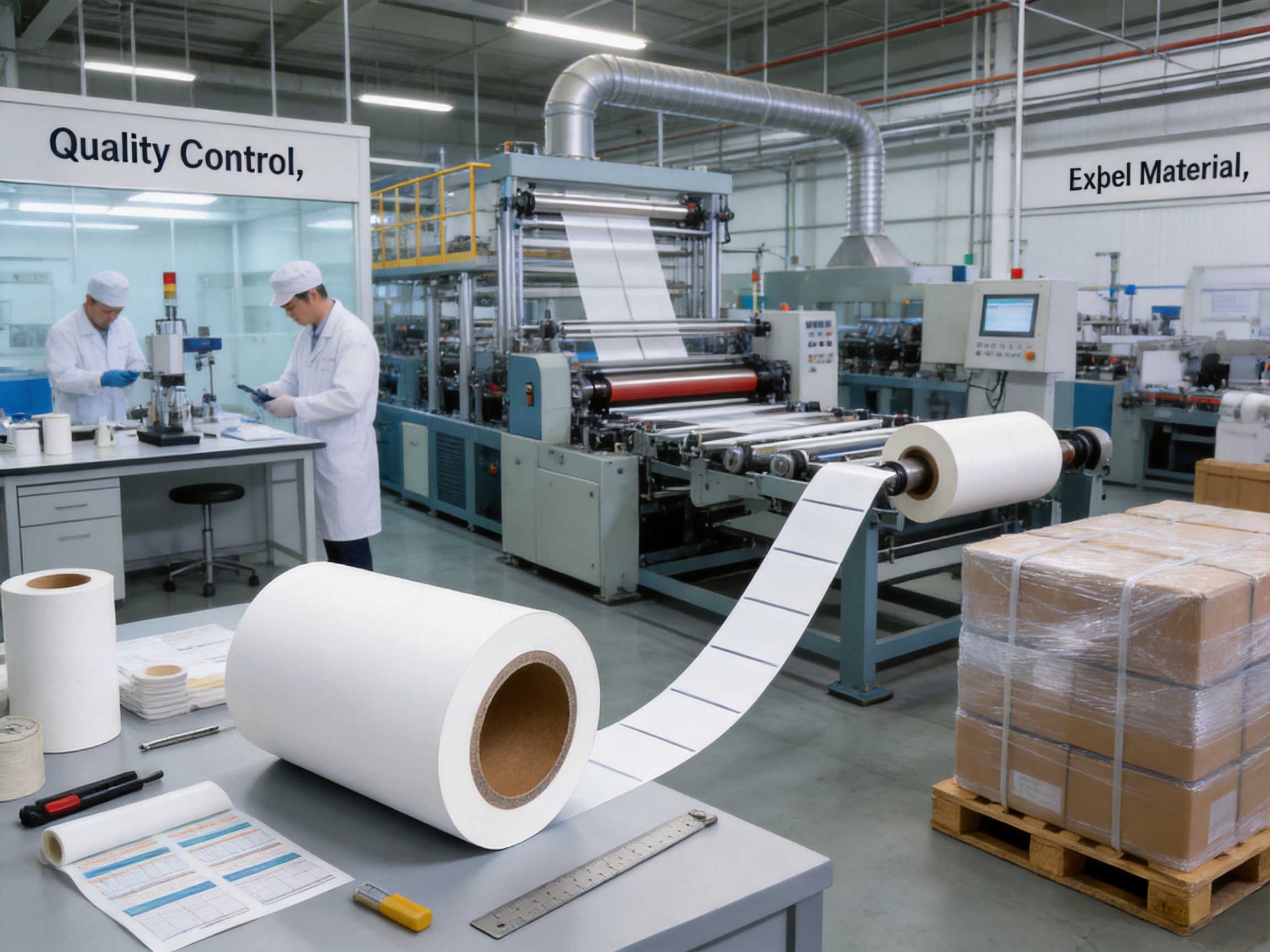
High-quality label material depends not only on raw materials but also on manufacturing process control. Suzhou Piaozhihua Composite Material Technology Co., Ltd. specializes in high-grade self-adhesive labels and integrates research and development, production, sales, and after-sales service. The company operates a complete range of production lines, including gluing, laminating, and cutting, which are essential for stable pressure-sensitive material production.
Gluing is one of the most critical stages. The adhesive must be applied evenly across the web, with controlled coat weight and stable coverage. Uneven adhesive can cause poor bonding, edge ooze, curling, label lifting, or inconsistent die-cutting. Advanced gluing capability helps ensure that each roll or sheet performs predictably during printing, converting, and application.
Laminating is another essential process. The face material, adhesive, and release liner must be combined with accurate tension control, clean surfaces, and uniform pressure. If lamination is unstable, the material may show wrinkles, bubbles, release variation, or web distortion. A strong laminating process helps preserve the flatness and integrity of the final label stock.
Cutting and slitting determine the usability of the supplied material. Converters require clean edges, accurate widths, stable roll tension, and neat winding. Sheet users require accurate dimensions and smooth stacking. The ability to provide both roll and sheet formats from stock reflects manufacturing flexibility and supports customers with different production workflows.
Production Capacity and Supply Reliability
Supply reliability is a key concern for label converters and packaging manufacturers. A material may perform well in trials, but if the supplier cannot deliver consistently, customers face production delays and business risk. With an annual production capacity of more than 280 million square meters, the manufacturer has the scale needed to support large-volume demand and long-term cooperation.
Large capacity also supports product consistency. When production is supported by systematic process control, stable equipment, and experienced technical teams, customers can receive repeatable quality across orders. This repeatability is especially important for packaging projects where color matching, die-cutting behavior, adhesive performance, and dispensing results must remain stable over time.
The company has developed sales outlets and service networks in many regions and has experience supplying domestic and international markets. For customers, this experience matters because export packaging, shipping conditions, documentation, communication, and after-sales service all affect the purchasing experience. A supplier familiar with international requirements can reduce uncertainty and help customers plan more efficiently.
Quality Control and Testing Capability
Quality control is essential for pressure-sensitive materials because small variations can create major problems during converting or application. The manufacturer maintains its own testing laboratory and advanced inspection equipment to help ensure product quality. Testing may involve material thickness, adhesive coat weight, peel strength, release force, tack, shear resistance, aging behavior, dimensional stability, and surface quality.
Testing is not only about rejecting defective material; it is also about understanding how the construction behaves in real applications. For example, a label intended for frozen food packaging should be tested under low-temperature conditions. A material designed for industrial product packaging may need abrasion or adhesion evaluation on specific substrates. A label for high-speed automatic application should be evaluated for release consistency and web handling.
Inspection equipment helps identify visible and hidden defects before products reach customers. Surface contamination, coating streaks, wrinkles, bubbles, uneven winding, or liner defects can cause press stoppages or label failure. By controlling these issues during manufacturing, the supplier helps customers reduce waste and improve productivity.
The company’s long-term manufacturing experience also contributes to quality. More than 20 years of OEM manufacturing experience provides practical knowledge of different markets, substrates, printing methods, adhesives, and customer requirements. Experience is especially valuable when developing customized solutions because technical decisions must balance performance, cost, processability, and end-use conditions.
OEM and ODM Customization Advantages
Modern packaging and labeling projects often require customized materials. A standard construction may not meet every requirement for adhesive strength, face material thickness, liner stiffness, print method, application temperature, or final product appearance. The availability of OEM and ODM services allows customers to develop label materials based on drawings, samples, or performance targets.
Customization can begin with the face material. A 54 mic synthetic paper may be selected for lightweight applications, while 100 mic, 150 mic, or 260 mic options may be chosen for higher stiffness, premium feel, or special durability. The choice depends on whether the customer prioritizes flexibility, cost, rigidity, opacity, or handling strength.
Adhesive customization is equally important. A removable label, a freezer label, a tyre label, a pharmaceutical label, and a cosmetic label require different bonding behavior. By offering multiple adhesive systems, the manufacturer can help customers match the label construction to their packaging surface and environmental conditions.
Liner customization supports different converting and application methods. Some customers need a smooth glassine liner for high-speed roll labels. Others may need a heavier backing for sheet-fed printing or manual handling. CCK liner may be preferred in certain applications because of its stiffness and lay-flat properties. Art paper liner can also be considered when sheet appearance and handling are important.
Sustainability and Environmental Considerations
The product is described as an environmentally friendly self-adhesive material, and sustainability is an increasingly important factor in packaging and printing decisions. Synthetic paper can contribute to sustainability goals by improving durability and reducing label failure. A label that remains intact through the product life cycle reduces waste caused by rework, relabeling, rejected packaging, or unreadable product information.
The manufacturer emphasizes sustainable development and environmental protection in its brand positioning. This includes the development of eco-friendly solutions involving face materials, adhesives, and backing papers. Such an approach is important because pressure-sensitive label sustainability depends on the full construction, not only one component. Face stock, adhesive, liner, printing ink, application substrate, and end-of-life pathway all influence environmental impact.
Water-based adhesive options can support customers seeking lower-solvent material solutions. Meanwhile, controlled manufacturing processes can reduce waste, improve yield, and help maintain efficient resource use. Customization also supports sustainability because customers can avoid over-engineering. Selecting the right thickness, adhesive strength, and liner type prevents unnecessary material consumption while maintaining required performance.
In many packaging projects, durability itself is a sustainability feature. If a label fails during logistics, the package may need to be replaced, reprinted, or discarded. By providing stronger tear resistance, moisture tolerance, and stable adhesion, synthetic paper can help preserve the value of the packaged product and reduce losses across the supply chain.
Packaging and Delivery Protection
Proper packaging is essential for label material because roll and sheet products must arrive clean, flat, dry, and undamaged. The product is available with sea-transit-worthy poly-wood pallet packing and carton packing. Both roll and sheet formats can be supplied from stock, giving customers flexibility in procurement and production planning.
For sheet material, 100 sheets per ream are packed with a strong PE-coated kraft paper wrapper. This protective wrapping helps resist moisture and handling damage. Strong pallets are wrapped with stretch film and fastened with plastic fastening belts, supporting stability during transport. These measures are especially important for export shipments and long-distance sea transit.
For roll products, stable winding and protective pallet packing help preserve roll shape and edge quality. Damaged roll edges can cause web breaks, tension problems, or printing defects. Proper palletization reduces movement during shipping and helps maintain the material’s usability when it reaches the customer’s production facility.
How to Select the Right Construction
Selecting the correct Synthetic Paper with White Glassine Liner construction begins with understanding the application. Customers should identify the substrate, environment, printing method, converting process, application temperature, service temperature, required durability, and whether the label must be permanent or removable. These factors determine the best combination of face material, adhesive, and liner.
For premium cosmetic packaging, customers may prioritize print appearance, opacity, smoothness, and resistance to moisture or oils. A standard or thicker synthetic paper face with a suitable permanent adhesive may be appropriate. For pharmaceutical cartons, dimensional stability, clean printing, barcode readability, and regulatory information durability may be key priorities.
For food packaging, the selection depends on whether the product is dry, refrigerated, frozen, or exposed to condensation. Anti-freeze or cryogenic adhesives may be considered for cold-chain use. For industrial packaging, adhesive strength, abrasion resistance, and label toughness may be more important than decorative appearance.
For publishing, maps, albums, and artworks, the face material thickness and printing surface are central concerns. The sheet size, stiffness, and finish should match the printing equipment and final user experience. Customized sheet formats such as A4, A3, 50 cm x 70 cm, or 70 cm x 100 cm can help printers reduce waste and improve workflow efficiency.
Why This Product Supports Converter Efficiency
Converters care about more than the final label. They need materials that print cleanly, die-cut accurately, strip smoothly, slit reliably, and run efficiently through equipment. Synthetic Paper with White Glassine Liner supports converter efficiency through its stable face material, adhesive options, and controlled liner performance.
A tear-resistant face stock reduces the risk of breaks during converting. Stable release liner behavior supports high-speed matrix stripping and label dispensing. Accurate roll widths and sheet sizes reduce setup time and waste. The availability of jumbo roll widths such as 1000 mm, 1020 mm, 1080 mm, and 1530 mm allows converters to plan slitting layouts efficiently.
Material consistency also helps reduce downtime. If a label stock varies from roll to roll, converters must adjust press tension, die pressure, stripping settings, or dispensing conditions. Consistency allows operators to maintain stable settings and achieve higher productivity. This is one of the major advantages of sourcing from a manufacturer with integrated production lines and quality inspection capability.
Competitive Value for Brand Owners
For brand owners, the label is not merely a sticker. It is a communication tool, a compliance carrier, a decorative element, and a protection layer for product information. Synthetic Paper with White Glassine Liner helps brand owners create labels that look professional and remain functional during the product’s journey from factory to consumer.
The material’s premium appearance can support brand positioning in cosmetics, specialty foods, health products, books, artworks, and industrial goods. Its durability supports customer satisfaction because labels remain clean, readable, and secure. Its customization options allow brand owners to align the material with specific packaging forms, such as cartons, bottles, boxes, pouches, or curved surfaces.
Compared with cheaper materials, the product may reduce hidden costs. Low-grade labels may create waste through printing defects, poor adhesion, tearing, or application failure. The cost of relabeling, rejected goods, machine stoppages, and customer complaints can exceed the savings from choosing an inferior material. A reliable synthetic paper label stock can therefore provide better total value.
Company Strengths Supporting Long-Term Cooperation
Suzhou Piaozhihua Composite Material Technology Co., Ltd. operates as a specialized manufacturer of high-grade self-adhesive label materials. Its integrated model covers research and development, production, sales, and after-sales service. This structure allows the company to respond to customer requirements with both technical support and production capability.
The company’s annual production capacity of more than 280 million square meters reflects large-scale manufacturing strength. Its full production lines for gluing, laminating, and cutting provide control over key stages of label material production. Its own testing laboratory and advanced inspection equipment help ensure stable quality. Its OEM and ODM capabilities allow customers to develop customized solutions based on drawings or samples.
The company has built market experience across many countries and regions, including Asia, Europe, the Americas, Africa, and the Middle East. International supply experience is important for customers who need stable export cooperation, sea-worthy packaging, and consistent communication. With more than 20 years of OEM manufacturing experience, the company can support both standard product supply and customized development projects.
The company’s values of quality, integrity, innovation, win-win cooperation, and responsibility are aligned with the requirements of modern packaging supply chains. Customers increasingly seek suppliers that can provide not only materials, but also technical advice, quality assurance, flexible customization, and after-sales support.
Q&A Section
What is Synthetic Paper with White Glassine Liner?
It is a self-adhesive label material made with a synthetic paper face stock, an adhesive layer, and a white glassine release liner. The construction combines printability, durability, tear resistance, and stable release performance for labeling, packaging, and premium printing applications.
What are the main advantages of synthetic paper compared with ordinary paper?
Synthetic paper offers better tear resistance, stronger durability, improved moisture tolerance, greater dimensional stability, and good opacity. It is more suitable than ordinary paper for demanding packaging, maps, artworks, cosmetics, pharmaceutical packaging, food packaging, and industrial labels.
Why is white glassine liner used?
White glassine liner provides a smooth, dense, and stable backing for the adhesive. It supports controlled release, clean die-cutting, efficient matrix stripping, reliable rewinding, and smooth automatic or manual label application.
Which adhesive options are available?
The standard adhesive is water-based adhesive. Other options include hotmelt adhesive, solvent adhesive, removable adhesive, anti-freeze adhesive, cryogenic adhesive, and tyre-grade rubber adhesive. The best choice depends on the substrate, temperature, permanence requirement, and application environment.
Can the material be customized?
Yes. Face material thickness, adhesive type, liner type, roll width, and sheet size can be customized. Available synthetic paper thicknesses include 54 mic, 75 mic, 100 mic, 150 mic, and 260 mic. Roll and sheet formats are both available.
What applications are best suited for this material?
It is suitable for high-grade artworks, maps, picture albums, premium books, packaging boxes, pharmaceutical packaging, cosmetic packaging, food packaging, industrial product packaging, and durable self-adhesive labels.
Is the material suitable for cold environments?
Yes, when paired with the correct adhesive. Anti-freeze and cryogenic adhesive options are available for refrigerated, frozen, or low-temperature applications where ordinary adhesives may not perform reliably.
How does the product help converters improve efficiency?
The stable face stock, controlled adhesive coating, and reliable release liner support smooth printing, die-cutting, matrix stripping, slitting, rewinding, and dispensing. Consistency reduces downtime, waste, and adjustment during production.
What packaging is available for shipment?
The material can be packed on sea-transit-worthy poly-wood pallets or in cartons. Sheets may be packed 100 sheets per ream with strong PE-coated kraft paper wrapping, while pallets are wrapped with stretch film and secured with plastic fastening belts.
It provides a strong balance of refined print appearance, tear resistance, opacity, durability, adhesive flexibility, and reliable converting performance. These qualities help protect brand image and reduce label failure during distribution and use.
Conclusion
Synthetic Paper with White Glassine Liner is a versatile and durable self-adhesive material designed for customers who require more than ordinary paper labels can provide. Its combination of synthetic paper face stock, flexible adhesive choices, and white glassine liner creates a reliable solution for high-grade printing, packaging, product identification, and specialty labeling.
The material stands out because it offers light weight, high strength, tear resistance, good printability, shading performance, UV resistance, durability, economic value, and environmental awareness. It is suitable for premium artworks, maps, picture albums, high-grade books, pharmaceutical packaging, cosmetic packaging, food packaging, industrial product packaging, and many other applications.
Its competitive advantage is strengthened by the manufacturer’s integrated production capability, including gluing, laminating, cutting, quality inspection, laboratory testing, OEM and ODM customization, and large-scale annual capacity. For converters, it supports efficient processing. For brand owners, it supports durable and attractive labeling. For packaging manufacturers, it provides flexibility across substrates and environments.
As packaging and labeling requirements continue to become more demanding, materials must deliver both appearance and performance. Synthetic Paper with White Glassine Liner meets this demand by offering a well-balanced construction that can be adapted to many industries, printing methods, and application conditions.
References
FINAT. Technical Handbook for Self-Adhesive Label Materials and Testing Methods.
TAPPI. Paper and Paperboard Testing Standards for Basis Weight, Thickness, Tensile Strength, and Surface Properties.
ISO 536. Paper and Board: Determination of Grammage.
ISO 534. Paper and Board: Determination of Thickness, Density, and Specific Volume.
Pressure Sensitive Tape Council. Test Methods for Pressure Sensitive Adhesive Performance.
Handbook of Pressure-Sensitive Adhesive Technology, edited by Donatas Satas.
Label and Narrow Web Industry Technical Guides on Release Liners, Adhesives, and Converting Performance.