
 English
 Español
 русский
 Français
 عربى
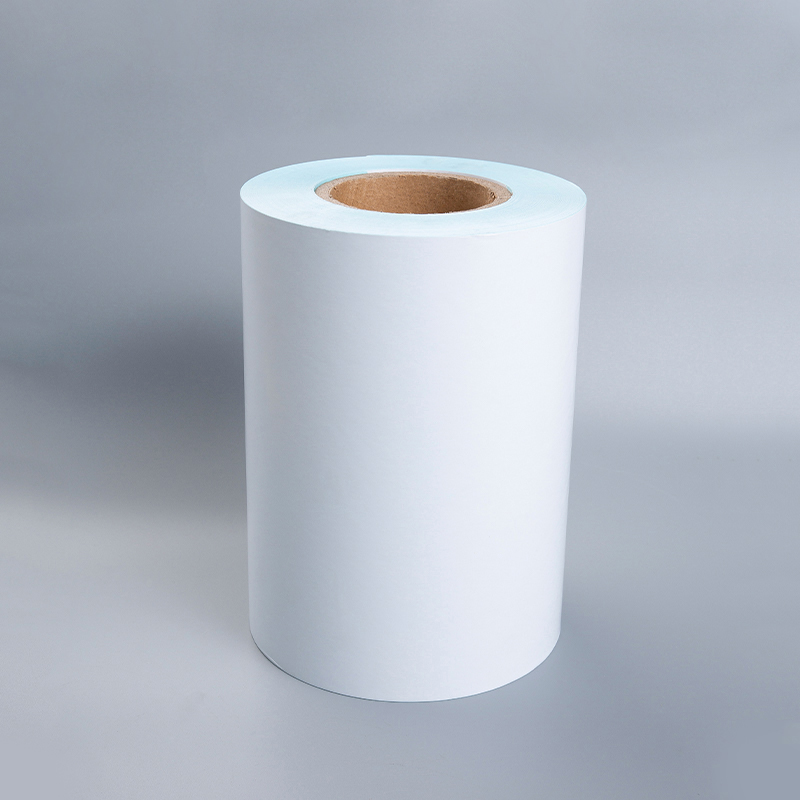
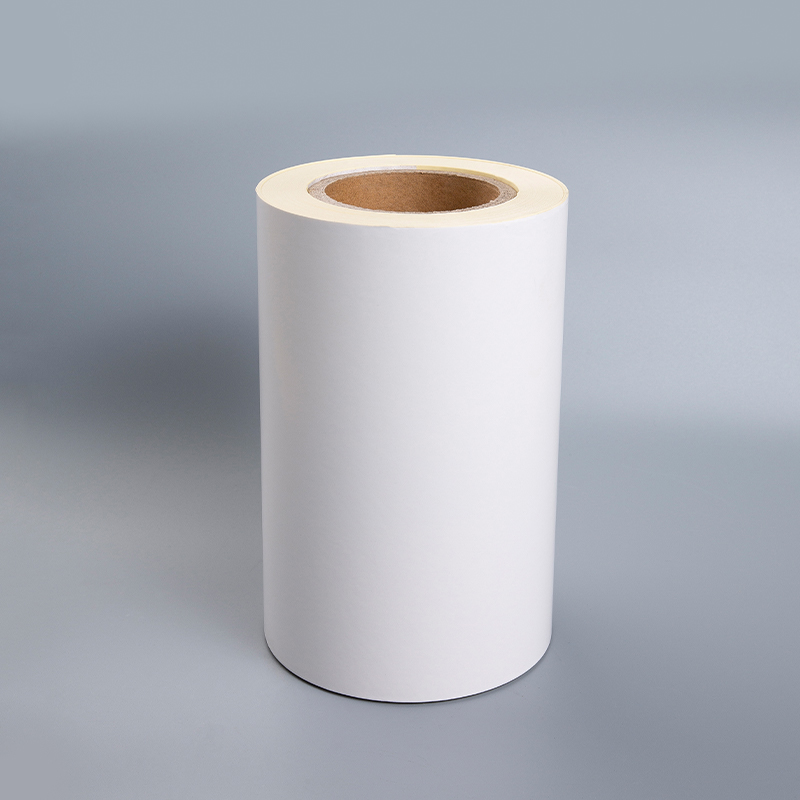
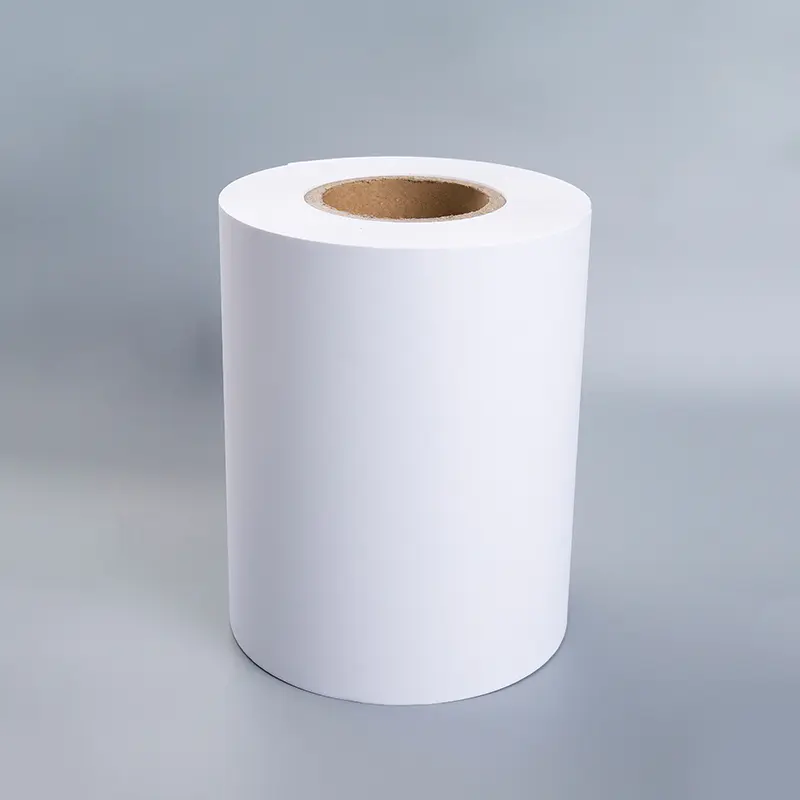
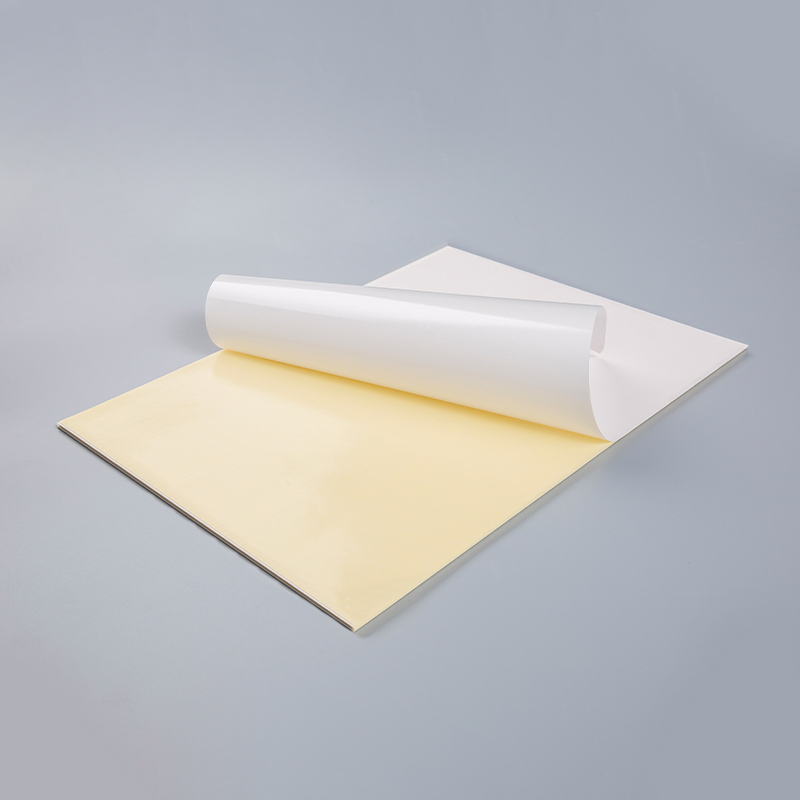
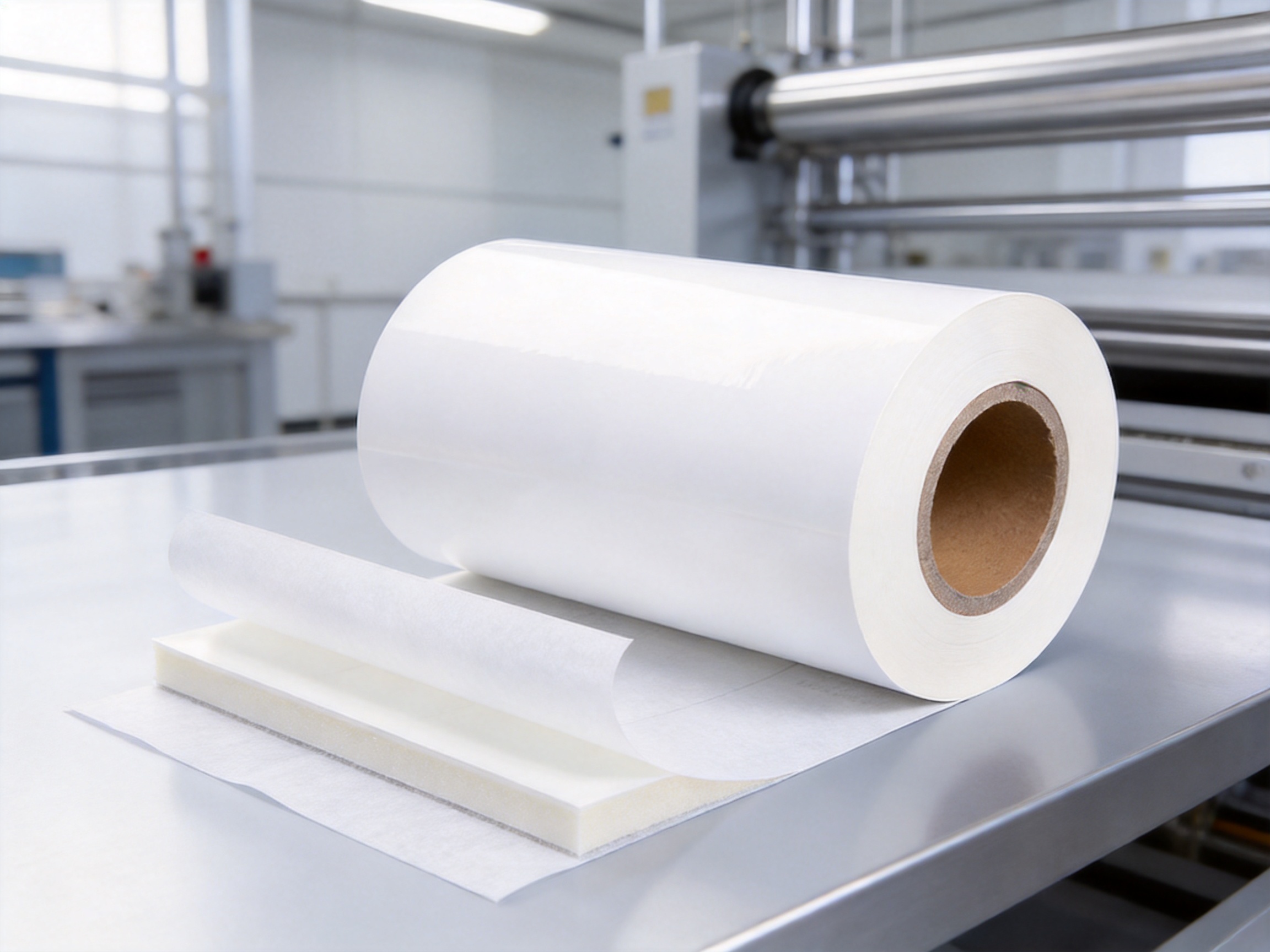
عربىHotmelt Adhesive Gloss White PP is a high-performance self-adhesive label material designed for applications that require a clean white appearance, excellent print presentation, reliable adhesion, and efficient converting. Built with a gloss white polypropylene face material, hotmelt adhesive, and a glassine or release liner system, it combines the visual appeal of film labels with the practical performance required by modern packaging, logistics, retail, food, cosmetic, promotional, and industrial labeling markets.
This product belongs to the Gloss White BOPP and self-adhesive film label material category. It is engineered for users who need more than an ordinary paper label. Compared with many conventional label stocks, the PP film face offers better resistance to moisture, tearing, surface abrasion, and deformation. Its glossy white surface supports attractive visual presentation, making it suitable for labels where shelf impact and brand appearance matter. The hotmelt adhesive provides fast bonding, strong initial tack, and dependable performance on a wide range of substrates.
Hotmelt Adhesive Gloss White PP 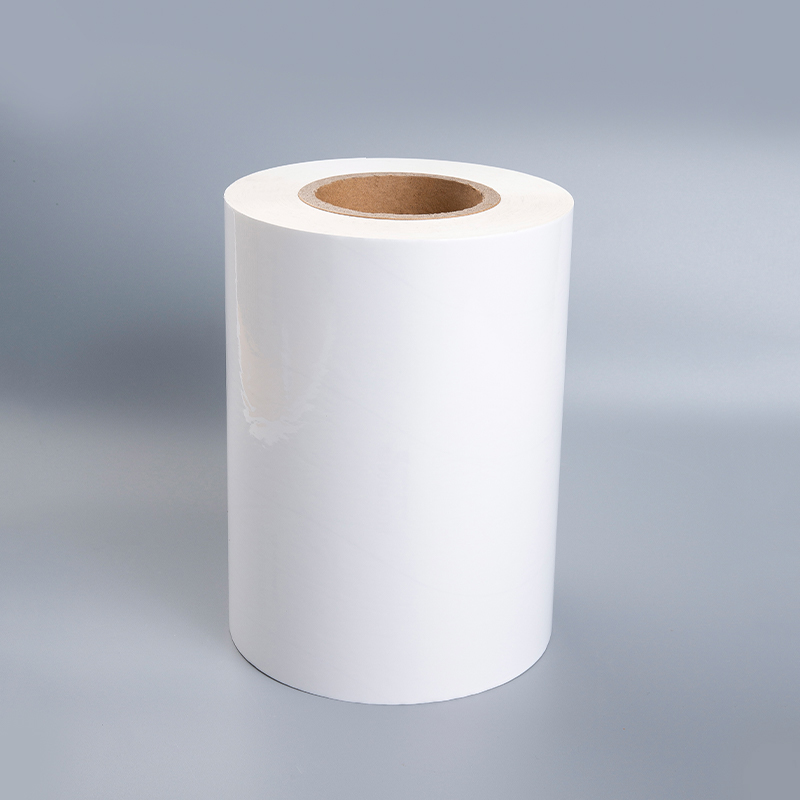
Content
- 1 Product Overview
- 2 Core Structure and Technical Configuration
- 3 Gloss White PP Face Material: Clean Appearance and Film-Level Strength
- 4 Hotmelt Adhesive: Fast Tack and Strong Bonding
- 5 Liner Options for Converting Stability
- 6 Applications Across Printing and Packaging
- 7 Print Performance and Visual Quality
- 8 Advantages Over Ordinary Paper Labels
- 9 Advantages Over Many Competing Film Label Materials
- 10 Manufacturing Excellence Behind the Material
- 11 Quality Control and Testing Capability
- 12 Production Capacity and Supply Stability
- 13 Customization for Different Markets
- 14 Sustainability and Responsible Material Development
- 15 OEM and ODM Support
- 16 Packaging and Delivery Reliability
- 17 How to Select the Right Construction
- 18 Storage and Handling Recommendations
- 19 Why This Material Creates Value for Converters and Brand Owners
- 20 Q&A Section
- 20.1 What is Hotmelt Adhesive Gloss White PP?
- 20.2 What is the standard material construction?
- 20.3 Why choose PP film instead of ordinary paper label material?
- 20.4 What are the advantages of hotmelt adhesive?
- 20.5 Can the product be customized?
- 20.6 What sizes are available?
- 20.7 Is this material suitable for cosmetic packaging?
- 20.8 Can it be used for food packaging labels?
- 20.9 What liner should be selected for automatic labeling?
- 20.10 How does the manufacturer ensure quality?
- 21 Conclusion
- 22 References
- 23 Product: Hotmelt Adhesive Gloss White PP
Product Overview
Hotmelt Adhesive Gloss White PP is typically constructed with a 60 micron gloss white PP face material, a pressure-sensitive hotmelt adhesive layer, and a 60 g white glassine paper liner. Alternative constructions are available, including 95 micron and 100 micron PP face options, different adhesive systems, and multiple liner weights. This makes the material adaptable to different converting methods, label sizes, printing technologies, packaging surfaces, and end-use environments.
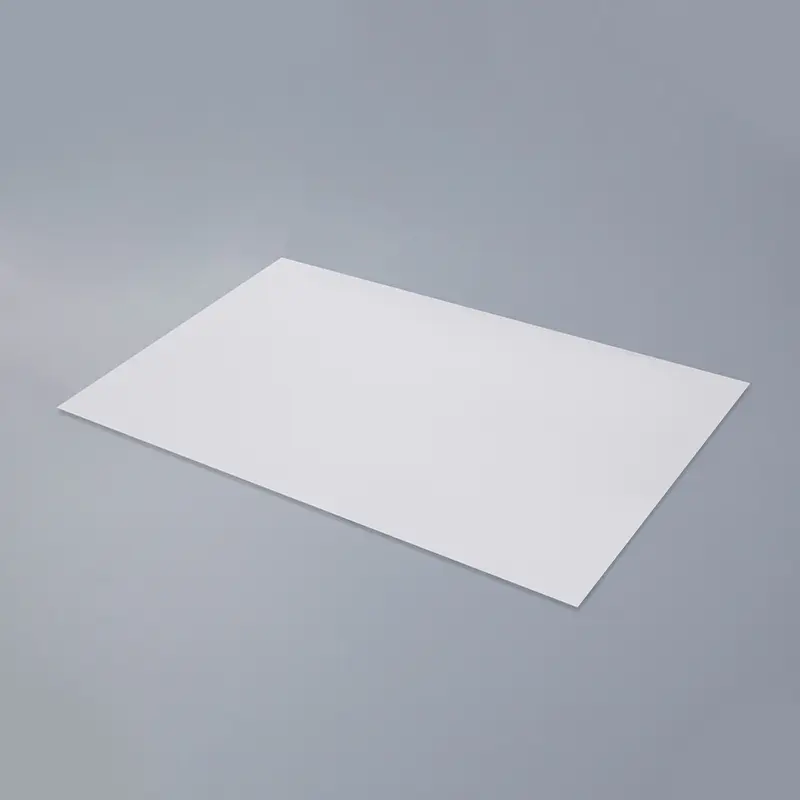
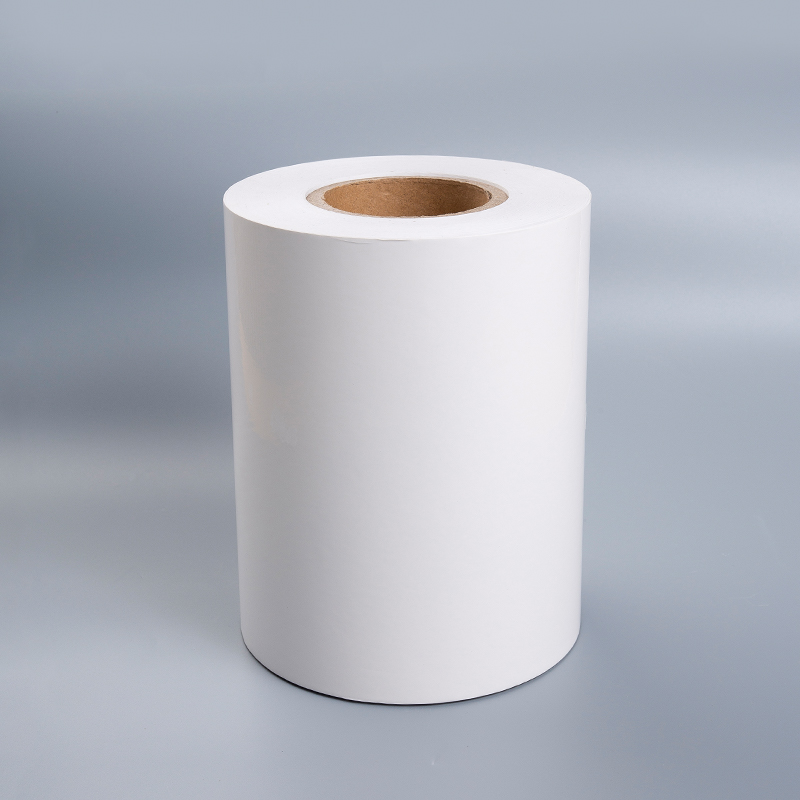
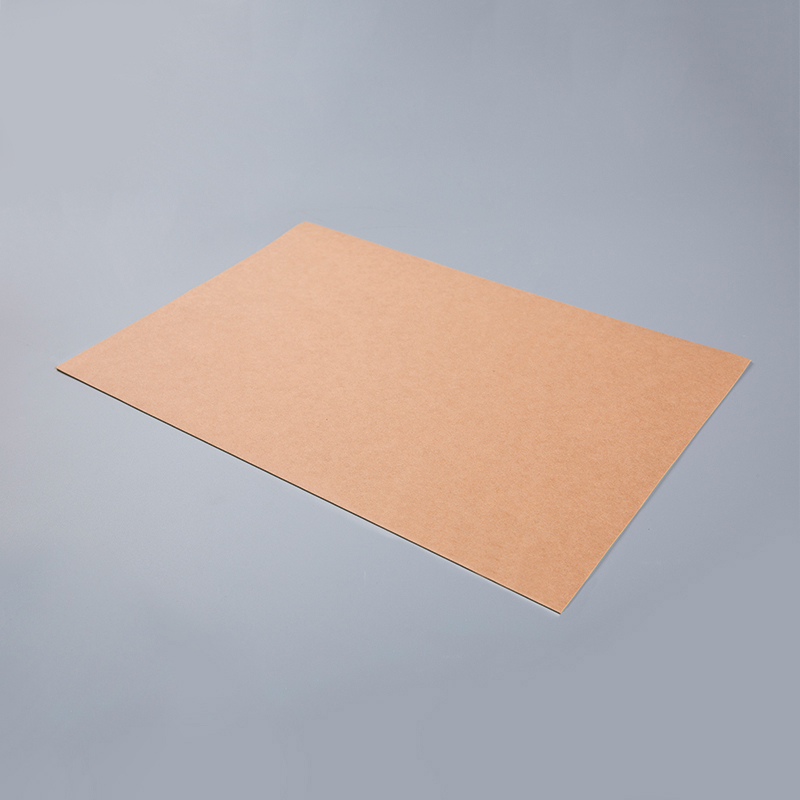
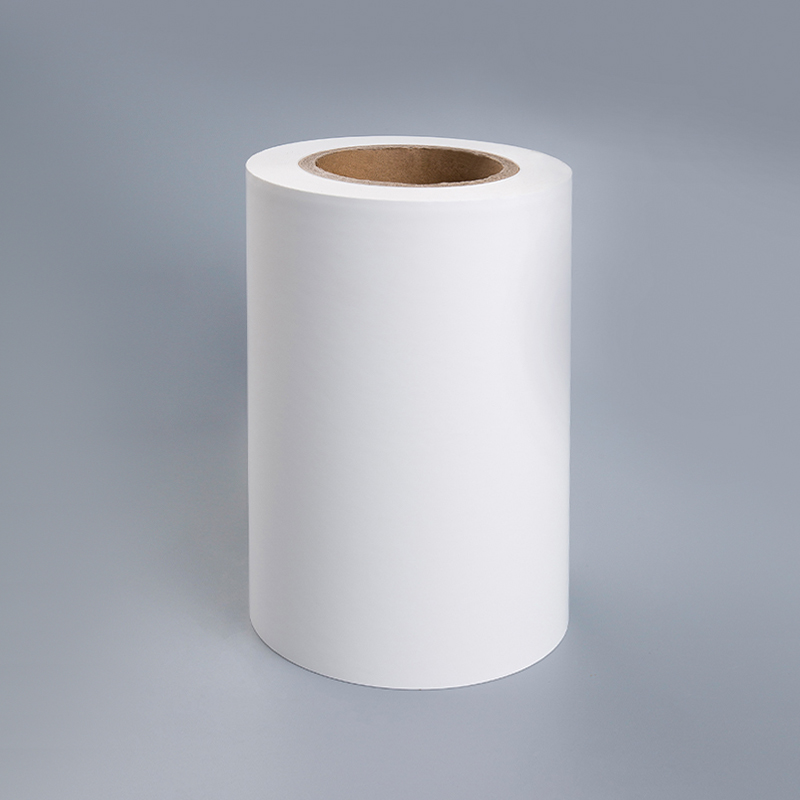
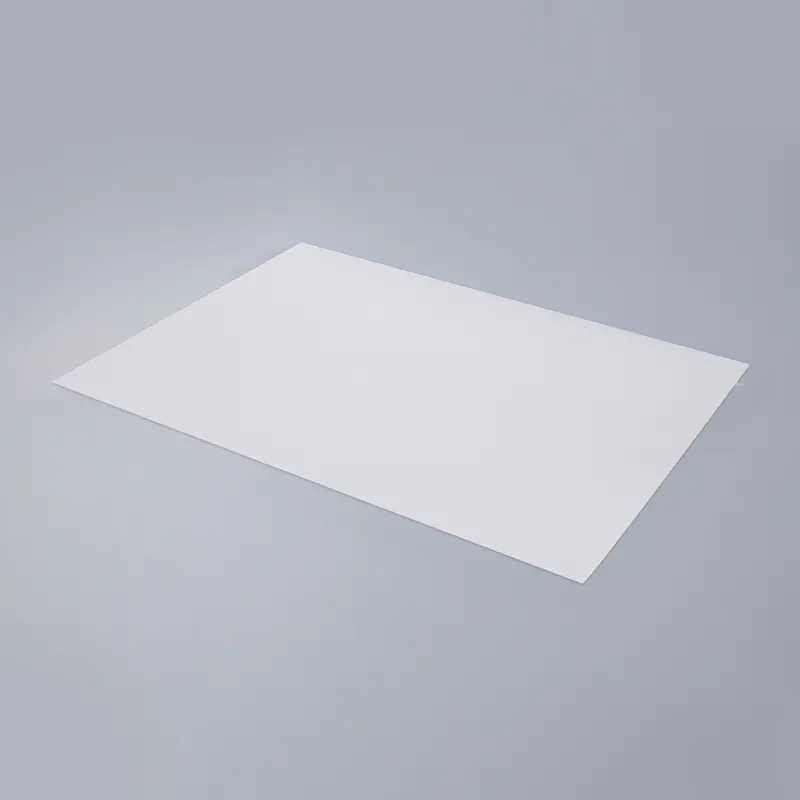
The product can be supplied in jumbo roll widths such as 1000 mm, 1020 mm, 1080 mm, and 1530 mm. It can also be converted into sheets such as A4, A3, 20 x 30, 21 x 30, 24 x 36, 50 cm x 70 cm, and 70 cm x 100 cm, with customized dimensions available according to customer requirements. This flexibility helps label converters, printers, packaging suppliers, and brand owners reduce waste, improve production efficiency, and match material specifications to their own equipment and market needs.
The face material is based on polypropylene, commonly used in BOPP label applications because of its excellent balance between appearance, stiffness, dimensional stability, and moisture resistance. When applied correctly, a gloss white PP label can retain its premium look even in conditions where paper labels may wrinkle, absorb moisture, or lose visual quality. For products displayed in retail environments, stored in humid conditions, or handled frequently, this performance difference can be a major advantage.
Core Structure and Technical Configuration
The performance of a self-adhesive label material depends on the balance among three main layers: face stock, adhesive, and liner. Hotmelt Adhesive Gloss White PP is designed around this principle. Each layer is selected to support printing, die-cutting, dispensing, application, and final label durability.
Component |
Standard Specification |
Available Options |
Performance Purpose |
Face Material |
60 micron Gloss White PP |
95 micron and 100 micron PP available |
Provides glossy white appearance, print surface, moisture resistance, and film durability |
Adhesive |
Hotmelt adhesive |
Water-based adhesive, solvent adhesive, removable adhesive, anti-freeze adhesive, cryogenic adhesive, and tyre-grade rubber adhesive available |
Ensures bonding performance for different substrates, temperatures, and application conditions |
Liner |
60 g white glassine paper |
50 g, 80 g, 100 g, and 120 g glassine paper; 60 g, 85 g, 120 g, and 140 g release paper; 140 g and 165 g art paper; 50 g, 80 g, 90 g, and 120 g CCK liner |
Supports coating quality, die-cutting, matrix stripping, release stability, and automatic labeling |
Roll Width |
1000 mm, 1020 mm, 1080 mm, 1530 mm |
Custom slitting available |
Supports printing presses, label converting lines, and large-scale production |
Sheet Size |
A4, A3, 20 x 30, 21 x 30, 24 x 36, 50 cm x 70 cm, 70 cm x 100 cm |
Customized sheet size available |
Supports sheet-fed printing, sample production, small-batch labeling, and specialty applications |
Gloss White PP Face Material: Clean Appearance and Film-Level Strength
The gloss white PP face material gives this product its premium look and functional durability. A bright, glossy white surface improves the visual impact of printed graphics, barcodes, product information, promotional messages, and brand elements. For packaging labels, cosmetic labels, food labels, and retail goods, the surface brightness and smoothness help create a clean, professional presentation.
Unlike ordinary uncoated paper, PP film does not easily absorb moisture. This means it is less likely to curl, wrinkle, or lose integrity when exposed to humid storage, condensation, light splashing, or frequent handling. In packaging environments where products may move from warehouse to transport to retail shelves, dimensional stability is essential. A label that remains flat and smooth improves both product appearance and scanning reliability.
Gloss White PP also has good tear resistance compared with many paper-based labels. This is valuable for products that are handled repeatedly, squeezed, transported, or placed on flexible packaging. The film face can help maintain label readability and surface quality throughout the product lifecycle. For brand owners, this supports a consistent consumer experience. For converters, it can reduce complaints related to label damage, poor appearance, or performance failure.
In many applications, PP label materials offer a strong balance between cost and performance. They are more durable than standard paper labels while remaining more economical than some specialty synthetic films. This makes Hotmelt Adhesive Gloss White PP a practical choice for customers seeking upgraded label quality without overengineering the material.
Hotmelt Adhesive: Fast Tack and Strong Bonding
The hotmelt adhesive system is one of the key performance advantages of this product. Hotmelt pressure-sensitive adhesives are known for high initial tack, fast wet-out, and strong bonding to many packaging surfaces. This makes the material suitable for automatic labeling lines, high-speed application, promotional labeling, logistics labels, and general-purpose packaging labels where the label must adhere quickly and securely.
Initial tack is especially important when labels are applied to curved, uneven, or slightly textured surfaces. A low-tack adhesive may lift at the edges or fail to bond quickly enough during high-speed labeling. Hotmelt adhesive helps reduce this risk by providing immediate grip. This contributes to smoother production, less label waste, fewer reworks, and better overall packaging efficiency.
Compared with some general water-based adhesive label materials, hotmelt adhesive often provides stronger tack on low-energy substrates, cartons, films, and rougher surfaces. This is useful in packaging operations that involve mixed materials. It can also perform well where labels must remain attached during transport and handling. For many end users, the benefit is simple: labels stay where they are supposed to stay.
At the same time, the product can be customized with other adhesive systems when needed. Water-based adhesives may be chosen for specific environmental or application preferences. Solvent adhesives can be used for demanding durability requirements. Removable adhesives are suitable for labels that must peel away cleanly. Anti-freeze and cryogenic adhesives support cold-chain or low-temperature applications. Tyre-grade rubber adhesive is available for challenging surfaces that require specialized tack and bonding behavior.
Liner Options for Converting Stability
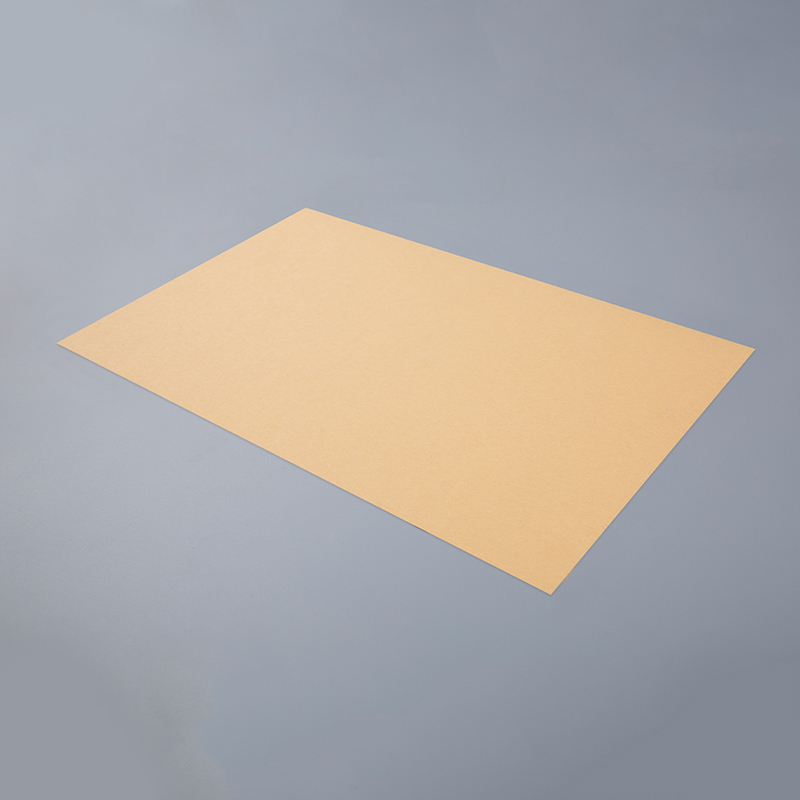
A label liner may appear secondary, but it plays a critical role in converting and application. The standard 60 g white glassine liner provides a smooth, consistent release surface suitable for many roll label applications. Glassine liners are widely used because they offer good caliper uniformity, die-cutting performance, and stable release characteristics. These features support clean matrix stripping, accurate label dispensing, and efficient automatic labeling.
For customers using different equipment or producing specialized labels, the availability of multiple liner options is a major advantage. Heavier glassine paper, release paper, art paper, and CCK liners can be selected depending on stiffness, release force, sheet handling, flatness, printing method, and die-cutting requirements. A well-matched liner helps reduce converting problems such as web breaks, uneven release, curling, poor sheet feeding, and die-cutting inconsistency.
This broad liner portfolio gives converters more freedom to design the correct label construction rather than forcing all applications into a single standard. For example, roll-to-roll label production may favor glassine liners, while sheet-fed applications may benefit from liner choices that improve flatness and feeding stability. Industrial applications may require heavier liners to withstand handling and processing. By offering these options, the product can be aligned with both technical needs and cost targets.
Applications Across Printing and Packaging
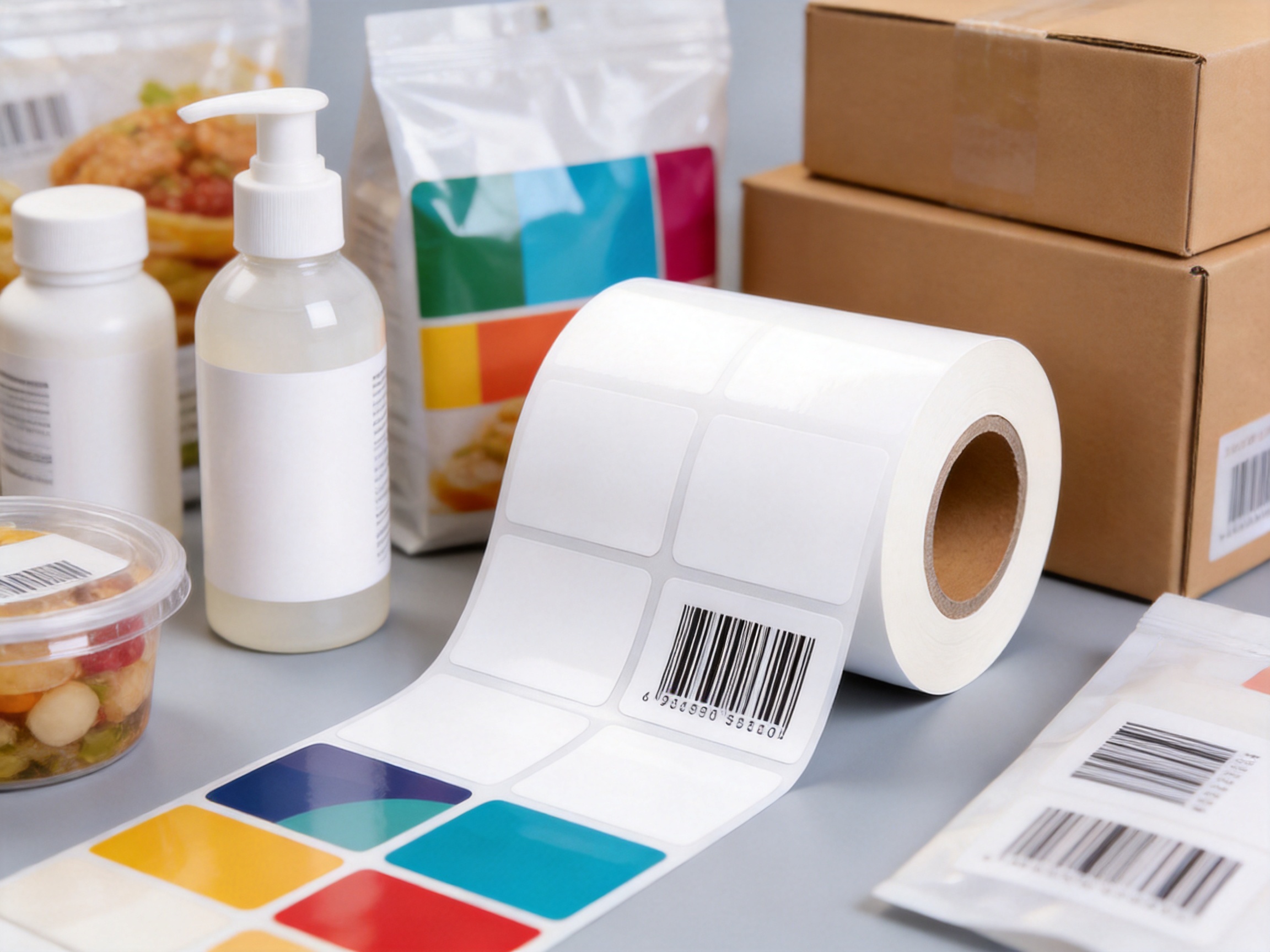
Hotmelt Adhesive Gloss White PP is suitable for a wide range of label and packaging applications. Its glossy white surface supports visual communication, while its film structure improves label durability. The product can be used for poster-related printing, promotional labels, food packaging labels, cosmetic packaging labels, automotive soft packaging, daily chemical labels, retail labels, logistics identification, and many other product marking applications.
For food packaging, the material’s smooth and bright face stock helps present product information clearly. Labels may include branding, nutritional panels, batch codes, barcodes, promotional graphics, or usage instructions. The moisture-resistant nature of PP is helpful for products stored in variable humidity or handled in refrigerated retail environments. When paired with the right adhesive, the material can support many common food packaging surfaces.
For cosmetic packaging, appearance is often as important as function. Gloss White PP provides a clean, polished look that suits bottles, jars, tubes, boxes, and flexible packaging. Cosmetics and personal-care products are frequently handled in bathrooms or humid spaces, where paper labels may lose appeal. Film labels help maintain a premium look for longer.
For automotive soft packaging and industrial goods, labels may need to withstand more demanding handling, friction, and storage conditions. PP film offers better resistance to tearing and moisture than ordinary paper labels. This makes it suitable for identification labels, product information labels, and packaging labels used in distribution environments.
For promotional and poster-related printing, the high-gloss white surface supports vivid graphics and strong visual contrast. Promotional labels often need to attract attention quickly, and the clean white background helps printed colors stand out. The material is suitable for short-term campaigns as well as product labels requiring long-term shelf appeal.
Print Performance and Visual Quality
A label material must not only adhere well; it must also print well. The gloss white PP face is designed to provide a smooth surface that supports high-quality image reproduction. Depending on the coating and printing system selected by the converter, it can be used for various printing processes common in label and packaging production. The surface supports sharp text, clean barcode readability, and attractive graphics when properly matched with ink, primer, and curing conditions.
Gloss is a strong advantage for retail packaging. It creates a bright, reflective finish that communicates cleanliness, quality, and modern design. On shelves crowded with competing products, label appearance can influence consumer perception. A dull or wrinkled label may make a product look less reliable, while a smooth gloss white PP label can help strengthen the brand image.
The film base also contributes to consistency during printing. Good flatness and dimensional stability help maintain registration, especially in roll-fed converting. This is important for labels with multiple colors, fine text, small icons, or precise die-cutting shapes. Better stability helps reduce waste during setup and production.
For barcode and variable information printing, surface uniformity is important. A clean white film surface can provide strong contrast between printed codes and background. This supports scanning performance in logistics, retail checkout, warehouse management, and product traceability. When labels remain smooth and undamaged through handling, barcode readability is better preserved.
Advantages Over Ordinary Paper Labels
Compared with standard paper self-adhesive labels, Hotmelt Adhesive Gloss White PP offers several meaningful advantages. The first is moisture resistance. Paper labels can absorb water vapor, causing swelling, curling, wrinkles, or surface deterioration. PP film resists moisture absorption, helping the label remain flat and attractive in challenging environments.
The second advantage is tear resistance. Paper labels can rip during application, handling, or transport. PP film is tougher and more flexible, reducing the likelihood of label damage. This is particularly valuable on flexible packaging, curved containers, and products that experience frequent contact.
The third advantage is premium appearance. Gloss white film labels often look cleaner and more modern than many paper labels. They support bright graphics and a smooth surface finish. This can help brands improve shelf appeal and communicate higher product value.
The fourth advantage is longer-lasting readability. Product information, barcodes, warnings, and regulatory details must remain legible. Because PP film is less prone to moisture-related deformation, it can protect label readability more effectively in many practical environments.
The fifth advantage is application versatility. With multiple adhesive and liner choices, this product can be configured for different surfaces, temperatures, and converting conditions. This makes it suitable for both standard and specialized labeling projects.
Advantages Over Many Competing Film Label Materials
Within the film label market, customers often compare PP, PET, PE, and specialty synthetic materials. Hotmelt Adhesive Gloss White PP stands out because it combines an attractive gloss surface, strong bonding performance, practical cost efficiency, and flexible construction options. For many packaging applications, it provides the right balance between durability and affordability.
Compared with heavier or more rigid specialty films, PP can be easier to use in common label applications where moderate flexibility and good appearance are required. Compared with softer film materials, BOPP-style PP can offer better flatness and print stability. Compared with premium films that may exceed the application requirement, this product can provide a more economical solution while still delivering a strong upgrade over paper.
The availability of hotmelt adhesive as a standard construction also differentiates it from some film label products that may rely on lower-tack general-purpose adhesives. High initial tack helps the label bond quickly during fast application, reducing edge lift and label failure. For converters and brand owners, this can translate into better productivity and lower total cost of use.
Another advantage is the broad customization platform. Customers can choose alternative adhesives, face material thicknesses, liner types, and sizes. Many competitors may offer limited combinations, which can force customers to compromise. A broader material system allows label performance to be tailored to the real application, improving reliability and customer satisfaction.
Manufacturing Excellence Behind the Material
High-quality self-adhesive label material depends on precise manufacturing. The production of Hotmelt Adhesive Gloss White PP requires careful control of coating weight, adhesive uniformity, lamination tension, liner release, roll winding, slitting accuracy, and surface cleanliness. Consistency across every layer is essential because even small defects can affect printing, die-cutting, dispensing, or final label performance.
The manufacturer operates complete production lines covering gluing, laminating, and cutting. This integrated production capability supports stable quality control from raw material selection to finished roll or sheet delivery. By controlling the key processes in-house, the company can respond more quickly to customer requirements, maintain product consistency, and develop customized constructions for different markets.
Gluing is a critical stage. The adhesive must be applied evenly across the web to avoid dry spots, excessive adhesive, streaks, or bonding inconsistency. Uniform adhesive coating helps ensure predictable tack, peel strength, and die-cutting performance. In high-speed converting, adhesive consistency can be the difference between smooth production and costly downtime.
Laminating must combine the face material, adhesive, and liner with correct tension and alignment. Poor lamination can lead to wrinkles, bubbles, curling, or uneven release. Advanced laminating control helps the material remain flat and stable, which is essential for printing and automatic labeling. A stable laminate structure also improves roll quality and storage performance.
Cutting and slitting require accuracy. Jumbo rolls must be converted into usable widths or sheets without damaging edges, contaminating surfaces, or creating winding defects. Clean slitting supports smooth running on printing presses and labeling equipment. Accurate sheet cutting supports reliable feeding in sheet-fed printing and small-format label production.
Quality Control and Testing Capability
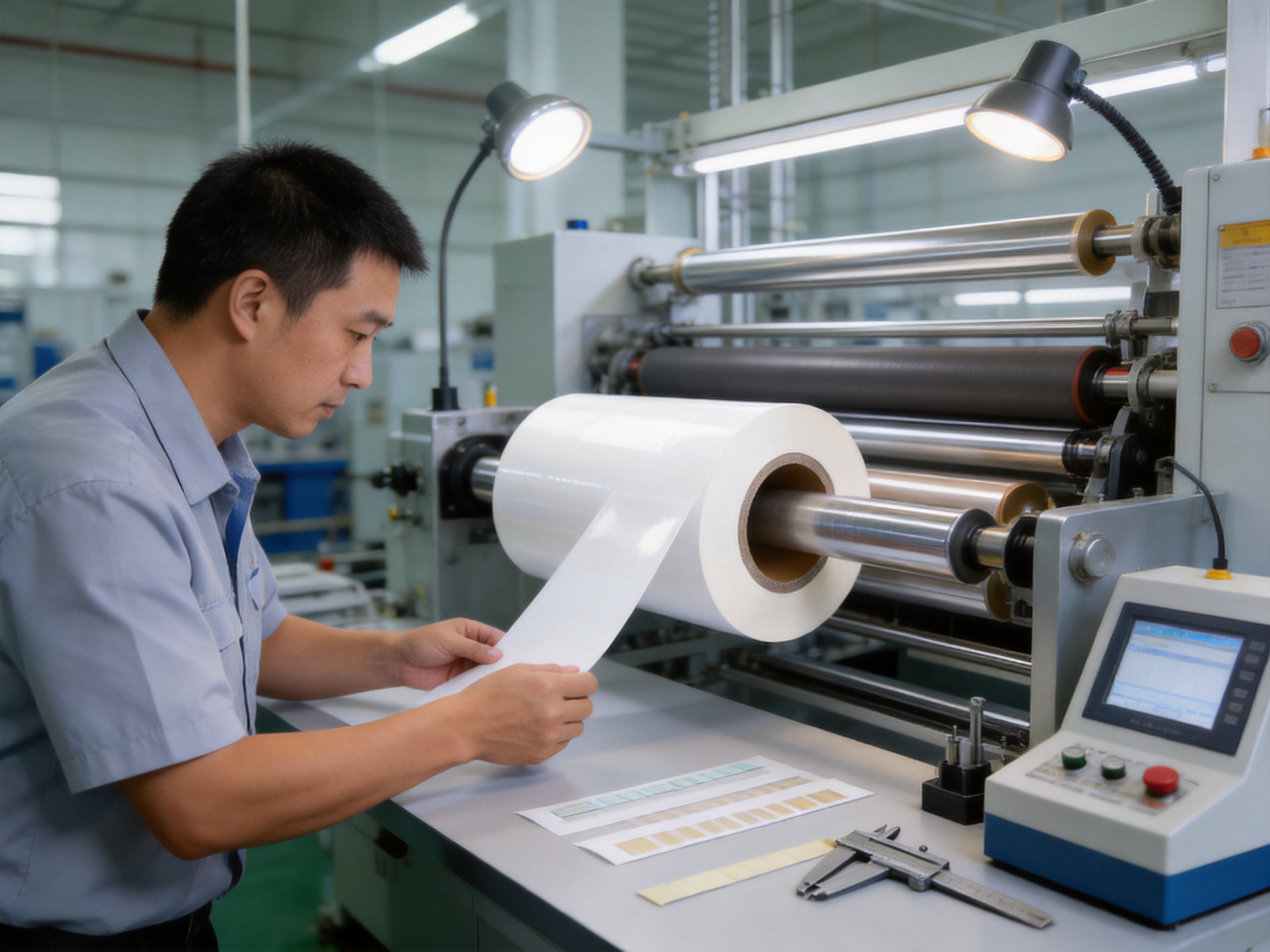
Quality assurance is central to label material performance. The company supports product quality through its own testing laboratory and advanced inspection equipment. This allows technical teams to evaluate raw materials, adhesive behavior, release performance, coating consistency, dimensional stability, and finished product quality before shipment.
Testing may include measurements related to thickness, basis weight, peel strength, tack, release force, surface appearance, roll quality, and cutting accuracy. For label converters, consistent release force is particularly important because it affects die-cutting, matrix removal, dispensing, and automatic application. If release is too tight, labels may not dispense properly. If it is too loose, labels may lift during converting or storage. Controlled release helps maintain process reliability.
Adhesive testing is equally important. Hotmelt adhesive must provide strong initial tack while remaining compatible with the face and liner. The final bond may be affected by substrate type, application pressure, temperature, surface energy, and storage conditions. Laboratory evaluation helps identify suitable constructions for different customer needs.
Visual inspection also matters. Film label materials must have a clean surface, consistent gloss, and stable color tone. Defects such as spots, wrinkles, scratches, bubbles, and coating streaks can reduce printing quality and customer satisfaction. Advanced inspection helps reduce the risk of defective material reaching production lines.
The company’s experience in OEM manufacturing further strengthens quality control. With more than 20 years of manufacturing experience, the team understands the real challenges faced by label printers, converters, packaging companies, and brand owners. This practical knowledge helps improve product design, troubleshooting, and technical support.
Production Capacity and Supply Stability
For buyers of self-adhesive label materials, stable supply is just as important as product performance. A material may be excellent, but if delivery is unreliable, it can disrupt printing schedules, packaging operations, and customer commitments. The manufacturer’s annual production capacity of more than 280 million square meters supports large-volume supply and long-term cooperation.
This capacity is valuable for customers with recurring label demand, seasonal packaging programs, national distribution, or multi-region supply chains. Large production capability helps ensure that standard materials can be produced efficiently and that customized materials can be scheduled according to project requirements.
The company has built sales and service networks across multiple domestic and international markets. Its products are supplied to regions including Asia, Europe, the Americas, Africa, and the Middle East. Global market experience helps the manufacturer understand different customer standards, packaging practices, climate conditions, and regulatory expectations.
Stable supply is supported not only by capacity but also by packaging and logistics preparation. The product can be packed in sea-transit-worthy poly-wood pallet packing and carton packing. Both roll and sheet formats are available from stock depending on requirements. Sheet products may be packed in reams, with each ream wrapped using strong PE-coated kraft paper. Pallets are wrapped with stretch film and fastened with plastic belts to improve transport safety.
Customization for Different Markets
One of the strongest commercial advantages of Hotmelt Adhesive Gloss White PP is its customization potential. Label applications vary widely. A cosmetic bottle label, frozen food label, tyre label, promotional sticker, and logistics barcode label all have different requirements. A single standard construction cannot perform optimally in every situation. This product platform allows customers to adjust key elements such as face thickness, adhesive type, liner type, roll width, and sheet size.
Face thickness can be selected according to stiffness, opacity, handling, and application requirements. A 60 micron face material is suitable for many general film label uses. Thicker 95 micron or 100 micron options may be selected when customers need a heavier feel, improved rigidity, or particular converting performance.
Adhesive selection can be tailored to the environment. Standard hotmelt adhesive supports strong tack and broad utility. Water-based adhesive may be preferred for certain general packaging needs. Solvent adhesive can support demanding performance conditions. Removable adhesive is appropriate for temporary labels, promotional stickers, reusable containers, or surfaces requiring clean removal. Anti-freeze and cryogenic adhesives are suitable for low-temperature applications. Tyre-grade rubber adhesive supports difficult, rough, and low-energy surfaces.
Liner selection can also be customized. Glassine liners support high-speed roll converting and automatic labeling. Release paper and CCK liners can be selected for different stiffness or flatness needs. Art paper liners may support sheet applications or specialty processing. This range enables customers to build a material construction that matches their equipment rather than forcing equipment to adapt to the material.
Custom sizes reduce waste and improve production efficiency. Jumbo roll widths can be matched to printing press requirements, while sheets can be cut to common or special dimensions. By optimizing width and size, customers can improve yield, reduce trimming loss, and streamline inventory management.
Sustainability and Responsible Material Development
Sustainability has become increasingly important in packaging and labeling. While film labels provide durability and performance, customers also seek responsible solutions that reduce waste, improve production efficiency, and support environmental goals. The manufacturer’s brand positioning focuses on sustainable development and environmental protection, including eco-friendly solutions involving face materials, adhesives, and backing papers.
Material efficiency is one practical sustainability advantage. A durable label that performs correctly the first time reduces waste from relabeling, rejected packaging, and damaged inventory. Stable converting performance reduces scrap during printing and die-cutting. Custom sizing helps reduce offcuts. Reliable adhesive bonding helps prevent label loss during transport and use.
Responsible development also involves selecting suitable materials for the application rather than using excessive specifications. Hotmelt Adhesive Gloss White PP provides a balanced option for customers who need more durability than paper but may not require more expensive or heavier specialty films. Correct material matching can help avoid overuse while maintaining product performance.
The availability of different adhesive and liner options also supports sustainability-oriented decisions. Customers can discuss project goals and select constructions that better match recycling strategies, waste reduction plans, or performance requirements. As packaging markets evolve, the ability to develop customized eco-conscious label materials will remain an important competitive strength.
OEM and ODM Support
The company offers OEM and ODM services, producing products based on customer drawings, samples, and technical requirements. This is particularly important in the self-adhesive label industry because each customer may have different printing methods, die-cut shapes, storage conditions, labeling surfaces, and market regulations. Standard stock materials are useful, but custom engineering often creates the best results.
OEM support enables customers to source label materials under their own specifications and business requirements. This is valuable for distributors, label converters, packaging suppliers, and brand owners who need reliable long-term production. ODM capability allows the company to participate in product development, helping customers create new label solutions for new packaging formats or market opportunities.
The professional research and development team supports innovation and problem-solving. With multiple patents and continuous technical improvement, the company can respond to changing market demands. Whether a customer needs improved tack, a different liner, better cold resistance, smoother die-cutting, or a specific sheet format, technical collaboration can help develop a practical solution.
After-sales service is another important part of the value proposition. Label material performance can be affected by printing conditions, storage, application pressure, substrate cleanliness, and equipment settings. Technical support helps customers identify the root cause of issues and optimize material use. This service-oriented approach strengthens long-term cooperation.
Packaging and Delivery Reliability
Proper packaging protects label material during storage and transport. Rolls and sheets must arrive clean, flat, dry, and undamaged. The product is available in sea-transit-worthy poly-wood pallet packing and carton packing, suitable for international shipments and long-distance delivery. Strong packaging reduces the risk of edge damage, moisture exposure, crushing, or contamination.
For sheet products, ream packing provides convenient handling and storage. Each ream can contain 100 sheets and is wrapped with strong PE-coated kraft paper. This helps protect sheet surfaces and maintain flatness. Pallets are wrapped with stretch film and secured with plastic fastening belts, helping maintain stability during handling and shipping.
Roll packaging is also important. Film label materials must maintain smooth winding and edge quality. Poorly protected rolls may develop telescoping, edge dents, contamination, or surface damage. Reliable roll packaging allows converters to load material into printing and die-cutting equipment with fewer interruptions.
For international customers, transport-ready packaging is essential. Ocean shipment, warehouse handling, customs inspection, and inland transport all create potential risks. A manufacturer experienced in export packing can reduce these risks and help customers receive material in production-ready condition.
How to Select the Right Construction
Selecting the correct Hotmelt Adhesive Gloss White PP construction begins with understanding the final application. Customers should consider the labeled surface, product shape, temperature, humidity, printing method, converting equipment, expected service life, and removal requirements. These factors determine whether the standard construction is sufficient or whether customization is recommended.
For general packaging labels on cartons, films, bottles, and retail goods, the 60 micron gloss white PP with hotmelt adhesive and 60 g glassine liner may provide a practical balance. It offers attractive appearance, strong tack, and efficient converting. For thicker or more rigid label needs, 95 micron or 100 micron face material may be selected.
For low-temperature labeling, anti-freeze or cryogenic adhesive should be evaluated. Labels applied or stored in cold conditions require adhesives that remain functional when standard adhesives may harden or lose tack. For temporary promotions, removable adhesive may be more suitable. For difficult surfaces such as tyres or rough rubber, tyre-grade rubber adhesive should be considered.
For automatic labeling, liner release, stiffness, and roll quality must be matched carefully. A glassine liner often supports efficient dispensing, but the exact weight should be chosen according to equipment requirements. For sheet-fed printing, sheet size, liner flatness, and feeding behavior should be evaluated before mass production.
Testing is recommended before full-scale use, especially for new substrates or demanding environments. Application trials can confirm adhesion, appearance, print compatibility, die-cutting, dispensing, and storage stability. This approach reduces risk and helps customers choose the best material configuration.
Storage and Handling Recommendations
To maintain label material quality, customers should store the product in a clean, dry, temperature-controlled environment. Excessive heat, humidity, direct sunlight, and dust exposure may affect adhesive performance, liner stability, or surface cleanliness. Rolls should be stored upright or according to recommended warehouse practices to prevent deformation.
Before printing or converting, materials should be acclimated to the production environment when there is a large temperature difference between storage and the workshop. This helps reduce condensation, curling, or tension-related issues. Operators should avoid touching the printable surface with bare hands, as oils and contaminants can affect ink adhesion or print quality.
During die-cutting, tooling pressure should be adjusted carefully. Cutting too deeply into the liner can cause dispensing problems or web breaks. Cutting too lightly can leave labels difficult to separate. Stable liner thickness and release help, but correct machine settings remain essential.
During application, the labeled surface should be clean, dry, and free from oil, dust, and release agents. Adequate pressure should be applied to ensure adhesive wet-out. For curved surfaces, label size and stiffness should be considered to reduce edge lift. For special surfaces, testing should be completed before production.
Why This Material Creates Value for Converters and Brand Owners
For label converters, Hotmelt Adhesive Gloss White PP offers a dependable material platform that supports efficient production. Stable face material, consistent adhesive coating, and suitable liner release contribute to smooth printing, die-cutting, matrix stripping, and rewinding. Reduced production interruptions can improve output and profitability.
For printers, the glossy white surface provides an attractive base for high-quality graphics. Good surface appearance can improve customer satisfaction and expand opportunities in premium packaging markets. The ability to supply both rolls and sheets supports different production models.
For brand owners, the material improves packaging appearance and durability. Labels can remain smooth, readable, and visually appealing through handling, storage, and display. This helps protect brand image and consumer trust. A label is often one of the first things customers notice, so material quality directly affects product perception.
For distributors, the broad specification range creates selling flexibility. Multiple adhesives, liners, thicknesses, and sizes allow one product family to serve many industries. This simplifies sourcing and helps meet diverse customer demands.
For packaging companies, reliable adhesion and stable supply reduce operational risk. Strong initial tack supports fast labeling lines, while export-ready packaging supports global logistics. Customization helps align the material with specific packaging formats and customer standards.
Q&A Section
What is Hotmelt Adhesive Gloss White PP?
It is a self-adhesive film label material made with a gloss white polypropylene face, hotmelt pressure-sensitive adhesive, and a liner such as white glassine paper. It is used for printing, packaging labels, promotional labels, food labels, cosmetic labels, and other durable labeling applications.
What is the standard material construction?
The standard construction includes 60 micron Gloss White PP face material, hotmelt adhesive, and 60 g white glassine paper liner. Other thicknesses, adhesives, and liners are available according to customer requirements.
Why choose PP film instead of ordinary paper label material?
PP film offers better moisture resistance, tear resistance, dimensional stability, and premium appearance than ordinary paper. It is especially useful when labels must remain attractive and readable during handling, storage, or exposure to humid conditions.
What are the advantages of hotmelt adhesive?
Hotmelt adhesive provides strong initial tack, fast bonding, and reliable adhesion on many packaging surfaces. It is suitable for high-speed labeling, curved containers, rougher surfaces, and applications where the label must attach quickly.
Can the product be customized?
Yes. Customers can select different PP thicknesses, adhesive systems, liner types, roll widths, and sheet sizes. Available adhesive options include water-based adhesive, solvent adhesive, removable adhesive, anti-freeze adhesive, cryogenic adhesive, and tyre-grade rubber adhesive.
What sizes are available?
Jumbo roll widths include 1000 mm, 1020 mm, 1080 mm, and 1530 mm. Sheet sizes include A4, A3, 20 x 30, 21 x 30, 24 x 36, 50 cm x 70 cm, and 70 cm x 100 cm. Customized sizes can also be produced.
Is this material suitable for cosmetic packaging?
Yes. The glossy white film surface offers a clean and premium appearance, while the PP face provides better moisture resistance than paper. This makes it suitable for bottles, jars, tubes, boxes, and personal-care packaging.
Can it be used for food packaging labels?
Yes, it can be used for many food packaging label applications when the correct adhesive and construction are selected. Testing is recommended to confirm suitability for the specific package surface, storage temperature, and handling environment.
What liner should be selected for automatic labeling?
Glassine liners are commonly used for roll labels and automatic labeling because they provide good release consistency and converting performance. The exact liner weight should be selected according to machine requirements and label design.
How does the manufacturer ensure quality?
The manufacturer uses integrated production lines for gluing, laminating, and cutting, supported by its own testing laboratory and advanced inspection equipment. Quality control focuses on adhesive uniformity, release performance, surface appearance, thickness, roll quality, and cutting accuracy.
Conclusion
Hotmelt Adhesive Gloss White PP is a versatile and competitive self-adhesive film label material for customers who need strong visual appeal, reliable adhesion, and better durability than ordinary paper labels. Its gloss white PP face provides a clean, premium printing surface with film-level moisture and tear resistance. Its hotmelt adhesive delivers fast tack and dependable bonding for many packaging surfaces. Its liner and size options support efficient converting, printing, and application.
The product’s value is strengthened by advanced manufacturing capability, including gluing, laminating, cutting, laboratory testing, inspection equipment, and large annual production capacity. With OEM and ODM services, flexible customization, global supply experience, and a commitment to quality and sustainable development, the manufacturer can support customers across diverse label and packaging markets.
For converters, printers, distributors, packaging companies, and brand owners, this material offers a practical route to better label performance and improved product presentation. Whether used for food packaging, cosmetics, promotional printing, automotive soft packaging, retail labels, or industrial identification, Hotmelt Adhesive Gloss White PP provides a strong balance of appearance, adhesion, processability, and long-term value.
References
1. Pressure-Sensitive Adhesive Technology: Materials, Applications, and Performance Evaluation.
2. Handbook of Polypropylene and Polypropylene Composites.
3. Label and Narrow Web Printing: Materials, Processes, and Quality Control.
4. Flexible Packaging Materials: Film Properties, Lamination, and Converting Methods.
5. Technical Guidelines for Pressure-Sensitive Label Storage, Printing, and Application.