
 English
 Español
 русский
 Français
 عربى
عربىDurable labeling is not about choosing the thickest film or the strongest glue and hoping for the best. It is a materials engineering decision. Every layer in a self-adhesive label — face stock, adhesive, and release liner — has to be selected for the environment it will live in, the surface it must bond to, and the years of handling it will endure.
For more than two decades, we at PUODEHUA have manufactured self-adhesive label materials for converters and printers worldwide. We have seen labels fail for many reasons: films that cracked under UV, adhesives that stopped holding below freezing, constructions that jammed production lines. Nearly every failure traced back to a mismatch between construction and real working conditions. This guide explains the essentials of durable labeling from a supplier's perspective, so you can specify with confidence.
Content
- 1 What Makes a Label Durable?
- 2 Choosing a Face Stock for Tough Environments
- 3 Adhesive Selection: The Layer That Holds Everything Together
- 4 Where Durable Labels Earn Their Keep
- 5 Testing, Standards, and Compliance
- 6 Preventing the Most Common Durable Label Failures
- 7 Building a Durable Labeling Strategy
What Makes a Label Durable?
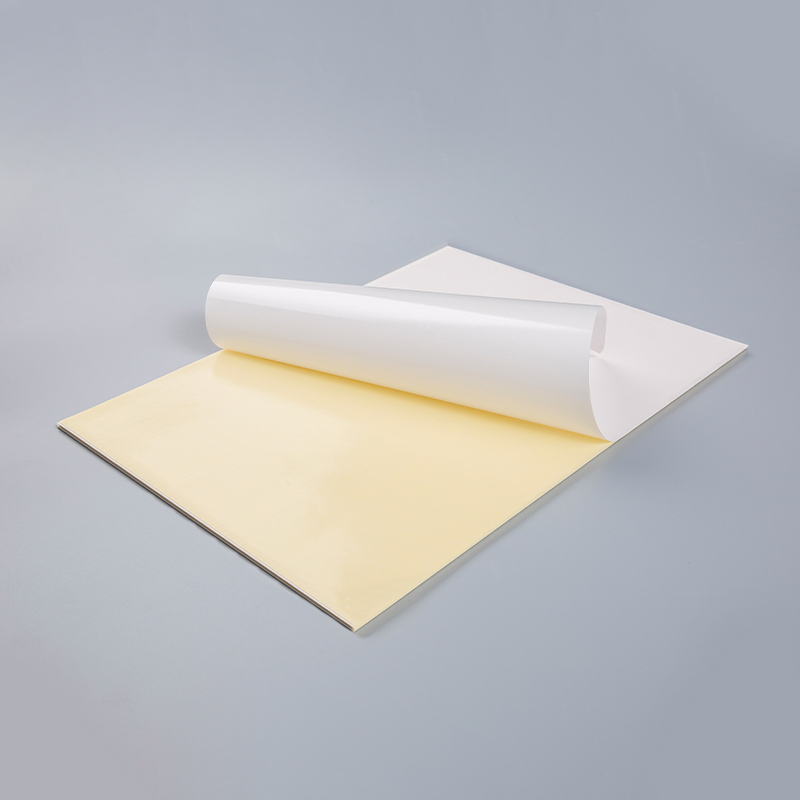
A durable label remains legible, attached, and intact through the full service life of the product it identifies. That requires the three functional layers of the construction to perform together:
- Face stock — the visible top layer that carries printed information and must resist abrasion, sunlight, chemicals, and moisture.
- Adhesive — the bonding layer that must hold the label to curved, rough, low-energy, or contaminated surfaces across the expected temperature range.
- Release liner — the carrier that protects the adhesive during die-cutting, printing, and dispensing; its quality directly affects converting efficiency.
Specifying all three layers as a system is the only reliable way to build durability. A premium film with an ordinary adhesive can fall off within weeks; an aggressive adhesive under a brittle paper stock can tear before it reaches its service position. Choose the materials together, based on the substrate, the environment, and the expected label lifetime.
Choosing a Face Stock for Tough Environments
Synthetic film face stocks dominate durable labeling because they resist moisture, tolerate wide temperature swings, and withstand far more handling than paper. The three most common film families are polyester (PET), biaxially oriented polypropylene (BOPP), and polyvinyl chloride (PVC). Each offers a different balance of strength, temperature tolerance, flexibility, and cost.
| Property | PET (Polyester) | BOPP (Polypropylene) | PVC (Vinyl) |
|---|---|---|---|
| Temperature resistance | Excellent | Good | Moderate |
| Chemical resistance | Excellent | Good | Good |
| Tear strength | Excellent | Very good | Good |
| Flexibility and conformability | Moderate | Good | Excellent |
| Relative cost | Higher | Economical | Moderate |
The right choice depends on the application's pressure points — temperature extremes, chemical exposure, surface geometry, and budget all shift the balance.
Polyester (PET): Strength and Chemical Resistance
Polyester is the material of choice when a label must survive for years in demanding conditions. PET films resist solvents, oils, and many industrial chemicals that degrade other films. They also keep their dimensional stability at elevated temperatures, which makes them suitable for nameplates, UL-rated equipment labels, chemical drum labels, and asset tracking tags. PET's stiffness is an advantage in die-cutting and automatic application.
Our matt silver PET with a white glassine liner combines a durable metallic face with a premium liner for smooth dispensing and thermal transfer printing — a practical choice for drum labeling and equipment nameplates. To understand how PET films behave under heat, pressure, and moisture, see our technical overview of adhesive PET film performance.
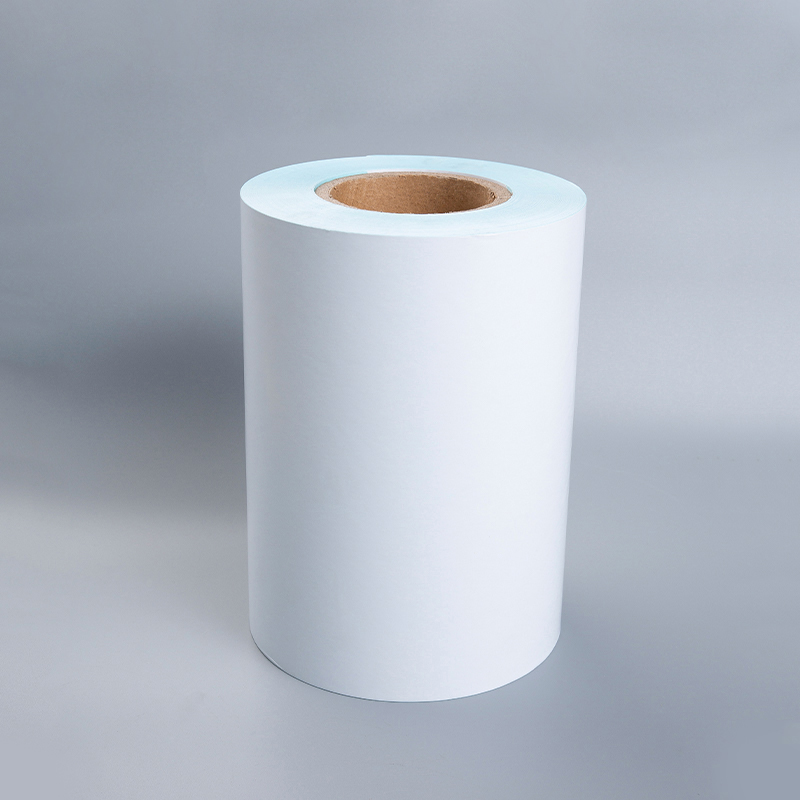
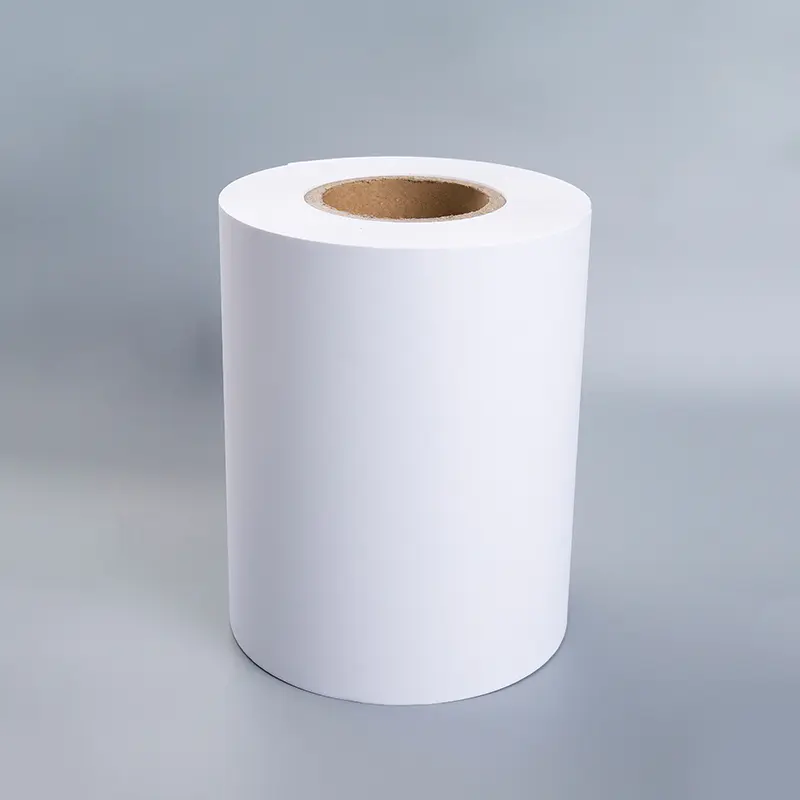
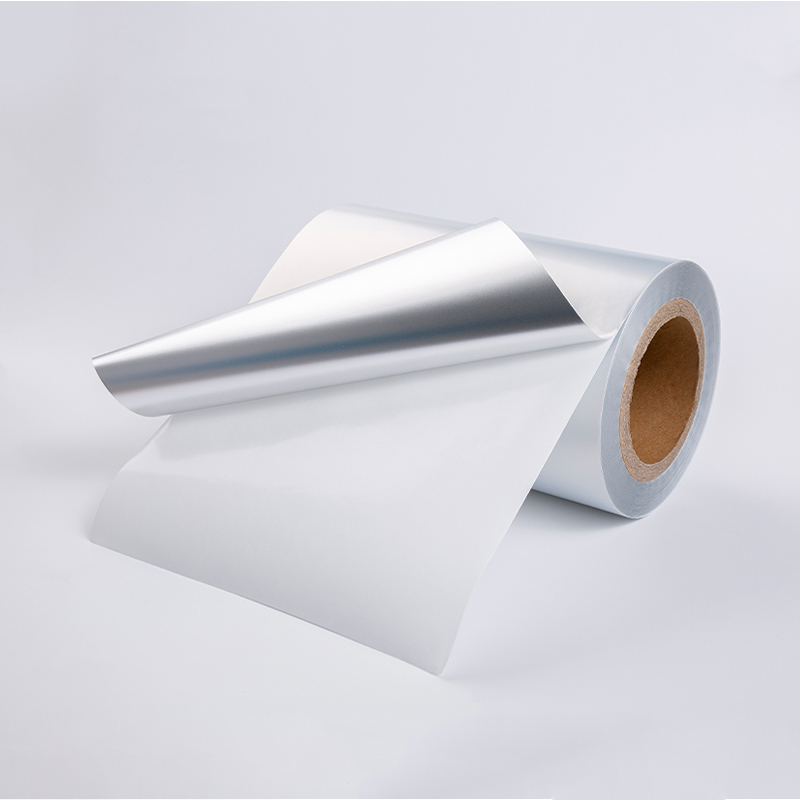 Matt Silver PET Film with White Glassine LinerThis metallic PET label combines a durable face with a premium liner for smooth dispensing, making it well-suited for drum labels and equipment nameplates where strength and a refined finish matter.View Product →
Polypropylene (BOPP): Balanced Durability and Economy
Biaxially oriented polypropylene is the most popular film face stock for general durable labeling because it balances moisture resistance, printability, and cost. BOPP labels hold up well in logistics, retail, beverage, and household applications, where labels face condensation, brief temperature excursions, and normal handling — but not aggressive chemicals or years of outdoor exposure.
Our gloss white BOPP range includes hot-melt adhesive versions for strong initial tack on curved containers and antifreeze adhesive versions for cold-chain and chilled environments. These constructions have become standard for durable food and beverage labeling, where a label has to stay in place from the filling line to the consumer's recycling bin.
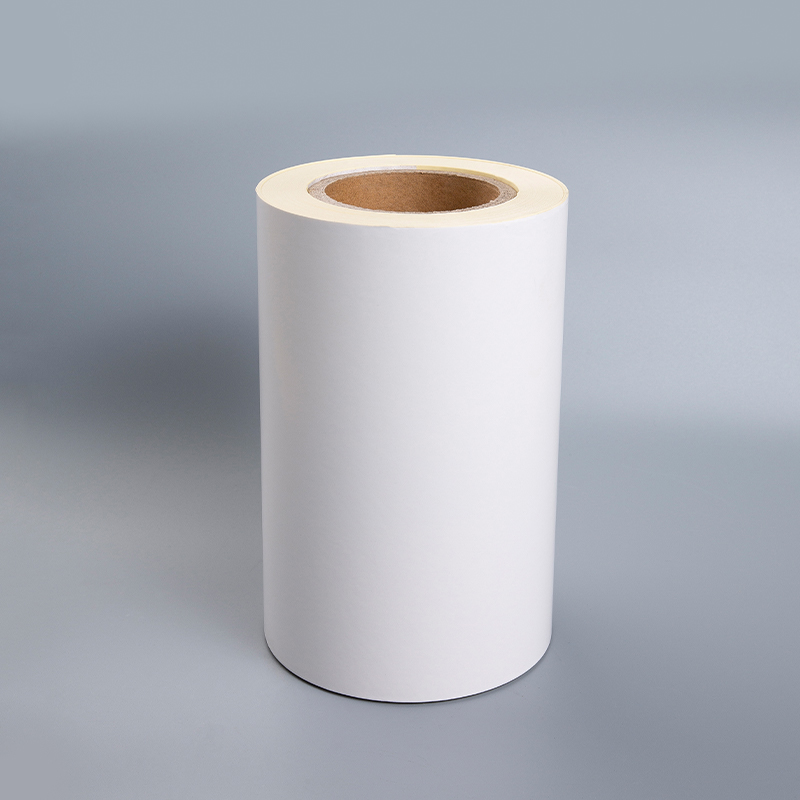
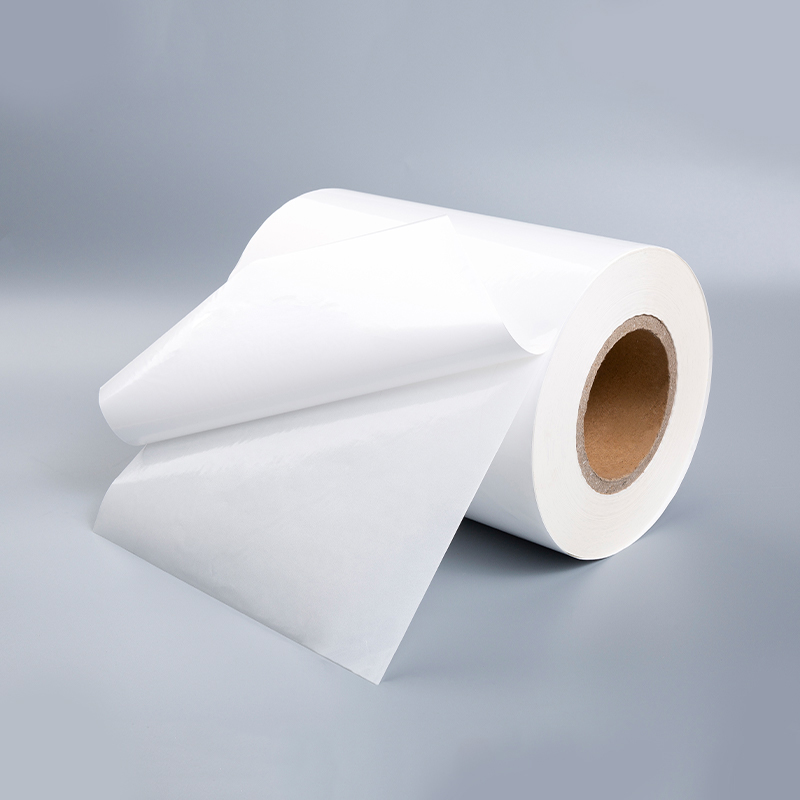 Hotmelt Adhesive Gloss White BOPP LabelWith strong initial tack for curved containers and an antifreeze option for cold environments, this BOPP label offers reliable performance in demanding food and beverage labeling applications.View Product →
PVC (Vinyl): Conformability and Surface Versatility
Polyvinyl chloride film, commonly called vinyl, is valued for its flexibility and ability to conform to curved, textured, and irregular surfaces. Vinyl labels are widely used on industrial containers, pipes, outdoor equipment, and vehicles. PVC can be formulated with removable adhesives for temporary identification and with clear liners for applications that need a high-clarity appearance.
For curved surfaces or repositionable application, our removable acrylic transparent PVC film combines vinyl's flexibility with an adhesive designed for clean removal when needed.
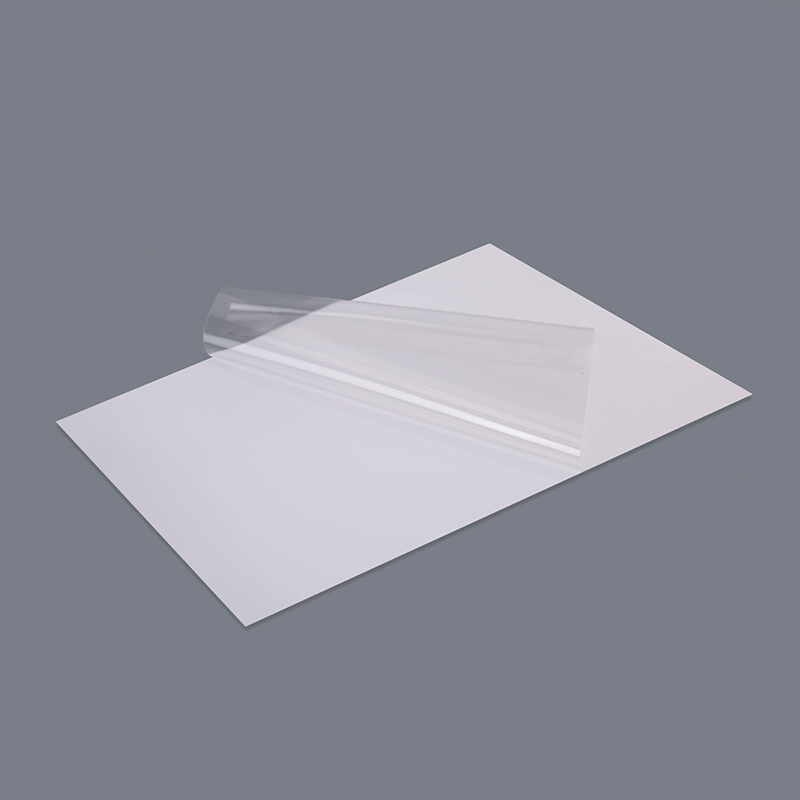 Removable Acrylic Transparent PVC FilmFlexible transparent PVC with an acrylic adhesive designed for clean removal, ideal for curved surfaces or temporary identification where repositioning and residue-free removal are essential.View Product →
Adhesive Selection: The Layer That Holds Everything Together
The best face stock cannot save a label whose adhesive does not match the substrate and environment. Durable labeling demands more than high initial tack. The adhesive must maintain bond strength across temperature cycling, resist moisture and chemical attack at the label edge, and sometimes allow clean removal without residue.
- Hot-melt adhesives offer high initial tack and fast application on packaging lines, performing well on corrugated and low-energy surfaces such as PE and PP containers.
- Water-based adhesives provide good heat resistance and clean converting for hygiene, cosmetic, and pharmaceutical labels.
- Solvent-based adhesives deliver the highest adhesion and temperature resistance, making them the choice for extreme industrial use.
- Removable acrylic adhesives hold firmly during service but peel away cleanly at end of life.
Adhesives must also be tested on the actual substrate — a label that sticks beautifully to a steel drum may struggle on a recycled plastic container with mold-release residue.
Where Durable Labels Earn Their Keep
Durable labeling is not confined to one industry. The same material science applies across very different environments. Common high-demand applications include:
- Chemical and industrial drums — GHS-compliant hazard labels must survive weather, forklift handling, and chemical splashes for the life of the container.
- Logistics and cold chain — thermal synthetic paper and film labels track parcels through freezers, rain, and rough sorting equipment.
- Automotive and machinery — VIN labels, component tags, and rating plates require resistance to under-hood heat, fuels, and cleaning solvents.
- Electrical and electronics — UL-recognized labels face temperature rise, solder exposure, and long product lifetimes.
- Outdoor equipment and infrastructure — utility, safety, and warning labels are exposed to years of sunlight, rain, and abrasion.
In each case, ask the same question: what conditions will this label encounter, and how long must it remain readable? The answer drives the material budget.
Testing, Standards, and Compliance
Once a label construction is defined, it has to be verified. Durability claims mean nothing without a test method. Several frameworks are widely used:
- BS 5609 — the British standard for pressure-sensitive labels on marine chemical containers. It includes immersion in seawater and exposure to UV and weathering, verifying that labels stay legible through ocean transport.
- UL component recognition — relevant for electrical and fire-safety labels, where the material must withstand the temperature and flammability requirements of the final product.
- ASTM and internal accelerated aging tests — simulating years of heat, humidity, UV, and thermal cycling in a fraction of the time.
Even when a formal standard does not apply, an accelerated aging trial is a wise investment before production quantities are converted. A few weeks of testing can prevent months of field failures and warranty claims.
Preventing the Most Common Durable Label Failures
In our years of manufacturing label materials, we have seen recurring patterns behind premature label failure. The most common are:
- Choosing paper where film is required. Paper absorbs moisture, shrinks, and tears — conditions that defeat any adhesive.
- Ignoring surface contamination. Dust, oils, and mold-release agents reduce adhesion immediately and worsen over time.
- Selecting a room-temperature adhesive for a freezer or hot-fill application. Exceeding the adhesive's service temperature accelerates bond loss.
- Forgetting edge exposure. Moisture and chemicals attack the label edge first, lifting from the outside in.
- Skipping the pilot test. A material can behave differently on a high-speed labeling machine than in hand application; always run a small batch first.
Suppliers that manufacture the full construction — film, adhesive, and release liner — can isolate these issues faster because they control every variable in the stack.
Building a Durable Labeling Strategy
Durable labeling is a specification exercise, not a guessing game. Start with the environment, the substrate, the application method, and the required label lifetime. Translate those requirements into a face stock family, an adhesive chemistry, and a liner that converts well on your equipment. Then verify the construction with realistic testing.
As a manufacturer of self-adhesive paper, film, special label materials, and silicone release paper, PUODEHUA supplies converters and end users worldwide with materials built for demanding applications. With over 280 million square meters of annual production capacity across gluing, laminating, and cutting lines, we are equipped for both technical problem-solving and volume stability. If you are specifying a durable label construction, the fastest route to the right answer is to talk to the people who make the materials — explore our self-adhesive film range to see which structure fits your application.