
 English
 Español
 русский
 Français
 عربى
عربىA polyimide label — usually shortened to PI label, and often called simply a high-temperature label — is a pressure-sensitive label built on polyimide film instead of paper or polyester. It exists for one reason: the printed information on it has to survive a process that would destroy ordinary label stock. A barcode on a printed circuit board that travels through a reflow oven, an asset tag inside a hard disk drive, a nameplate on a motor housing — that is polyimide territory. After twenty years of coating, laminating and slitting self-adhesive materials, we have watched PI labels move from a specialty aerospace item into routine electronics purchasing. Here is what matters when you specify one.
Content
- 1 What Makes Polyimide Film a Different Kind of Facestock
- 2 How Polyimide Compares with Everyday Label Materials
- 3 Where Polyimide Labels Earn Their Cost
- 4 Inside a Polyimide Label: Film, Adhesive and Liner
- 5 Choosing the Adhesive: Silicone or Acrylic
- 6 Printing and Applying Polyimide Labels
- 7 Sourcing Polyimide Label Materials and Custom Structures
- 8 The Short Version
What Makes Polyimide Film a Different Kind of Facestock
Polyimide is a polymer whose molecular backbone is built from imide rings. Those rings make the chain stiff and thermally stable, which is why a 25 micron PI film holds its shape at temperatures where polyester film has already softened and paper has started to discolour. That single property explains most of the demand.
The film brings a combination of characteristics that is hard to match with any other facestock:
- Continuous service temperature of roughly 250 °C, with short excursions far above that during soldering and other thermal processes.
- No melting, dripping or charring — the label stays flat and dimensionally stable instead of curling away from the surface.
- Good resistance to flux, cleaning solvents, oils and many acids, which matters on a line where boards are washed and reworked.
- Very thin gauges, typically 25 or 50 micron, so the label adds almost no height to a component.
- Low moisture absorption and low outgassing, both important inside sealed electronic assemblies.
How Polyimide Compares with Everyday Label Materials
It helps to place polyimide next to the two facestocks most buyers already know. The values below are typical rather than guaranteed, because the adhesive and the liner influence the final result as much as the film does.
| Facestock | Typical continuous service temperature | Relative material cost | Where it usually earns its place |
|---|---|---|---|
| Paper | Up to about 80 °C | Lowest | Retail, logistics and general packaging |
| Polyester (PET) | About -40 to 150 °C | Moderate | Durable product labels, automotive interiors, general electronics |
| Polyimide (PI) | About -40 to 250 °C, with much higher short-term peaks | Highest | PCB traceability, hard disk drives, under-hood parts, sterilisation |
A polyimide label is rarely the cheapest option on the table, and it is not meant to be. It is chosen when the cost of a lost or unreadable label — a scrapped board, an untraceable batch, a failed audit — is far higher than the price difference of the material.
Where Polyimide Labels Earn Their Cost
PI labels appear wherever heat, chemicals or traceability requirements push ordinary materials out of the running:
- Electronics assembly. A barcode applied to a bare board before surface-mount assembly has to survive the reflow profile and still scan afterwards, and it often stays on the board for the life of the product.
- Data storage and semiconductors. Cleanliness, low particle shedding and dimensional stability matter more here than raw adhesion strength.
- Automotive and battery packs. Identification near exhaust systems, power electronics and battery modules faces both heat and chemical exposure.
- Aerospace, defence and rail. Long service life and documented material behaviour are the deciding factors.
- Medical devices that pass repeated autoclave cycles without lifting or fading.
- Industrial equipment. Motors, transformers, ovens and process lines all need nameplates that outlast the paint around them.
Inside a Polyimide Label: Film, Adhesive and Liner
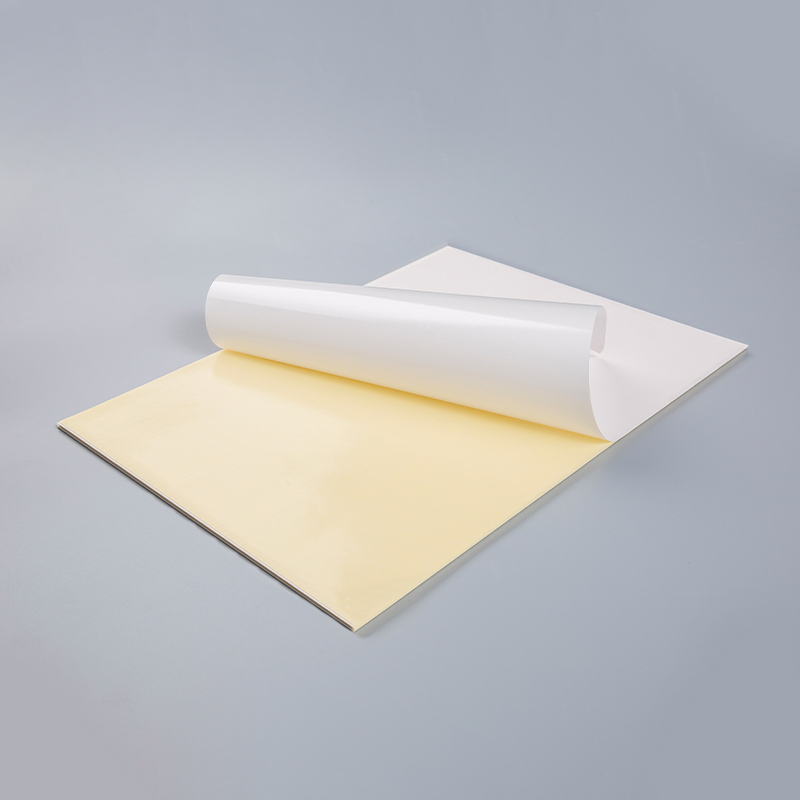
A finished PI label is a three-part construction: the film facestock, the pressure-sensitive adhesive, and the release liner that protects the adhesive until application. Buyers tend to focus on the film, yet the liner is the part that decides whether the label can be die-cut cleanly, fed through an applicator at speed, and peeled without curling.
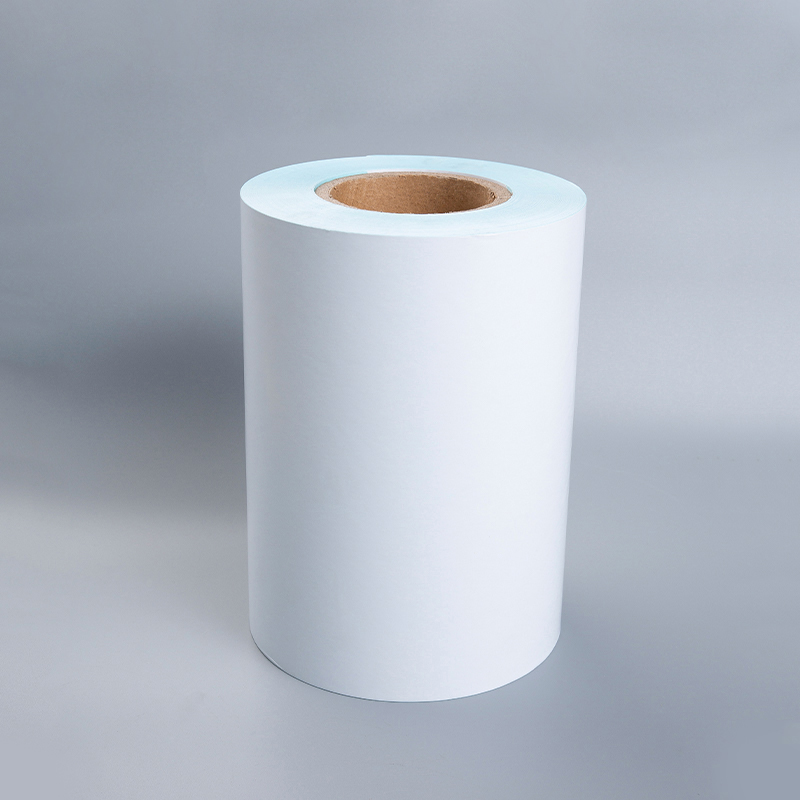
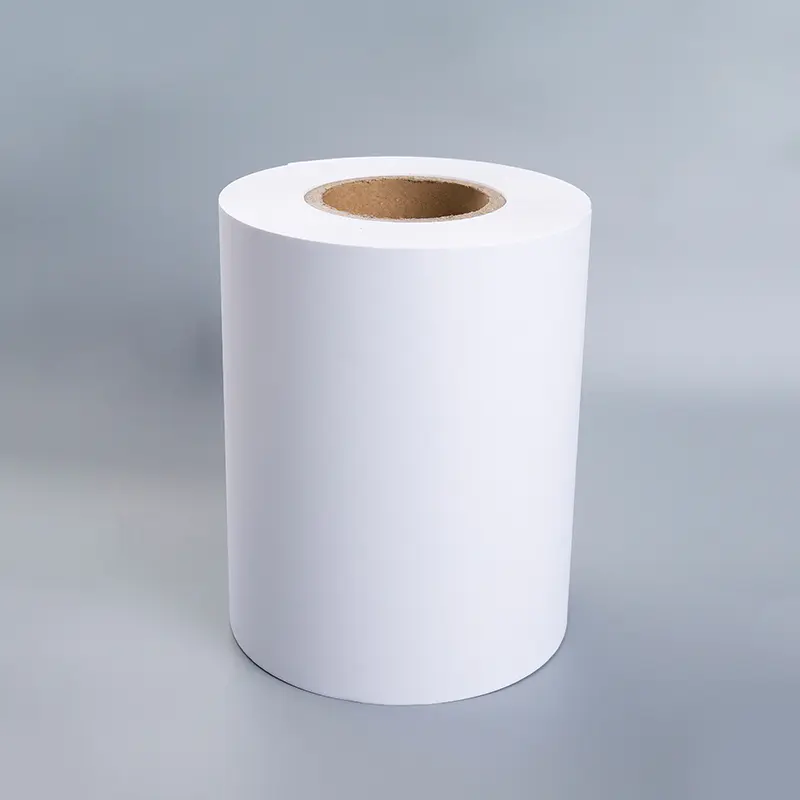
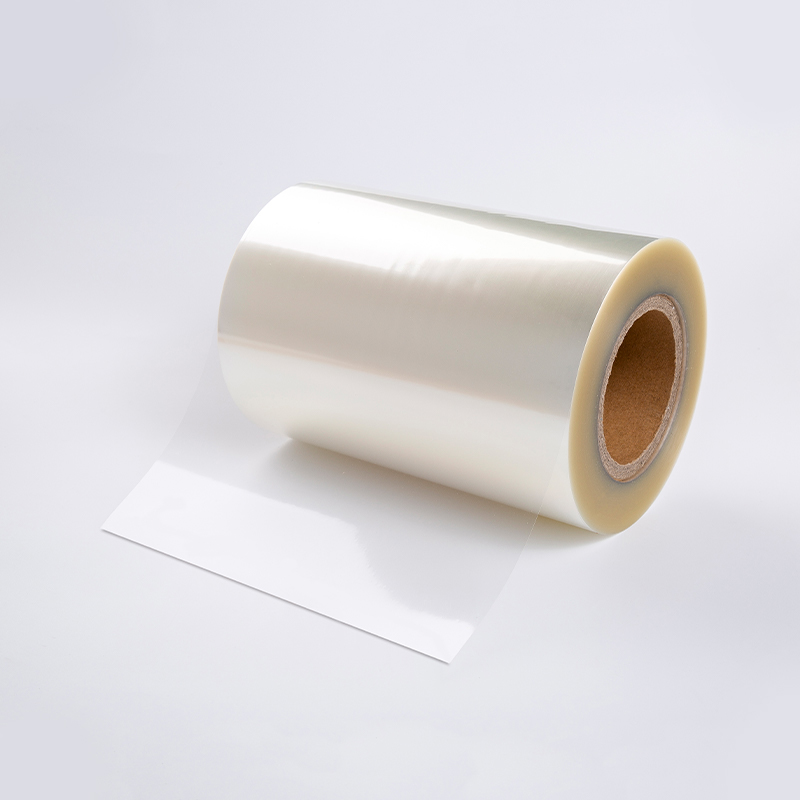 Transparent PET Release Liner for High-Temperature LabelsTransparent PET release film for high-temperature label work, available in multiple thicknesses and roll or sheet formats to support clean die-cutting and reliable peeling.View Product →
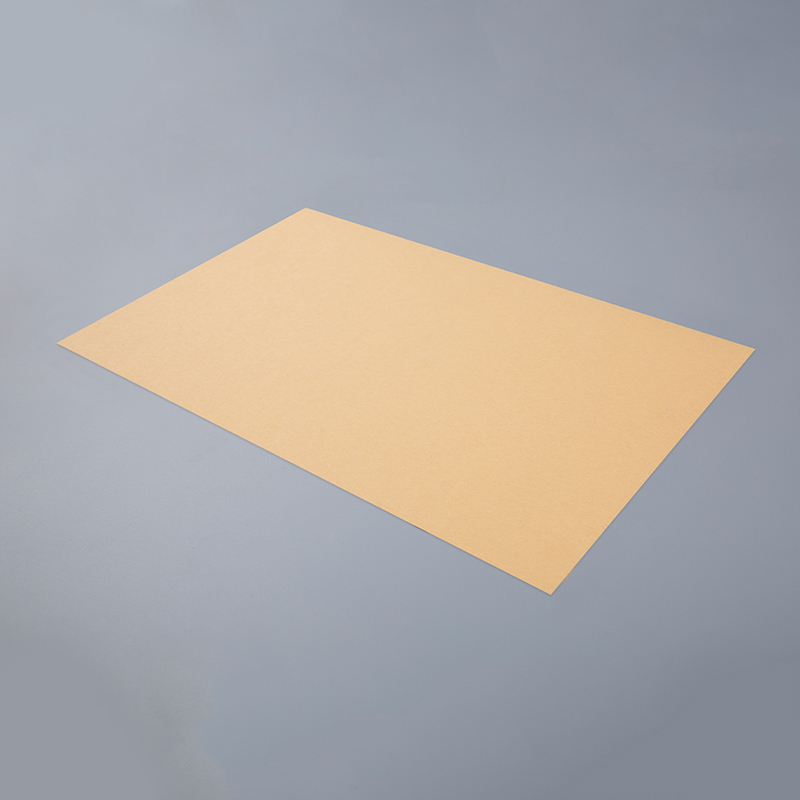
For high-temperature work, a silicone-coated PET liner is the usual choice. It is thin, dimensionally stable and does not react to the heat of the printing or soldering process, so the web stays flat on the applicator. Paper liners remain a practical option for hand-applied labels and flat sheets, where stiffness and cost matter more than heat resistance.
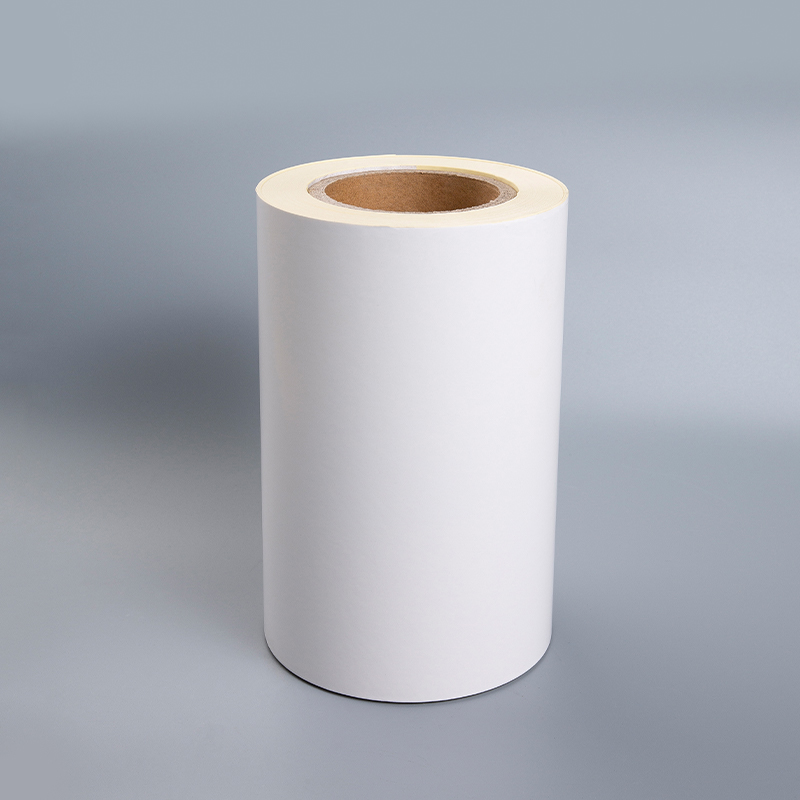
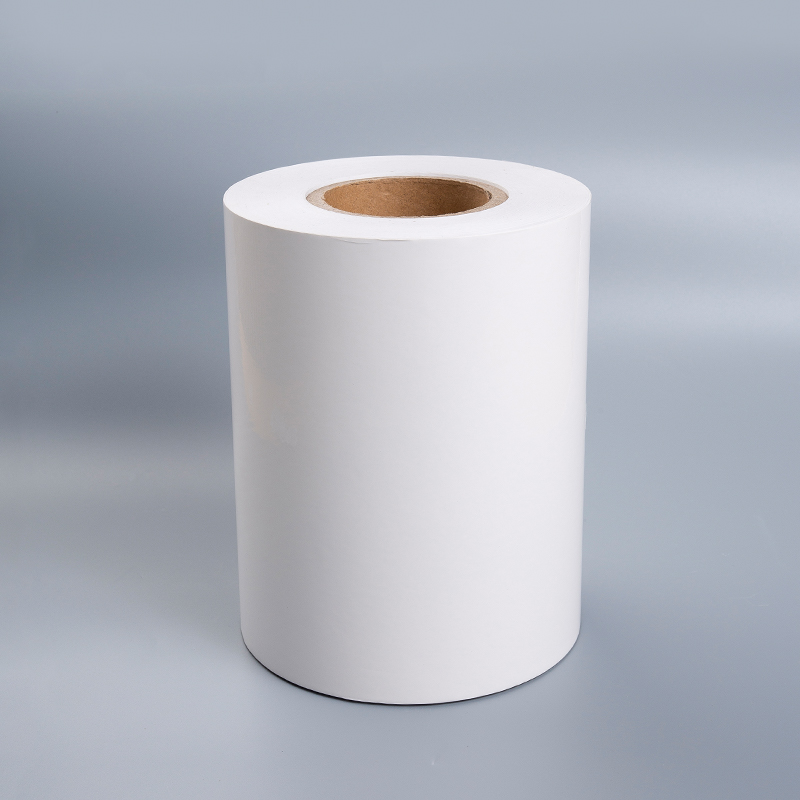
 Custom White Glassine Release Paper for Labels and TapesWhite glassine release paper with multiple grammages and sheet or jumbo roll options, supporting high-speed labeling, adhesive products and clean silicone release.View Product →
Either way, the release side deserves more attention than it usually gets. Coating weight, surface smoothness and the age of the silicone layer all affect how the label peels, and a liner that releases too easily is just as much of a problem as one that grips too hard. We have written a longer explanation of how different silicone release paper grades behave in practice if you want the detail.
Choosing the Adhesive: Silicone or Acrylic
The facestock sets the ceiling, but the adhesive decides whether you actually reach it:
- Silicone adhesives tolerate the widest temperature range, stay chemically inert and bond to difficult, low-energy surfaces. Their initial tack is lower and their price is higher.
- High-temperature acrylics offer a faster, stronger initial bond at lower cost, with a practical ceiling closer to 150 to 200 °C.
- Standard rubber-based adhesives have no place in a polyimide construction; they age poorly under heat and tend to leave residue behind.
For labels that pass through reflow soldering, silicone is the usual answer. For labels that live at moderate temperatures but must hold firmly to a textured or low-surface-energy housing, a high-temperature acrylic may perform better and cost less.
Printing and Applying Polyimide Labels
A few practical points separate a label that works from one that merely looks right:
- Print with thermal transfer and a resin ribbon. Resin formulations fuse into the surface and survive heat and solvents far better than wax or wax-resin ribbons.
- If the print must stay sharp after abrasion, ask for a top-coated PI facestock rather than printing directly onto bare film.
- Clean the surface with isopropyl alcohol and let it dry. PI labels are thin and conform well, but they will not bond through oil or mould release agent.
- Small die-cut labels are difficult to peel by hand. A stiffer liner, a larger label face or a proper applicator often solves a problem that looks like an adhesive failure.
- Store rolls at around 20 to 25 °C and moderate humidity, and always run a sample through the real process before releasing a specification.
Sourcing Polyimide Label Materials and Custom Structures
Polyimide film itself comes from a small group of specialist film producers, and most label converters buy it as a semi-finished roll. What happens after that is where a label material manufacturer earns its place: selecting and coating the adhesive, controlling coating weight, laminating facestock to liner, and slitting to the width your press actually needs.
This is the part of the chain our team works in. Suzhou Piaozhihua Composite Material Technology Co., Ltd., known internationally as PUODEHUA, has spent twenty years coating, laminating and slitting self-adhesive materials, and now produces more than 280 million square metres a year across self-adhesive paper, self-adhesive film, special label material and silicone release liner lines. Because we make our own release liners in white, blue and yellow glassine as well as PET and CCK grades, we can adjust the release level, the liner thickness and the die-cutting behaviour to suit a specific application instead of shipping whatever happens to be on the shelf.
We also take on custom label materials — different adhesive systems, different liner combinations, different roll formats — which is usually the fastest route when a PI label has to fit an existing press and an existing applicator. If you are working through a high-temperature labelling project, tell us the process temperature, the surface and the printing method, and we will suggest a structure to test.
The Short Version
Polyimide labels are not complicated in concept: a heat-resistant film, an adhesive that matches the exposure, and a liner that behaves on your line. Most failures come from specifying only the film and leaving the other two layers to chance. Get all three right, verify them in a real process, and a PI label will quietly outlast everything else on the product.