
 English
 Español
 русский
 Français
 عربى
عربىContent
- 1 Material Structure That Determines Environmental Performance
- 2 Performance of Adhesive PET Film Under Heat Exposure
- 3 Behavior of Adhesive PET Film Under Pressure
- 4 Resistance of Adhesive PET Film to Moisture and Humidity
- 5 Combined Effects of Heat, Pressure, and Moisture
- 6 Application Implications for Industrial Use
Material Structure That Determines Environmental Performance
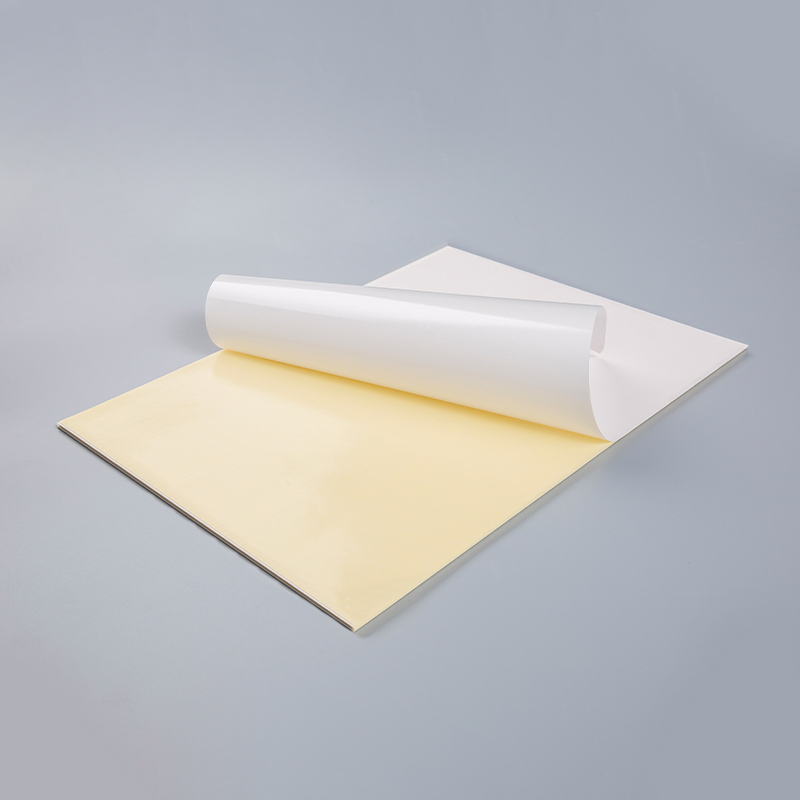
Adhesive PET film is composed of a polyethylene terephthalate base film combined with a pressure-sensitive or heat-activated adhesive layer. The PET substrate provides dimensional stability and mechanical strength, while the adhesive layer governs bonding behavior under external conditions. Performance under heat, pressure, and moisture depends on how these two layers interact rather than on a single material property.
Performance of Adhesive PET Film Under Heat Exposure
Heat resistance is one of the defining advantages of PET-based adhesive films. The PET carrier maintains structural integrity at elevated temperatures, preventing shrinkage or deformation that could compromise alignment or appearance. Adhesive behavior under heat varies depending on formulation, but stable adhesion is typically maintained within the designed operating range.
Thermal Stability of the PET Substrate
The PET film layer resists warping and dimensional change when exposed to sustained or cyclic heat. This makes adhesive PET film suitable for processes such as lamination, electronic assembly, and component protection where thermal exposure is unavoidable.
Adhesive Response to Elevated Temperatures
Under heat, the adhesive layer may soften slightly to improve surface wetting and bond formation. Properly selected adhesive systems retain cohesive strength and do not flow excessively, ensuring that bonding performance remains consistent rather than degrading.
Behavior of Adhesive PET Film Under Pressure
Pressure plays a direct role in activating and strengthening adhesion. Adhesive PET film responds well to uniform pressure, which increases contact between the adhesive and substrate surface. This improves bond strength without damaging the PET base film.
Load Distribution and Film Integrity
The inherent tensile strength of PET allows the film to distribute applied pressure evenly across the bonded area. This reduces the risk of localized stress concentration, helping prevent tearing, edge lifting, or adhesive failure.
- Uniform pressure enhances adhesion efficiency
- PET base resists compression-related deformation
- Stable bonding under continuous mechanical load
Resistance of Adhesive PET Film to Moisture and Humidity
Moisture resistance is critical in environments where condensation, humidity, or occasional water contact occurs. PET film itself has low water absorption, which helps maintain mechanical and dimensional stability even in humid conditions.
Moisture Barrier Properties
The dense molecular structure of PET limits moisture penetration, protecting both the adhesive layer and the bonded interface. This characteristic supports long-term adhesion performance in applications such as insulation, labeling, and surface protection.
Adhesive Stability in Humid Environments
High-quality adhesive formulations resist hydrolysis and maintain bonding strength despite prolonged humidity exposure. This prevents peeling, blistering, or loss of adhesion that can occur with moisture-sensitive materials.
Combined Effects of Heat, Pressure, and Moisture
In real-world applications, adhesive PET film is often exposed to multiple stress factors simultaneously. The combined resistance to heat, pressure, and moisture allows the film to perform reliably in demanding environments such as electronics manufacturing, industrial labeling, and protective lamination.
| Environmental Factor | PET Film Response | Adhesive Performance |
| Heat | Maintains dimensional stability | Stable bonding within rated range |
| Pressure | High tensile strength | Improved surface contact |
| Moisture | Low water absorption | Resists humidity-related degradation |
Application Implications for Industrial Use
Understanding how adhesive PET film performs under heat, pressure, and moisture allows engineers and manufacturers to select suitable grades for specific operating conditions. When properly matched to application requirements, adhesive PET film delivers stable bonding, surface protection, and long-term reliability across a wide range of industrial environments.