
 English
 Español
 русский
 Français
 عربى
عربىContent
- 1 Understanding the Two Products: A Starting Point
- 2 Structural Composition: What Each Product Is Actually Made From
- 3 Adhesive Systems: The Critical Difference in Bonding Performance
- 4 Side-by-Side Performance Comparison
- 5 Thermal and Barrier Properties: Where the Gap Is Widest
- 6 Application Suitability: Choosing the Right Product for the Job
- 7 How to Identify Genuine Adhesive Aluminium Foil Paper Before Purchase
Understanding the Two Products: A Starting Point
At first glance, adhesive aluminium foil paper and regular adhesive foil paper appear to serve the same purpose — they are both roll or sheet products with a metallic foil face and a pressure-sensitive or heat-activated adhesive backing. In practice, however, they differ substantially in their construction, material quality, adhesive chemistry, performance under heat and moisture, and the range of applications for which they are suited. Choosing the wrong product for a given application can result in adhesive failure, contamination, poor thermal performance, or premature deterioration of the bond — all of which have practical and financial consequences in professional and industrial settings.
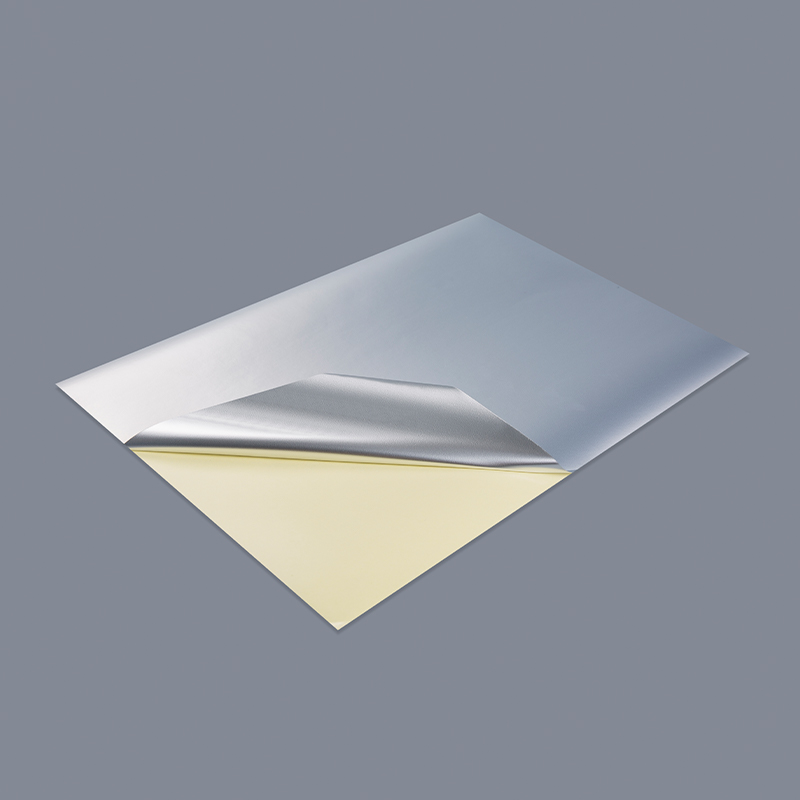
Adhesive aluminium foil paper — sometimes called aluminium foil tape or self-adhesive aluminium foil — is a purpose-engineered product built around a genuine aluminium foil substrate of defined purity and thickness, combined with a high-performance adhesive system designed to withstand specific environmental conditions. Regular adhesive foil paper, on the other hand, is a broader and less precisely defined category that includes a wide range of products with metallic-looking faces that may or may not contain actual aluminium, backed by standard commodity adhesives. Understanding this distinction is the foundation for making informed purchasing and application decisions.
Structural Composition: What Each Product Is Actually Made From
The single most important difference between genuine adhesive aluminium foil paper and regular adhesive foil paper lies in the composition of the face material — what you actually see and touch on the outside of the product.
Adhesive Aluminium Foil Paper Construction
Genuine adhesive aluminium foil paper is constructed from a continuous layer of pure or high-purity aluminium metal foil, typically with an aluminium content of 99% or higher. The foil thickness in industrial-grade products commonly ranges from 25 micrometers (0.025 mm) to 150 micrometers (0.15 mm) depending on the application, with thicker gauges providing greater mechanical strength and puncture resistance. This aluminium layer is a true metal: it is electrically conductive, thermally reflective, impermeable to gases and moisture vapor, and physically stable across a wide temperature range. The foil face is typically laminated to a backing — either a kraft paper liner, a polyester film, or a non-woven fabric — to provide additional dimensional stability, tear resistance, and handling strength. The adhesive is then applied to the reverse side of this composite structure, with a release liner protecting the adhesive until the product is applied.
Regular Adhesive Foil Paper Construction
Regular adhesive foil paper — the type commonly found in craft supply stores, general stationers, and low-cost packaging suppliers — typically does not use a genuine aluminium foil face. Instead, the metallic appearance is achieved by applying a very thin layer of aluminium through a vacuum metallization process onto a paper or plastic film substrate. Vacuum metallized paper has an aluminium deposition layer that is typically only 0.02 to 0.05 micrometers thick — many hundreds of times thinner than the foil used in genuine adhesive aluminium foil tape. While this metallized surface creates an attractive silver or gold mirror finish, it provides essentially none of the functional properties of actual aluminium foil: it has negligible thermal reflectivity, no meaningful barrier to moisture or gases, no electrical conductivity, and very low resistance to mechanical abrasion or chemical exposure.
Some intermediate products exist that use aluminium foil laminated to paper — often called foil-backed paper or aluminium foil paper — which do provide genuine aluminium properties but may use thinner gauges or lower-purity alloys than dedicated industrial aluminium foil tape. These products occupy a middle ground and their performance must be evaluated against the specific requirements of the intended application.
Adhesive Systems: The Critical Difference in Bonding Performance
Beyond the face material, the adhesive system used in each product type is a defining performance differentiator. The adhesive determines bond strength, temperature resistance, aging behavior, compatibility with different substrates, and the conditions under which the product can be successfully applied and removed.
Adhesive aluminium foil paper for industrial and construction applications typically uses one of three adhesive chemistries, each suited to different performance requirements:
- Acrylic adhesive: the most common system in professional-grade aluminium foil tape. Acrylic adhesives offer excellent resistance to UV radiation, oxidation, and temperature extremes, maintaining bond integrity from approximately −40°C to +150°C or higher in some formulations. They age well over multi-year service periods without significant loss of peel strength or shear resistance, making them the preferred choice for HVAC ductwork sealing, building envelope applications, and industrial insulation facing.
- Rubber-based adhesive: provides higher initial tack — meaning the tape bonds aggressively on contact — which is useful for fast application in production environments. However, rubber adhesives degrade more rapidly under UV exposure and elevated temperatures, limiting their long-term service suitability to indoor, temperature-stable applications.
- High-temperature silicone adhesive: used in specialty aluminium foil tapes designed for extreme-temperature applications such as exhaust systems, furnace insulation, and aerospace thermal management. Silicone adhesives maintain bond integrity at temperatures exceeding 250°C where acrylic and rubber systems would fail completely.
Regular adhesive foil paper almost universally uses a standard pressure-sensitive rubber or low-grade acrylic adhesive designed for ambient-temperature, general-purpose bonding. These adhesives perform adequately for decorative applications, light-duty sealing, and craft projects but lack the temperature resistance, UV stability, and long-term aging performance of the adhesive systems used in professional aluminium foil tape products. In elevated temperature environments — such as near heating ducts, behind appliances, or in vehicles — standard adhesive foil paper adhesives will soften, flow, and lose bond strength, potentially causing the product to delaminate from the substrate entirely.
Side-by-Side Performance Comparison
| Performance Property | Adhesive Aluminium Foil Paper | Regular Adhesive Foil Paper |
| Face material | Genuine aluminium foil (25–150 μm) | Metallized paper/film (0.02–0.05 μm Al) |
| Thermal reflectivity | High (95%+ reflectance) | Low to negligible |
| Moisture/vapor barrier | Excellent (impermeable) | Poor to moderate |
| Temperature resistance | −40°C to +150°C (acrylic); up to +260°C (silicone) | Typically limited to 60–80°C |
| Electrical conductivity | Yes — conductive face | No meaningful conductivity |
| Long-term bond durability | Excellent (years in service) | Moderate (months to 1–2 years) |
| UV and weathering resistance | Good to excellent | Poor — yellowing and delamination common |
| Typical cost | Higher | Lower |
Thermal and Barrier Properties: Where the Gap Is Widest
The functional performance gap between genuine adhesive aluminium foil paper and regular adhesive foil paper is most pronounced when thermal management and barrier properties are relevant to the application. These two areas represent the core technical rationale for specifying true aluminium foil products rather than their metallized imitations.
Thermal Reflectivity and Insulation Facing
Genuine aluminium foil reflects approximately 95% to 97% of radiant heat energy — a property directly attributable to the high purity and continuous nature of the metal film. This thermal reflectivity is the basis for using aluminium foil-faced insulation products in HVAC systems, building envelopes, industrial pipe insulation, and refrigerated transport. When adhesive aluminium foil tape is used to seal joints and seams in these insulation systems, it maintains the continuity of the radiant barrier and prevents thermal bridging at connection points. Regular adhesive foil paper, with its nanometer-scale metallized coating, provides none of this thermal reflectivity — the coating is too thin and often too discontinuous to function as an effective radiant barrier. Using regular foil paper in place of genuine aluminium foil tape in insulation sealing applications will result in measurably poorer thermal performance of the insulation system.
Moisture and Gas Barrier Performance
A continuous aluminium foil layer of even 25 micrometers thickness is essentially impermeable to water vapor and oxygen transmission under practical service conditions. This impermeability makes adhesive aluminium foil tape an effective vapor barrier sealant in building construction, where preventing moisture migration through insulation layers is critical to avoiding condensation, mold growth, and structural degradation. Metallized films and papers used in regular adhesive foil products have pinholes, microdefects, and areas of incomplete coverage in the metallized layer that allow measurable vapor transmission — far exceeding the performance of a true foil barrier. For applications where vapor control is a functional requirement rather than an aesthetic consideration, only genuine aluminium foil products should be specified.
Application Suitability: Choosing the Right Product for the Job
Given the substantial performance differences between the two product categories, matching the product to the application is essential. Using genuine adhesive aluminium foil paper where only decorative performance is needed is an unnecessary expense; using regular adhesive foil paper where thermal, barrier, or structural performance is required is a reliability failure waiting to happen.
Adhesive aluminium foil paper is the correct specification for the following applications:
- HVAC ductwork sealing: sealing joints, seams, and connections in flexible and rigid ductwork systems where airtightness, temperature resistance, and long-term bond durability are required to maintain system efficiency
- Pipe and vessel insulation: facing and seam sealing on mineral wool, fiberglass, or foam insulation applied to process piping, HVAC equipment, and cold storage systems
- Vapor barrier installation: sealing overlaps and penetrations in polyethylene vapor control layers in building construction, particularly in below-grade and cold climate applications
- EMI and RFI shielding: wrapping cables, enclosures, and electronic components to provide electromagnetic interference shielding, leveraging the electrical conductivity of the genuine aluminium face
- Automotive and aerospace thermal management: heat shielding near exhaust components, engine bay thermal barriers, and aerospace insulation blanket fabrication
Regular adhesive foil paper is appropriate for the following applications where functional performance requirements are minimal:
- Decorative crafts and gift wrapping: adding a metallic accent to handmade items, scrapbooking, card making, and decorative gift packaging where appearance is the sole requirement
- Light-duty label and signage applications: indoor metallic labels and decorative signage elements in ambient temperature environments with no significant humidity or UV exposure
- Temporary masking: short-duration masking of surfaces for painting or finishing processes where the foil is removed after a brief service period
How to Identify Genuine Adhesive Aluminium Foil Paper Before Purchase
For buyers who need to confirm that a product is genuine adhesive aluminium foil paper rather than a metallized substitute, several practical checks can be performed before purchase or before committing a product to a critical application.
- Conductivity test: genuine aluminium foil is electrically conductive. Touching the probes of a multimeter set to continuity or resistance mode to the face of the foil should produce a reading indicating conductivity. Metallized paper will show no conductivity or a very high resistance reading because the metal layer is too thin and discontinuous to carry current.
- Flex and crease test: genuine aluminium foil retains a crease when bent — it does not spring back to its original flat shape. Metallized paper typically springs back or shows surface cracking of the metal layer when creased because the metallized coating cannot deform with the paper substrate without fracturing.
- Product specification review: reputable suppliers of professional aluminium foil tape will publish datasheets specifying the foil thickness in micrometers, adhesive type, peel strength, temperature range, and relevant certifications such as UL 181A-P or UL 181B-FX for HVAC applications. The absence of these specifications is a strong indicator that the product is a commodity foil paper rather than a genuine aluminium foil tape product.
- Weight comparison: genuine aluminium foil tape is noticeably heavier per unit area than metallized paper products of the same apparent dimensions, because aluminium metal has a much higher density per unit thickness than the nanometer-scale metal deposits used in vacuum metallization. A simple weight comparison between two seemingly similar rolls can reveal substantial differences in foil content.
By applying these practical checks and consulting supplier technical documentation, buyers can make confident, informed decisions that match the correct product to the performance requirements of each specific application — avoiding both the cost of over-specification and the reliability risk of under-specification.