
 English
 Español
 русский
 Français
 عربى
عربىA label that performs perfectly on a glass jar can lift off a polyethylene squeeze bottle within days on the same store shelf. The difference is rarely the amount of glue, but the substrate itself. Polyethylene, polypropylene, silicone, PTFE, and many powder coatings are low surface energy (LSE) materials, generally defined as surfaces below roughly 36 dynes/cm. On these surfaces, most conventional pressure-sensitive adhesives cannot wet out properly, so the bond never develops its full strength.
The practical takeaway for label buyers and converters: adhesion problems on plastics are solved by matching adhesive chemistry, surface treatment, and construction design to the substrate's energy, not by applying more adhesive. The sections below explain what surface energy means in numbers, which materials sit in the low band, why standard adhesives fail there, and how to specify label constructions that hold on polyolefin bottles, drums, and coated equipment housings.
Content
What Surface Energy Means in Practical Numbers
Surface energy describes how strongly a surface attracts and spreads the liquids placed on it. When a liquid's surface tension is lower than the substrate's surface energy, the liquid spreads into a thin, continuous film, which is wetting. When the substrate's energy is lower, the liquid beads up. Water on freshly waxed paint is the everyday example: the wax layer lowers the surface energy, so water forms spheres instead of spreading.
Pressure-sensitive adhesives obey the same rule. An adhesive can only bond to surfaces it can wet, so the relationship between adhesive and substrate energy decides whether a label grips or peels. The industry commonly works with three bands:
- High surface energy, above roughly 50 dynes/cm: glass, ceramics, bare metals, and most paper surfaces. Nearly all adhesives wet these instantly.
- Medium surface energy, roughly 36 to 50 dynes/cm: PET, polystyrene, ABS, and nylon. General-purpose acrylic adhesives are usually reliable here.
- Low surface energy, below roughly 36 dynes/cm: PE, PP, silicone, PTFE, EVA, and many powder coatings. These demand matched adhesives or surface treatment.
The table below places the substrates label converters meet most often against this scale.
| Substrate | Typical surface energy (dynes/cm) | Bonding behavior with standard adhesives |
|---|---|---|
| PTFE | 18 to 20 | Adhesive beads and peels cleanly; special LSE adhesives or treatment required |
| Cured silicone | 20 to 24 | Very poor wetting; among the hardest everyday surfaces to label |
| Polypropylene (PP) | 29 to 34 | Weak initial tack; edge lifting common on curved containers |
| Polyethylene (PE) | 31 to 36 | Slow bond build-up; labels may detach after handling or cooling |
| Polystyrene / ABS | 35 to 42 | Borderline performance; most acrylic adhesives acceptable |
| PET | 41 to 44 | Reliable bonding with general-purpose adhesives |
| Glass and bare metals | Well above 100 | Immediate wetting; the reference point for easy bonding |
Materials That Commonly Sit in the Low Energy Band
The materials behind most low-energy labeling problems are the polyolefins. HDPE and LDPE squeeze bottles, detergent containers, jerrycans, and crates, along with PP closures, pails, and thin-wall tubs, make up a large share of consumer and industrial packaging. Their surfaces repel most adhesives strongly enough that a construction tested on cardboard will fail on them.
Beyond polyolefins, the recurring names are PTFE and other fluoropolymer coatings used for chemical resistance and nonstick behavior; cured silicone found in gaskets, tubing, and coated papers; EVA foams in case inserts and cushioning; acetal (POM) engineering parts; and powder-coated or baked-enamel housings on appliances and equipment. One trap deserves emphasis: mold-release residues and processing oils can pull even a medium-energy plastic down into low-energy territory. A substrate that should bond acceptably may test at 30 dynes/cm because silicone release agent from the molding process is still sitting on the surface.
Why Standard Adhesives Fail on These Surfaces
When an adhesive cannot wet a surface, it contacts only the microscopic peaks of that surface instead of flowing into the valleys. Contact area collapses, and with it peel strength and shear hold. The visible symptoms are predictable: low initial tack at the labeling head, no bond build-up over the following hours, and labels that peel away cleanly with no adhesive transfer, as if the glue had never anchored to the substrate at all.
Two aggravating factors make LSE applications harder than the raw numbers suggest. First, polyolefin containers flex and cool after filling, and a weakly bonded film label concentrates stress at its edges, producing edge lift. Second, many LSE products pass through chilled or humid environments, and condensation on a cold bottle behaves like a release agent against an adhesive that is already struggling to wet. A heavier adhesive coating does not solve either problem; it raises cost and invites ooze while the wetting physics stay unchanged.
How to Achieve Dependable Adhesion on LSE Materials
Reliable adhesion on low surface energy materials comes from three decisions made together: the adhesive, the surface, and the application conditions.
Choose an adhesive formulated for the substrate
Adhesive manufacturers have developed acrylic formulations with lower surface tension and higher affinity for polyolefins specifically for this band of substrates. Rubber-resin hot melt adhesives are the other common answer: their strong initial grab suits high-speed lines and many plastic surfaces, though they carry different temperature limits and aging behavior than acrylics. Ask the supplier for the adhesive's tested substrate list, its minimum application temperature, and expected peel values on your specific plastic, then compare candidates on those numbers.
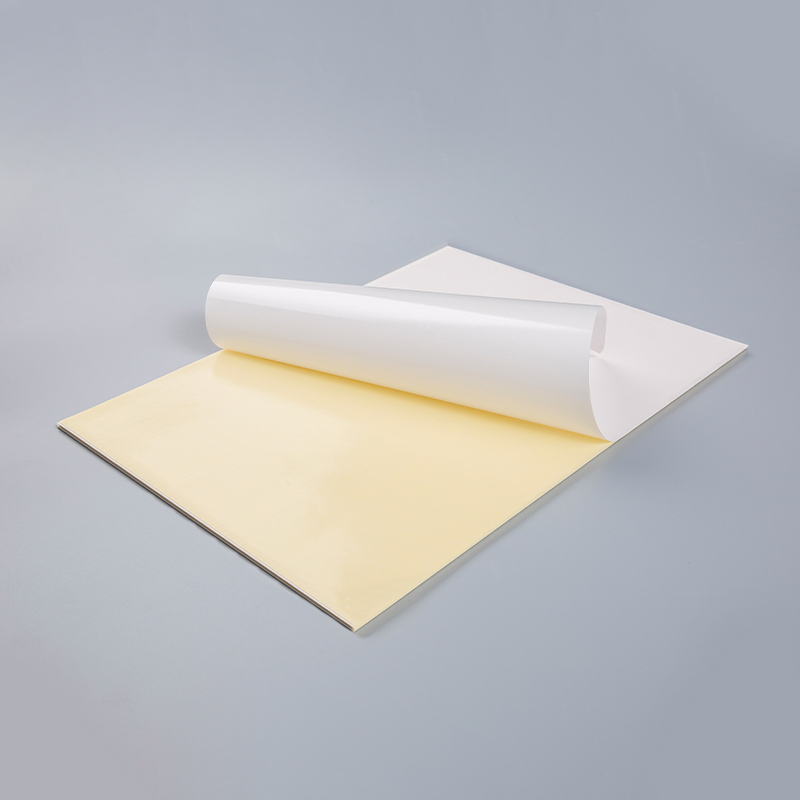
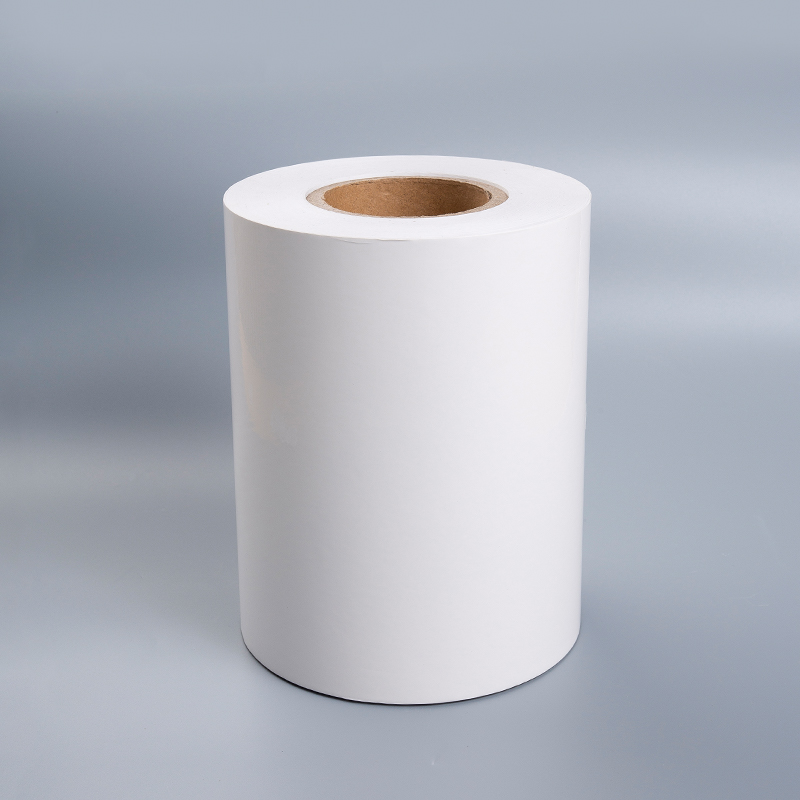
For high-speed labeling of plastic containers, a construction such as our hot melt adhesive gloss white PP label material pairs a bright BOPP facestock with an adhesive selected for strong initial grab on film-like surfaces.
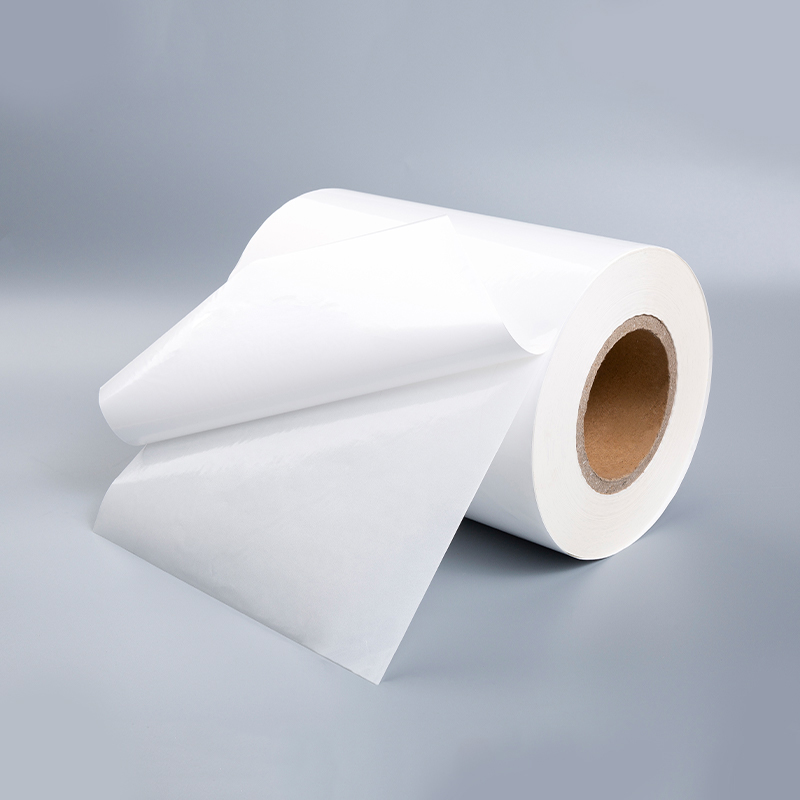 Hotmelt Adhesive Gloss White PP Label MaterialCombines a bright BOPP facestock with a hot melt adhesive chosen for strong initial grab on plastic film surfaces. A practical option for high-speed labeling of containers where quick adhesion matters before treated surfaces lose energy.View Product →
Treat or prime the surface where the process allows
Corona, flame, and plasma treatment can raise a polyolefin surface from around 30 to above 40 dynes/cm, moving it into the range where standard adhesives perform. The gain is temporary, because treated surfaces lose energy over days and weeks, so treatment works best when labeling follows quickly, as in inline converting. Dyne pens give a fast verification before and after treatment. Where treatment is impossible, such as a filling plant applying labels to incoming bottles, the adhesive itself has to carry the load, and primers or tie-layers become the fallback on extreme substrates.
Match the application environment
Most standard adhesives specify a minimum application temperature around +10 °C; below it, the adhesive stiffens and cannot wet even a friendly surface. Cold-chain, dairy, and freezer applications therefore need adhesives with low-temperature ratings, applied to dry, condensation-free containers. Give every construction 24 hours of dwell before judging peel performance, and test with the actual containers rather than glass plates, because a label that passes on a flat laboratory plate can still fail on a curved HDPE bottle.
Release Liners Put Low Surface Energy to Work
The same physics that causes failures is deliberately engineered into every pressure-sensitive construction. Release liners carry a silicone coating with surface energy around 20 dynes/cm, lower than the adhesive itself, so a layer that grips a PP bottle firmly will still separate cleanly from the liner at the labeling head. Release performance is tuned through silicone coating weight and cure, and the liner's carrier, whether glassine, PE-coated kraft, or PET film, shapes die-cutting quality, dispensing speed, and waste stripping.
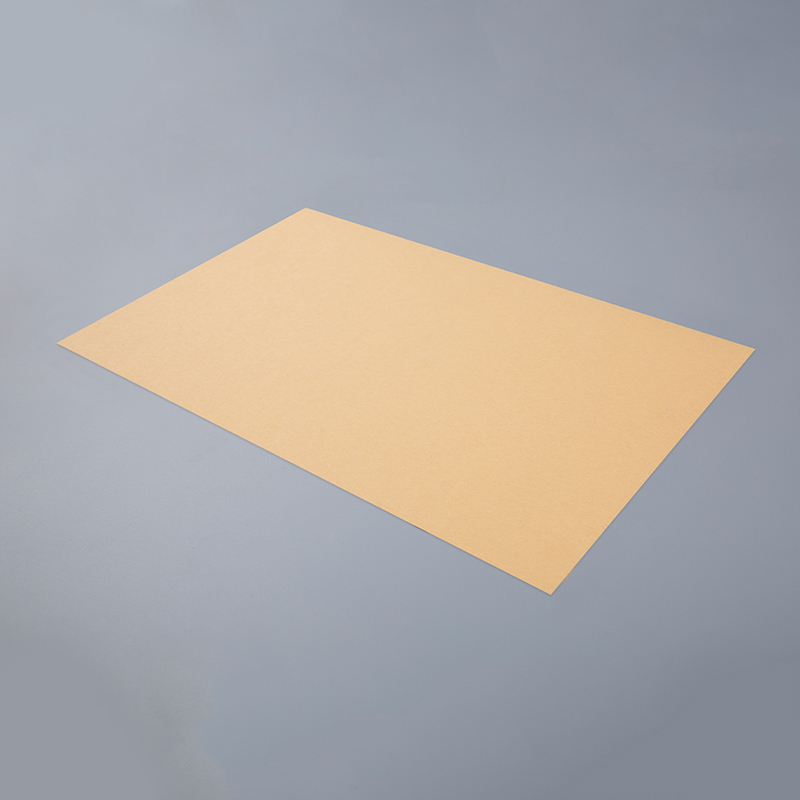
For converters balancing easy release against dimensional stability during die-cutting, our silicone release paper range spans glassine, PE-coated kraft, and specialty liners for different facestock and adhesive systems. For a closer look at the mechanism behind controlled release, see our explanation of how silicone release paper prevents materials from sticking.
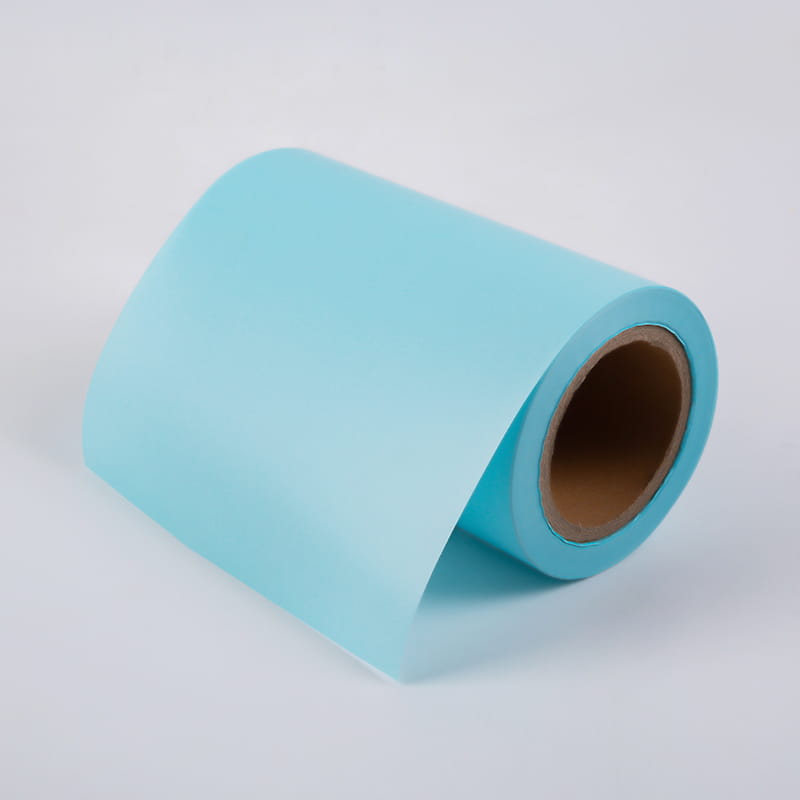 Silicone Coated Release Liner PaperAvailable in glassine, PE-coated kraft, PET film, and other liners across different gsm and colors. Helps converters achieve controlled release while maintaining dimensional stability during die-cutting of self-adhesive label constructions.View Product →
A Selection Checklist for Label Buyers
A short, disciplined sequence prevents most LSE surprises before they reach the labeling line:
- Identify the exact substrate. "Plastic" is not a specification; PE, PP, and powder coatings behave differently, and container resin often differs from what the brand assumes.
- Check the surface condition. Look for mold-release agents, coatings, and oils, and confirm surface energy with dyne pens or supplier data on production-representative samples.
- Screen adhesives for the measured energy band and the full temperature range, from filling conditions through storage to end use.
- Decide permanence early. Returnable glass, promotional decals, and price marking call for removable systems rather than maximum adhesion.
- Trial under production-like conditions: real containers, real line speed and temperature, and peel tests after a 24-hour dwell.
- Retest after aging. Humidity, refrigeration, and sunlight can separate constructions that looked equal on day one.
Where clean removal is the priority, a construction such as our removable acrylic transparent PVC film is designed to lift from glass and smooth plastics without leaving residue behind, keeping the primary package intact for reuse or relabeling.
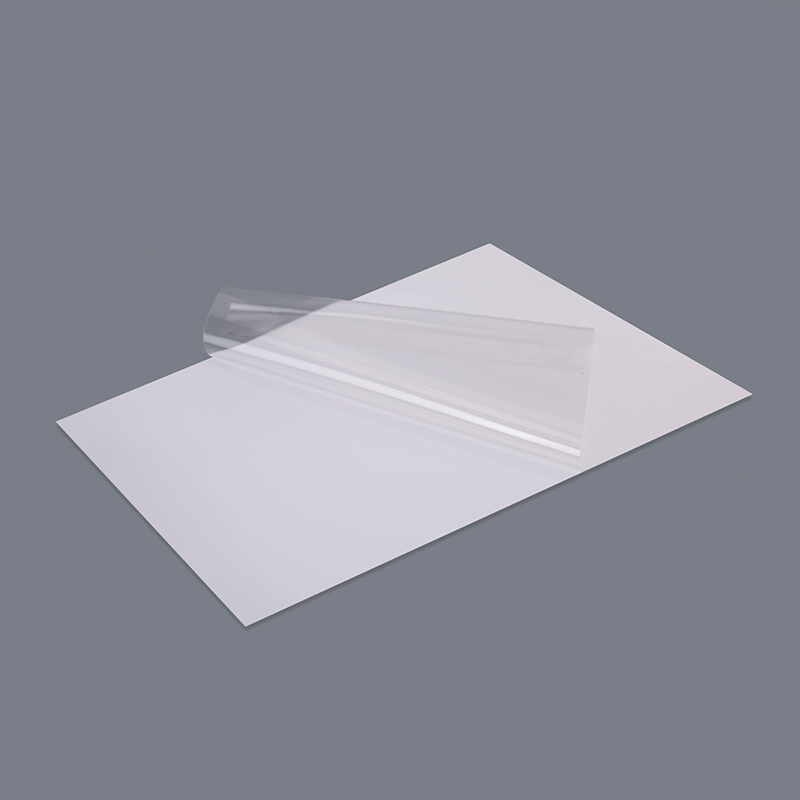 Removable Acrylic Transparent PVC FilmAn acrylic adhesive transparent PVC construction designed to lift cleanly from glass and smooth plastics without residue. Suited for applications where the primary package must stay intact for reuse or relabeling.View Product →
Low surface energy materials are now standard packaging rather than a special case, so adhesion has to be engineered instead of assumed. Buyers who avoid field failures treat every construction as a three-layer decision, matching facestock, adhesive, and release liner to the substrate's measured energy. Working with a manufacturer that produces all three layers in-house, as PUODEHUA does across its self-adhesive label materials portfolio of paper, film, specialty, and silicone release liner lines, keeps every layer specified against the same bonding target from the first sample through volume delivery.