
 English
 Español
 русский
 Français
 عربى
عربىA procurement engineer once asked us whether a peel strength value of 2.5 N/cm on a label datasheet was strong enough for a cold-chain logistics application. The question seemed simple, but a direct answer demanded a unit conversion, a test-method detail, and an application reality check. Here is the core principle: peel strength is always expressed as force per unit width, and a value of 2.5 N/cm can also appear as 250 N/m, 0.025 N/mm, 1.43 lb/in, 22.9 oz/in, or 637 g/25 mm.
Content
What Does Peel Strength Actually Measure?
Peel strength quantifies the average force per unit width that is required to separate two bonded materials when pulled at a defined peel angle. In the context of pressure-sensitive label materials, this measurement directly relates to how a finished label will behave when it is applied to a container and later peeled off.
There are two ways the term is used in the field. Peel force is the total measured force, while peel strength divides that force by the specimen width. A 180-degree peel test on a 25 mm wide strip that records an average force of 12.5 N produces a peel strength of 0.5 N/mm, or 500 N/m, or 2.86 lb/in, or 1275 g/25 mm.
Understanding this distinction matters because a label that peels too easily may fail in transit, while a label that adheres too aggressively may damage the surface when removed. A supplier datasheet that only says "peel strength greater than 3" without a unit and a test method is incomplete.
The Standard Units Used for Peel Strength
Peel strength units reflect a simple ratio of force to width, but they appear in several systems depending on the standard, the region, and the industry. The most common units for pressure-sensitive adhesives are:
- N/m (Newtons per meter) is used in ISO 29862 and appears frequently in European datasheets. Because label test strips are typically 25 mm or 50 mm wide, results often look like 600 N/m or 1250 N/m.
- N/cm (Newtons per centimeter) is the same measurement with a smaller divisor. A value of 6 N/cm equals 600 N/m. This unit is very common in label material documentation.
- N/mm (Newtons per millimeter) is popular in engineering and some ASTM contexts. A 6 N/cm value equals 0.06 N/mm.
- lb/in (pounds per inch) is the standard used in ASTM D903 and D3330 and is widely seen in North American datasheets.
- oz/in (ounces per inch) is used for weaker adhesives, such as removable labels, where the value is a small number.
- g/25 mm (grams per 25 millimeters) is common in Asia, particularly in China and Japan. Many label factories in the region report peel strength this way.
When comparing an Asian material to a North American one, the first step should be converting both numbers into the same unit system. A common practical range for permanent general-purpose paper labels is about 300 to 640 g/25 mm when measured on stainless steel at 180 degrees. That is roughly 1.2 to 2.5 N/cm, or 0.69 to 1.43 lb/in.
| N/m | N/cm | N/mm | lb/in | oz/in | g/25 mm |
|---|---|---|---|---|---|
| 100 | 1.0 | 0.01 | 0.57 | 9.14 | 255 |
| 200 | 2.0 | 0.02 | 1.14 | 18.3 | 510 |
| 250 | 2.5 | 0.03 | 1.43 | 22.9 | 638 |
| 500 | 5.0 | 0.05 | 2.86 | 45.7 | 1275 |
| 1000 | 10.0 | 0.10 | 5.71 | 91.4 | 2550 |
| 2000 | 20.0 | 0.20 | 11.4 | 183.0 | 5100 |
Use the table as a cross-check when a datasheet differs from your own measurement setup. Approximate conversions are fine for most ordering decisions. For a precise engineering judgment, ask the supplier to provide the result in the unit you are already using.
How Peel Strength Is Tested
Peel strength values cannot be interpreted without knowing the test method. Different peel angles and test speeds produce different numbers for the same adhesive.
180-degree peel test
This is the most common method for label materials. A strip of the labeled material is pulled back at 180 degrees, and the average force over a set peel distance is recorded. The result is then divided by the width of the strip. ASTM D903 and ISO 29862 both describe this test.
90-degree peel test
The 90-degree method is closer to how a label is actually peeled from a container in many real-world cases. It tends to give slightly lower values than the 180-degree test because more of the force is transferred through the adhesive layer. ASTM D3330 covers this method.
T-peel test
When two flexible materials are bonded and peeled apart in a T shape, it is a T-peel test. This is used for laminated structures and less often for typical label applications.
Test conditions that affect the result
- Peel speed: A faster peel generally shows a higher peak force, but the average may remain steady.
- Peel angle: Changing from 90 to 180 degrees changes the reading.
- Surface: Stainless steel and glass are common reference standards in datasheets, but the actual label substrate may be cardboard, HDPE, PET, or glass.
- Dwell time: Most pressure-sensitive adhesives build strength after application. A test done 1 minute after application is very different from one done 24 hours later.
- Temperature and humidity: Many adhesives soften in heat and stiffen in cold, which shifts peel strength up or down.
What Peel Strength Values Do Label Materials Need?
There is no single universal peel strength value because each application has a different tolerance. The following ranges offer a starting point for purchase planning.
| Application | Typical N/cm | Typical lb/in | Typical g/25 mm |
|---|---|---|---|
| Removable promotional labels | 0.3 - 0.8 | 1.7 - 4.6 | 76 - 204 |
| General paper packaging labels | 1.2 - 2.5 | 6.9 - 14.3 | 306 - 638 |
| Thermal labels in logistics | 2.0 - 4.0 | 11.4 - 22.9 | 510 - 1020 |
| Film labels on curved containers | 2.5 - 5.0 | 14.3 - 28.6 | 638 - 1275 |
| Permanent outdoor and automotive | 3.0 - 6.0 | 17.1 - 34.3 | 765 - 1530 |
Notice that the ranges are broad. A lower value is acceptable when the label is only for indoor use and the product weight is low. A higher value is necessary when the product will face rough shipping, cold storage, or extreme outdoor weather.
Factors That Affect Peel Strength in Label Materials
Peel strength is not a fixed property of the adhesive alone. Four variables dominate the final performance:
- Adhesive chemistry and coating weight. Hot melt adhesives offer quick tack and higher initial peel. Solvent-based adhesives offer better surface wetting on low-energy plastics. Water-based adhesives often deliver a balance of price and performance. Increasing coating weight generally increases final peel strength up to an optimum point.
- Substrate surface energy and roughness. Label materials adhere more firmly to glass and metal than to untreated polypropylene or HDPE. A rough or dusty surface creates voids where the adhesive cannot wet out, lowering measurable peel strength.
- Face material stiffness. A thick film backing distributes peel force across a wider contact area, changing the way the adhesive is stressed at the peel front.
- Environmental exposure. Heat, moisture, plasticizer migration, and UV light can all reduce bond strength over time. For containers made of flexible PVC or materials containing plasticizers, plasticizer migration is a common cause of adhesive softening and label slippage.
A technical article on what factors influence the peel strength and bonding performance of label materials examines these interactions in more detail. For a practical sourcing decision, it is worth asking whether the supplier has already tested the material on a substrate similar to yours.
Practical Guidance for Buyers and Printers
When you compare peel strength values from different suppliers, keep a few simple rules in mind.
- Convert both values to the same unit before discussing them with your production team.
- Ask the supplier to mention the test method and conditions on the datasheet. An unexplained number is not useful.
- Check whether the reported value is a peak or an average. Average peel strength is more representative of long-term performance.
- Match the test surface to your actual label substrate. A value measured on stainless steel may be misleading for a label going onto an HDPE crate.
- Remember that removability depends on the adhesive type, not only on the peel strength. A removable adhesive can have a moderate peel value on a clean glass surface but still release cleanly after months.
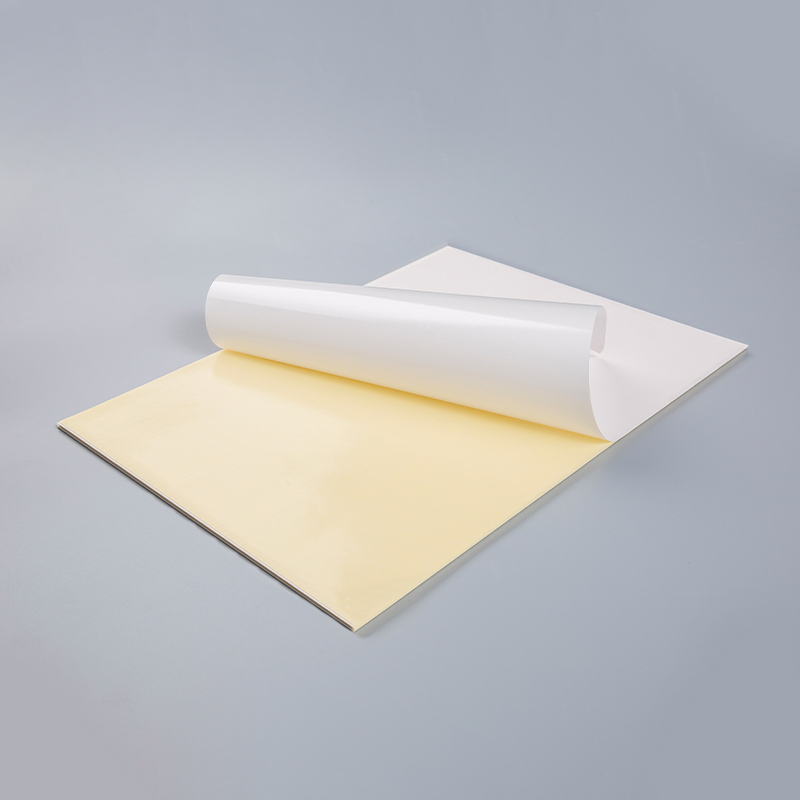
Selecting the right self-adhesive material also means considering the adhesive layer together with the face material. For example, a semi-glossy paper label with a water-based adhesive may be ideal for general packaging. A cast coated paper with a hot melt adhesive may deliver the high print quality and bond strength needed for premium cosmetics. The product choice is a combined decision about printability, removability, and peel performance.
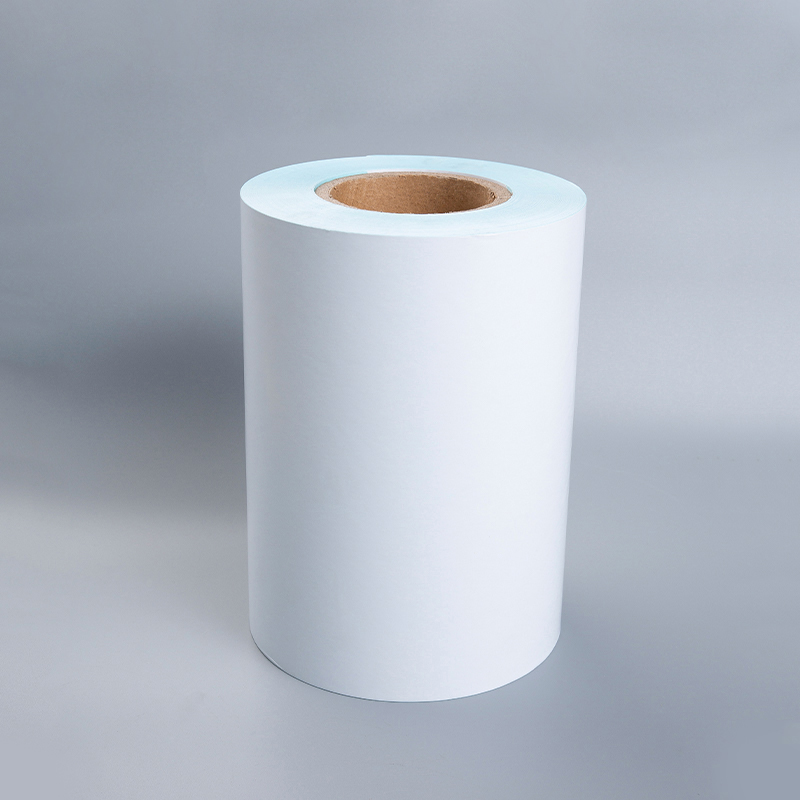
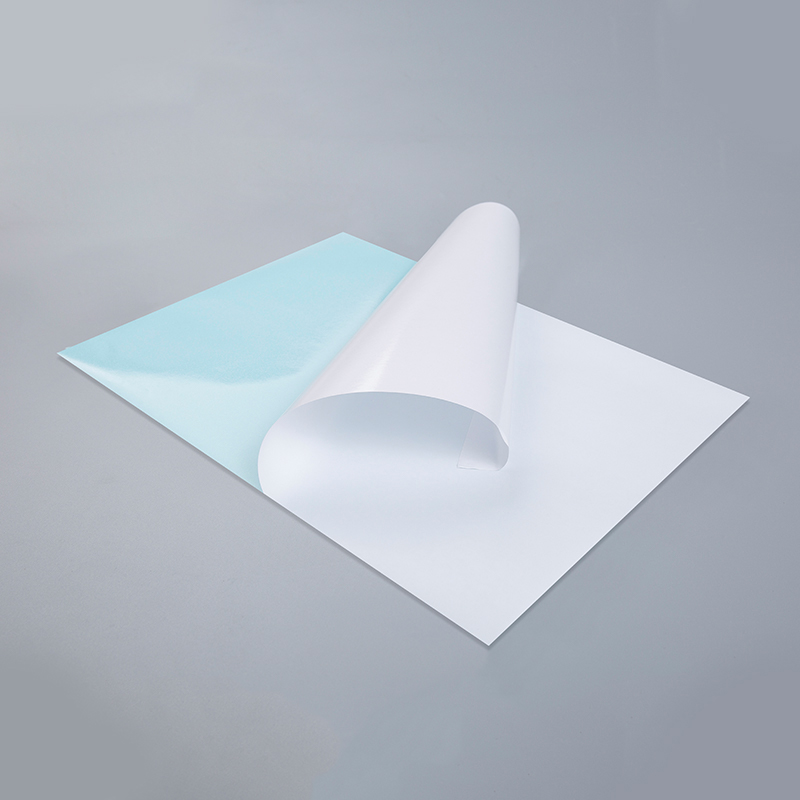 Semi Glossy Paper with Blue Glassine Liner for Quality PrintingThis semi glossy paper label with blue glassine liner offers good printability and strength for general packaging, aligning with the need to balance adhesive and face material in label selection.View Product →
If you are buying a film-based label for a curved container, the adhesive must wet out the plastic at application and remain securely fixed when the container is squeezed. A film label may show a higher peel strength on test steel but low performance on the actual container surface if the adhesive was not designed for that substrate.
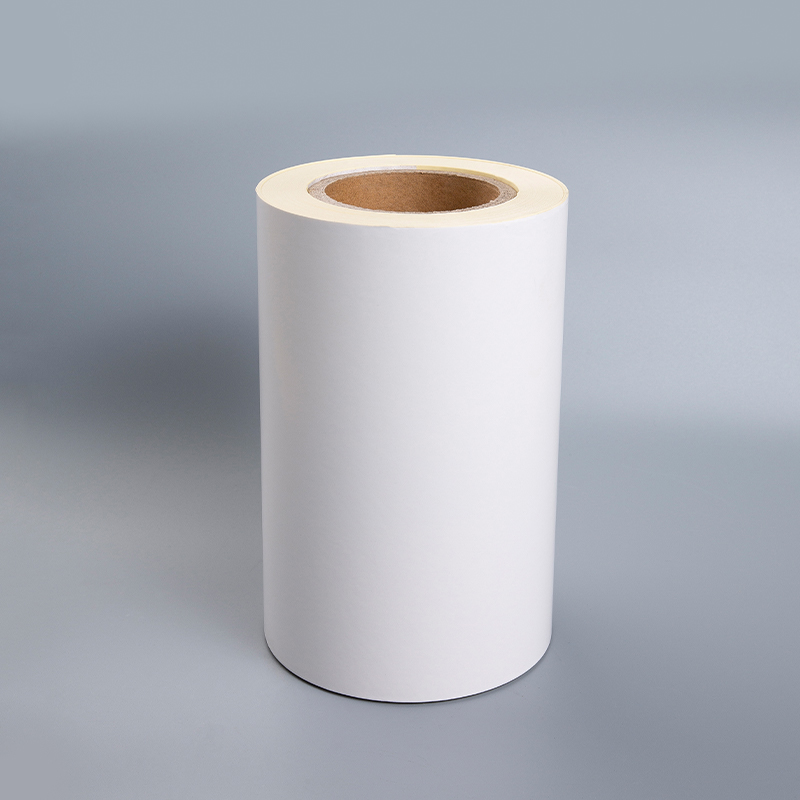
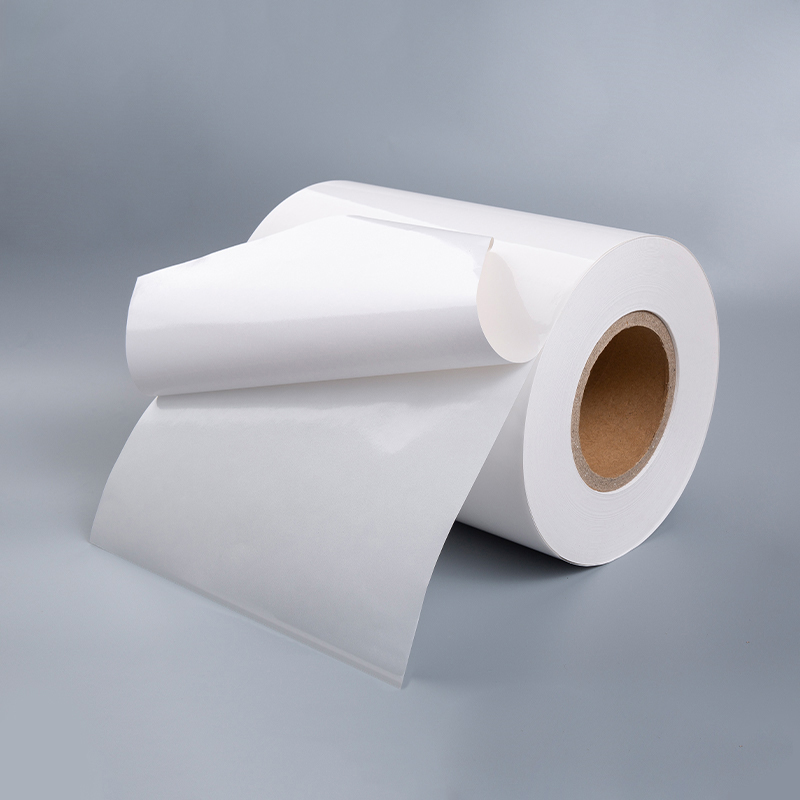 Cast Coated Paper with White Release Liner for Premium LabelsCast coated paper with white release liner provides high print quality and secure bonding, making it a suitable choice when film labels are considered for curved containers.View Product →
For an in-depth look at how to balance adhesive type with a specific label substrate, the guide on how to choose the right label glue offers practical selection criteria.
Final Takeaway
Peel strength units exist to make adhesive performance measurable and comparable. When you evaluate a potential label material, always confirm three things: the unit, the test angle, and the test surface. That simple discipline will save you from ordering a material whose datasheet number is impressive but whose real-world performance does not match your application. Confirming the unit and method is a small step; comparing apples to apples is the whole point.