
 English
 Español
 русский
 Français
 عربى
A retro reflective sheet looks simple in a sample book and becomes complicated the moment it goes outdoors. It is expected to return light to a driver, inspector, or camera at night, hold that performance through weather and cleaning, and still cut, print, and apply without turning a production run into a rework pile. The difference between a sheet that works and one that merely shines usually sits in the construction, the adhesive, and the specification rather than the surface gloss.
Content
- 1 What a Retro Reflective Sheet Actually Does
- 2 Reading Grade Labels Without Getting Fooled
- 3 Matching the Sheet to the Job
- 4 Adhesive and Liner Choices Matter More Than They Look
- 5 Printing, Plotting, and Installation Notes from the Shop Floor
- 6 Where Adjacent Reflective and Metallic Films Fit
- 7 A Practical Specification Checklist
- 8 Questions We Hear Most
What a Retro Reflective Sheet Actually Does
Retroreflection is not the same as a mirror finish. A retroreflective sheet sends light back toward the source, which is why a sign appears bright to the person holding the headlights or flashlight. Most products use either tiny glass beads or microprisms to do this. Glass-bead constructions are often flexible and forgiving; prismatic constructions can deliver higher brightness and sharper angular performance. Both rely on a carefully built stack: face film, optical layer, pressure-sensitive adhesive, and release liner.
Two phrases come up in every serious conversation: entrance angle and observation angle. In plain terms, they describe how the light hits the sheet and where the viewer stands. A sheet can look excellent straight on and disappoint when viewed from a sharp angle. That is why a sample held under a desk lamp is only a starting point, not a specification.
Reading Grade Labels Without Getting Fooled
Suppliers often use familiar labels such as engineering grade, high-intensity, or diamond grade. These names are useful shorthand, but they are not a substitute for photometric data. A “high-intensity” sheet from one production line may not match another in brightness, durability, or converting behavior. For a traffic or safety application, ask for the certified coefficient of retroreflection at the relevant angles, the expected service life, and the standard the product is tested against, such as ASTM D4956 or EN 12899 where applicable.
| Typical tier | Optical approach | Common fit | Watch-outs |
|---|---|---|---|
| Engineering grade | Glass bead or entry prismatic | Short-term work zones, parking areas, low-speed signage | Lower brightness; confirm durability for permanent use |
| High-intensity | Microprismatic or efficient glass bead | Permanent road signs, bollards, utility markers | Check angular performance and warranty terms |
| High-performance / diamond | Dense prismatic | High-speed roads, complex geometry, critical guidance | Higher cost; orientation and application matter |
A sensible buyer compares samples on the same substrate, under the same lighting, and with the same viewing distance. If the application is regulated, the certificate and batch traceability matter as much as the first impression.
Matching the Sheet to the Job
Retro reflective sheet is used on road signs, work-zone devices, parking and wayfinding signs, bollards, utility markers, marine structures, and commercial vehicle conspicuity markings. Each has a different balance of brightness, flexibility, and service life. A permanent highway sign and a temporary event sign may both look silver in daylight, but they should not share the same specification.
- Permanent outdoor signs need UV-stable face film, proven adhesive, and a realistic service-life claim.
- Curved or riveted surfaces need a sheet that conforms without lifting or cracking.
- Printable graphics need ink and laminate compatibility tested on the actual sheet.
- Removable campaigns need a different adhesive from a twenty-year installation.
The substrate is part of the decision. Bare aluminum, painted steel, plastic, and composite panels behave differently. Surface energy, contamination, temperature at application, and thermal movement all influence whether the adhesive holds. A sheet with excellent optics and the wrong adhesive is still a failure waiting to happen.
Adhesive and Liner Choices Matter More Than They Look
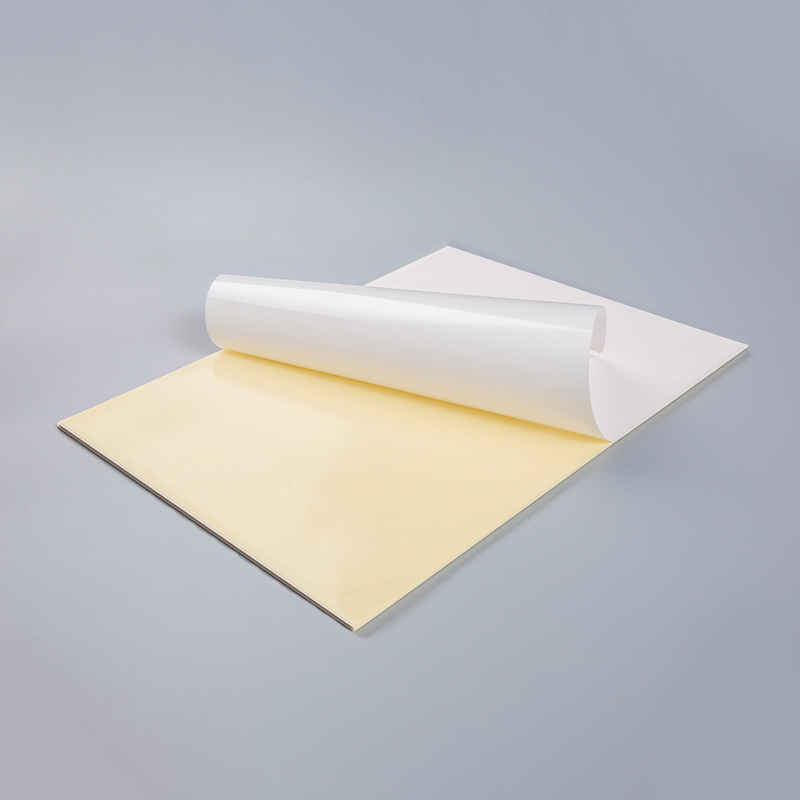
In our own work with self-adhesive label materials, we see how often a project succeeds or fails at the adhesive and liner interface. For retroreflective applications, an acrylic adhesive is commonly chosen for outdoor durability, but the final choice depends on the substrate, climate, and removal requirement. A low-temperature installation may need a softer, more aggressive adhesive. A sheet applied to a curved panel may need greater conformability. A large format graphic may need a liner that lays flat and releases cleanly without wrinkling.
Release liner choice is not glamorous, but it affects cutting, dispensing, and application speed. Paper liners can be stable and economical; PET liners can offer dimensional stability and clean release in demanding converting. Ask for a sample of the actual liner, not just the face sheet, because the liner often decides how the material behaves on a plotter or press.
Printing, Plotting, and Installation Notes from the Shop Floor
Retroreflective sheet can be printed, but it is not a generic vinyl. Solvent, UV, and screen inks behave differently on bead and prismatic surfaces. Always test ink adhesion, drying, and opacity on the exact product. For plotted graphics, adjust knife pressure and weed the material slowly; too much pressure can damage the optical layer. A compatible laminate may protect the print and improve cleaning resistance, but it must not blur the retroreflective effect.
- Condition the sheet and substrate at the recommended temperature before application.
- Clean and dry the surface; remove dust, oil, and release agents.
- Make a small trial application to check adhesion and conformability.
- Apply with a squeegee using firm, overlapping strokes to drive out air.
- Post-heat edges and rivets where the product instructions allow.
- Allow proper cure time before washing or exposing the sign to high stress.
Where Adjacent Reflective and Metallic Films Fit
Not every shiny film is a retroreflective sheet. Metallized PET and holographic films reflect light broadly and create decorative or branding effects, but they do not replace certified retroreflective sheeting for nighttime safety. This distinction matters. Specifying a decorative film for a road sign because it looks bright in a photograph is a costly mistake.
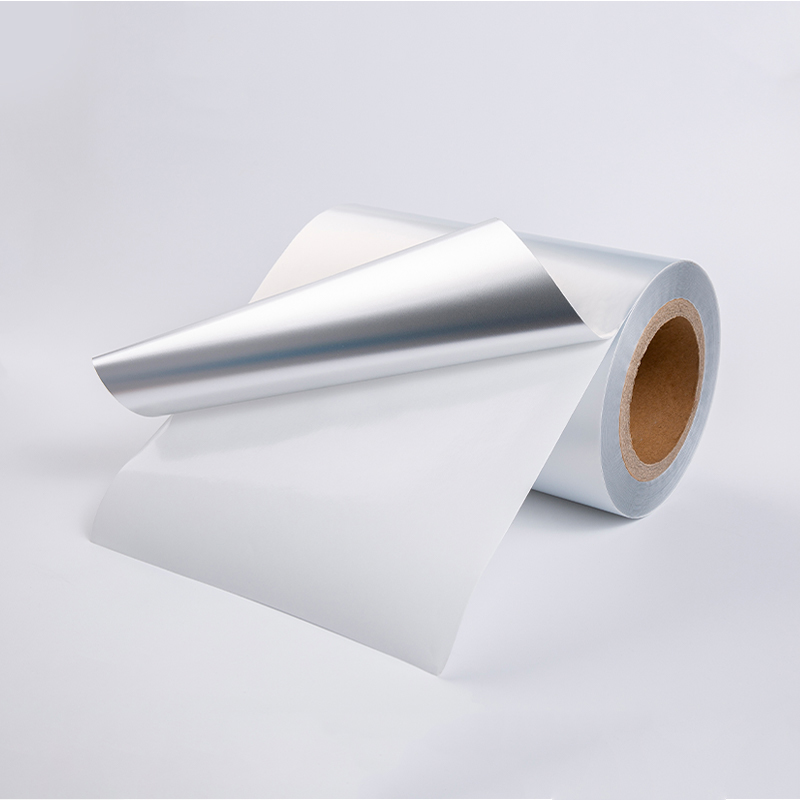 Custom Matt Silver PET Label Material With White Glassine LinerPressure-sensitive matte silver PET label stock for branding and packaging, distinct from certified retroreflective sheeting, with varied adhesives, liners, and custom formats.View Product →
For labels, packaging, and graphics, adjacent materials such as matt silver PET can deliver a clean metallic appearance with predictable converting behavior. Our technical note on how metallization affects reflective performance explains why visual sparkle and certified retroreflection should not be confused.
 Plain Holographic Laser Film In RollsSelf-adhesive 50-micron holographic laser label film for eye-catching decoration, available in rolls or sheets with alternative adhesives, liners, and printing-compatible customization.View Product →
Holographic laser film is another useful option when the goal is eye-catching decoration rather than driver safety. At PUODEHUA, we have spent two decades coating, laminating, and cutting self-adhesive materials. That does not make us the right source for every traffic-grade retro reflective sheet, and we will say so plainly. It does give us a practical view of adhesive selection, liner behavior, and converting performance that can help you avoid expensive surprises.
A Practical Specification Checklist
Before ordering a retro reflective sheet, write down what the product must do, not just what it should look like. A short specification avoids most sample-room mistakes.
- State the application, expected service life, and any regulation or standard to meet.
- Define brightness at the relevant entrance and observation angles.
- Confirm daytime color and nighttime color appearance.
- Name the substrate, surface condition, and whether it is flat, curved, or riveted.
- Describe the climate, cleaning method, and exposure to salt, sand, or chemicals.
- Specify adhesive and liner requirements for your cutting or printing process.
- Request a production-lot sample for print, plot, and adhesion trials.
- Ask for certificates, batch records, and a clear warranty statement.
Questions We Hear Most
Is retro reflective sheet printable?
Yes, with the right ink and process. The key is testing on the actual sheet and finishing with a compatible protective laminate if needed.
Can it be applied to curved surfaces?
Some products can, but prismatic sheets may resist tight curves. Always test a small piece and follow the supplier’s application limits.
How long will it last?
Service life depends on grade, climate, substrate, installation quality, and cleaning. A realistic answer comes from test data and warranty terms, not a guess from the sample swatch.
If you are comparing samples for a project, send your substrate, print method, expected life, and application conditions. We will tell you when a material is outside our range and when an adjacent self-adhesive film is the more honest choice. That is how good specifications are built: with clear performance data, practical converting advice, and no promises the material cannot keep.