
 English
 Español
 русский
 Français
 عربى
عربىContent
- 1 What Is Cast Coated Paper?
- 2 Key Properties That Make Cast Coated Paper Stand Out
- 3 Cast Coated Paper vs. Gloss, Dull, and Matte Coated Papers
- 4 Self-Adhesive Cast Coated Paper for Labels: Key Advantages
- 5 How to Choose the Right Self-Adhesive Cast Coated Paper for Your Project
- 6 Why Partner with a Reliable Cast Coated Paper Manufacturer
- 7 Cast Coated Paper in Action: Real-World Label Applications
What Is Cast Coated Paper?
A label’s first job is to stop the consumer. If the surface doesn't reflect light in a way that signals quality, the product behind it rarely gets a second look. Cast coated paper achieves that signal through a manufacturing process that replicates the surface of a polished mirror on paper.
The defining characteristic of this material is its exceptionally high gloss, typically exceeding 90% at a 60-degree measurement angle. This finish is not the result of a varnish or film laminate applied after printing. It is engineered directly into the paper during production. In the cast coating process, a wet coating layer is pressed against a large, heated, highly polished chrome drum. The coating dries while in full contact with the drum’s surface, faithfully replicating its smoothness and gloss before the paper is stripped away. Because the coating solidifies against the drum rather than in open air, the final surface is denser and more uniform than standard calendared or blade-coated papers.
For label converters, this means the paper provides a stable, high-energy surface that holds fine text and vivid solids without requiring heavy ink loads to overcome surface roughness. The resulting print contrasts sharply with the unprinted background, a critical factor for luxury packaging where empty space is as intentional as the graphics themselves.
Key Properties That Make Cast Coated Paper Stand Out
High gloss is the headline, but print performance depends on a cluster of physical properties that printers and designers need to evaluate together. Three characteristics explain most of the material’s behavior on press and on the shelf.
Ultra-High Gloss and Smoothness
Gloss is quantified with a glossmeter at a standard geometry, usually 60 degrees. While an uncoated paper might read 5–10 gloss units and a standard glossy coated paper 70–80, a well-made cast coated sheet consistently delivers readings above 90. This translates to reflected light that makes dark inks look deeper and metallic effects pop. The critical specification for converters is Bekk smoothness, often 1,500 seconds or higher for cast coated grades, compared with 300–800 seconds for conventional glossy papers. A smoother surface allows a cleaner release from the printing plate and sharper halftone dot reproduction.
Ink Receptivity and Print Quality
The coating layer is engineered with a microporous structure that draws ink vehicles into the sheet quickly while locking pigments near the surface. This balance is particularly useful when running highly pigmented, fast-drying inks on high-speed presses. The immediate absorption reduces the risk of set-off in the delivery pile, a problem that frequently limits throughput on less absorptive films. For designs that combine heavy solids with fine reverse type, a cast coated sheet minimizes dot gain, preserving legibility that can be lost on rougher, more absorbent surfaces. The paper performs reliably with UV flexo, conventional offset, and toner-based digital presses, provided the fuser temperature is compatible with the coating chemistry.
Cast Coated Paper vs. Gloss, Dull, and Matte Coated Papers
Choosing between coated paper finishes involves a trade-off between visual impact and reading comfort. Cast coated paper occupies the extreme high-gloss end of the spectrum, and understanding its position against other finishes prevents costly mismatches.
Standard gloss coated paper offers good color saturation for photography and general commercial print, but its surface can create distracting glare under directional lighting, making it unsuitable for text-heavy applications. Dull and matte coated papers reduce glare significantly, making them the preferred choice for books, manuals, and labels where legibility under varied lighting conditions is paramount. However, that reduction in glare comes with a perceptible loss in color brilliance; ink films sit on a microscopically rougher surface, which scatters light and dulls saturation.
Cast coated paper resolves this conflict only for applications where maximum shelf presence is the top priority. It delivers deeper black density and more vibrant color than any other coated paper, but its surface is directional and unforgiving of surface defects. The reverse side of a cast coated sheet is typically uncoated or lightly coated, which can affect adhesive anchorage and lay-flat behavior. The decision to use cast coated paper is a declaration that visual richness matters more than material cost or handling ease, a calculation that fits luxury wine labels, premium cosmetics, and limited-edition packaging perfectly.
Self-Adhesive Cast Coated Paper for Labels: Key Advantages
Applying a cast coated facestock to a pressure-sensitive construction multiplies its utility. The label converter receives a ready-to-print material that combines the visual performance of cast coating with the application speed of a self-adhesive laminate.
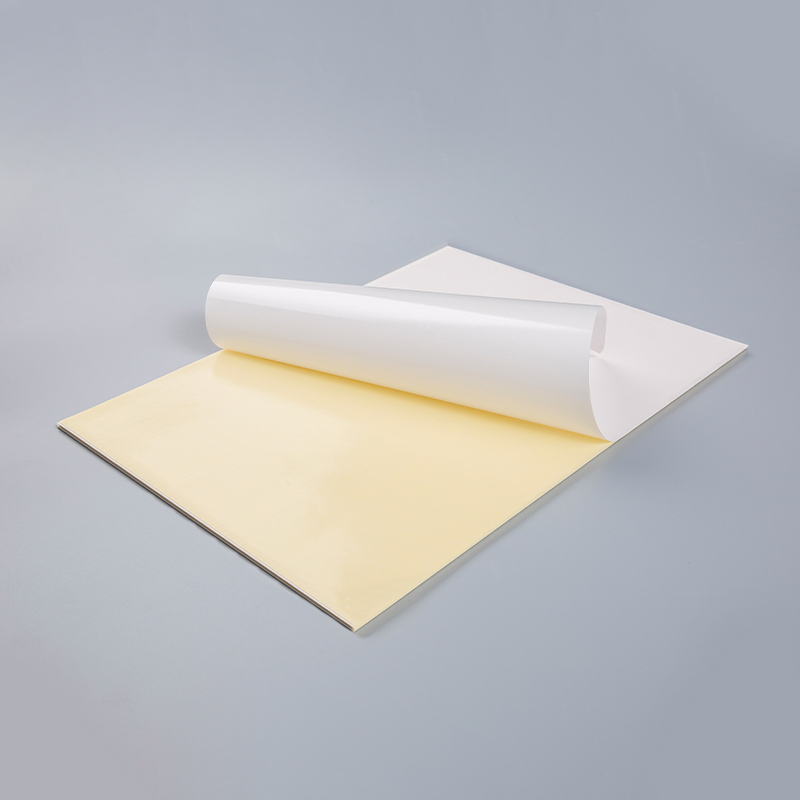
The construction consists of the cast coated face layer, an adhesive film, and a release liner. What makes this combination particularly effective is the control it gives over the adhesive system. Converters can select from permanent acrylic adhesives that bond aggressively to glass and metal, removable adhesives that peel cleanly from painted surfaces, or specialized low-temperature adhesives that remain functional in refrigerated and frozen environments. This versatility means the same premium facestock can serve a dry-goods cosmetic jar, a chilled beverage bottle, and a frozen food container, simply by changing the adhesive coat.
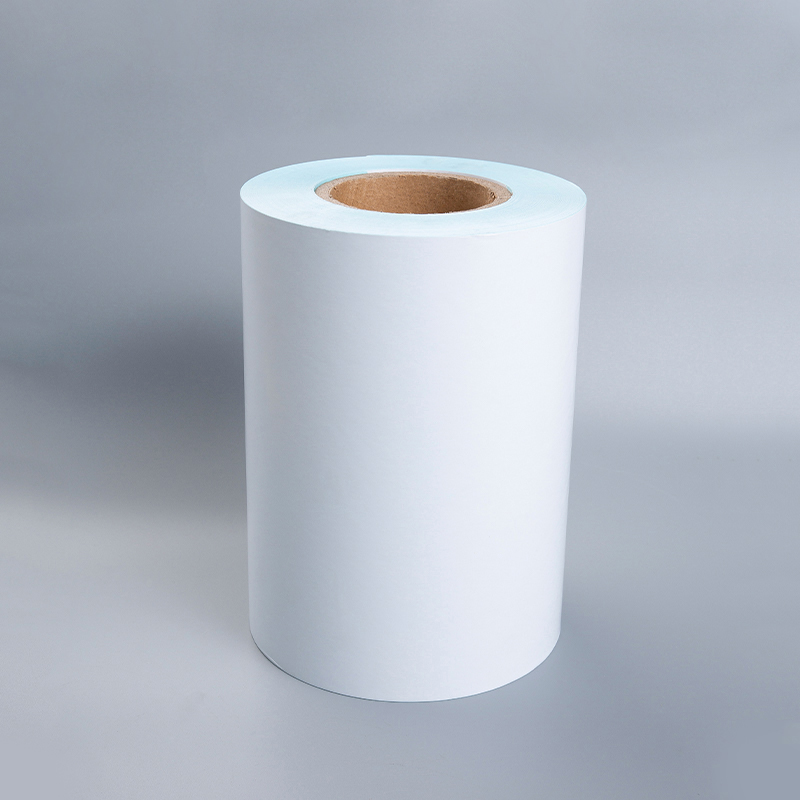
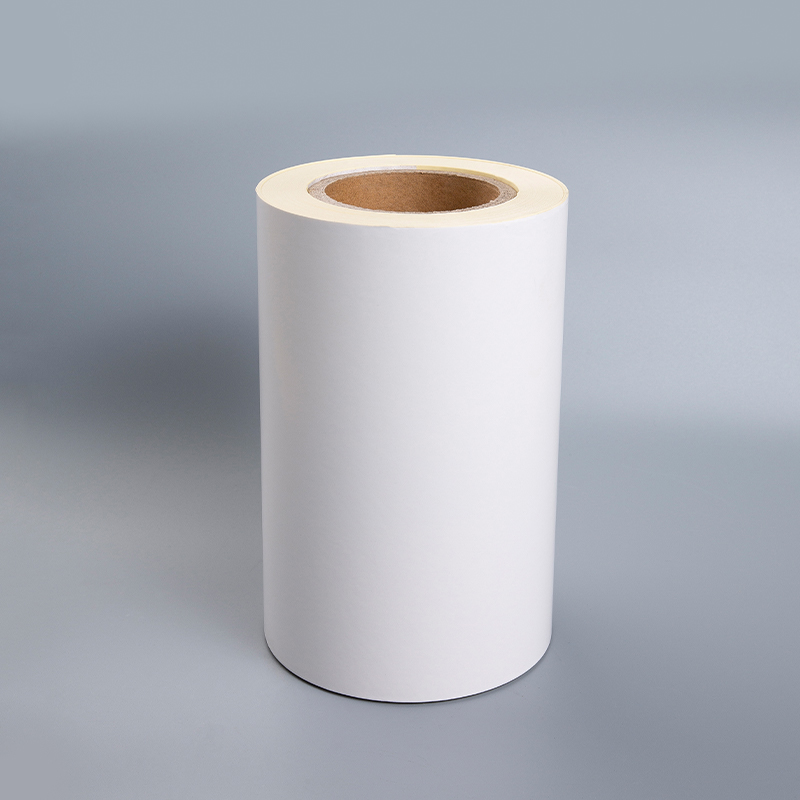
The release liner itself is a functional component. Cast coated face materials are commonly supplied with either a white release liner or a yellow release liner. The liner color affects automatic label application and inspection systems. White liners provide higher contrast for opaque facestocks and are often preferred for high-speed optical sensing. Yellow liners offer a visual cue that helps operators distinguish liner from facestock during manual weeding or splicing, reducing waste on the converting line. For wine and spirit labels, where the label must survive ice-bucket condensation and resist peeling at the edge, cast coated self-adhesive materials demonstrate measurably better wet stability than uncoated or lightly coated papers. Visit the self-adhesive cast coated paper range to review specific constructions and available adhesive combinations.
How to Choose the Right Self-Adhesive Cast Coated Paper for Your Project
Specifying a self-adhesive label stock requires matching the print method, the application environment, and the container geometry. A systematic approach prevents the common error of selecting for appearance alone and discovering a bond failure only after the first production run.
Begin with the printing process. UV flexo and narrow-web offset are the most common choices for cast coated facestocks. Confirm with the supplier that the coating is formulated to withstand the UV curing dose without yellowing or becoming brittle. For digital toner presses, verify the toner anchorage by requesting a tape-pull test on a printed sample; cast coated surfaces can be smooth enough to challenge certain toners if not specifically treated.
Next, define the label’s working life. A wine bottle destined for a cellar requires different adhesive chemistry than a single-use promotional sticker. Low-temperature adhesives maintain tack on chilled, damp glass, while high-tack permanent adhesives prevent flagging on small-diameter vials and curved containers. The liner matters here too: white release liner cast coated paper provides the contrast needed for automated sensor gates, while the yellow release liner alternative can improve manual handling efficiency and reduce application errors on slower, semi-automatic lines. Ordering a sample roll with the recommended adhesive and liner combination and running it on the actual filling line remains the most reliable validation step.
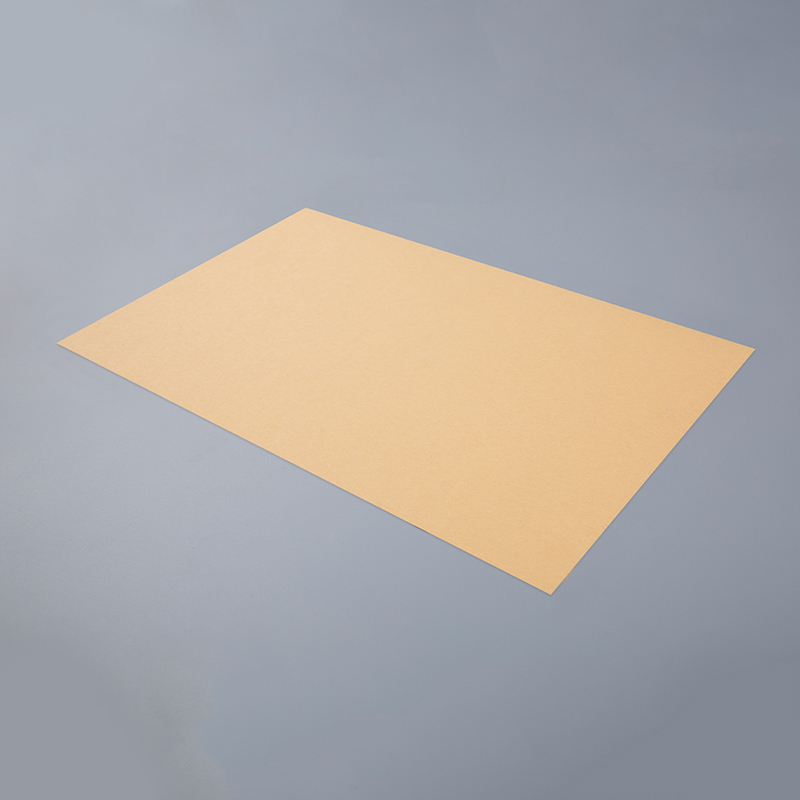
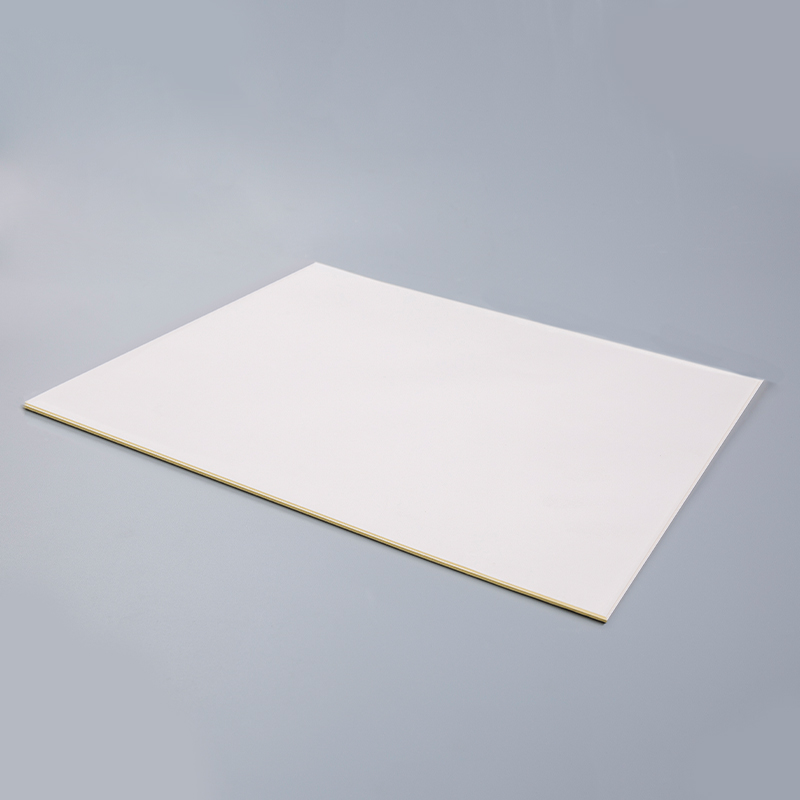 Custom Cast Coated Paper With Yellow Release Liner Suppliers, CompanySuzhou Piaozhihua Composite Material Technology Co., Ltd. is China Custom Cast Coated Paper With Yellow Release Liner Suppliers and Compa...View Product →
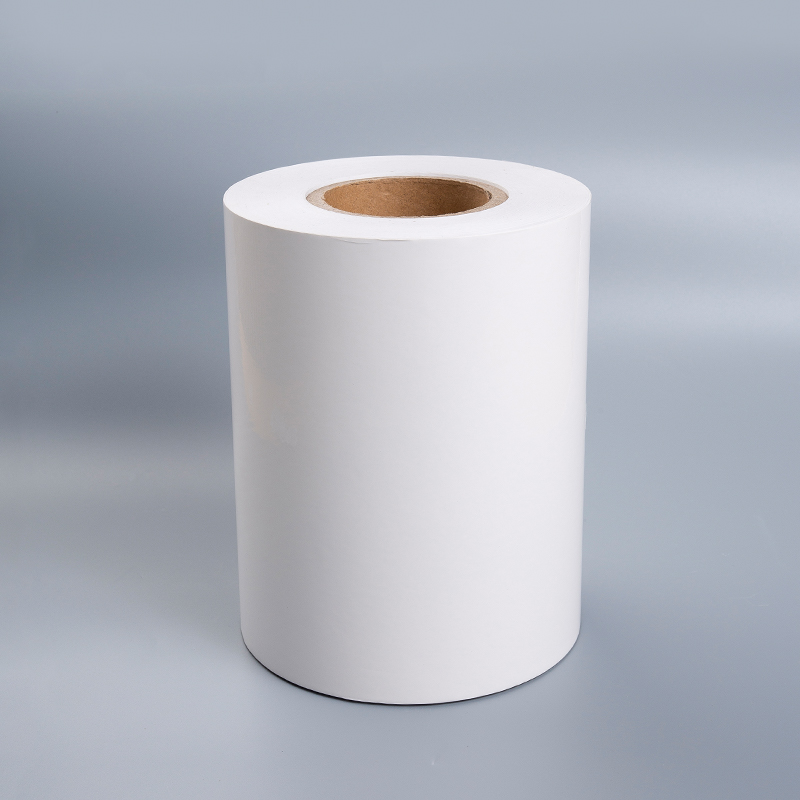
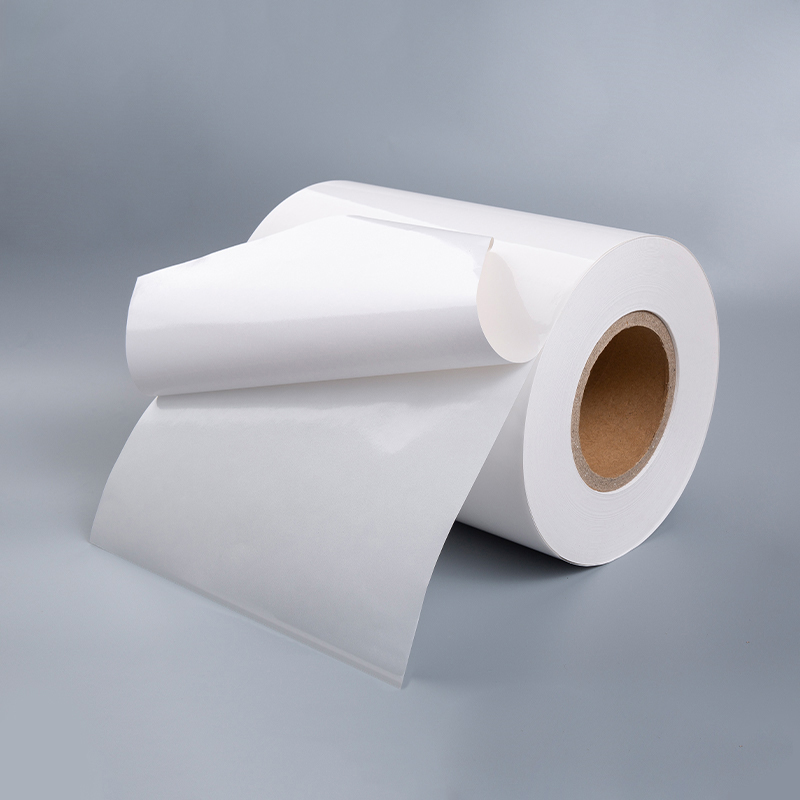 Custom Cast Coated Paper With White Release Liner Suppliers, CompanySuzhou Piaozhihua Composite Material Technology Co., Ltd. is China Custom Cast Coated Paper With White Release Liner Suppliers and Compan...View Product →
Why Partner with a Reliable Cast Coated Paper Manufacturer
Procurement managers quickly learn that a material specification sheet tells only part of the story. The same grade description can produce different results from two suppliers, and the difference becomes painfully visible only at 10,000 labels per hour.
A manufacturer with two decades of focused experience in self-adhesive composites brings process control that generic paper mills cannot match. With complete coating, laminating, and slitting lines under one roof, the production team can adjust coating weight, liner type, and adhesive coat weight to the specific demands of the job, rather than offering a limited selection of stock items. Annual production capacity exceeding 280 million square meters indicates the volume to support consistent lot-to-lot uniformity, a prerequisite for brands that cannot tolerate shade variation across label batches.
Global exhibition presence across Dubai, Korea, and Europe further signals that the manufacturer’s quality management system withstands scrutiny from diverse international buyers with varying regulatory requirements. For converters managing multi-continent brand rollouts, this consistency removes a variable from the supply chain. The specification itself becomes reliable; the sample matched, the production run matches the sample, and the next run matches the last.
Cast Coated Paper in Action: Real-World Label Applications
The material’s performance profile dictates its application set. Three sectors account for the majority of cast coated pressure-sensitive label consumption, each demanding a different combination of gloss, ink holdout, and physical durability.
Premium wine and spirits labels remain the flagship application. The deep reflection from a cast coated surface enhances foil stamping and embossing, while the wet-strength properties prevent the label from softening and bubbling when bottles are chilled. Cosmetic labels for serums and creams benefit from the material’s ability to maintain color fidelity under the harsh fluorescent lighting of retail displays—a blue that looks rich on the proof remains rich on the shelf. Promotional and limited-edition labels for consumer electronics and gift packaging exploit the high gloss to signal a premium unboxing experience, often combining cast coated paper with spot varnishes for a multi-texture effect that would flatten on a uniformly coated sheet.
Each of these applications starts with the same fundamental advantage: the material itself communicates value before the consumer reads a single word. When label real estate is measured in square centimeters, every property of the paper must work toward that first impression.